Author

admin

Browsing

Apple has accused a former engineer for its Vision Pro headset computer of stealing company trade secrets before starting a new job at Snap, according to a lawsuit filed in California last week.

In the June 24 court filing, Apple accuses Di Liu, a senior design engineer, of downloading thousands of documents in his final days at the Cupertino company last year and saving them to his personal cloud accounts.

This lawsuit is the latest example of Apple publicly going after a former employee for leaking internal information. Apple is an intensely secretive company, and lawsuits like this one highlight how the iPhone maker exercises tight control over its internal information, even if it has to pursue legal action against former staff.

Apple alleges that Liu didn’t inform the company when he resigned late last year that he was headed to Snap, a competitor and maker of smart glasses. As a result, Apple did not shut off his access to accounts and allowed him a customary two-week transition period, which he used to download company files, according to the lawsuit.

“Worse still, the review of Mr. Liu’s Apple-issued work laptop also shows that while maintaining access to Apple’s Proprietary Information under false pretenses, he used his Apple credentials to exfiltrate thousands of documents containing Proprietary Information from Apple’s secure file storage systems,” the iPhone maker’s lawyers said in the filing.

Many of the files downloaded by Liu had codenames for Apple projects and described the company’s technology, product design and supply chain, according to the lawsuit. Apple says that all employees agree to keep Apple files confidential and that Liu broke confidentiality agreements he made when he joined. Liu worked for Apple between 2017 and 2024, according to the lawsuit.

Liu worked on Apple’s Vision Pro headset as a system product design engineer, per the filing. Liu did not respond to a request for comment from CNBC.

Apple lawyers wrote that Liu could use the trade secrets in his work at Snap. Apple is not suing Snap, and the social media company did not respond to a request for comment.

“The overlap between Apple’s Proprietary Information that Mr. Liu retained and Snap’s AR products (for which Mr. Liu is a ‘product design engineer’) suggests that Mr. Liu intends to use Apple’s Proprietary Information at Snap,” according to the filing.

Apple is seeking damages and for Liu to have his devices inspected by a forensic examiner to make sure all the trade secrets are deleted.

The iPhone maker has sued several former employees in recent years for taking files when they left the company.

Apple settled with former engineer Simon Lancaster in 2022 over providing information to a journalist. Apple also sued a former employee, Andrew Aude, in 2024 over leaking details to the media. That lawsuit was dismissed after Aude apologized.

The Cupertino company sued Rivos, a chip startup staffed by former Apple semiconductor employees, over its intellectual property, and settled in 2024.

Additionally at least three former Apple employees have also been arrested and accused by the government of taking company secrets and giving them to China-linked organizations. One pled guilty and was sentenced to four months in prison, and two are still in proceedings.

This post appeared first on NBC NEWS

Elon Musk and President Donald Trump are fighting again. Now Musk’s business interests — and the billions in government contracts they enjoy — are once again in the crosshairs.

Investors were already punishing Tesla on Tuesday, sending shares in the electric carmaker more than 4% lower in afternoon trading. The stock has experienced a late-spring rally alongside the broader market but remains down some 20% so far this year. The shares have been pummeled by a global backlash to Musk’s alliance with Trump on the campaign trail and in the White House, where the multibillionaire led a sweeping program of government cuts

Musk acknowledged there had been “some blowback” to the actions taken by his Department of Government Efficiency project that may have affected Tesla sales. Yet investors remain largely bullish on the company and its efforts to pivot away from mass-market EVs and toward self-driving taxis and robotics, pushing its market valuation back toward $1 trillion.

Tesla remains Musk’s best-known business, but its fortunes are less directly tied to the government than SpaceX, his rocket-building company. SpaceX’s $350 billion valuation largely rests on the many government contracts that fuel it. SpaceX’s work for NASA has ramped up in recent years in support of the Artemis mission to return to the moon.

Meanwhile, SpaceX’s Dragon spacecraft is currently the only active vessel capable of carrying astronauts to and from the International Space Station. SpaceX has also become essential to the Department of Defense’s missions taking satellites into orbit and today is responsible for the majority of such missions, according to Ars Technica.

SpaceX is privately held, meaning its shares don’t trade on the open market. It is thus difficult to get a real-time gauge on how worsening relations could affect the company’s fortunes. But the impact could be substantial. Since fiscal year 2000, total revenue for SpaceX and Tesla from federal unclassified contracts sits at $22.5 billion, according to Bloomberg Government data — with most of those going to the former. The Washington Post has put the figure for SpaceX alone at close to $38 billion, with $6.3 billion alone coming in 2024 — the highest annual total to date.

The dispute with Trump has also taken a chunk out of Musk’s personal net worth. After soaring to an all-time high of nearly half a trillion dollars after Trump’s election win, Musk’s publicly available wealth tally now sits at $400 billion, though that still makes him the world’s wealthiest individual by nearly $150 billion ahead of Oracle founder Larry Ellison, another Trump ally.

The Musk-Trump tiff first exploded into public view last month, shortly after Musk formally stepped down from his special government employee role and criticized the massive spending and tax cut bill that Republican senators passed Tuesday. Trump responded at the time by threatening to “terminate Elon’s Governmental Subsidies and Contracts.”

Musk, in turn, said he would begin “decommissioning” the Dragon, only to reverse course hours later after an X user advised him and Trump to “cool off and take a step back for a couple of days.”

Before their initial flare-up subsided, Musk announced he would be reining in his political spending weeks after a candidate he had backed lost a key Wisconsin Supreme Court race. Some analysts believe the current relapse in tensions between the two men will be short-lived given Musk’s reliance on the government, and vice-versa.

Still, Musk is now discussing launching his own political party to address the U.S.’s fiscal imbalances, which he believes Trump’s bill will exacerbate — a contention supported by the nonpartisan Congressional Budget Office. While the South Africa-born executive is ineligible to run for office, any candidate he backed for national office would likely face immediate conflict-of-interest questions.

This post appeared first on NBC NEWS

Australian airline Qantas says a data hack on Monday exposed the personal information of six million customers and it expects the amount stolen to be “significant.”

The hack penetrated a third-party customer service platform used by a Qantas contact center, the airline said in a statement on Wednesday. Six million customers have service records on the platform – with data including some of their names, email addresses, phone numbers, birth dates and frequent flyer numbers.

However, the platform does not contain any customer credit card details, financial information or passport details, Qantas said.

After Qantas detected “unusual activity” on the platform, it took action and “contained” the system, it said. The statement said all Qantas systems are now secure, and there is no impact to the company’s operations or safety.

It’s not clear exactly how much data was stolen, “though we expect it to be significant,” the airline said. It is now working to support affected customers, and is cooperating with the Australian Cyber Security Centre, Australian Federal Police and independent cybersecurity experts on the investigation.

“We sincerely apologize to our customers and we recognize the uncertainty this will cause. Our customers trust us with their personal information and we take that responsibility seriously,” said Qantas CEO Vanessa Hudson in the statement.

“We are contacting our customers today and our focus is on providing them with the necessary support.”

Qantas’ share price was down 3.5% in morning trading, against a 0.4% gain in the broader market, according to Reuters.

Australia has seen a series of major cyberattacks and company hacks in recent years. In 2019, a cyberattack targeted Australia’s ruling and opposition parties less than three months before a national election. Two years later, broadcaster Nine News suffered a cyberattack that forced a number of live shows off air – calling it the largest cyberattack on a media company in Australia’s history.

Most recently in 2022, cybercriminals in Russia conducted a ransomware attack on Medibank, one of Australia’s largest private health insurers. Sensitive personal data, including health claims information, was stolen from 9.7 million customers – some of which was then released onto the dark web.

Last year, Australia publicly named and imposed sanctions on a Russian national for his alleged role in the attack. He was an alleged member of the Russian ransomware gang REvil, which had previously launched large attacks on targets in the United States and elsewhere, before Russian authorities cracked down in 2022 and detained multiple people.

This post appeared first on cnn.com

Their reunion? It’s smooth like butter. The K-pop septet BTS will return in spring 2026 with a new album and world tour.

Members Jin, RM, V, Jimin, J-Hope, Jung Kook and Suga made the announcement Tuesday during a livestream on Weverse, an online fan platform owned by BTS management company Hybe. It was the first time all seven members have broadcast live together since September 2022.

“We’ll be releasing a new BTS album in the spring of next year. Starting in July, all seven of us will begin working closely together on new music,” the band said in a statement. “Since it will be a group album, it will reflect each member’s thoughts and ideas. We’re approaching the album with the same mindset we had when we first started.”

According to a press release, the band will be in the United States this month to begin working on new music.

The 2026 album will mark their first since 2022’s anthology, “Proof,” their 2021 Japanese compilation album “BTS, the Best,” and their last studio album, “Be,” released in 2020.

They also announced a world tour, their first in nearly four years. The news arrives a few weeks after BTS superstars RM, V, Jimin and Jung Kook were discharged from South Korea’s military after fulfilling their mandatory service.

In South Korea, all able-bodied men aged 18 to 28 are required by law to perform 18-21 months of military service under a conscription system meant to deter aggression from rival North Korea.

Six of the group’s seven members served in the army, while Suga, the last to return, fulfilled his duty as a social service agent, an alternative to military service.

Jin, the oldest BTS member, was discharged in June 2024. J-Hope was discharged in October.

South Korea’s law gives special exemptions to athletes, classical and traditional musicians, and ballet and other dancers if they have obtained top prizes in certain competitions and are assessed to have enhanced national prestige. K-pop stars and other entertainers aren’t subject to such privileges.

However, in 2020, BTS postponed their service after South Korea’s National Assembly revised its Military Service Act, allowing K-pop stars to delay their enlistment until age 30.

This post appeared first on cnn.com

The debris arrives in the rockets’ wake: melted plastics, aluminum and pieces of blue adhesive. It all ends up stranded on the sands of Bagdad beach in northern Tamaulipas, Mexico, home to an endangered species of sea turtle. Just across the border lies Starbase, SpaceX’s launchpad and company town.

Since November, Conibio Global, a small non-governmental organization, has taken on a daunting task: cleaning up trash from SpaceX, one of the most powerful companies in the world.

In May, however, there was another launch, with more debris. This time, the activist claims, millions of particles ended up contaminating the area on the Mexican side. Ibarra said that a few days later, the organization collected more than a ton of waste in an area of 500 meters.

“In half a kilometer out of the 40 kilometers of shoreline, we already collected one ton (of trash),” added Ibarra. “We are a very small group, it’s impossible to clean everything.”

Ibarra said that Conibio Global handed the debris to the Mexican government’s environmental protection agency PROFEPA.

The statement added that the company had performed tests that they claim confirm that there are no chemical, biological or toxicological risks associated with the flotsam and jetsam of a typical SpaceX launch.

Ibarra said that Conibio Global has not had any contact with the company.

“Although a lot of debris is not hazardous, spaceflight-related vehicles can contain hazardous chemicals and materials,” Sorge wrote. “Be aware that it is not worth the risk to touch a piece of debris, and it could interfere with important investigations.”

Some of the objects found during cleanup operations, Ibarra said, are solid and spongy plastics, a type of rubber with a consistency similar to cork, aluminum with SpaceX labels, pieces of plastic bubble wrap, steel tubes, and pieces of a blue-colored adhesive.

Some of this trash, Ibarra predicted, could end up being ingested by Kemp’s ridley turtles, an endangered species of sea turtle that inhabits the area.

On its website, SpaceX says it is committed to minimizing the impact and improving the environment whenever possible, highlighting agreements with various US agencies and the Texas government.

A months-long saga

After the recent explosion of a SpaceX rocket on June 19, the NGO reported that some large fragments appeared in Mexican territory the next morning. It stated that several officials from the Mexican government got in touch so that they could be informed of the situation.

Conibio follows SpaceX’s social media announcements to know when there will be launches and goes to the sites to collect evidence of debris they know will fall. He says this happens in the northern area of Bagdad Beach and on a parcel of communal farming land in nearby Matamoros.

Following persistent public complaints, Mexico’s President Claudia Sheinbaum spoke out at her daily conference on June 25.

Sheinbaum said that her government had found that there is indeed pollution and that the impact of rocket launches in general will be reviewed in order to take action “within the framework of international laws,” including possible legal actions.

Ibarra, who is also a veterinarian and director of the Marine Turtle Program at Conibio Global, said that he believes the vibrations generated by the rockets compact the sand where there are turtle nests and prevent them from emerging. He said that at least 300 hatchlings have died in the compacted nests.

“There is vegetation that the last explosion burned, the entire edge of the Rio Bravo, and the pipes broke many trees, which fell near a small population of people,” said Ibarra. He added that in several border cities between Tamaulipas and Texas it was reported that there was minor damage to houses due to the vibrations from the rockets.

A team of environmental officials and personnel from the Mexican Navy Secretariat went to collect the waste Conibio collected last weekend, and during the visit, Ibarra recounted, they found a tank approximately 4 meters long and a stainless steel pipe weighing about 5 kg.

Dealing with cleaning up the waste has cost the NGO more than US$26,000 in operating expenses and beach monitoring due to vehicle fuel they use and laborers’ wages, as well as cleaning materials, the organization claims.

Ibarra noted that the Mexican government has collaborated with them since they became aware of the situation, especially since it involves a foreign company. He claimed that during one of the visits they were “harassed” by SpaceX drones that were recording them.

In SpaceX’s statement on social media, the company said that the debris is its property and that its recovery attempts have been hindered by individuals who had “trespassed” on private property without authorization.

The Government of Tamaulipas has always expressed that it wants a collaborative relationship with SpaceX. Governor Américo Villarreal visited Starbase in November 2024.

While the bigger rocket pieces have been removed, Ibarra says the trash remains a major problem at Bagdad Beach.

“The debris is still there,” Ibarra said. “It’s no longer as visible as in the photos because the tides have been burying it, but it’s there, and it has to be removed sooner or later.”

This post appeared first on cnn.com

As Israeli Prime Minister Benjamin Netanyahu prepares for his third visit to the White House this year, his host has made his expectations clear. US President Donald Trump, who has spoken often about his desire to secure a ceasefire in Gaza, said on Tuesday: “We’re looking for it to happen next week.”

Though the two leaders will celebrate the US and Israeli strikes in Iran, Gaza is very much on their agenda. “We want to get the hostages back,” Trump said.

Netanyahu, who is set to meet the US president on Monday, faces a critical decision at the crossroads of two very different conflicts: one precise and short, the other brutal and protracted. The long-time Israeli leader held two high-level meetings on Gaza already this week and is expected to hold another on Thursday, according to an Israeli official.

But the government has yet to decide on how to proceed in Gaza, a source familiar with the discussions said. That choice boils down to whether to pursue a ceasefire agreement or to intensify a military bombardment of the enclave that has already killed more than 56,000 Palestinians, as Israel tries to increase pressure on Hamas.

Earlier this week, the Israeli military recommended pursuing a diplomatic path in the strip after more than 20 months of fighting and the elimination of much of Hamas’ senior leadership.

“It’s harder now to achieve tactical goals,” the official said. The military could keep pursuing the destruction of Hamas’ military and governance capabilities, they added, but a political agreement could also be effective.

The far-right members of Netanyahu’s government are demanding an intensification of Israel’s campaign.

“No agreements. No partners. No mediators. Only a clear outcome: the destruction of Hamas and the return of the hostages from a position of strength,” said Finance Minister Bezalel Smotrich, head of the Religious Zionism party, on Monday.

But after almost two years of war, others have made clear that the release of the remaining 50 hostages in Gaza is the priority.

“In my opinion, everything must be done to release the hostages. And we are over 600 days late. Everything must be done to bring everyone back – the living and the fallen. Not out of weakness – out of strength,” Minister of Welfare Ya’akov Margi said on Israel’s religious Kol B’ramah radio. Pressed on whether that includes an end to the war, Margi said, “I think we should enter negotiations, and everything should be on the table.”

The Israel Defense Forces (IDF) already controls some 60% of Gaza’s besieged territory, forcing more than two million Palestinians – many of whom have been displaced several times – into shrinking areas near the coast. But negotiations have been stalled for weeks, unable to bridge a key gap. Hamas demands a permanent end to the conflict as part of any ceasefire agreement, while Israel has refused to commit to end the war.

“The IDF has reached the limit of what you can achieve with power,” said Israel Ziv, a retired major general who once led the military’s operations department. “Netanyahu has reached a crossroads, and he must make a choice,” he added.

One path is to leverage the achievements against Iran, Hezbollah and Hamas and push for a regional agreement that could include upgrading relations with Syria and Lebanon, Ziv said. Such an option would end the war in Gaza and secure the release of the hostages, but it risks collapsing Netanyahu’s government if the far-right parties quit the coalition.

“The second path is continuing the war – and even if it’s not officially declared, it would mean the conquest of Gaza,” said Ziv.

Over the weekend, Netanyahu said “many opportunities have opened up” following Israel’s military operations in Iran, including the possibility of bringing home everyone still held captive by Hamas. “Firstly, to rescue the hostages,” he said. “Of course, we will also need to solve the Gaza issue, defeat Hamas, but I believe we will accomplish both missions.”

The comments marked a potentially significant shift in how Netanyahu has laid out Israel’s goals in Gaza. For the vast majority of the war, he has prioritized the defeat of Hamas. In May, he said that was the “supreme objective,” not the return of the hostages.

But after the campaign against Iran, Netanyahu has signaled a newfound flexibility on negotiations, one that may quickly be put to the test at the White House as he meets an American president pushing for a deal.

This post appeared first on cnn.com

Three people who were part of the senior leadership team at the hospital where nurse and convicted child serial killer Lucy Letby worked have been arrested on suspicion of gross negligence manslaughter, British police said Tuesday.

The three senior staff members, who have not been named by police, worked at the Countess of Chester Hospital in 2015 and 2016 at the same time as Letby. All three suspects have been released on bail after being questioned by police on Monday.

“It is important to note that this does not impact on the convictions of Lucy Letby for multiple offences of murder and attempted murder,” Cheshire Constabulary Detective Superintendent Paul Hughes said in a statement.

The aspect of the investigation related to the latest arrests focuses on the “grossly negligent action or inaction of individuals,” police said. Meanwhile, another ongoing part of the investigation into the separate offence of corporate manslaughter “focuses on senior leadership and their decision making to determine whether any criminality has taken place concerning the response to the increased levels of fatalities.”

Letby, 34, was found guilty of murdering seven children and attempting to murder seven more between June 2015 and June 2016 while working in the neonatal unit of the hospital in Chester, England. The former nurse is serving 15 whole-life sentences.

The court heard during the case in 2023 that Letby attacked babies in her care by administering air into their blood and stomachs, overfeeding them with milk, physically assaulting them, and poisoning them with insulin.

However, her convictions have been criticized after an international panel of experts raised questions regarding the medical evidence.

The panel said there was no medical evidence indicating murder and that the babies’ collapses resulted from “either natural causes or bad medical care.”

It also highlighted issues of unsafe delays in diagnosis and treatments at Countess of Chester Hospital and said that in some cases staff were working “probably beyond their expected ability or designated level of care,” according to the British Medical Journal (BMJ).

Last week, former UK Health Secretary Jeremy Hunt called for an “urgent reexamination” after experts raised “serious and credible” questions.

Independent experts “are saying there is no medical evidence in the 17 deaths that were examined in the trial of what they call maleficence, of malicious intent,” Hunt said in an interview with Good Morning Britain, calling for a speedy review by the UK’s Criminal Cases Review Commission. “If they are saying that, then I really think we need to do this.”

“I am not arguing that Letby is innocent. That is not my place… The pain endured by the families affected must also be at the forefront of our minds,” Hunt wrote in a separate op-ed published in the Daily Mail newspaper last month, arguing that the families deserve the truth. “And if medical error was the cause, we can then make sure no more babies die from the same mistakes.”

Letby has maintained her innocence and her lawyer Mark McDonald submitted an application earlier this year for her case to be reviewed by the commission. Letby’s previous attempts to overturn her convictions have been refused by the court.

McDonald told the UK’s PA Media on Tuesday that a proper and full public inquiry into failings by the hospital’s neonatal and pediatric medical care unit is needed.

“The concerns many have raised will not go away, and we will continue to publicly discuss them,” McDonald said, according to PA. “The reality is that 26 internationally renowned experts have looked at this case and the lead expert has concluded that no crime was committed, no babies were murdered.”

A public government inquiry is set to be published in early 2026. That inquiry previously heard evidence from the senior hospital leadership about the concerns raised regarding the rise in infant deaths at the neonatal unit, and the actions taken as a result.

Cheshire Police said they were continuing to investigate “the deaths and non-fatal collapses of babies at the neo-natal units of both the Countess of Chester Hospital and the Liverpool Women’s Hospital,” at which Letby undertook training placements. The elements of the investigation related to corporate manslaughter and gross negligence manslaughter are also ongoing, police said.

A spokeswoman for the Countess of Chester Hospital said it “would not be appropriate” for the hospital to comment due to “the ongoing police investigations” and public inquiry, PA reported.

This post appeared first on cnn.com

North Korea is set to triple the number of its troops fighting for Russia along the front lines with Ukraine, sending an additional 25,000 to 30,000 soldiers to assist Moscow, according to an intelligence assessment from Ukrainian officials.

The assessment also says there are signs that Russian military aircraft are being refitted to carry personnel, reflecting the vast undertaking of moving tens of thousands of foreign troops across Russian Siberia, which shares a border with North Korea in its far southwest.

North Korea initially sent 11,000 troops to Russia in the fall of 2024 in great secrecy, with Russian President Vladimir Putin only confirming the deployment in late April.

In October, North Korean soldiers were pictured being handed equipment for the frontlines at the Sergeevka military base in Primorskyi Krai.

A month later, a Ropucha-class Russian ship docked at the Dunai port near Nakhodka, 95 kilometers (59 miles) to the southwest, which could carry up to 400 troops, analysts said.

“Satellite imagery shows a Russian personnel carrier arriving at Dunai in May, and activity at Sunan airport in May and June,” said Joe Byrne, senior analyst at the Open Source Centre. “This appears to indicate the routes previously used to move DPRK troops are active, and could be used in any large-scale future transfer of personnel.”

Jenny Town, senior fellow and director of the Korean program at the Stimson Center, said the Ukrainian assessment of up to 30,000 sounded “high… but they can certainly come up with that number. They won’t be elite soldiers. Kim Jong Un has said he is all in, so it depends on what Russia has asked for.”

Town said 10,000 to 20,000 “sounds more realistic,” and that North Korea might slowly deploy the troops in stages. “There have been rumors that Russian generals have been inside North Korea training troops there already,” she said.

Ukraine’s Defense Minister Rustem Umerov said Thursday that Kyiv suspected further North Korean troops might be deployed but added that the country’s leader, Kim Jong Un, risked putting his own government in peril by exposing so many elite troops to the high casualty rates of the front line. “Russia’s use of elite North Korean troops demonstrates not only a growing reliance on totalitarian regimes but also serious problems with its mobilization reserve,” Umerov said. “Together with our partners, we are monitoring these threats and will respond accordingly.”

On Friday, Ukraine’s military chief, Oleksandr Syrskyi, said Russia was amassing 110,000 troops near the front-line hotspot town of Pokrovsk, in preparation for a possible offensive on the strategic population center.

Sergei Shoigu, a top adviser to Putin who previously served as his defense minister, visited Pyongyang on June 17 – a trip made on Putin’s orders, and his second visit in a fortnight, the Russian state-run TASS news agency reported. During the visit, Shoigu announced 1,000 North Korean sappers and 5,000 military construction workers would be sent to Russia, to clear mines and “restore infrastructure destroyed by the occupiers” in the Kursk region, according to TASS.

South Korea’s National Intelligence Service (NIS) has briefed lawmakers in Seoul that North Korea has begun selecting personnel for overseas deployment which could occur as early as July or August, according to remarks by lawmaker Lee Seong-kweun. He highlighted Russia’s public announcement of another 6,000 North Korean mine clearers and military construction workers being sent. It is unclear if the NIS shares the Ukranian intelligence assessment that the deployment could be as many as 30,000.

The six-minute video shows a Russian military instructor declaring that North Koreans aged 23 to 27 arrive “physically well-prepared.” He added, “As fighters they are not worse than ours. The enemy runs away first.”

The Russian trainer discusses with Kim a translation sheet of basic military Russian terms to Korean. It is unclear if the North Korean trainees are new arrivals or the remnants of the 11,000 sent last year. The reporter also visits a trench network where the North Koreans live with basic comfort items such as red Korean pepper, and handwritten posters declaring in Korean “Revenge for our fallen comrades” above their bunks.

Another two videos posted by TASS imply greater integration of North Korean soldiers into the Russian military than was previously seen. North Korean troops’ first exposure to the front line in Kursk was as a distinct, separate unit, owing to the language barrier with Moscow’s troops, according to assessments by Ukrainian officials.

One TASS video shows North Korean and Russian troops working to clear buildings together in close-combat training, and another shows North Koreans receiving training with shotguns, used to tackle the Ukrainian drone threat.

The manuals have emerged at the same time as increasing numbers of videos of North Korean artillery at the front line have been seen online, and as a report from 11 UN member states last month said that Pyongyang had sent at least 100 ballistic missiles and 9 million artillery shells to Russia in 2024.

The report also echoed statements from the South Korean military in March that another 3,000 North Korean troops had been sent to Russia early this year.

Town, from the Stimson Center, said Pyongyang saw a long-term benefit to Moscow being in its debt. “The more ‘blood debt’ there is between them,” she said, “the more North Korea will benefit in the long run, even if they are making sacrifices in the short term.”

This post appeared first on cnn.com

The Dalai Lama has announced that he will have a successor after his death, continuing a centuries-old tradition that has become a flashpoint in the struggle with China’s Communist Party over Tibet’s future.

Tibetan Buddhism’s spiritual leader made the declaration on Wednesday in a video message to religious elders gathering in Dharamshala, India, where the Nobel Peace laureate has lived since fleeing Tibet after a failed uprising against Chinese communist rule in 1959.

“I am affirming that the institution of the Dalai Lama will continue,” the Dalai Lama said in the pre-recorded video, citing requests he received over the years from Tibetans and Tibetan Buddhists urging him to do so.

“The Gaden Phodrang Trust has sole authority to recognize the future reincarnation; no one else has any such authority to interfere in this matter,” he added, using the formal name for the office of the Dalai Lama.

The office should carry out the procedures of search and recognition of the future dalai lama “in accordance with past tradition,” he said, without revealing further details on the process.

The Dalai Lama has previously stated that when he is about 90 years old, he will consult the high lamas of Tibetan Buddhism and the Tibetan public to re-evaluate whether the institution of the dalai lama should continue.

Wednesday’s announcement – delivered days before his 90th birthday this Sunday – sets the stage for a high-stakes battle over his succession, between Tibetan leaders in exile and China’s atheist Communist Party, which insists it alone holds the authority to approve the next dalai lama.

In a memoir published in March, the Dalai Lama states that his successor will be born in the “free world” outside China, urging his followers to reject any candidate selected by Beijing.

That could lead to the emergence of two rival dalai lamas: one chosen by his predecessor, the other by the Chinese Communist Party, experts say.

“Both the Tibetan exile community and the Chinese government want to influence the future of Tibet, and they see the next Dalai Lama as the key to do so,” said Ruth Gamble, an expert in Tibetan history at La Trobe University in Melbourne, Australia.

Samdhong Rinpoche, a senior official at the Dalai Lama’s office, told reporters on Wednesday that any further information about the procedures or methods of the Dalai Lama’s reincarnation would not be revealed to the public until the succession takes place.

Struggle over succession

Over a lifetime in exile, the 14th Dalai Lama, Tenzin Gyatso, has become synonymous with Tibet and its quest for genuine autonomy under Beijing’s tightening grip on the Himalayan region.

From his adopted hometown of Dharamshala, where he established a government-in-exile, the spiritual leader has unified Tibetans at home and in exile and elevated their plight onto the global stage.

That has made the Dalai Lama a persistent thorn in the side of Beijing, which denounces him as a dangerous “separatist” and a “wolf in monk’s robes.”

Since the 1970s, the Dalai Lama has maintained that he no longer seeks full independence for Tibet, but “meaningful” autonomy that would allow Tibetans to preserve their distinct culture, religion and identity. His commitment to the nonviolent “middle way” approach has earned him international support and the Nobel Peace Prize in 1989.

The Dalai Lama has long been wary of Beijing’s attempt to meddle with the reincarnation system of Tibetan Buddhism.

Tibetan Buddhists believe in the circle of rebirth, and that when an enlightened spiritual master like the Dalai Lama dies, he will be able to choose the place and time of his rebirth through the force of compassion and prayer.

But the religious tradition has increasingly become a battleground for the control of Tibetan hearts and minds, especially since the contested reincarnation of the Panchen Lama, the second-highest figure in the religion.

In 1995, years after the death of the 10th Panchen Lama, Beijing installed its own panchen lama in defiance of the Dalai Lama, whose pick for the role – a six-year-old boy – has since vanished from public view.

Under Tibetan tradition, the dalai lamas and the panchen lamas have long played key roles in recognizing each other’s reincarnations. Experts believe Beijing will seek to interfere in the current Dalai Lama’s succession in a similar way.

“There’s a whole series of high-level reincarnated lamas cultivated by the Chinese government to work with it inside Tibet. (Beijing) will call on all of those to help establish the Dalai Lama that they pick inside Tibet,” Gamble said. “There’s been a long-term plan to work toward this.”

Beijing has repeatedly said that the reincarnation of all Living Buddhas – or high-ranking lamas in Tibetan Buddhism – must comply with Chinese laws and regulations, with search and identification conducted in China and approved by the central government.

A “resolution of gratitude” statement released by Tibetan Buddhist religious leaders gathering in Dharamshala on Wednesday said they “strongly condemn the People’s Republic of China’s usage of reincarnation subject for their political gain” and “will never accept it.”

For his part, the current Dalai Lama has made clear that any candidate appointed by Beijing will hold no legitimacy in the eyes of Tibetans or followers of Tibetan Buddhism.

“It is totally inappropriate for Chinese Communists, who explicitly reject religion, including the idea of past and future lives, to meddle in the system of reincarnation of lamas, let alone that of the Dalai Lama,” he writes in his latest memoir, “Voice for the Voiceless.”

This post appeared first on cnn.com

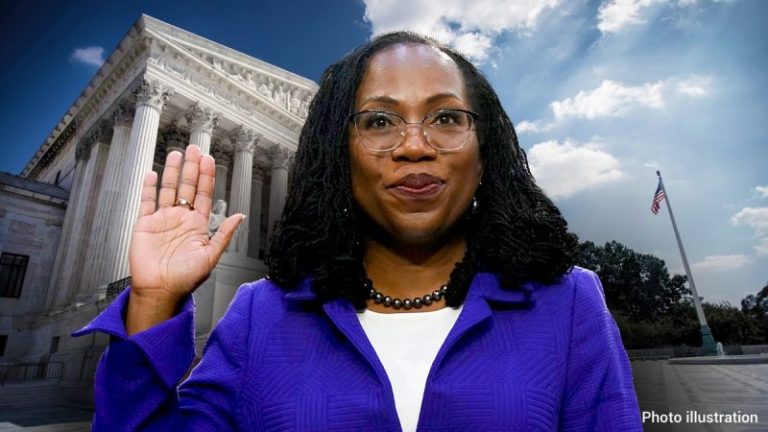
Much has been written in recent days about the war of words between Supreme Court justices Amy Coney Barrett and Ketanji Brown-Jackson in the opinions handed down in Trump v. Casa, Inc., the case involving an injunction issued in a case challenging birthright citizenship.

But as I pointed out in a Post on X Friday morning, Barrett’s decision was written on behalf of herself and the five other justices in the majority. The fact that Barrett was assigned this opinion by the chief judge (the chief judge decides who writes the opinion when he votes with the majority) is a signal that the other five justices turned her loose on Jackson. Such an unsparing smackdown of the most junior justice with a vastly different view of the judicial function would have been received much differently had it come from one of the other five justices in the conservative wing of the Court.

But coming from another female justice, one with only two more terms on the Court than Jackson, it was the least harsh way to deliver the rebuke that the majority opinion represented. But the language was anything but gentle, and the point was anything but subtle. 

If Jackson seems out of her element, there’s a reason. There have been many career paths followed by justices who have been appointed to the Supreme Court. But it is quite uncommon for someone to be appointed to the Supreme Court without meaningful experience at the level of an appellate court, as is the case with Jackson.

Justice Elena Kagan charted a very different course to the Supreme Court, largely through academia. However, before joining the court she did serve in various DOJ positions in the Clinton administration, and as the solicitor general of the United States under President Obama. The solicitor general argues cases on behalf of the United States before the Supreme Court.  Kagan also wrote extensively on legal issues during the nine years she served as both a professor and dean at Harvard Law School.

Another outlier was Justice Lewis Powell, who joined the Court in 1972 directly out of a large law firm where he had practiced corporate law for 35 years, never having been a judge in any court at any level. 

Jackson did not join the Court with no experience as a judge as was the case with Justices Kagan and Powell. But the judicial experience she had is not necessarily conducive to the largely cerebral approach of judging that happens on the Supreme Court.

Jackson hashad  a distinguished academic career, having graduated from both Harvard College and Harvard Law School with honors. In the 17 years between Harvard Law School and her first judicial appointment, she had several noteworthy positions in various legal enterprises, including five years as a member of the U.S. Sentencing Commission. Jackson also served as an assistant federal defender in the District of Columbia for three years, during which she enjoyed success as a trial lawyer.

Her first judicial appointment was to the United States District Court for the District of Columbia in 2014, where she served as a district judge for seven years. In June of 2021, following President Biden’s nomination, Jackson was confirmed to replace Merrick Garland on the Court of Appeals for the District of Columbia.

But only eight months later, Biden named her to replace the retiring Justice Stephen Breyer on the Supreme Court. In her eight months on the Court of Appeals, Justice Jackson authored only two opinions. 

The practical reality was that Biden nominated a district court judge to a seat on the Supreme Court consisting of nine justices who decide cases by majority vote. 

District court is where federal cases begin – where ‘cases’ and ‘controversies’ are first decided. The district judges are the ‘referees’ between the litigants, and sometimes they serve as the decision-makers on the outcome of the cases. There is a significant amount of trial work where the district judge presides alone over the proceedings. Many quick decisions and judgments are made during a trial, often with little time for research or considered analysis.   

Even where time and research are available, the district judge is still working ‘solo’ with the assistance of one or more law clerks. The final decision on such motions belongs to the judge alone. 

District judges largely operate independent of their peers in the same courthouse. Their decisions are not binding on each other. They preside over their own dockets and make decisions in the cases assigned to them as they see fit.

Under this system, legal mistakes and errors are inevitable. The only requirement for proceedings at the district court level – including trials – is that they be fair. It is not required that they be ‘error-free.’ Only when errors result in unfairness that prejudices one side or the other is the outcome of the case called into doubt.       

Appellate courts sit in review of the outcomes in trial courts. They focus on the errors in the case presented. While broader legal questions are sometimes an issue on appellate review, the focus is primarily on the presence or absence of errors in the case in the district court, and whether any identified errors justify altering the outcome in that court. 

The Supreme Court plays a very different role. While it does make a judgment about the correctness of the outcome of cases, the focus of the Supreme Court is normally on the broader legal implications for hundreds/thousands of other cases in the future from affirming or reversing the case being reviewed.   

The federal district judge often plays the role of interrogator of the attorneys representing each side. Anyone who has been a trial attorney for any substantial period of time in federal district courts understands this. The questioning by that district judge can be hostile, aggressive, condescending, dismissive, humiliating, etc.  But that questioning is focused on the facts and specific legal issues presented in that case, and not the broader implications of how the outcome of that case might impact other cases. Part of the reason is because that district judge’s decisions are not binding on other district judges.

Jackson just completed her third term on the court. This chart, which is from the 2024-2025 term, is highly revealing in terms of one of the issues that stands between her and her colleagues – her conduct as a justice is still influenced by her eight years as a district judge, i.e., she spends much more time examining the attorneys before the court than do her colleagues.

The same source has a similar chart for the 2023-2024 Term of the Court, and the numbers are no different.

Setting aside this quantitative measure, in listening to many oral arguments of the Court this past term, one gets the very familiar vibe from Jackson of a district judge interrogating one counsel or the other to wring out admissions or concessions about the specifics of the case. The focus is on the outcome of the case, and not the broader implications that the outcome might foretell.       

Justice Samuel Alito can often present in the same manner, but he spoke less than half the number of words as Jackson. She separates herself from her colleagues both in terms of how much time she is involved in the dialogue and her sharply partisan tenor that gives away what her likely vote will be in pretty much every case with any political implications.

Her rhetoric in dissenting from the Trump v. Casa – ‘With deep disillusionment, I dissent’ – seems an almost unintended peek behind the curtain of her thinking.  What the majority did was take away one of the most powerful weapons possessed by a district court judge to shape how a case goes forward from the outset. 

The progressive activist inner district judge in her – who seeks only to ‘do right’ – is protesting that loss.

This post appeared first on FOX NEWS