Author

admin

Browsing

A summit of leaders from the BRICS group of major emerging economies kicks off in Brazil Sunday – but without the top leader of its most powerful member.

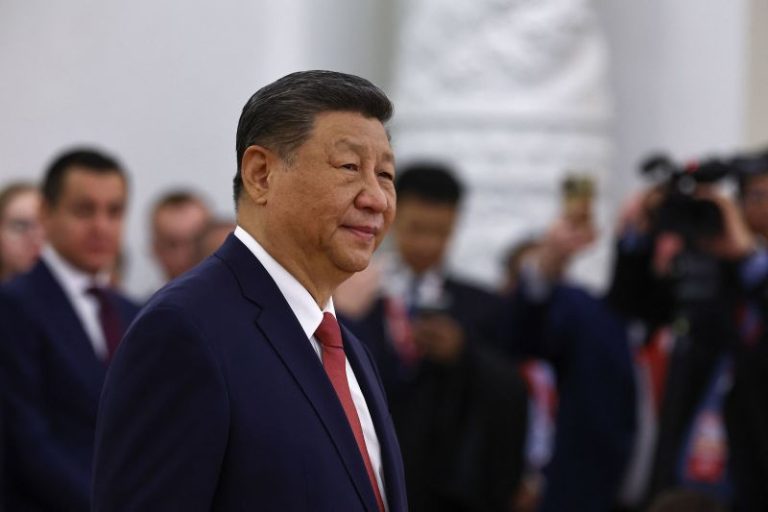
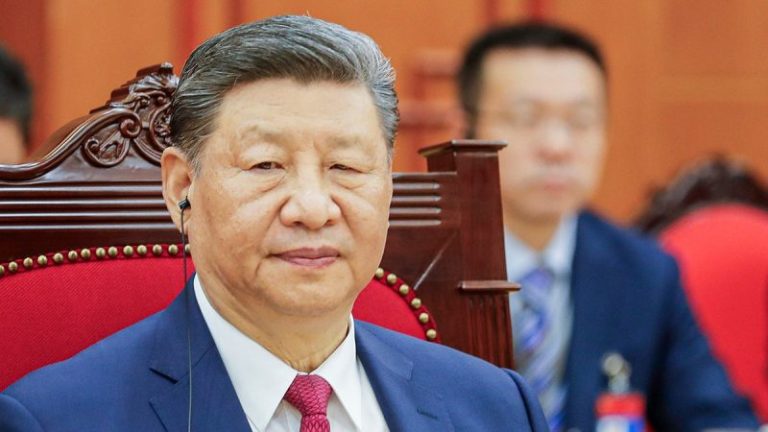
For the first time in more than one decade of rule, Chinese leader Xi Jinping – who has made BRICS a centerpiece of his push to reshape the global balance of power – will not attend the annual leaders’ gathering.

Xi’s absence from the two-day summit in Rio de Janeiro comes at a critical moment for BRICS, which owes its acronym to early members Brazil, Russia, India, China and South Africa, and since 2024 has expanded to include Egypt, the United Arab Emirates, Ethiopia, Indonesia and Iran.

Some members are up against a July 9 deadline to negotiate US tariffs set to be imposed by US President Donald Trump, and all face the global economic uncertainty brought on by his upending of American trade relations – putting the club under more pressure show solidarity.

Xi’s absence means the Chinese leader is missing a key opportunity to showcase China as a stable alternative leader to the US. That’s an image Beijing has long looked to project to the Global South, and one recently elevated by Trump’s shift to an “America First” policy and the US decision last month to join Israel in bombing Iranian nuclear facilities.

But the Chinese leader’s decision not to attend – sending his No. 2 official Li Qiang instead – doesn’t mean Beijing has downgraded the significance it places on BRICS, observers say, or that it’s less important to Beijing’s bid to build out groups to counterbalance Western power.

“(BRICS) is part and parcel of Beijing’s effort to make sure it isn’t hemmed in by the US allies,” said Chong Ja Ian, an associate professor at the National University of Singapore.

But that pressure may have lessened with Trump in office, Chong added, referencing the US president’s shake-up of relations even with key partners, and for Xi, BRICS may just not be “his greatest priority” as he focuses on steering China’s domestic economy. Beijing may also have low expectations for major breakthroughs at this year’s summit, he said.

BRICS attendance sheet

Xi is not the only head of state expected to be absent in Rio.

The Chinese leader’s closest ally in the group, Russia’s Vladimir Putin, will only attend via video link, for the same reason he also joined a 2023 BRICS gathering in South Africa remotely. Brazil, like South Africa, is a signatory to the International Criminal Court and so would be obligated to arrest Putin on a court charge alleging war crimes in Ukraine.

The absence of two global heavy hitters leaves ample limelight for Indian Prime Minister Narendra Modi, who will visit Brazil both for the summit and a state visit. South African President Cyril Ramaphosa is also expected to attend.

Some new club members have yet to announce their plans, though Indonesia’s Prabowo Subianto is expected in Rio after Southeast Asia’s largest economy officially joined BRICS earlier this year. BRICS partner countries, including some who aspire to join the group, will also send delegations. Uncertainty remains over whether Saudi Arabia has accepted an invitation to become a full member.

The sting of Xi’s absence for Brazil’s President Luiz Inácio Lula da Silva may be blunted by the fact that the Chinese leader visited Brazil in November for the G20 summit and a state visit, when he and Lula inked a raft of cooperation agreements. The Brazilian leader also visited China in May, after attending a military parade in Moscow alongside Xi.

That recent diplomacy, low expectations for major breakthroughs at this year’s summit, and a heightened focus on domestic issues all likely factored into Xi’s decision to send Li, a trusted second-in-command, observers say.

China is facing steep economic challenges in the face of trade frictions with the US – and its leaders are busy charting a course for the five years ahead of a key political conclave expected this year.

In Rio, Li will likely be charged with advancing priorities like shoring up energy ties between Beijing and BRICS’ major oil-exporting members, while pushing for the expanded use of China’s offshore and digital currency for trade within the group, according to Brian Wong, an assistant professor at the University of Hong Kong, who added that Xi’s absence shouldn’t be interpreted as a snub to BRICS.

“Whether it be the Sino-Russian partnership or Beijing’s desire to project its purported leadership of the Global South, there is much in BRICS+ that resonates with Xi’s foreign policy worldview,” said Wong, using a term for the extended group.

De-dollarization?

Launched in 2009 as an economic coalition of Brazil, Russia, India and China before South Africa joined a year later, BRICS roughly positions itself as the Global South’s answer to the Group of Seven (G7) major developed economies.

It’s taken on greater significance as countries have increasingly pushed for a “multipolar world” where power is more distributed – and as Beijing and Moscow have looked to bolster their international clout alongside deepening tensions with the West.

But BRICS’ composition – a mix of countries with vastly different political and economic systems, and with occasional friction between each other – and its recent expansion have also drawn criticism as leaving the group too unwieldy to be effective.

The disparate group’s efforts to speak with one voice distinct from that of the West often become mired in opposing views. A statement last month expressed “grave concern” over the military strikes against BRICS member Iran, but stopped short of specifically naming the US or Israel, the two countries that carried out the strikes.

Nonetheless, the US will be watching how the countries talk about one issue that has typically united them: moving their trade and finance to national currencies – and away from the dollar. Such de-dollarization is particularly attractive to member countries such as Russia and Iran, which are heavily sanctioned by the US.

Earlier this year, among the goals of Brazil’s host term, Lula included “increasing payment options” to reduce “vulnerabilities and costs.” Russia last year pushed for the development of a unique cross-border payments system, when it hosted the club.

What’s unlikely to be on the negotiating table, however, is the lofty goal of a “BRICS currency” – an idea suggested by Lula in 2023 that has drawn ire from Trump even as other BRICS leaders have not signaled it’s a group priority.

The US president in January threatened to place “100% tariffs” on “seemingly hostile” BRICS countries if they supported a BRICS currency, or backed another currency to replace “the mighty U.S. Dollar.”

As countries convene in Rio, observers will be tracking how strident their leaders are in promoting the use of national currencies at a meeting of a group where China is the leading member, but US global economic clout still looms large.
This post appeared first on cnn.com

Prominent Democrats sent messages of doom and gloom rather than celebration on July 4, drawing ire from a multitude of critics. Many of the messages included warnings about supposed threats to the country emanating from the Trump administration.

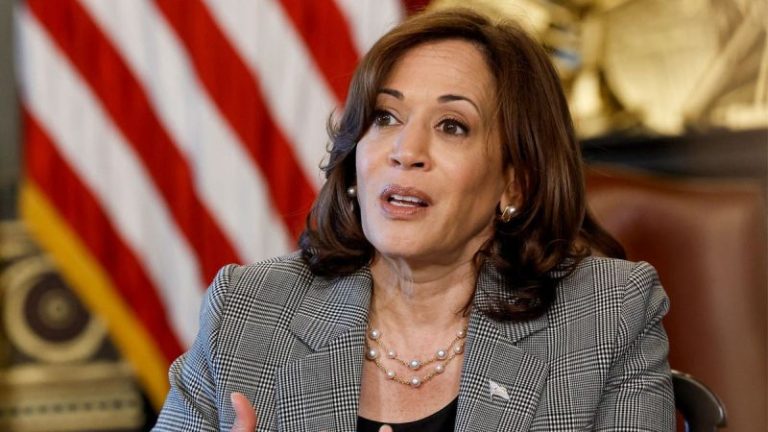
‘This Fourth of July, I am taking a moment to reflect. Things are hard right now. They are probably going to get worse before they get better,’ former Vice President Kamala Harris wrote in a post on X that included a photo of her and former first gentleman Doug Emhoff at the White House. ‘But I love our country — and when you love something, you fight for it. Together, we will continue to fight for the ideals of our nation.’

Many social media users were quick to point out that Harris cropped former President Joe Biden and former first lady Jill Biden out of the photo. Others took one of Harris’ famous phrases to mock her, saying that the country was ‘unburdened by what has been.’

Harris’ old boss, former President Joe Biden, posted a more mild message, while also encouraging Americans to ‘fight to maintain’ democracy.

Meanwhile, former President Barack Obama also chimed in with a warning of his own, saying that ‘core democratic principles seem to be continuously under attack.’ He argued that the word ‘we’ is the ‘single most powerful word in our democracy,’ and used his first presidential campaign slogan as one of his examples.

‘Independence Day is a reminder that America is not the project of any one person. The single most powerful word in our democracy is the word ‘We.’ ‘We The People.’ ‘We Shall Overcome.’ ‘Yes We Can.’ America is owned by no one. It belongs to all citizens. And at this moment in history—when core democratic principles seem to be continuously under attack, when too many people around the world have become cynical and disengaged—now is precisely the time to ask ourselves tough questions about how we can build our democracies and make them work in meaningful and practical ways for ordinary people,’ Obama wrote.

Xi Van Fleet, a survivor of Mao’s Cultural Revolution, responded saying, ‘We the People are taking our country back from those like you who despise America and work tirelessly to dismantle everything it stands for.’

Sen. Bernie Sanders appeared to support the anti-Trump ‘No Kings’ movement in his July 4 post.

‘On July 4, 1776, Americans said: No to Kings, No to Despotism. On July 4, 2025, all across the country, Americans say again: No to Kings, No to Despotism,’ Sanders wrote.

In response, several social media users pointed out that, unlike a king, President Donald Trump was elected.

This post appeared first on FOX NEWS

Chinese President Xi Jinping will not attend this week’s BRICS Summit in Brazil, marking the first time the Chinese leader has missed the gathering of major emerging economies. The abrupt decision has triggered widespread speculation about internal political dynamics within China and the fraying cohesion of BRICS itself.

China’s official explanation — a ‘scheduling conflict’ and the fact that Xi already met with Brazilian President Luiz Inácio Lula da Silva earlier this year, according to the South China Morning Post — has been met with skepticism. Premier Li Qiang will attend the summit in Xi’s place, continuing a recent trend of Xi scaling back his appearances on the global stage.

‘That doesn’t make sense,’ said Gordon Chang, an expert on U.S.-China relations. ‘There are many other countries at the BRICS summit, not just Brazil. To me, it’s extremely significant that Xi Jinping is not going. It suggests turbulence at home — there are signs he’s lost control of the military and that civilian rivals are reasserting power. This is a symptom of that.’

Bryan Burack of the Heritage Foundation agrees that Xi’s absence underscores deeper issues: ‘It’s another indication that BRICS is not going to be China’s vassalization of the Global South.’ He noted that countries like Brazil and Indonesia have recently imposed tariffs on China over industrial overcapacity and dumping, moves that suggest widening rifts within the group.

‘China is actively harming all those countries for the most part, maybe with some exceptions, through its malign trade policies and dumping and overcapacity.’

Tensions with India and global trade pressure may also be factors

Some analysts point to rising China-India friction as a contributing factor in Xi’s decision to skip the summit. 

‘China has been at war with India for decades, essentially,’ Burack said. ‘These are fundamentally opposing interests. It’s difficult to see China changing its behavior in the near term, and that will keep tensions high.’

India’s Prime Minister Narendra Modi is expected to take a leading role at the gathering, potentially another deterrent for Xi’s attendance.

Another key leader — Russian President Vladimir Putin — is only expected to address the group by video. 

BRICS: United in name, divided in decades-long tensions 

Formed by Brazil, Russia, India and China and later joined by South Africa, BRICS was envisioned as a non-Western counterweight to G7 dominance. It has expanded to include Egypt, Ethiopia, Iran, the UAE and, most recently, Indonesia, strengthening its economic footprint.

Economist Christian Briggs highlighted BRICS’s massive scale: ‘BRICS now comprises 12 full members and up to 23 when counting partners. Collectively, they account for over 60% of the world’s GDP and around 75% of the global population. They control vast natural resources and a growing share of global trade flows.’

Yet despite its scale, the bloc remains ideologically and strategically fragmented. ‘It’s a group of countries that hate each other,’ Burack said bluntly. ‘China is harming many of them through unfair trade practices. There’s not a lot of incentive for real unity.’

Currency ambitions and strategic divergences

The alliance’s aspirations to challenge the U.S. dollar through alternative payment systems and a potential BRICS currency have gained media traction — but experts caution against overestimating this threat.

‘There’s been a lot of fearmongering about a BRICS currency,’ said Burack. ‘But the interests of these countries are completely divergent. There’s more smoke than fire when it comes to a currency challenge to the dollar.’

Chang echoed this skepticism: ‘The only country that can challenge the dollar is the United States. Weakness in the dollar is due to what we are doing domestically, not what the BRICS are doing.’

Still, Briggs offered a counterpoint, arguing that BRICS members are already reshaping global currency flows.

‘They’re moving away from the dollar into digital yuan, rupees, rubles. China has launched a SWIFT alternative already adopted by the Caribbean banking sector — trillions of dollars are shifting.’

Is BRICS still a threat to U.S. influence?

While its cohesion remains questionable, BRICS poses a long-term challenge to U.S. influence — particularly in regions where Washington has retreated diplomatically and economically.

‘China filled the void left by the U.S. in places like Africa,’ said Briggs. ‘Now it controls about 38% of the world’s minerals. Meanwhile, Russia’s economy has doubled despite sanctions, because they preemptively reduced reliance on the dollar.’

Yet Chang sees India as a brake on any aggressive anti-Western tilt. ‘BRICS has an ‘I’ in it—and that’s India. Modi doesn’t want to be part of an anti-Western bloc. As long as India’s in BRICS, the rest of the world is safe.’

A missed opportunity — or a calculated power move?

To some, Xi’s no-show signals instability in Beijing. To others, the opposite: it demonstrates confidence in China’s dominance over the other BRICS members.

‘He doesn’t have to be there,’ Briggs contended. ‘Xi’s power allows him to delegate. China is trading with nearly 80% of the world now. He’s moving the agenda forward even in absentia.’

What’s clear is that BRICS continues to evolve — its internal contradictions as visible as its geopolitical ambitions. Whether Xi’s absence marks a retreat or a recalibration remains one of the key questions hovering over the summit in Brazil.

This post appeared first on FOX NEWS

The stock markets had a dynamic start to the third quarter, pushing indices to new highs after earlier tariff concerns.

On Monday (June 30), markets generally saw strong gains, with the S&P 500 (INDEXSP:INX) and Nasdaq Composite (INDEXNASDAQ:.IXIC) reaching new record highs in the US while the S&P/TSX Composite Index (INDEXTSI:OSPTX) climbed higher after a last-minute policy reversal to rescind a planned digital services tax targeting US tech firms.

Tuesday (July 1), Canadian markets were closed for Canada Day. As for US markets, following two consecutive days of highs, the S&P and Nasdaq declined on Tuesday (July 1) after a renewed feud between Tesla (NASDAQ:TSLA) CEO Elon Musk and US President Donald Trump sent Tesla shares down by over 5 percent.

However, tech stocks boosted the performance of both Canadian and US markets on Wednesday (July 2) and Thursday (July 3) after export restrictions to China were lifted and the US labor market reported better-than-expected unemployment data.

US markets were closed on Friday (July 4) for a holiday, while Canadian markets ended the day slightly positive.

1. Meta announces AI restructure, continues talent acquisition

Last weekend, reports surfaced that Meta Platforms (NASDAQ:META) has hired four additional researchers from OpenAI, bringing the total number of high-profile AI talent poached from other tech labs to 13, according to a tweet from former Scale AI CEO Alexandr Wang, who was recently recruited as Meta’s Chief AI Officer.

Then, in an internal memo to employees on Monday, Meta CEO Mark Zuckerberg unveiled the company was restructuring its AI division under the name Meta Superintelligence Labs. According to the memo, which was reviewed by Bloomberg, the new division will be led by Wang and one of its commitments is ‘developing AI ‘superintelligence’ or systems that can complete tasks as well as or even better than humans.’

Meta has reportedly offered researchers contracts and signing bonuses worth up to US$100 million; however, Chief Technology Officer Andrew Bosworth has pushed back on those reports, claiming the figures are inflated.

Helen Toner, a former OpenAI board member and director of strategy at Georgetown’s Center for Security and Emerging Technology, told Bloomberg TV’s Haslinda Amin on Thursday that Meta’s bid to become an AI leader would be “difficult” considering its track record of internal dysfunction and questions around the return on its massive talent spending.

“Meta has started to get a reputation of having a little bit of a dysfunctional AI team, not really having its organizational structure set up in a way that really lets them succeed and innovate. And what I think we’re seeing here is CEO Mark Zuckerberg really stepping in and saying, well, we have to do something differently. We need a big new push, we need a big new effort,’ she said.

‘I think (Meta is) really trying to start something new, to pour enormous amounts of financial resources into that. So the question (to watch) is six months from now, 12 months from now, is that paying off for them?’

2. Apple considers third-party AI for Siri overhaul

Apple (NASDAQ:AAPL) is reportedly in active discussions with Anthropic and OpenAI to integrate their foundation models into an overhauled version of its voice assistant Siri, a significant pivot from the company’s in-house approach to AI. According to people familiar with the discussions who spoke to Bloomberg, Apple has asked both companies to train versions of their models that could be tested on Apple’s infrastructure, the publication reported Monday.

Apple announced plans to release a new version of its voice assistant at its Worldwide Developers Conference in 2024. The release was slated for 2026, but the company has run into multiple engineering snags and delays, and ultimately replaced John Giannandrea with Mike Rockwell as the new Siri chief executive.

Rockwell and software engineering head Craig Federighi launched an evaluation, instructing staff to assess Siri’s performance using third-party tech, including Anthropic’s Claude, OpenAI’s ChatGPT and Alphabet’s (NASDAQ:GOOGL) Gemini.

According to Bloomberg’s sources, the team found Anthropic’s technology most promising for Siri, leading Apple’s vice president of corporate development to open discussions with Anthropic.

Bloomberg’s sources maintain that the development of an in-house model is still active, and Apple hasn’t made a final decision on using third-party models.

Apple shares closed up 6.24 percent for the week.

Apple’s share price performance, June 30 to July 3, 2025.

3. Oracle and OpenAI ink massive computing deal

OpenAI will rent roughly 4.5 gigawatts of computing power from Oracle (NYSE:ORCL) as part of the Stargate Project, according to sources for Bloomberg. The news follows a US$30 billion single cloud deal announced on Monday with an unnamed customer.

The Stargate energy deal is reportedly a component of that larger contract.

Sources added that Oracle will develop multiple data centers in the US, considering sites in Texas, Michigan, Wisconsin and Wyoming, and that the company will expand its recently built center in Abilene, Texas, to accommodate about two gigawatts of power capacity.

This collaboration underscores the escalating demand for high-performance computing necessary to train and operate advanced AI models. OpenAI, a leader in AI research and development, requires immense computational resources to fuel its projects, including large language models and other sophisticated AI applications.

The Stargate initiative positions Oracle as a crucial enabler of this next generation of AI innovation, solidifying its role in the evolving cloud and AI ecosystem. The long-term implications of this partnership could see a significant shift in how AI companies acquire and manage their computational infrastructure, potentially paving the way for more dedicated and extensive cloud partnerships in the future.

Oracle’s share price performance, July 1 to July 3, 2025.

4. CoreWeave deploys first Nvidia GB300-powered AI server

CoreWeave (NASDAQ:CRWV) said it has received the first AI server system built around NVIDIA’s (NASDAQ:NVDA) ultra-powerful GB300 Grace Blackwell AI chip.

The server is deployed within Dell’s (NYSE:DELL) integrated rack-scale system — a turnkey AI infrastructure platform combining compute, networking and cooling — and features 72 of Nvidia’s GB200 chips.

CoreWeave said it will install the cutting-edge hardware in the US and roll out more servers over time. The company will offer the server as part of its AI cloud platform, allowing clients like OpenAI to train and deploy massive, next-generation AI models with faster speeds and greater efficiency.

In the announcement, CoreWeave claimed the NVIDIA GB300 NVL72 significantly boosts AI reasoning performance, offering a 10 times improvement in user responsiveness and five times better throughput per watt than the Hopper server. This translates to an increase of fifty times in reasoning model inference output, enabling faster, more complex AI models.

5. US lifts EDA software export restrictions to China

License requirements for design software sales in China were lifted this week as part of a trade deal between the US and China.

On July 2, the US Commerce Department told Synopsys (NASDAQ:SNPS), Cadence Design Systems (NASDAQ:CDNS) and Siemens (XETR:SIE), three of the world’s leading design software providers, that they would no longer need to seek government licenses to conduct business in China.

Official announcements from the companies confirmed they would be resuming business with Chinese counterparts, sending each of their stock prices up between 3 and 6 percent.

The US government restricted sales of electronic design automation (EDA) tools to China in late May as a response to China’s decision to limit shipments of essential rare earth minerals. Last week, the two countries reached a trade agreement that would re-allow shipments of EDA software after Beijing speeds up approvals of critical mineral exports to the US.

Securities Disclosure: I, Meagen Seatter, hold no direct investment interest in any company mentioned in this article.

This post appeared first on investingnews.com

Iran is preparing its next step in what one security expert warns remains its chief objective: developing a nuclear weapon.

‘Repair, reconstitute and rebuild is going to be the modus operandi of the Islamic Republic of Iran,’ Behnam Ben Taleblu, Senior Director of the Foundation for Defense of Democracies’ Iran Program told Fox News Digital. ‘It just depends on how are they going to be doing it? While flirting with the international community? Are they going to go dark totally altogether?

‘All of this remains to be seen,’ he added.

Spokesman for the regime, Fatemeh Mohajerani, confirmed this week that the Fordow, Isfahan and Natanz nuclear sites had been ‘seriously damaged’ following the U.S. and Israeli strikes on Iran’s nuclear program last month. 

Questions remain over the extent of damage that was incurred, as well as skepticism over whether Iran was able to move any enriched uranium or centrifuges away from the heavily guarded sites prior to the strikes. 

Though the Trump administration said on Wednesday that it had ‘obliterated’ the three facilities it struck, and has fervently rejected reports suggesting that Iranian officials may have been able to transfer some elements of the regime’s coveted nuclear program, Israeli officials confirmed this week that they are continuing to monitor the situation closely.

Experts in the U.S. and Israel have said they believe Iran is still assessing the extent of the damage from the ‘bunker busting’ bombs, and that the regime will look to recover and repair what it can — meaning it may be looking to buy time.

‘No doubt, the regime will still have a diplomatic strategy designed to rope-a-dope anybody, and to find as much time as possible for this government to do that,’ Ben Taleblu said.

The Iranian regime this week suggested it remained open to negotiations with the U.S. after President Donald Trump signaled that the talks could begin as soon as next week, though multiple Iranian officials said that that timeframe was overly ambitious. 

‘I don’t think negotiations will restart as quickly as that,’ Iranian Foreign Minister Abbas Araghchi said in a CBS News interview. ‘The doors of diplomacy will never slam shut.’ 

But the regime also took steps to further hinder the UN nuclear watchdog — which is tasked with tracking all nation’s nuclear programs — and suspended all interaction with the International Atomic Energy Agency (IAEA) on Wednesday. 

That same day, the State Department condemned the move, and spokesperson Tammy Bruce said it was ‘unacceptable that Iran chose to suspend cooperation with the IAEA at a time when it has a window of opportunity to reverse course and choose a path of peace and prosperity.’

Iran has limited IAEA access in the past and Ben Taleblu argued Tehran will likely look to do this again as it attempts to hold on to any bargaining chip it can.

‘The Islamic Republic of Iran’s next step, and likely most dangerous capability right now, is its diplomatic capability,’ the Iranian security expert argued. ‘This is the capability of the regime to either enter negotiations with a weak hand and leave with a strong hand, or try to prevent a military victory of its adversaries from becoming a political victory. 

‘If negotiations do take place between the U.S. and the Iranians, be they direct or indirect, the Iranians are going to be dangling IAEA access. This is already their most important weapon,’ he added. 

Ben Taleblu explained that using the IAEA as a bargaining chip not only enables Iran to play for time as it looks to re-establish its nuclear program, but to sow division in the U.S. by creating uncertainty. 

‘By diminishing the monitoring and by circumscribing and even cutting IAEA access to these facilities, the regime is trying to make America have to rely on intelligence alone,’ he said. ‘And as you see from the very politicized debates over the battle damage assessment, relying on intelligence alone without sources on the ground inspecting the sites, inspecting the facilities, documenting the fissile material, can lead to drastically different conclusions being taken by similar but not the same intelligence organizations or representatives.’

Ultimately, Iran is not going to give up on its nuclear ambitions, Ben Taleblu warned, noting that Tehran’s security apparatus completely changed during its war with Iraq in the 1980s. 

‘Everything that we face from the regime that is a security threat was started then — the ballistic missile program, the drone program, the maritime aggression, the transnational terrorist apparatus and the nuclear program all have their origins in the 1980s,’ he said.  ‘By resurrecting this nuclear program, the Islamic Republic was not engaging in a science fair experiment. 

‘The Islamic Republic was seeking an ultimate deterrent,’ Ben Taleblu continued. ‘It was seeking an ultimate deterrence because it had a vision for what the region and the world should look like, and it was willing to put foreign policy muscle and the resources of its state behind that vision.’

The expert on the Iranian regime warned that Iran’s 40-year ‘obsession’ with developing its nuclear program to achieve its geopolitical aims is not going to change because of U.S. military intervention. 

This post appeared first on FOX NEWS

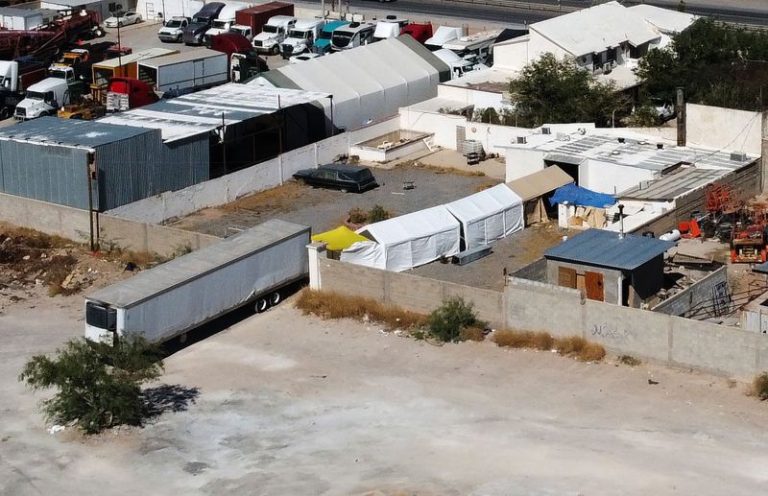
Families are demanding answers after authorities in Ciudad Juárez, Mexico, discovered that 383 bodies had been stored in a crematorium for months and years after the people had died.

Norma Guardado Meraz was one of many locals who visited the Chihuahua Prosecutor’s Office this week to get more information about its investigation into the discovery, fearing that among the bodies are those of their relatives.

The discovery was made on June 26 after several municipal police officers found a hearse containing two bodies and other corpses piled up in a room in the building’s courtyard.

Prosecutor César Jáuregui said the pile of bodies had accumulated since 2020, suggesting that the Plenitud crematorium had failed to perform services it had been subcontracted for by six funeral homes.

She and her family want clarity about the fate of the remains of her mother, María Nieves Meraz, who died three years ago and was mourned at one of the funeral homes that had subcontracted the crematorium.

Another resident, Javier Ramírez, went to the prosecutor’s office Wednesday to determine if the remains he had received actually belong to his father, who died two months ago and whose wake was held at one of the other funeral homes.

The office said Tuesday that of the 383 bodies found, 218 were men, 149 were women and the gender of 16 could not been identified.

As the case moves forward, the prosecutor’s office is promising a thorough investigation and says it encourages more people to come forward and demand answers.

This post appeared first on cnn.com

Hamas announced on Friday that it had “submitted a positive response” to a proposal for a 60-day ceasefire in Gaza, opening the path toward a deal to halt the conflict after months of failed efforts.

Hamas has “submitted a positive response to the mediators, and the movement is fully prepared to immediately enter into a round of negotiations regarding the mechanism for implementing this framework,” the group said in a statement.

Israel had previously accepted the US-sponsored framework, which means the two sides are now expected to enter final, detailed negotiations before a ceasefire agreement is officially reached.

Bishara Bahbah, a Palestinian-American interlocutor who has been in direct discussions with Hamas, praised the group’s response on Facebook, saying, “We are now much closer to ending this cursed war.”

He said Hamas had introduced “amendments it deemed necessary.”

“In my view, these amendments will not prevent reaching a ceasefire agreement within the coming week, God willing,” he said.

An Israeli source familiar with the matter said earlier Friday that Israel had expected a positive response from Hamas, with the rewording of a few points in the proposal language. The source said these changes were not expected to derail the ceasefire efforts.

Of the 50 Israeli hostages remaining in Gaza, the proposal calls for the release of 10 living hostages and 18 deceased during the ceasefire. On the first day of the ceasefire, Hamas would release eight living hostages in exchange for an unspecified number of Palestinian prisoners and detainees. Following the release, Israel would withdraw from parts of northern Gaza, and the two sides would begin negotiations toward a permanent ceasefire.

The release of the hostages is to take place without any Hamas ceremonies or fanfare. The remaining hostages would be released on four more dates specific in the proposal.

Efforts to secure a ceasefire intensified following the 12-day conflict between Israel and Iran last month. Qatar, a key negotiator, immediately launched a new round of indirect talks between Israel and Hamas to find a “middle ground” based on previous proposals.

This is a developing story and will be updated.

This post appeared first on cnn.com

President Donald Trump has ramped up expectations around a possible 60-day ceasefire in the war in Gaza after he said Thursday that a response from Hamas was expected within the next day.

Asked by a reporter whether Hamas has agreed to the latest ceasefire and hostage deal, Trump replied “We’ll see what happens, we’re going to know over the next 24 hours.” Qatar put forward an updated proposal to Israel and Hamas earlier this week, and Israel accepted it on Tuesday.

Hamas says it will announce its decision after consultations with other Palestinian factions, without specifying how long this might take.

Trump has pushed hard for a ceasefire, saying on Tuesday that Israel had “agreed to the necessary conditions” to finalize a deal for a 60-day cessation of hostilities. In a post on Truth Social, Trump warned Hamas to accept the proposal as well.

“I hope, for the good of the Middle East, that Hamas takes this Deal, because it will not get better — IT WILL ONLY GET WORSE,” he said, thanking Qatar and Egypt for their role in advancing the proposal.

The latest proposal does not differ markedly from previous plans put forward by negotiators, maintaining the same number of hostages released and the same length of the earlier temporary ceasefire. But the proposal offers two key concessions to Hamas demands, spacing out the release of hostages over the entire timeline and offering stronger guarantees – in this case, directly from Trump – that the ceasefire will continue beyond 60 days even if a comprehensive agreement to end the war has not yet been reached.

The plan calls for the release of 10 living Israeli hostages and 18 deceased hostages spread out over the full timeline, according to a source familiar with the negotiations who shared details of the plan.

On the first day of the ceasefire, Hamas would release eight living hostages. In exchange, Israel would release an unspecified number of Palestinian prisoners and detainees, and withdraw its forces from pre-agreed locations in northern Gaza. Israel would then withdraw from parts of southern Gaza on the seventh day, following the release of a number of deceased hostages.

Israel and Hamas would also immediately enter into negotiations for a permanent ceasefire once the initial truce goes into effect. A total of 50 hostages remain in Gaza, at least 20 of whom are believed to be alive.

The last two living hostages would be released on the fiftieth day of the ceasefire. Meanwhile, five deceased hostages would be released on the seventh and thirtieth days, while the final eight would be released on the final day.

Under the deal, hostages will be released without ceremonies or fanfare at Israel’s request – unlike during the last truce, when Hamas staged public propaganda events around hostage transfers that sparked outrage in Israel.

Humanitarian aid will immediately begin to flow into Gaza at the start of the ceasefire, including from the United Nations and from other aid organizations, similar to the previous ceasefire which began on January 19.

On Thursday, Israeli-American hostage Edan Alexander met with Trump in Washington and said he told the president that he worries continued fighting in Gaza endangers the remaining hostages. A statement from the Hostages and Missing Families Forum after the meeting quoted Alexander as telling Trump, “I fear continued fighting endangers the hostages and hope you can achieve another historic breakthrough — a comprehensive deal to free them all, all 50 hostages. You are the person who can make it happen.”

This post appeared first on cnn.com

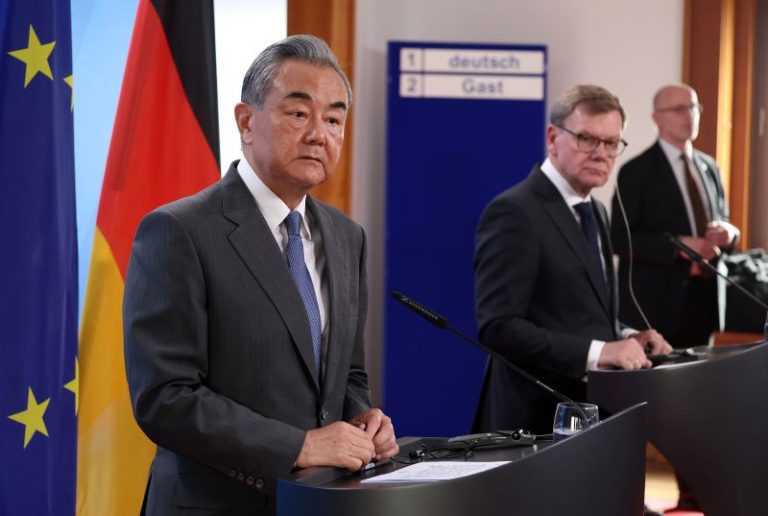
Chinese Foreign Minister Wang Yi told the European Union’s top diplomat that Beijing can’t accept Russia losing its war against Ukraine as this could allow the United States to turn its full attention to China, an official briefed on the talks said, contradicting Beijing’s public position of neutrality in the conflict.

The admission came during what the official said was a four-hour meeting with EU foreign affairs chief Kaja Kallas on Wednesday in Brussels that “featured tough but respectful exchanges, covering a broad range of issues from cyber security, rare earths to trade imbalances, Taiwan and Middle East.”

The official said Wang’s private remarks suggested Beijing might prefer a protracted war in Ukraine that keeps the United States from focusing on its rivalry with China. They echo concerns of critics of China’s policy that Beijing has geopolitically much more at stake in the Ukrainian conflict than its admitted position of neutrality.

On Friday, at a regular Chinese Ministry of Foreign Affairs briefing, spokeswoman Mao Ning was asked about the exchange, which was ﷟first reported in the South China Morning Post, and re-affirmed Beijing’s long-standing position on the three-year war.

“China is not a party to the Ukraine issue,” Mao said. “China’s position on the Ukraine crisis is objective and consistent, that is, negotiation, ceasefire and peace. A prolonged Ukraine crisis serves no one’s interests.”

She added that China wanted a political settlement as quickly as possible: “Together with the international community and in light of the will of the parties concerned, we will continue playing a constructive role towards this end.”

China’s public statements on the Ukraine war mask a more complex picture.

Just weeks before Russia launched its full-scale invasion of Ukraine, Chinese leader Xi Jinping declared a “no limits” partnership with Moscow and since then political and economic ties have strengthened.

China has also rejected growing accusations it is providing near-military support to Russia. Ukraine has sanctioned several Chinese companies for providing Russia drone components and technology for use in missile production.

After a record assault on the Ukrainian capital Kyiv on Friday, Ukraine’s Foreign Minister, Andrii Sybiha, posted pictures he said were the fragments of a Geran 2 combat drone launched by Russia. One image displayed part of the drone’s alleged fuselage which said the device was made in China on June 20.

Sybiha added that night the “Chinese Consulate General’s building in Odesa suffered minor damage as a result of Russian strikes on the city. There is no better metaphor for how Putin continues to escalate his war and terror while involving others, including North Korean troops, Iranian weapons, and some Chinese manufacturers. Security in Europe, the Middle East, and the Indo-Pacific is inextricably linked.”

This year also saw allegations that Chinese nationals have been fighting with Russia in Ukraine. Beijing denied any involvement and repeated previous calls for Chinese citizens to “refrain from participating in military actions of any party.”

This post appeared first on cnn.com

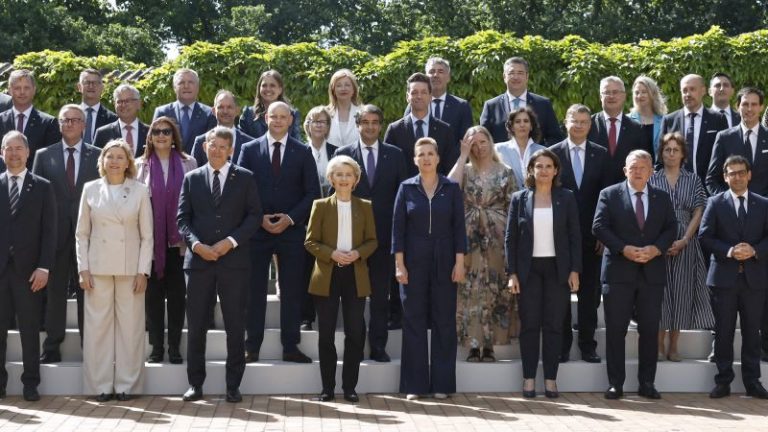
As Denmark takes over the presidency of the European Union, Danes are more strongly pro-European than at any time in the past two decades – a shift in sentiment that can at least partly be attributed to US President Donald Trump.

An eye-opening survey published in March by Berlingske, a Danish daily newspaper, said 41% of Danes now see the United States as a threat. It also said 92% of respondents either “agree” or “mostly agree” that the Nordic nation needs to rely more on the European Union than the US for its security.

Given the recent tensions between Washington and Copenhagen, those statistics may not be surprising.

Since his return to the White House, Trump has spoken frequently and aggressively about Greenland, an autonomous crown dependency of Denmark, saying he would like the US to own it.

Vice President JD Vance and members of the Trump family have made what many see as provocative trips to and statements about the world’s largest island.

After Vance’s visit to the US military’s Pituffik Space Base in Greenland in March, Danish Prime Minister Mette Frederiksen pushed back on his claim that Denmark isn’t doing enough for defense in the Arctic, calling her country “a good and strong ally.”

Back in Trump’s first administration, too, Greenland was a hot topic. In 2019, he reportedly accused Frederiksen of making a “nasty” and “absurd” statement in discussions about the island.

Sinking trust in Trump

“Now we have a different Denmark,” she said.

“Things have dramatically changed in Denmark and our attitude toward Europe,” she said, without mentioning the president’s name directly.

She was also very clear that Denmark feels a sense of disappointment in its longtime ally.

Denmark would still like to have a strong relationship with the US, Bjerre said, “but in a situation where the US is closing itself more around itself… is threatening us with tariffs and also criticizing Europe, our freedom of expression and all sorts of other things. Of course, in that situation, we have to be stronger on our own.”

She added, “The world order, as we have known it since the Second World War, is changing and we have to deliver to that geopolitical new situation that we are standing in.”

The minister also referenced the historic ties and shared past experiences of both nations, expressing a degree of frustration, if not anger, about how that relationship has changed.

“You could not put a paper in between the US and Denmark, we have always supported the US. We went into war with our soldiers in Iraq and Afghanistan… Seeing us, as a country, being criticized for not being a good ally, of course, that does affect our opinion,” Bjerre said.

Per capita, Denmark lost the second-highest number of soldiers of all the US-led coalition partners fighting in Afghanistan. In total, 43 Danish soldiers died, equating to 7.82 deaths per million citizens. The US, by comparison, lost 7.96 soldiers per million.

“We used to be a very, very transatlantic country… that has plummeted,” said Friis. “There is now the feeling… we simply cannot trust him,” she said – the “him” being Trump.

‘Huge’ change in tone

The shift in Danes’ opinions coincides with Denmark taking up the rotating, six-month EU presidency.

Denmark has long worried about the EU wading into Danes’ lives, fearing in particular for its relatively unregulated labor market. It has various opt-outs on EU policy, including not joining the EU’s single currency, the euro.

“We do things differently to other European nations,” said Bjerre.

Politicians and citizens used to fear that the EU “would become too dominating and too powerful,” Friis said, but now “the fear is the complete opposite.” Danes feel the bloc is “too weak” to deal with Putin to the East and Trump to the West, she said.

Friis also described the prime minister’s shift in tone as “huge,” saying Frederiksen used to be “very skeptical towards the EU.”

In June, Frederiksen announced that Denmark was quitting the so-called “Frugal Four,” an informal group of EU nations that had pushed to limit common spending, saying that “the most important thing is to rearm Europe.”

Laying out Denmark’s priorities for the EU presidency later that month, she reiterated that view, saying: “Now more than ever Europe needs to step up and stand together. We have to build an even stronger Europe, a more secure Europe where we are able to protect our democracies.”

EU-commissioned, biannual polls show a clear trend of increased trust in the EU over the past two decades, rising from 46% in spring 2005 to 74% this past spring. Steeper increases can be seen during Trump’s first term, after Russia’s full-scale invasion of Ukraine, and as Trump’s second term began.

The war in Ukraine has had a significant influence on Danish views on the EU, Friis said.

“The very fact that you had a war in our backyard has sort of created a completely new sort of atmosphere around security in Denmark, people are worried. People are prepping now because they’re scared about what could happen also to our own security,” she said.

Bjerre said Copenhagen’s EU presidency would prioritize a “stronger Europe and a changing world,” with Europe having a real focus on security.

Denmark takes the European helm, then, at a time of increasingly pro-European sentiment among its own population and a wider recognition in Europe that it must do more to stand on its own. The problem is that some of Europe’s most pressing issues – Ukraine, trade tariffs and security – mean talking to the US and Trump. And at the moment, there may not be much love lost between the two.

This post appeared first on cnn.com