Author

admin

Browsing

Boeing delivered 60 airplanes last month, the most since December 2023, as the plane maker seeks to raise production of its bestselling 737 Max jets after a series of manufacturing and safety problems.

The tally was the highest since before a door plug from one of its new 737 Max 9 planes blew out midair in January 2024, sparking a new crisis for the company and slowing production and deliveries of aircraft. Of the monthly total, 42 were 737 Maxes, going to customers including Southwest Airlines, Alaska Airlines and United Airlines.

CEO Kelly Ortberg, who took the top job at Boeing last August, has said the company has made progress in improving production rates and quality on its factory lines.

For the three months ended June 30, Boeing handed over 150 airplanes, its best second quarter since 2018, before two crashes of Max planes five months apart grounded the jets and sparked a multiyear crisis at the top U.S. exporter. That was also the last year Boeing posted an annual profit. Its problems also gave rival Airbus a bigger lead over Boeing.

Boeing this spring had been producing about 38 Max aircraft a month and will need Federal Aviation Administration approval to go above that limit, which the agency set after the door plug accident. Ortberg said at a Bernstein investor conference in late May that he’s confident that the company could increase production to 42 of the jets a month.

The company booked 116 gross orders in June, or 70 net orders when including cancellations and accounting adjustments. Boeing often removes or adds orders to its backlog for a variety of reasons including customers’ financial health.

Boeing’s backlog stood at 5,953 as of June 30.

The manufacturer is set to report second-quarter financial results on July 29, when investors will be focused on Ortberg’s plan to increase production and aircraft deliveries.

This post appeared first on NBC NEWS

Waymo announced Tuesday that it is offering accounts for teens ages 14 to 17, starting in Phoenix.

The Alphabet-owned company said that, beginning Tuesday, parents in Phoenix can use their Waymo accounts “to invite their teen into the program, pairing them together.” Once their account is activated, teens can hail fully autonomous rides.

Previously, users were required to be at least 18 years old to sign up for a Waymo account, but the age range expansion comes as the company seeks to increase ridership amid a broader expansion of its ride-hailing service across U.S. cities. Alphabet has also been under pressure to monetize AI products amid increased competition and economic headwinds.

Waymo said it will offer “specially-trained Rider Support agents” during rides hailed by teens and loop in parents if needed. Teens can also share their trip status with their parents for real-time updates on their progress, and parents receive all ride receipts.

Teen accounts are initially only being offered to riders in the metro Phoenix area. Teen accounts will expand to more markets outside California where the Waymo app is available in the future, a spokesperson said.

Waymo’s expansion to teens follows a similar move by Uber, which launched teen accounts in 2023. Waymo, which has partnerships with Uber in multiple markets, said it “may consider enabling access for teens through our network partners in the future.”

Already, Waymo provides more than 250,000 paid trips each week across Phoenix, the San Francisco Bay Area, Los Angeles, Atlanta, and Austin, Texas, and the company is preparing to bring autonomous rides to Miami and Washington, D.C., in 2026.

In June, Waymo announced that it plans to manually drive vehicles in New York, marking the first step toward potentially cracking the largest U.S. city. Waymo said it applied for a permit with the New York City Department of Transportation to operate autonomously with a trained specialist behind the wheel in Manhattan.

This post appeared first on NBC NEWS

King Charles III will highlight the crucial bonds between the United Kingdom and France in the face of a “multitude of complex threats” as he welcomes President Emmanuel Macron for the first state visit by a European leader since Brexit.

The French leader’s three-day visit to the UK kicks off on Tuesday and sees Charles and Queen Camilla host Macron and his wife Brigitte at Windsor Castle, with a glittering banquet at the royal residence in the evening.

In his toast on Tuesday evening, the King is expected to praise the strength of Anglo-French relationship as “our two countries face a multitude of complex threats, emanating from multiple directions,” according to Britain’s PA Media news agency.

“As friends and as allies, we face them together,” he will say.

Charles will also reflect on the “shared history and culture between our two peoples” and express his “awe of France’s extraordinary attributes and achievements.”

The Macrons were greeted off the plane by the Prince and Princess of Wales on their arrival at RAF Northolt, west of London, and will travel together to Windsor where they will be treated to a full ceremonial welcome by the King and his wife.

Rolling out the red carpet for the first visit by a French president to the UK since 2008, the pomp and pageantry that Britain is known for will be on full display.

The King is pulling out all the stops for Macron’s visit, with a carriage procession through the streets of Windsor to the historic castle. There in the quadrangle, the French president will be met with an honor guard while the regimental band plays the French and British national anthems, followed by a lunch in the lavish State Dining Room joined by additional members of the royal family.

Macron will have a busy afternoon, taking a trip into London to lay a wreath at Westminster Abbey’s Grave of the Unknown Warrior before giving an address to lawmakers in the Palace of Westminster’s Royal Gallery.

In the days ahead, the French leader will hold several meetings with UK Prime Minister Keir Starmer as the pair seek to further heal the wounds after years of Brexit-fueled animosity.

Their talks are expected to focus on support for defense and security cooperation as well as tackling illegal migration across the Channel. On Thursday, the pair will join a UK-France Summit at Downing Street.

Support for Ukraine will also be a priority for the two leaders as they seek to build momentum around their “Coalition of the Willing” – the European peacekeeping force created in March. They are also expected to visit a military base in northwest London where they will dial into a meeting of the informal group of nations working to bolster support for Ukraine.

Both leaders have faced political challenges at home amid an increasing fractured landscape, and have suffered from decreasing popularity in recent polls. It’s likely they’ll be hoping the visit offers a much-needed, if fleeting, boost.

Major deals on Ukraine and curbing migrant boat crossings seem unlikely but even more humble announcements would illustrate a further resetting of the relationship between the two nations.

This post appeared first on cnn.com

“Something can be born out of everything – if you want it to,” said Iris Haim, whose hostage son Yotam was killed in Gaza. Those words are helping her find hope.

The new beginning that Haim now longs for is a grandchild, created from sperm she had harvested from Yotam’s body upon its return home in December 2023.

Yotam, 28, was kidnapped by Hamas-led militants from kibbutz Kfar Aza on October 7, 2023. After spending 65 days in captivity, he was mistakenly shot by Israeli troops on December 15, 2023 along with two other hostages, Alon Shamriz and Samer Talalka, as they attempted to flee their captors in northern Gaza.

Yotam is the only Israeli hostage whose sperm is known to have been retrieved posthumously, and whose family is lobbying to use it to have a child.

Haim says Yotam, a single man at the time of his death, always wanted children. “Yotam really wanted that – he talked about it a lot,” she said.

A total of 205 hostages have so far been returned, 148 of whom were released alive, and 57 returned dead, according to Prime Minister Benjamin Netanyahu’s office. Most had been dead for weeks, if not months, making the men’s sperm no longer viable for use – except for Yotam’s. That’s where his mother saw an unexpected opportunity to have what would be her first grandchild.

Chances of successful sperm retrieval are highest in the first 24 hours after death, with the cut-off time being 72 hours, according to the Israeli government.

There are currently 50 Israeli hostages held in Gaza, of whom at least 20 are believed to be alive. Both Hamas and Israel have accepted a new ceasefire proposal and indirect negotiations on a deal have restarted, raising hopes that more could return home soon.

Uncharted territory

Haim remembers with painful clarity the moment Israeli authorities came to her home and told her about her son’s death. “Yotam was killed. By friendly fire. While escaping Hamas captivity. He was mistakenly identified as a terrorist,” Haim recalled the officers saying.

Half an hour after they broke the news of Yotam’s death, one officer approached Haim and whispered, “you can request sperm retrieval,” Haim said. The process “immediately got started, immediately,” she said.

Yotam’s sperm was retrieved within the necessary window of time. Ten samples were extracted, “enough for five children,” Haim recalled being told by the doctor who performed the procedure.

Haim now faces an uphill battle to get approval to use his sperm to produce a grandchild. If she succeeds, her next challenge would be to find a woman to carry the child and raise it.

Sperm lives on briefly after death, which is why it’s possible for doctors to retrieve it from testicular tissue. Any live sperm cells found are transferred and frozen in liquid nitrogen.

None, however, can be used without approval from a family court, where Haim now faces an uphill battle to continue her son’s lineage.

In Israel, extracting sperm from a dead body is permitted, but there is no law that clearly defines the process of using the sperm for the purpose of producing offspring.

“In Israeli law, we don’t have a law for this procedure,” Nily Shatz, Haim’s lawyer, said, adding that family courts have only approved posthumous use of sperm by parents of the deceased to produce a child twice in the past; however, the second case was later overturned after an appeal brought by the state. “All the other cases were rejected.”

The first case was that of a woman who after years of court battles was able to have a grandchild after proving that her son, who was killed in Gaza in 2002, wanted children, according to Shatz. The court, however, declared that the ruling should not be perceived as a precedent, saying legislators must decide on the matter in the future. The second case was that of a couple who are still fighting in court to have a grandchild with retrieved sperm of their late son, who died in 2012.

Extreme caution

Meirav Ben-Ari, a lawmaker in Israel’s parliament, the Knesset, is pushing for a bill that formally allows family members to use retrieved sperm even if the deceased had not specifically stated his wish to have a child posthumously, as long as they can prove the deceased would have wanted a child.

Netanyahu’s coalition is made up of some of the most religiously conservative parties ever to hold power in Israel, including ultra-Orthodox and far-right religious Zionist factions whose agendas are reshaping the country’s legal and social fabric.

Shatz, Haim’s lawyer, said that after the horrors of October 7, it was past time for parliament to pass a law on the issue, especially as families of hundreds of fallen soldiers retrieve the sperm of their dead.

But while Haim longs to be a grandmother, the issue of using the sperm of deceased men remains controversial. It raises ethical, religious and legal questions that lawmakers are yet to address.

For now, cases are assessed individually by the family courts, Shatz said. And since there are varying opinions in government about the practice, each case is viewed with extreme caution, she said.

At the moment, for families to use the sperm of their deceased, they must prove to the courts that the person who died wanted children, even after his death.

Yotam’s family is working to prove that he wanted children by providing testimony from relatives, friends and his therapist, but such intangible proof is likely to be harder for many others to present.

“There’s no logical way (where) usually people say that I want a child, even if I’m going from the world,” Shatz said, noting this isn’t something ordinary men think about, especially when young.

Sperm retrievals soared after October 7

Posthumous sperm retrieval (PSR) in Israel was previously open only to partners – provided other relatives did not object – while parents of the deceased had to apply for legal permission. Following the October 7 attacks, the Ministry of Health loosened the rules.

“In previous years, approximately 15–20 such retrievals were performed annually,” the ministry said.

For Haim, having a grandchild is a way to prove that Israel will keep growing despite the massacre.

“Every mother whose child was killed wants to have something from that child, not just photos. She wants something tangible,” Haim said, her eyes briefly filling with tears. “As the people of Israel, we need to understand today that, after October 7, we need to keep growing – to show our enemies that our way, this continuity of our lives here in this country, and in general, is through the creation of new life.”

“That forces you to be in this situation. That’s what war is doing to us,” he said.

Levine advocates for soldiers to decide early whether they’d like to have children, and for them to preserve their sperm while they are still alive.

Some have also called for soldiers to leave a “biological will,” a testament that lays out an individual’s wishes when it comes to posthumous use of eggs or sperm, whether they are retrieved after death or frozen while the person is still alive.

‘The knock on the door’

Bella Savitsky, whose son Jonathan died in combat on October 7, opted to retrieve his sperm and got approval for it, but it came too late.

Savitsky, a senior lecturer in the School of Health Sciences at Ashkelon Academic College, said studies show a maximum of 36 hours since time of death is the only time that retrieved sperm can be usable, a shorter timeframe than that cited by the Israeli government. This window is narrower in Israel because the hot weather can affect the sperm’s quality in dead bodies, she said.

On October 9, 2023, Savitsky received “the knock on the door” from authorities, telling her that her 21-year-old son had been killed in heavy fighting at an army outpost near Gaza.

“He wanted to get married, to have children, a dog, and a home in the countryside.”

It took many hours for Savitsky to obtain a court order allowing the harvesting of her son’s sperm.

“Altogether, it took 70 hours,” she said. “So, when the posthumous sperm retrieval was done, it was not intact. There was no live sperm.”

Ethical considerations

Sperm retrieval after death undoubtedly raises complex moral, ethical, judicial and religious questions. While technology has advanced, critics say the law has not kept up.

Experts say the controversy stems from the lack of clear consent from the father and the idea of bringing a child into the world who is fatherless from the outset.

“You are bringing into the world a child whose parent is known, named and deceased. This has a significant psychological impact and is different from a single-parent family,” Siegal said.

Some may also object to having children that effectively serve as a monument to the deceased father.

In that case, “the grandparents are seeking a ‘memorial’ – a form of commemoration – or trying to recreate something that cannot be recreated,” Siegal said. There are also religious considerations, as “retrieving sperm is an intrusive act, and in Judaism, there is a critical prohibition against desecrating the dead,” he said.

To mitigate these issues, Savitsky believes that young men should be asked whether they would want their sperm to be posthumously retrieved before they enter army service, but said the ministry of defense may be wary of implementing this as it could dent troop morale.

For Haim, despite the difficulties, the battle to have a grandchild gives her strength in the face of the tragedy she faces after October 7, as well as hope for the future.

In May, the State Attorney’s Office gave a green light in principle for Haim to use Yotam’s sperm. That was a first step towards what may be a long journey for her to have a grandchild. The family still needs to present evidence to prove that Yotam would have wanted a child, Shatz, Haim’s lawyer said.

“In the end, the reality did happen to us on October 7. So now – what will we do with that reality? Cry, wail, say, why did this happen to us?” she asked.

“Yes, a disaster happened. Period. But what else happened? A lot of amazing things also happened. That’s where I’m aiming (for).”

This post appeared first on cnn.com

Former Russian Transport Minister Roman Starovoit died by suicide on Monday, just hours after Russian President Vladimir Putin fired him from the job, officials said.

Starovoit was dismissed by Putin on Monday morning. The decree announcing his dismissal was published on the official Kremlin website, with his deputy Andrey Nikitin appointed acting minister.

Asked by reporters for the reasons behind Starovoit’s dismissal, Kremlin spokesperson Dmitry Peskov denied this was due to a “lack of trust,” but he did not give any alternative reason.

The Investigative Committee of Russia said in a statement that Starovoit’s body was found inside a car in Odintsovo, a suburb of Moscow. He was found with a gunshot wound, the committee said. It said the circumstances of his death were being investigated but the “main theory is suicide.”

Before he became a minister in May 2024, Starovoit was the governor of the southern Russian Kursk region. While he left the post before Ukraine’s surprise incursion, he was partially blamed for security failures in the Russian region.

The dismissal came amid a multi-day disruption to air travel in Russia. Russian Federal Agency for Air Transport said 485 flights were canceled, 88 were diverted and 1,900 were delayed over the weekend and into Monday.

The agency said the cancellations were down to “external interference,” without giving any specifics. But the Russian Defense Ministry said more than 400 Ukrainian long-range strikes were intercepted during the same period of time.

The Ukrainian military said it also struck a chemical plant in Krasnozavodsk, north of Moscow early on Monday. It said the plant manufactures “pyrotechnic devices and ammunition, including thermobaric warheads for Shahed-type” drones.

Another deadly night in Ukraine

At least 12 civilians were killed and more than 90 injured in Russian attacks across Ukraine in the 24 hours to mid-morning on Monday, according to Ukrainian authorities.

At least 29 people, including three children aged 3, 7 and 11, were injured when Russian drones hit a residential building, a kindergarten and a commercial area at 6 a.m. local time Monday (11 p.m. ET on Sunday) in Kharkiv in northeastern Ukraine.

At least 17 more people, including a teenage boy, were injured when the same city was struck with drones again just five hours later, according to Kharkiv mayor Ihor Terekhov.

The Ukrainian Air Force said Russia fired four surface-to-air missiles and 101 Shahed-type drones at Ukraine in the past 24 hours, adding that it downed 75 of the drones either by shooting them down or by jamming.

The Land Forces of Ukraine said on Monday that two of its recruitment offices were hit by Russian drones on Monday, the latest in a string of similar incidents.

Six draft offices across the country have been attacked by Russian drones in just over a week, the Land Forces said in a statement, adding that they believed Russia was attacking the offices in an attempt to disrupt the Ukrainian military’s enlistment process.

At least two people have been killed and more than a dozen injured in these attacks, the statement said.

This post appeared first on cnn.com

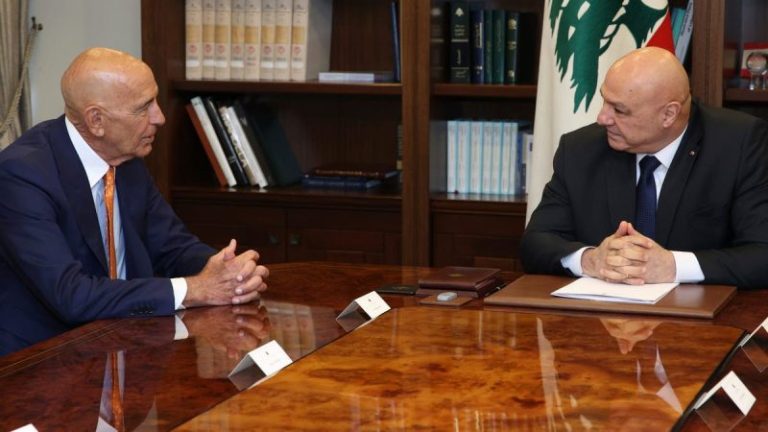
The U.S. envoy to Lebanon championed a response issued by Beirut on Monday to a proposal by Washington that detailed the complete disarmament of the Iran-backed terrorist group Hezbollah in exchange for the withdrawal of Israeli troops from its southern region. 

Envoy Thomas Barrack told reporters he was ‘unbelievably satisfied’ with Beirut’s timely response to a June 19 proposal that called for the disarmament of Hezbollah within a four-month timeframe. 

‘What the government gave us was something spectacular in a very short period of time,’ Barrack said following a meeting with Lebanese President Joseph Aoun, who took the top job in January. ‘I’m unbelievably satisfied with the response.’

The news comes as negotiators are also working to end Israel’s war against Hamas in the Gaza Strip after Jerusalem saw itself facing four fronts just last fall with a war on its southern border against Hamas, back-and-forth missile strikes with Iran as well as with the Houthis in Yemen, and a campaign that unfolded in Lebanon.

A truce was struck in Lebanon following a sophisticated pager bombing that targeted hundreds of Hezbollah members across the country in September. 

Hezbollah largely retreated from Lebanon’s southern region and has reportedly relinquished some arms.

But reporting by Reuters on Monday also suggested that Hezbollah may be unwilling to relinquish all its arms and the details of the U.S.-Lebanon agreement that would see the disarmament of the terrorist network remain unknown.

Israeli troops have remained in parts of southern Lebanon to counter what it argues is a continued threat posed by the terrorist network to Israeli communities that live on the northern border, and skirmishes have continued. 

Barrack, who also serves as U.S. ambassador to Turkey and special envoy for Syria, said he believes that, ultimately, Lebanon and Israel share the same goal – peace.

‘The Israelis do not want war with Lebanon,’ he said. ‘Both countries are trying to give the same thing – the notion of a stand-down agreement, of the cessation of hostilities, and a road to peace.’

Barrack also suggested that the Trump administration may look to add Lebanon to the list of nations that have normalized ties with Israel under the Abraham Accords – a chief policy of Trump’s during his first administration and one which he has once again made a top priority. 

Fox News Digital could not confirm whether Beirut is yet interested in that level of diplomacy with its southern neighbor.

But Barrack also suggested that Syria has already begun ‘dialogue’ with Israel. 

‘The dialogue has started between Syria and Israel, just as the dialogue needs to be reinvented by Lebanon,’ he said. ‘If you don’t want change, it’s no problem. The rest of the region is moving at Mach speed and you will be left behind.’

The comments come one week after Israeli Minister of Foreign Affairs Gideon Sa’ar said Jerusalem ‘is interested in expanding the Abraham Accords circle of peace and normalization.

‘We have an interest in adding countries, such as Syria and Lebanon, our neighbors, to the circle of peace and normalization – while safeguarding Israel’s essential and security interests,’ he added, though much of the normalization efforts would depend on Israel ending its war in the Gaza Strip. 

Reuters contributed to this report. 

This post appeared first on FOX NEWS

A Senate Republican believes that regime change is the best long-term ‘solution’ in Iran as a fragile ceasefire between the Islamic Republic and Israel continues to hold.

The truce between Israel and Iran came late last month, and so far has put a hold on the fighting that took place over the course of 12 days in the region, which began when the Jewish State struck Iranian targets on June 13. It culminated in a U.S. strike on Iranian nuclear sites with bunker-busters in an operation greenlit by President Donald Trump.

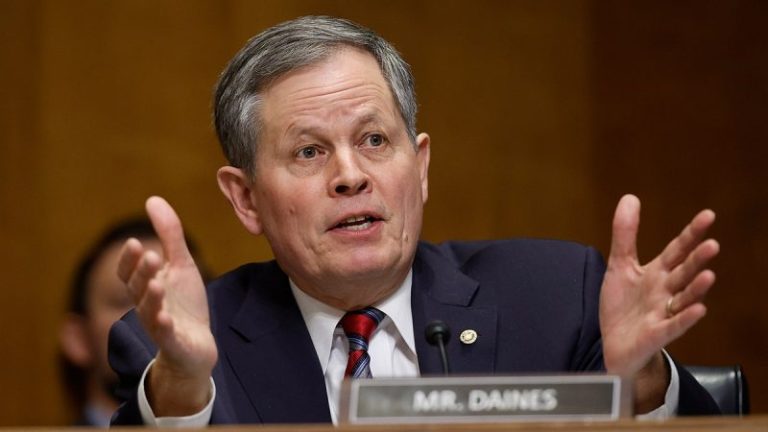
Sen. Steve Daines, R-Mont., who serves on the Senate Foreign Relations Committee and previously held a position as chair of the Senate GOP’s campaign arm, told Fox News Digital that he is cautiously optimistic that the truce will hold, but warned that Iran’s deep-seated aggression towards Israel could be the ceasefire’s undoing — unless a new regime took over.

‘I’m of the opinion that the longer-term solution in Iran is going to be regime change,’ Daines said. ‘Because until you have a regime that recognizes the legitimacy of the Jewish state of Israel and their right to exist, and believes that Israel should not be destroyed, I don’t think we’re going to bring the peace that we need, that we all aspire to see between Iran, Israel and, frankly, in the Middle East.’

Daines’ sentiment comes ahead of an expected meeting between Trump and Israeli Prime Minister Benjamin Netanyahu on Monday at the White House. 

There is a bipartisan push between Reps. Mike Lawler, R-N.Y., and Josh Gottheimer, D-N.J., to further arm Israel with B-2 bombers and bunker-busting bombs, but most lawmakers, including Daines, don’t believe that the U.S. should get involved in toppling the current regime and installing a new one.

The U.S. was involved in regime change in the country in the 1950s, when then-Prime Minister Mohammad Mosaddegh was removed and the door was opened for Shah Mohammad Reza Pahlavi to take control of Iran. In 1979, the Islamic Revolution took place, which removed Pahlavi from power and saw the birth of the current regime.

Daines argued that any change must come from within, because ‘otherwise, it’s just a matter of time before that regime would lose its legitimacy.’

‘Regime change is risky because you may end up with something worse than what you have,’ Daines said. ‘Now in this case, the bar is set awfully low in Iran, but you could get an equivalent type of philosophy, or maybe something a little better.’

‘I think we need to have a regime that recognizes that Iran and their long-term prosperity will be tied to growing closer to the West and being an ally of the West and not being an ally of China, Russia, North Korea,’ he continued.

‘A ceasefire is not the end. It’s a means. A ceasefire just says, ‘OK, we’re still at war, but we’re not going to shoot for a while.’ That’s what a ceasefire is,’ Daines said. ‘A lasting peace will be when the Iranian leadership recognizes the legitimacy of Israel as a Jewish state.’

‘Until that happens, I think Iran will remain a threat, particularly if the regime, whether it’s the current regime or a regime that changed that has a similar ideology as the current regime, that Israel must be destroyed,’ he continued. ‘That is not a peaceful outcome. That’s just delaying what could be a future development of nuclear capabilities and some kind of a first strike by Iran, either against Israel or against the United States.’

This post appeared first on FOX NEWS

Democrats are assembling a new policy brain trust called Project 2029, an effort aimed at shaping the party’s long-term vision and regaining electoral strength.

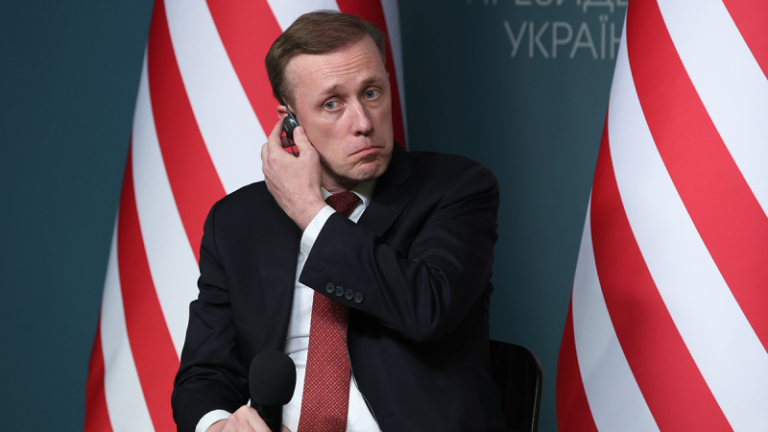
But at a time when there’s widespread agreement that Democrats need fresh ideas and new voices, the inclusion of longtime party insiders — especially former President Joe Biden’s national security advisor Jake Sullivan — is raising eyebrows across the political spectrum.

‘It’s really disappointing to see the lack of self-awareness on Jake’s part,’ said Brett Bruen, former director of global engagement in the Obama White House. ‘Having Jake involved, let alone leading this, will only lead to stupid, superficial changes.’

‘These Democratic leaders need to take a long look in the mirror and understand they played a big part in bringing this situation about — and exit stage left.’

Modeled in name and structure after the Heritage Foundation’s conservative Project 2025, Project 2029 brings together high-profile Democratic veterans to outline a policy road map. After a decade of standing more against President Donald Trump than for anything else, the group is dedicated to helping Democrats define the policies that can win the 2028 election.

The initiative, first reported by The New York Times, is led by longtime Democratic strategist Andrei Cherny and a cast of familiar faces — including Sullivan, Neera Tanden, Biden’s domestic policy advisor; Anne-Marie Slaughter, CEO of New America; Justin Wolfers, University of Michigan economist; Jim Kessler, co-founder of Third Way; and Felicia Wong , former president of the Roosevelt Institute. 

But Sullivan’s role has drawn particular criticism from both Republicans and progressives. 

Sullivan was Biden’s top advisor during the chaotic 2021 withdrawal from Afghanistan, which resulted in the deaths of 13 U.S. service members. He reportedly offered to resign at the time once the evacuation didn’t go as planned. 

He’s also drawn fire for the Biden administration’s failure to help Israel and Hamas reach a lasting ceasefire, and for its Ukraine policy — which, as one European diplomat told Fox News Digital, seemed aimed at letting Ukraine ‘lose slowly.’​​

‘Why isn’t Jake Sullivan working at Chipotle?’ quipped Steven Moore, founder of the Ukraine Freedom Project, on a podcast in 2024. 

‘Jake in his position both as national security advisor and in Biden world is one of the last people on earth that should be involved in a reset for the Democratic Party,’ said Bruen.

Sullivan did not reply to a request for comment by Fox News Digital.

Zohran Momdani’s stunning upset in New York City’s mayoral primary over former Gov. Andrew Cuomo has reignited a debate over whether Democrats on a national level need to start taking progressivism seriously.

‘The people responsible for driving the Democratic Party into a ditch are now asking for the keys again,’ said Joseph Geevarghese, executive director of progressive group Our Revolution. ‘Leaders like Zohran Mamdani are showing what’s possible when you speak directly to working-class pain and stand up to entrenched power.’

Despite the criticism, some Democrats defend Sullivan’s role and believe he could help unify the party.

‘He’s a historic organizer of the diverse lanes of Democratic foreign policy, and he’s done a great job with it,’ said Joel Rubin, a former deputy assistant secretary of state and Democratic strategist. However, Rubin questioned how much real influence Project 2029 will have, especially with no clear 2028 front runner.

‘We’re going to have a wide-open primary,’ Rubin said. ‘Unlike Project 2025, where Republicans had a candidate-in-waiting in Trump, we have no standard-bearer. So Project 2029 is going to be one of many blueprints for what a Democratic administration should do.’

Some argue that figures like Sullivan are better suited to bridge the divide between establishment figures and progressives than any leftist leader. 

‘He’s part of the old guard, but the old guard isn’t that old. There’s a lot of young people,’ one Democratic insider said. ‘You’d be hard-pressed to find people in the progressive lane pulling in establishment folks, whereas the establishment lane is working to pull in progressives.’

Sullivan’s GOP critics also point to his role in promoting now-debunked allegations during the 2016 election.

After a report from Slate claimed Trump Tower maintained a secret server communicating with Russia’s Alfa Bank, Sullivan — then a senior advisor to Hillary Clinton — amplified the claim.

‘This could be the most direct link yet between Donald Trump and Moscow,’ Sullivan said in a statement at the time. ‘This secret hotline may be the key to unlocking the mystery of Trump’s ties to Russia.’

Republicans later accused him of spreading unverified information and misleading the public.

This post appeared first on FOX NEWS

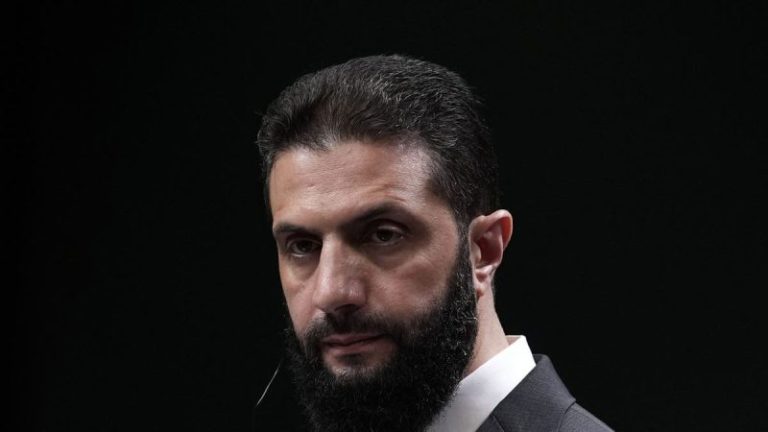
The Trump administration revoked the terrorist designation for Hay’at Tahrir al-Sham, the militant group who overthrew President Bashar al’Assad and assumed control of the Syrian government. 

The group was formed as Syria’s al-Qaeda branch. In an astounding turnaround, the group’s interim leader Ahmed al-Sharaa went from a $10 million U.S. bounty on his head to the de facto leader of Syria who scored a meeting with President Donald Trump in June. 

Al-Sharaa had been campaigning hard for a relationship with Washington and sanctions relief: He offered to build a Trump Tower in Damascus, ease hostilities with Israel, and give U.S. access to Syria’s oil and gas. He worked to soften the image of Hay’at Tahrir al-Sham and promised an inclusive governing structure. 

‘In consultation with the Attorney General and the Secretary of the Treasury, I hereby revoke the designation of al-Nusrah Front, also known as Hay’at Tahrir al-Sham (and other aliases) as a Foreign Terrorist Organization,’ Secretary of State Marco Rubio wrote in a memo made public Monday. 

The move comes a week after Trump signed an executive order ending sanctions imposed on Syria. Trump said he’d lift the sanctions on Syria to give the nation, ravaged by decades of civil war, a chance at economic development. 

Treasury Secretary Scott Bessent said that lifting sanctions would help Syria ‘reestablish ties to global commerce and build international confidence,’ while continuing to prevent ‘Assad, his cronies, terrorists, and other illicit actors from attempting to destabilize Syria and the region.’ 

HTS, a Sunni Islamist group, emerged out of Jabhat al-Nusra, Syria’s former al-Qaeda affiliate. The State Department under Trump in 2018 added HTS to the existing al-Nusra foreign terrorist designation.

Some sanctions still will need to be lifted by Congress. In a bipartisan pairing from opposite sides of the political spectrum, Reps. Ilhan Omar, D-Minn., and Anna Paulina Luna, R-Fla., recently introduced legislation to lift sanctions on Syria. 

U.S. sanctions have included financial penalties on any foreign individual or company that provided material support to the Syrian government and prohibited anyone in the U.S. from dealing in any Syrian entity, including oil and gas. Syrian banks also were effectively cut off from global financial systems. 

This post appeared first on FOX NEWS

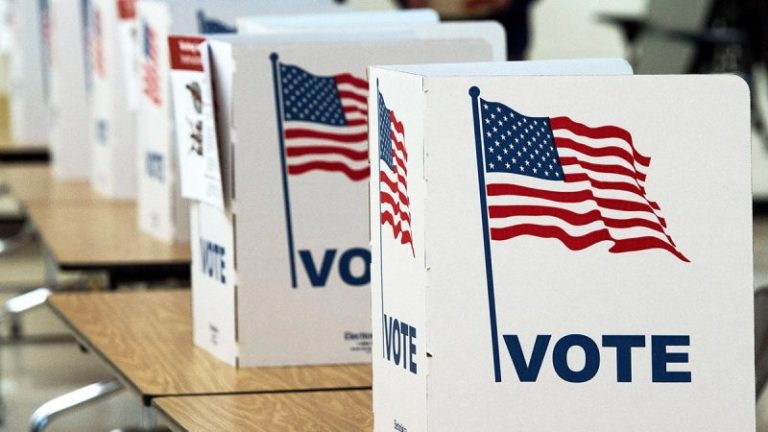
More than 211 million people were active registered voters for the 2024 general election.

And over 158 million voters cast ballots in last year’s presidential election.

Those figures are according to a report issued to Congress by the U.S. Election Assistance Commission (EAC), which has been conducting election administration and voter surveys of federal elections for two decades.


The commission touts that it ‘provides the most comprehensive source of state- and local jurisdiction-level data about election administration in the United States.’

More than 85% of voting-age Americans registered as active voters last year — the highest level on record, according to the report.

And voter turnout was the second highest in the past five presidential elections, trailing only the 2020 election.

The turnout of 64.7% of the citizen voting age population in the U.S. was a slight 3% drop compared to four years earlier.

Nearly three-quarters of those who voted last year cast their ballots in person — with 35.2% voting in person ahead of Election Day and 37.4% voting on Election Day.

According to the report, 30.3% voted by mail. That’s a drop from the 43% who voted by mail during the 2020 election, which, amid the COVID-19 pandemic, was the highwater mark for mail-in balloting.

But the report noted that the percentage of people who voted by mail in 2025 was ‘still larger than the percentage of the electorate that voted by mail in pre-pandemic elections.’

President Donald Trump won back the White House in last year’s election, with Republicans taking back control of the Senate and holding on to their razor-thin majority in the House.

This post appeared first on FOX NEWS