
Author

admin

Browsing

Silver is a notoriously volatile metal capable of wide price swings in either direction. However, the metal is also seen by many as a safe-haven investment and a hedge against inflation.

While investing in silver bullion is one popular method for gaining exposure, silver-mining companies offer another route.

Silver-mining companies with strong balance sheets and experienced management teams are able to capitalize on high silver prices and weather the storm of low silver prices. Some of the most profitable silver-mining companies are even able to offer investors dividends, which may be appealing for those who are in it for the long haul.

Dividends are especially attractive in the often-unstable mining sector because they give investors a degree of security — if a company pays a dividend, it generally feels that it has the cash to do so and believes it will have the ongoing profits it needs to keep those payments coming.

There are several dividend-paying silver stocks for investors to choose from. The companies below are ordered by dividend yield, and all data is current as of June 19, 2025.

1. Fresnillo (LSE:FRES,OTC Pink:FNLPF)

LSE market cap: GBP 10.66 billion
Dividend yield: 1.71 percent

Major miner Fresnillo bills itself as the world’s leading primary silver producer and a significant gold producer. Its precious metals operations are all located in Mexico, including the Fresnillo mine, which is the largest primary silver mine in the world. It also holds a portfolio of exploration prospects in the country and silver streaming contracts.

Fresnillo’s attributable output from its mines for the full 2024 year came to 56.3 million ounces of silver and 610,646 ounces of gold. The company’s reported mine production for the the first quarter of 2025 comes to 12.4 million ounces of silver and 156,100 ounces of gold.

Dividends from the company are paid in pounds sterling unless shareholders elect to be paid in US dollars. This silver stock pays two dividends per year, with the dividend split unevenly between the two; one third is paid in the interim dividend and two-thirds in the final dividend. Its dividend policy takes business profitability and underlying earnings growth into account, as well as capital requirements and cash flow.

Most recently, Fresnillo paid its 2024 final dividend of 19.6521 pence, or US$0.261, on May 30, 2025. Additionally, due to its 2024 financial performance, including revenue growth of 26.9 percent, the company paid a special one-off dividend of 31.4736 pence, or US$0.418 per share, the same day. This made 2024 Fresnillo’s highest recorded dividend payout year yet.

2. Pan American Silver (TSX:PAAS,NYSE:PAAS)

TSX market cap: C$14.39 billion
NYSE market cap: US$10.55 billion
Dividend yield: 1.41 percent

Founded by Ross Beaty in 1994, Pan American Silver currently operates four primary silver mines, which are located in Mexico, Peru, Bolivia and Argentina. It also has a portfolio of gold mines produce silver as a by-product.

The company’s 2024 silver production came in at 21.1 million ounces alongside 892,000 ounces of gold. For Q1 this year, output reached a total of 5 million ounces of silver and 182,200 ounces of gold.

In May, Pan American announced a definitive agreement to acquire silver producer MAG Silver (TSX:MAG,NYSEAMERICAN:MAG), which owns a 44 percent interest in the large-scale, high-grade Juanicipio mine, operated by Fresnillo.

The highest dividend Pan American has ever paid is US$0.125 per share, and it was able to pay a dividend of that amount a noteworthy nine times in a row between March 18, 2013, and March 13, 2015. The silver stock paid its most recent quarterly dividend on June 2, 2025, at US$0.10 per share.

3. Wheaton Precious Metals (TSX:WPM,NYSE:WPM)

TSX market cap: C$56.63 billion
NYSE market cap: US$41.58 billion
Dividend yield: 0.71 percent

Wheaton Precious Metals is a well-known name in the silver space largely because of its business model — it is the world’s biggest precious metals streaming company.

Streaming companies operate differently from miners, making upfront payments to a variety of metals companies in order to gain the right to purchase all or a portion of their metal production at a low, fixed cost.

The company currently has streaming agreements in place for 18 operating mines and 28 development-stage projects. It is interested in companies operating in politically stable jurisdictions, and states that its value should rise with the price of silver and gold. As a result, Wheaton sees itself offering investors multiple benefits while reducing many of the downside risks that traditional miners face.

Wheaton pays a quarterly dividend. So far in 2025, it has already made two dividend payments of US$0.165 per share, with the latest payment on June 10, 2025.

4. Silvercorp Metals (TSX:SVM)

TSX market cap: C$1.29 billion
NYSE market cap: US$950.85 million
Dividend yield: 0.59 percent

Silvercorp Metals operates the Gaocheng and Ying silver-mining operations in China, and is also focused on acquiring and growing underdeveloped projects with high upside.

Its silver production for its 2025 fiscal year ended March 31 came in at approximately 6.95 million ounces, and the company also produced 7,495 ounces of gold. The company’s 2026 production guidance is set at 7.38 million to 7.6 million ounces of silver and 9,100 to 10,400 ounces of gold.

Silvercorp offers shareholders a semiannual dividend, which it states is “based on a number of factors including commodity prices, market conditions, financial results, cash flows from operations, expected cash requirements and other relevant factors.” Its most recent dividend was paid on June 26, 2025, at a rate of US$0.0125 per share.

5. Hecla Mining Company (NYSE:HL)

NYSE market cap: US$3.76 billion
Dividend yield: 0.59 percent

Last on this list of silver stocks that pay dividends is Hecla Mining Company, which wholly owns and operates four mines and has a large exploration portfolio. The oldest precious metals miner in North America, Hecla is also the largest primary silver producer in the US and Canada and the third largest in the world.

In the US, Hecla operates the Greens Creek and Lucky Friday silver mines, located in Alaska and Idaho respectively. As for Canada, Hecla has the Keno Hill silver mine in the Yukon’s Keno Hill silver district, which is home to some of the world’s highest silver grades, as well as the Casa Berardi gold-silver mine in Québec.

Hecla reported 2024 production of 16.2 million ounces of silver, the second highest in the company’s history, and 142,000 ounces of gold. As for Q1 2025, the company produced 4.1 million ounces of silver and 34,242 ounces of gold.

Hecla pays an annual minimum common stock dividend, distributing it on a quarterly basis. Its dividends previously included a silver-linked component, but the company removed this in February 2025 in part to refocus the capital on growth opportunities.

Currently, the company’s annual minimum common stock dividend is set at US$0.015 per share, divided into quarterly payments of US$0.00375. Its most recent payment was on June 10, 2025.

Hecla also pays a quarterly US$0.875 per share dividend for its Series B cumulative convertible preferred stock, which it states is typically paid on January 1, April 1, July 1 and October 1.

FAQs for silver dividend stocks

What are dividend stocks?

Dividend stocks regularly pay a sum of money to a class of shareholders out of the company’s earnings. To qualify for a dividend payout, an investor must have owned the stock on the ex-dividend date.

Dividends are often issued as cash payments sent to a shareholder’s brokerage account, but can also be issued as stock or discounts on share purchases.

How to invest in dividend stocks?

You can invest in dividend-paying stocks through a stock broker or stock platform, and a stock broker can offer advice on how to take advantage of companies offering dividend programs. Some dividend stocks may also offer a dividend reinvestment program, allowing shareholders to automatically buy new shares with their dividends, either commission-free or at a reduced cost.

How much do dividend stocks pay?

A company’s board of directors is responsible for setting a dividend policy and will determine the size of the dividend payout based on the firm’s long-term revenue outlook.

The size of an individual shareholder’s dividend payout depends on the number of shares owned in that company. For example, if an investor owned 1,000 shares of Wheaton Precious Metals, which is currently paying a dividend of US$0.165 per share, they would get US$165 every quarter, totaling US$660 annually.

What silver ETFs pay dividends?

There are no physical backed Silver ETFs with dividends. However, ETFs that track dividend-paying silver stocks such as those listed above may offer the potential for dividend income. A few examples of are Global X Silver Miners ETF (ARCA:SIL), and iShares MSCI Global Silver and Metals Miners ETF (BATS:SLVP).

Securities Disclosure: I, Melissa Pistilli, hold no direct investment interest in any company mentioned in this article.


This post appeared first on investingnews.com

Amazon is extending its annual Prime Day sales and offering new membership perks to Gen Z shoppers amid tariff-related price worries and possibly some consumer boredom with an event marking its 11th year.

For the first time, Seattle-based Amazon is holding the now-misnamed Prime Day over four days. The e-commerce giant’s promised blitz of summer deals for Prime members started at 3:01 a.m. Eastern time on Tuesday and ends early Friday.

Amazon launched Prime Day in 2015 and expanded it to two days in 2019. The company said this year’s longer version would have deals dropping as often as every 5 minutes during certain periods.

Prime members ages 18-24, who pay $7.49 per month instead of the $14.99 that older customers not eligible for discounted rates pay for free shipping and other benefits, will receive 5% cash back on their purchases for a limited time.

Amazon executives declined to comment on the potential impact of tariffs on Prime Day deals. The event is taking place two and a half months after an online news report sparked speculation that Amazon planned to display added tariff costs next to product prices on its website.

White House Press Secretary Karoline Leavitt denounced the purported change as a “hostile and political act” before Amazon clarified the idea had been floated for its low-cost Haul storefront but never approved.

Amazon’s past success with using Prime Day to drive sales and attract new members spurred other major retail chains to schedule competing sales in July. Best Buy, Target and Walmart are repeating the practice this year.

Like Amazon, Walmart is adding two more days to its promotional period, which starts Tuesday and runs through July 13. The nation’s largest retailer is making its summer deals available in stores as well as online for the first time.

Here’s what to expect:

Amazon expanded Prime Day this year because shoppers “wanted more time to shop and save,” Amazon Prime Vice President Jamil Ghani recently told The Associated Press.

Analysts are unsure the extra days will translate into more purchases given that renewed inflation worries and potential price increases from tariffs may make consumers less willing to spend. Amazon doesn’t disclose Prime Day sales figures but said last year that the event achieved record global sales.

Adobe Digital Insights predicts that the sales event will drive $23.8 billion in overall online spending from July 8 to July 11, 28.4% more than the similar period last year. In 2024 and 2023, online sales increased 11% and 6.1% during the comparable four days of July.

Vivek Pandya, lead analyst at Adobe Digital Insights, noted that Amazon’s move to stretch the sales event to four days is a big opportunity to “really amplify and accelerate the spending velocity.”

Caila Schwartz, director of consumer insights and strategy at software company Salesforce, noted that July sales in general have lost some momentum in recent years. Amazon is not a Salesforce Commerce Cloud customer, so the business software company doesn’t have access to the online giant’s e-commerce sales and so is not privy to Prime Day figures.

“What we saw last year was that (shoppers) bought and then they were done, ” Schwartz said. “We know that the consumer is still really cautious. So it’s likely we could see a similar pattern where they come out early, they’re ready to buy and then they take a step back.”

Amazon executives reported in May that the company and many of its third-party sellers tried to beat big import tax bills by stocking up on foreign goods before President Donald Trump’s tariffs took effect. And because of that move, a fair number of third-party sellers hadn’t changed their pricing at that time, Amazon said.

Adobe Digital Insights’ Pandya expects discounts to remain on par with last year and for other U.S. retail companies to mark 10% to 24% off the manufacturers’ suggested retail price between Tuesday and Friday.

Salesforce’s Schwartz said she’s noticed retailers becoming more precise with their discounts, such as offering promotion codes that apply to selected products instead of their entire websites.

Amazon Prime and other July sales have historically helped jump-start back-to-school spending and encouraged advance planners to buy other seasonal merchandise earlier. Analysts said they expected U.S. consumers to make purchases this week out of fear that tariffs will make items more expensive later.

Brett Rose, CEO of United National Consumer Supplies, a wholesale distributor of overstocked goods like toys and beauty products, thinks shoppers will go for items like beauty essentials.

“They’re going to buy more everyday items,” he said.

As in past years, Amazon offered early deals leading up to Prime Day. For the big event, Amazon said it would have special discounts on Alexa-enabled products like Echo, Fire TV and Fire tablets.

Walmart said its July sale would include a 32-inch Samsung smart monitor priced at $199 instead of $299.99; and $50 off a 50-Inch Vizio Smart TV with a standard retail price of $298.00. Target said it was maintaining its 2024 prices on key back-to-school items, including a $5 backpack and a selection of 20 school supplies totaling less than $20.

Independent businesses that sell goods through Amazon account for more than 60% of the company’s retail sales. Some third-party sellers are expected to sit out Prime Day and not offer discounts to preserve their profit margins during the ongoing tariff uncertainty, analysts said.

Rose, of United National Consumer Supplies, said he spoke with third-party sellers who said they would rather take a sales hit this week than use up a lot of their pre-tariffs inventory now and risk seeing their profit margins suffer later.

However, some independent businesses that market their products on Amazon are looking to Prime Day to make a dent in the inventory they built up earlier in the year to avoid tariffs.

Home fragrance company Outdoor Fellow, which makes about 30% of its sales through Amazon’s marketplace, gets most of its candle lids, labels, jars, reed diffusers and other items from China, founder Patrick Jones said. Fearing high costs from tariffs, Jones stocked up at the beginning of the year, roughly doubling his inventory.

For Prime Day, he plans to offer bigger discounts, such as 32% off the price of a candle normally priced at $34, Jones said.

“All the product that we have on Amazon right now is still from the inventory that we got before the tariffs went into effect,” he said. “So we’re still able to offer the discount that we’re planning on doing.”

Jones said he was waiting to find out if the order he placed in June will incur large customs duties when the goods arrive from China in a few weeks.

This post appeared first on NBC NEWS

Dylan Earl said he needed a “fresh start” in life. Unsatisfied by his prospects in his dreary English town, he decided to orchestrate a terrorist attack in London on behalf of a Russian mercenary group.

If he’d had things his way, the 20-year-old, small-time drug dealer would have moved to Russia to join its military. He’d heard that he could make good money fighting for what he saw as a just cause but feared his lack of spoken Russian would hold him back.

As it happened, Earl was able to join the war from the comfort of his home in England’s Midlands. All it took was a simple “Hi” to an anonymous Telegram account called “Privet Bot” that was inviting Europeans to join the “resistance” against Ukraine’s allies.

Just five days later, Earl arranged for a group of men to set fire to a warehouse in east London, choosing the target because of its links to Ukraine. The next month, Earl was arrested and charged with aggravated arson and an offense under the UK’s new National Security Act, to which he pleaded guilty. A second suspect, Jake Reeves, would plead guilty to aggravated arson and another National Security Act charge.

More than a year on, six others stood trial between May and July at London’s Old Bailey in relation to the attack.

On Tuesday, three were convicted by the jury of aggravated arson, while a fourth – the man who prosecutors said drove them to the site – was acquitted of that charge, which he denied.

Of the two men accused of failing to inform the police of a potential terror attack, one was acquitted on two counts and the other found guilty on one count and cleared of a second.

British prosecutors said the “Privet Bot” account was associated with Wagner, a Russian mercenary group that has fought in Ukraine and maintained Moscow’s footprint in Africa. The account is now defunct, but correspondence revealed in the trial showed the length to which operatives went to recruit foot soldiers in the “shadow war” against the West.

Russia has not relied on well-trained agents in this campaign, but a network of low-level criminals: some sympathetic to Moscow’s cause, others simply wanting cash. Whereas espionage and sabotage used to take years to recruit and plan for, these operations now require just a few hours on Telegram and some cash. Analysts say this tactic is a dark spin on the modern “gig” economy: Hostile states use a young workforce that is temporary and flexible. The work is on-demand, just-in-time, no-strings-attached.

This has created headaches for those tasked with keeping Europe safe. Ken McCallum, the head of MI5, Britain’s domestic intelligence service, warned last year that Russia is on a “mission to generate mayhem on British and European streets.” Richard Moore, then head of MI6, the foreign intelligence agency, put it more bluntly: “Russian intelligence services have gone a bit feral.”

Some messages were deleted by the suspects, and investigators could not establish the identity of all the anonymous accounts involved. Where reproduced, some exchanges have been edited for clarity and length.

The crime

Earl made money dealing cocaine, with about £20,000 ($27,000) in cash and more in cryptocurrency to show for his exploits. But he wanted to make it big, and that meant getting out of England. One place in particular caught his eye.

It is not clear when Earl first became interested in Russia. On June 23, 2023, he joined a Telegram group called “AP Wagner Chat.” That same night, Yevgeny Prigozhin – then the head of Wagner – declared what would prove to be a short-lived mutiny against Russian President Vladimir Putin. Prigozhin died in a plane crash two months later.

Earl joined both smaller pro-Russian Telegram chats and larger groups such as “Grey Zone,” which boasted some 500,000 subscribers, and, according to British investigators, functioned as Wagner’s de facto mouthpiece. At least eight times between 2023 and 2024, the trial jury heard, the account promoted “Privet Bot,” encouraging people to join operations across Europe.

The account soon gave Earl his first target: a warehouse in Leyton, east London. The site was run by a Ukrainian man, whose businesses included delivering Starlink internet terminals to Ukraine – crucial technology for Kyiv’s war effort.

In case Earl was not sure what kind of work he was getting into, “Privet Bot” told him to watch the series “The Americans” – a Cold War drama in which Russian spies, embedded in Washington, DC, conduct dangerous missions for the Soviet Union.

The new world

Earl may have imagined himself as a Cold War-era spy, but much of that world has faded.

Landsbergis said it was like drones replacing legacy equipment on the battlefields of Ukraine. “They’re just cheaper, and as efficient to (achieve) your stated goals.”

Russia’s shift to this tactic may initially have been out of necessity. With hundreds of its diplomats and agents expelled from European countries in the wake of Russia’s full-scale invasion of Ukraine, Moscow had to get creative in how it conducted its operations.

But the tactic proved fruitful: Attacks like that in Leyton are cheap to set up, often deniable, and below the threshold likely to trigger a response under NATO’s Article 5.

The foot soldiers

Earl was committed to the mission; he just needed recruits. He found one in Reeves, a 23-year-old from Croydon, south London. It is not clear how Earl and Reeves first came into contact.

By day, Reeves worked as a cleaner at London’s Gatwick Airport. But in his ketamine-fueled nights, he became increasingly fascinated with his contact, Earl, whom he believed to be a Russian national, or at least a Russian speaker, with ties to the Kremlin.

While lacking Earl’s ideological fervor, Reeves could still help his cause by finding him willing foot soldiers. Prosecutors alleged he recruited Nii Mensah, now 23, another Croydon local who said he was “down for da cause,” as well as a large payday. Mensah appears to have recruited Jakeem Rose, also now 23, who lived near Mensah. Now they just needed a driver.

The night

Paul English took a laxative on the evening of March 20, 2024, to prepare for his bowel cancer screening the next morning. Planning for a quiet night, the 61-year-old would instead find himself driving “cross-legged” across London.

His neighbor’s son, Ugnius Asmena, needed a favor. He and his mates needed a lift around the city. Might English be able to help out?

As English recalled in his police interview, Asmena’s offer was simple: £500 for a night’s work – half up front, the rest later. All he had to do was take him to Croydon, pick up a couple of others, then head north across the River Thames. English agreed, because he was “skint,” or broke. Soon after, he was driving towards Leyton with Asmena in the front, and two others – Mensah and Rose – in the back, prosecutors said.

English said he did as he was told: He drove to Leyton, filling a jerry can with gasoline en route, and waited in the car with Asmena, while Mensah and Rose got out to “do their thing.” Minutes later, the pair jumped over the fence and back into the car, leaving English to make their getaway.

Just before midnight, the London Fire Brigade was called to the Cromwell Industrial Estate. The blaze caused more than £1 million in damage, the court heard.

Later that night, Mensah Googled “Leyton fire.”

“Bro lol,” he said to Earl on Telegram. “It’s on the news.”

When the jury returned Tuesday after several days of deliberation, Asmena, Rose and Mensah were each found guilty of aggravated arson, charges they had denied. English was acquitted of the same charge, which he had also denied.

The motive

Burning a warehouse will not on its own tip the balance of the war in Russia’s favor. But cumulatively, such attacks can unsettle Ukraine’s Western backers.

According to a database of alleged Russian “shadow” attacks compiled by the US-based Center for Strategic and International Studies (CSIS) think-tank, the number carried out quadrupled between 2022 and 2023, then nearly tripled between 2023 and 2024.

These alleged attacks have included blazes at a shopping mall in Poland and an Ikea store in Lithuania, cyberattacks on Czech railways, and the vandalism of Jewish buildings in France. Russia has denied allegations of any involvement.

Recalling his time in office in Lithuania, Landsbergis said responding to such attacks felt like playing whack-a-mole: “You catch one and Russia easily replaces them with several others hired through Telegram.”

Galeotti, the Russia analyst, said this alleged campaign has two main goals: To show Europe that there are costs to backing Ukraine, and – even if the operations fail – to cultivate a “general sense of chaos” in Europe.

“Everything that goes wrong, someone sees the ‘dread hand’ of Putin behind it,” Galeotti said. “If nothing else, it makes the Russians seem much more powerful that they really are.”

The fallout

Back in Croydon, Mensah wanted payment. But there was a holdup: Earl said he wouldn’t be paid until the Russians could judge the extent of the damage.

But “Privet Bot” wasn’t happy. It told Earl that he had jumped the gun. “We could have burned the warehouses much better and more if we had coordinated our actions,” it told him. As such, Earl wouldn’t receive the full fee.

Earl’s accomplices grew bitter – none more so than Mensah. Earl couldn’t stump up the cash for the first job, but felt he had something better: an even more lucrative contract for another arson attack – this time in London’s swish Mayfair district.

The targets were a restaurant and wine shop owned by Yevgeny Chichvarkin, a Russian businessman who had criticized the war in Ukraine. Earl went back to his UK contacts.

Reeves was happy to help, messages showed. He couldn’t be “broke forever,” he told his school friend, Dmitrijus Paulauskas, a Russian-speaking Lithuanian who moved to Britain when he was young. Although Paulauskas was not involved in planning the attack, in his messages he said he was “gassed” (excited) that Russia had “integrated into the UK underworld.”

Paulaskas was cleared by the Old Bailey jury on two counts of failing to disclose information about terrorist acts. Another defendant, Ashton Evans, 20, faced the same charges and was found guilty on one count and acquitted on the second.

The end game

While preparing for the attack in central London, Earl began to have grander ambitions. “Privet Bot” was encouraging: “You are wise and clever despite being young! We have a lot of glorious jobs ahead.”

But to recruit more people, Earl needed faster payments from Russia. Most of Earl’s messages to the bot were not recovered in the investigation, but one late-night, Google-Translated outburst had not been deleted, showing Earl pleading with his superiors to equip him to become “the best spy you have ever seen.”

The next day, Earl was arrested by British police. He pleaded guilty to aggravated arson and to an offense under the National Security Act. Reeves was arrested nine days later, and pleaded guilty to similar charges. Sentencing for Reeves and Earl – and the four others convicted – will take place at a later date, the UK’s Crown Prosecution Service said.

The next phase

Historically, Moscow has gone to great lengths to reward and retrieve its spies. But these “gig economy” recruits can’t expect the same.

To Russia, they are disposable; to their home countries, they are traitors. In her summing up, the judge put it starkly: “Our parents and grandparents would have had a simple term for what Dylan Earl and Jake Reeves did: treason.”

Although sabotage is an old crime, Europe has struggled to combat the new ways of committing it. Landsbergis said Europe’s disjointed response meant Russia could act with impunity. Now, Europe should “go after the archer, not the arrows,” he said.

The tempo of Russia’s alleged attacks has, however, slowed in recent months, Galeotti noted, perhaps due to the success of European authorities in thwarting them and bringing the perpetrators to justice. Or, he said, Moscow may be taking stock of what it learned from 18 months of “entrepreneurial” thinking.

“I would love to think that it was just something they tried and then abandoned. But I have a feeling we’re going to see them return to it, having internalized the lessons of the first ‘test’ operations,” he said.

This post appeared first on cnn.com

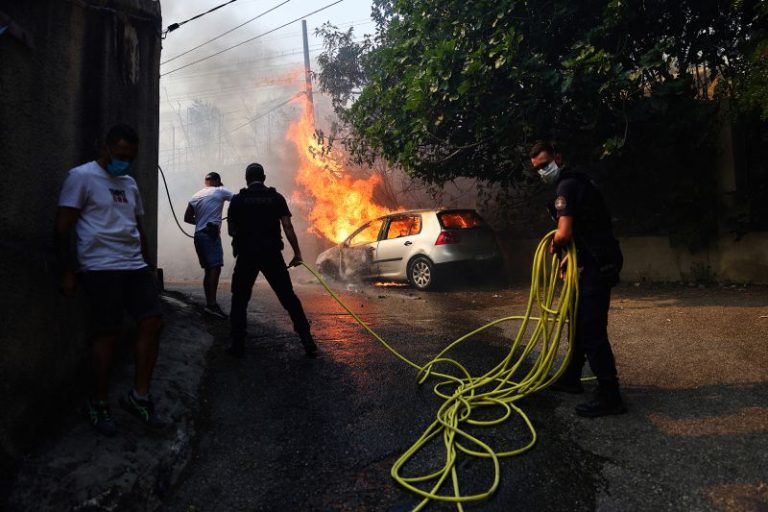
A fast-moving wildfire reached the outskirts of Marseille, France’s second-largest city, on Tuesday, leading its airport to be shut down, with residents told to stay indoors and shut all openings to be safe from the smoke.

The blaze, fanned by winds of up to 70 kilometers per hour, could be smelled in the center of Marseille, residents said, as thick clouds of smoke hovered over the city.

“It’s very striking – apocalyptic even,” said Monique Baillard, a resident of Les Pennes-Mirabeau, a town north of Marseille where the fire, which has now burned across around 350 hectares, started.

Wildfires, which have become more destructive in Mediterranean countries in recent years due to climate change, were also raging in northeastern Spain, where large parts of the country were on high alert for fires.

Last week there were fires on the Greek island of Crete and in Athens, as much of Europe sweltered in an early summer heatwave.

As the fire was spreading, residents of Marseille’s 16th borough, which borders Les Pennes-Mirabeau, were also instructed by the prefecture to stay home, close doors and shutters and put damp cloths on any openings.

“The fire that started in Pennes-Mirabeau is now at the gates of Marseille,” mayor Benoit Payan said on X.

One bank worker reached by phone said: “The sky is grey with ash, and the smell of fire is very strong in the center of Marseille.”

Residents were told not to evacuate unless ordered to, to leave roads free for rescue services.

“At this stage, populations must remain confined,” the Provence-Alpes-Côte d’Azur prefecture posted on X. “Close shutters, doors, keep your property clear for emergency services, and do not travel on the roads.”

The local fire service said on X that 168 firefighters had been deployed to fight the blaze. Fire engines and helicopters were also being used.

A spokesperson for Marseille airport, France’s fourth-busiest, said planes had not been taking off or landing since around midday and some flights had been diverted to Nice, Nimes and other regional airports. It was unclear when the airport would reopen.

Train lines heading north and west from Marseille were suspended due to a fire near the tracks, the SNCF train operator said.

Meanwhile, a wildfire that started near Narbonne, in southwestern France, was still active on Monday, fanned by winds of 60 kilometers per hour.

Some 2,000 hectares have burnt, the local prefecture said.

This post appeared first on cnn.com

Four men in Quebec, including two active members of the Canadian Armed Forces, were arrested and charged in what Canadian police say is a case of “ideologically motivated violent extremism.”

Three of the men, all in their mid-twenties, “were planning to create an anti-government militia” with the intent to “forcibly take possession of land in the Québec City area,” the Royal Canadian Mounted Police (RCMP) said in a statement on Tuesday.

“To achieve this, [the three men] took part in military-style training, as well as shooting, ambush, survival and navigation exercises,” the statement continues. “They also conducted a scouting operation. A variety of firearms, some prohibited, as well as high-capacity magazines and tactical equipment were allegedly used in these activities.”

The three were charged with facilitating terrorist activity. A fourth individual, a man in his early thirties, faces numerous firearms and explosives-related charges, police said.

In a January 2024 search near Quebec City, police say they found “16 explosive devices, 83 firearms and accessories, approximately 11,000 rounds of ammunition of various calibres, nearly 130 magazines, four pairs of night vision goggles and military equipment.”

They used the account to advertise military-style training in Quebec and Ontario, Gasse added.

Gasse did not elaborate on what specific ideology allegedly motivated the men, or the location of the land near Quebec City police claim they plotted to seize.

“It’s a good thing we caught them when we did,” Gasse said.

“The Canadian Armed Forces is taking these allegations very seriously and has fully participated in the investigation,” a department spokesperson said in an email.

Extremism within Canada’s armed forces is a longstanding issue, with a 2022 government report noting that the country’s military is “not immune to infiltration” by members of extremist groups.

“The suspected presence of members of extremist groups within [the Department of National Defence/Canadian Armed Forces] is a pressing moral, social and operational issue,” the report concluded.

This post appeared first on cnn.com

Thirteen women and two men who survived captivity by Hamas said they experienced or witnessed sexual violence while held hostage in Gaza, according to a new report by a group of Israeli researchers known as the Dinah Project.

The Dinah Project experts — all women — gathered first-hand testimonies from the 15 returned hostages, one survivor of an attempted rape during the October 7, 2023 terror attacks, 17 eye and ear witnesses and 27 first responders who attended the scenes of the attacks.

These testimonies, coupled with forensic reports and photographs and videos from the attacks, led them to conclude that Hamas used sexual violence in a widespread, systematic and “tactical” way as a “weapon of war.”

The report, published on Tuesday, describes some of the survivors’ experiences.

One female hostage was beaten and sexually assaulted at gunpoint while in captivity, according to the report. She said she was chained by an iron ankle chain for three weeks and was repeatedly asked about the timing of her menstrual cycle. The report details that many of the 15 former hostages were threatened with rape in the form of forced marriage. Almost all of them reported verbal sexual harassment and some physical sexual harassment, including unwanted touching of private parts, it said.

Israel has in the past accused international organizations, including the UN and its agencies, of ignoring widespread sexual violence perpetrated by Hamas and other militant groups during the October 7 attacks.

The Dinah Project is an Israeli group established following the attacks to seek justice for victims of sexual violence. Made up of legal and gender experts, it is led by legal scholar Ruth Halperin-Kaddari and Sharon Zagagi-Pinhas, who was the former chief military prosecutor of the Israel Defense Forces, and operates under the auspices of the Ruth and Emanuel Rackman Center for the Advancement of Women at Bar-Ilan University.

The first official acknowledgment by the UN of the use of sexual violence during the attacks came some five months after October 7. Then, following a mission to Israel, the UN’s Special Representative on Sexual Violence in Conflict Pramila Patten published a report concluding there were reasonable grounds to believe conflict-related sexual violence occurred in multiple locations, and that there was clear and convincing evidence that hostages in Gaza were subjected to sexual assaults.

Hamas has denied in the past that militants committed sexual violence, saying in a statement in December that these were “unfounded lies and allegations.”

The scale of the atrocities committed on the day of the attacks meant that first responders and investigators were overwhelmed. According to Jewish customs, bodies must be buried as soon as possible after death, so the focus of the first responders, many of whom were Orthodox Jewish volunteers, was on recovering remains rather than investigation.

In many instances, authorities did not have a chance to collect sufficient forensic evidence because they were attending scenes while the attacks were still ongoing. This meant that there were often no detailed records or photographs of the crime scenes in the immediate aftermath. Many of the victims of sexual violence were murdered by their attackers, which meant there were almost no first-hand testimonies, according to the report.

As some of the hostages were released and more time passed, allowing victims to process their experiences, researchers were able to collect more comprehensive first-hand evidence.

The Dinah Project researchers called for the sexual violence perpetrated during the attacks to be recognized as crimes against humanity, and said the perpetrators must be held accountable and receive international condemnation.

This post appeared first on cnn.com

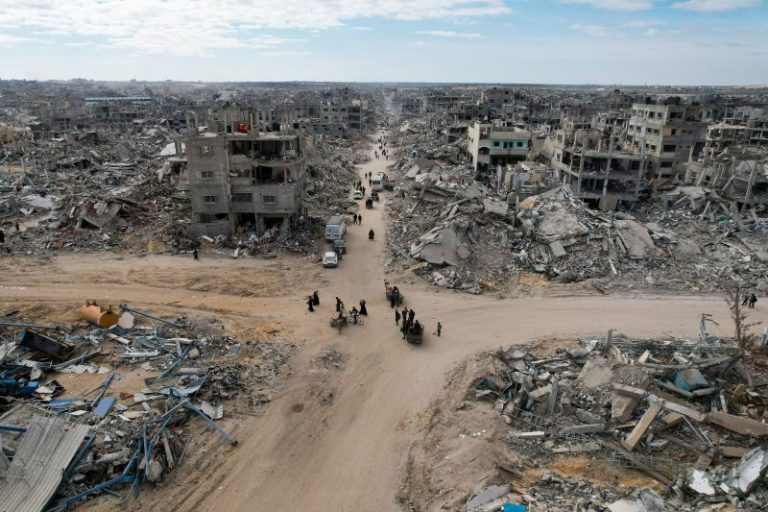
Israel’s defense minister said he told the military to advance plans for what he called a “humanitarian city” built on the ruins of Rafah in southern Gaza, according to reports in Israeli media.

In a briefing to reporters Monday, Israel Katz said the zone would initially house some 600,000 displaced Palestinians who have been forced to evacuate to the Al-Mawasi area along the coast of southern Gaza, multiple outlets who attended in the briefing reported. Palestinians who enter the zone will go through a screening to check that they are not members of Hamas.

They will not be allowed to leave, Katz said, according to Israeli media. Eventually, the defense minister said the entire population of Gaza – more than 2 million Palestinians – will be held in the zone. Katz then vowed that Israel would implement a plan, first floated by US President Donald Trump, to allow Palestinians to emigrate from Gaza to other countries.

Israeli politicians, including Prime Minister Benjamin Netanyahu, have eagerly supported the emigration plan, despite no country publicly expressing any willingness to take part. At a White House dinner with Trump Monday, Netanyahu said, “We’re working with the United States very closely about finding countries that will seek to realize what they always said, that they want to give the Palestinians a better future, and I think we’re getting close to finding several countries.”

Katz said the zone for displaced Palestinians will be run by international bodies, not the Israel Defense Forces (IDF), Israeli media reported. The IDF would secure the zone from a distance, Katz said, in a plan that appears to imitate the aid distribution mechanism of the US- and Israeli-backed Gaza Humanitarian Foundation (GHF). GHF operates the distribution sites, but the IDF surrounds them militarily.

It’s unclear what bodies would agree to participate in Katz’s plan, especially since most international organizations refuse to take part in GHF’s distribution sites due to serious concerns about impartiality and the safety of the Palestinian population. Hundreds of Palestinians have been killed trying to approach the distribution sites since they began operating a month ago, according to health officials in Gaza and the United Nations.

A spokesman for Katz has not responded to repeated requests for comment.

Asked about the plan at a press conference on Tuesday evening, IDF spokesman Brig. Gen. Effie Defrin said the military “will present several options to the political echelon.”

“Every option has its implications. We will act according to the directives of the political echelon,” Defrin added.

On Tuesday, British Foreign Secretary David Lammy said the UK opposes the new plan, just as it opposed GHF.

“I’m surprised at the statements that I’ve seen from Mr. Katz over the last 24 hours,” Lammy told a parliamentary committee. “They run contra to the proximity to a ceasefire that I thought we were heading towards.” Lammy added that he does not recognize the plan “as a serious context in which the people of Gaza can get the aid and support that they need at this time.”

In a statement Tuesday, Hamas said that Israel’s “persistent efforts to forcibly displace our people and impose ethnic cleansing have met with legendary resilience. Our people have stood firm in the face of killing, hunger, and bombardment, rejecting any future dictated from intelligence headquarters or political bargaining tables.”

“If they are done on a massive scale – whole communities – they can amount to war crimes,” Sfard said, dismissing the notion that any departure from Gaza could be considered voluntary.

“There is no consensual departure. There is no voluntary departure. People will flee from Gaza because Israel is mounting on them coercive measures that would make their life in Gaza impossible,” he said. “Under international law, you don’t have to load people on trucks at gunpoint in order to commit the crime of deportation.”

Qatar, which is now hosting proximity talks between Israel and Hamas, also rejected the deportation of Gaza’s population. “We have said very clearly we are against any forced relocation of Palestinians, or any relocation of Palestinians outside their land,” Majed Al Ansari, spokesman for the Qatari Foreign Ministry, said on Tuesday.

This post appeared first on cnn.com

More than 200 kindergarten students in northwestern China were found to have abnormal blood lead levels after kitchen staff used paint as food coloring, authorities said, in a case that’s stoked outrage in a country long plagued by food safety scandals.

Eight people, including the principal of the private kindergarten that the children attended, have been detained “on suspicion of producing toxic and harmful food,” according to a report released Tuesday by Tianshui city government, as cited by Chinese state broadcaster CCTV.

The principal and a financial backer of the school had allowed kitchen staff at the Heshi Peixin Kindergarten to use paint pigments to color the children’s food, leading to contamination, according to the report, which followed a days-long but ongoing probe into the cases.

Of the 251 students enrolled at the kindergarten, 233 were found to have abnormal levels of lead in their blood, the report found. The children were undergoing medical treatment with 201 of them currently in hospital, authorities said. Medical evaluation on the effects of their exposure, which can cause long-term and developmental harm, were not yet made public.

Local media cited a pediatrics professor as saying aspects of the case suggest there could be chronic lead poisoning, meaning exposure over a period of more than three months.

During the investigation, two food samples from the kindergarten – a red date steamed breakfast cake and a sausage corn roll – were found to have lead levels more than 2,000 times the national food safety standard for contamination, according to figures cited in the investigation report.

Authorities said they launched the probe on July 1 after becoming aware of reports that children at the school had abnormal blood lead levels. Lead exposure in children can lead to severe consequences, including impacting children’s brain development, behavior and IQ.

The government report did not disclose how long the exposure had gone on, with some affected parents interviewed by state media saying they had noticed abnormal signs in their children’s health and behavior for months – and clamoring for more answers about how the exposure happened.

“My mind went blank,” a mother of one affected student told state media after learning from a hospital in a nearby city that her child had a blood lead level of 528 micrograms per liter – a revelation that came after she said a local department in Tianshui told her the blood levels were normal, according to a report published by outlet China National Radio (CNR). China’s National Health Agency classifies “severe lead poisoning” as anything above 450 micrograms per liter.

“Right now, I’m not thinking about compensation – I just want my child to be healthy,” she was quoted as saying.

‘How could they be poisoned so seriously?’

The case has raised all-too-familiar concerns in China about food safety as well as the levels of transparency with which such cases are handled – especially in a system where independent journalism is tightly controlled and officials are under pressure to resolve issues quickly.

Earlier this month, after the school conducted tests on the students but did not issue individual results, many parents took their children to Xi’an – a major city a roughly four-hour drive from Tianshui – for testing, according to a report published by a news outlet affiliated with the official People’s Daily.

Reports from state-affiliated media found that 70 children who were tested in Xi’an had blood lead levels surpassing the threshold of lead poisoning, with six of those cases exceeding 450 micrograms per liter. According to China’s official guidelines, this level is classified as “severe.” A full picture of the results from all the students with abnormal levels was not publicly available.

One mother told the People’s Daily-affiliated outlet that she had been confused by her daughter’s constant stomach aches, loss of appetite and behavioral changes over the past six months, which didn’t improve after treating her with traditional Chinese medicine.

Others expressed skepticism about the results of the official investigation.

“The children only eat three-color jujube steamed cake and corn sausage rolls once or twice a week, how could they be poisoned so seriously?” one mother, who gave her surname Wu, told CNR. “If something like this happened to the children in school, at least give us an explanation. Now there is nothing.”

Earlier this week, Tianshui’s mayor Liu Lijiang said the city would “do everything possible to ensure the children’s treatment, rehabilitation and follow-up protection,” while vowing to close “loopholes” in Tianshui’s public food safety supervision.

‘Serious accountability’

The case has led to widespread expressions of outrage across Chinese social media, the latest among dozens of high-profile scandals have been reported by local media since the early 2000s.

“Serious accountability must be maintained and food safety issues cannot be ignored or slacked off. When it involves the life safety of young children, severe punishment must be imposed,” wrote one commentator on the X-like platform Weibo.

“Children are the hope of a family. I hope they can recover soon and grow up healthily,” said another.

Past scandals have also impacted children. In one of the most egregious examples, six infants died and some 300,000 others were sickened by milk powder formula containing the toxic industrial chemical melamine. Several executives found to be responsible for the 2008 case were ultimately handed death sentences, and the tragedy drove deep mistrust of domestic products and food safety in China.

Lead poisoning used to be a more widespread issue in China. In 2010, the central government for the first time allocated special funds for heavy metal pollution prevention in response to at least 12 high-profile cases the previous year that left more than 4,000 people with elevated blood lead levels, according to state media.

Officials have also moved to tighten food safety regulations in recent years, but pervasive cases have shown more needs to be done in terms of enforcement and to build back public trust, experts say.

Improving the food regulatory system calls for “more transparency, more thorough investigation of food safety cases,” said Yanzhong Huang, a senior fellow for global health at the Council on Foreign Relations in New York and author of the book “Toxic Politics: China’s Environmental Health Crisis and its Challenge to the Chinese State.”

Huang also said a lack of public confidence in the safety systems could evolve into a “trust crisis.”

This post appeared first on cnn.com

More than 80 years ago, the crew of the USS New Orleans, having been hit by a Japanese torpedo and losing scores of sailors, performed hasty repairs with coconut logs, before an 1,800-mile voyage across the Pacific in reverse.

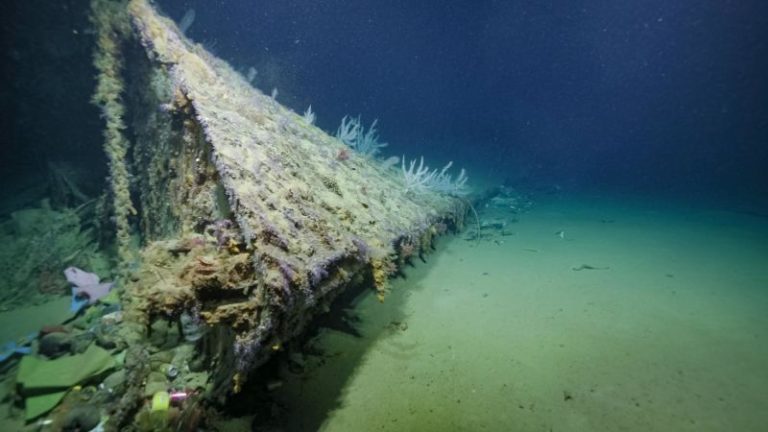
The front of the ship, or the bow, had sunk to the sea floor. But over the weekend, the Nautilus Live expedition from the Ocean Exploration Trust located it in 675 meters (2,214 feet) of water in Iron Bottom Sound in the Solomon Islands.

Using remotely operated underwater vehicles, scientists and historians observed “details in the ship’s structure, painting, and anchor to positively identify the wreckage as New Orleans,” the expedition’s website said.

On November 30, 1942, New Orleans was struck on its portside bow during the Battle of Tassafaronga, off Guadalcanal island, according to an official Navy report of the incident.

The torpedo’s explosion ignited ammunition in the New Orleans’ forward ammunition magazine, severing the first 20% of the 588-foot warship and killing more than 180 of its 900 crew members, records state.

The crew worked to close off bulkheads to prevent flooding in the rest of the ship, and it limped into the harbor on the island of Tulagi, where sailors went into the jungle to get repair supplies.

“Camouflaging their ship from air attack, the crew jury-rigged a bow of coconut logs,” a US Navy account states.

With that makeshift bow, the ship steamed – in reverse – some 1,800 miles across the Pacific to Australia for sturdier repairs, according to an account from the National World War II Museum in Louisiana.

“‘Difficult’ does not adequately describe the challenge,” Schuster said.

While a ship’s bow is designed to cut through waves, the stern is not, meaning wave action lifts and drops the stern with each trough, he said.

When the stern rises, rudders lose bite in the water, making steering more difficult, Schuster said.

And losing the front portion of the ship changes the ship’s center of maneuverability, or its “pivot point,” he said.

“That affects how the ship responds to sea and wind effects and changes the ship’s response to rudder and propellor actions,” he said.

The New Orleans’ officers would have had to learn – on the go – a whole new set of actions and commands to keep it stable and moving in the right direction, he said.

The ingenuity and adaptiveness that saved the New Orleans at the Battle of Tassafaronga enabled it to be a force later in the war.

After making it across the Pacific from Australia to the US naval yard at Puget Sound, Washington state – facing the right way this time – the New Orleans undertook permanent repairs. It later participated in actions across the Pacific, including the decisive battles of Saipan and Okinawa, which led to the US gaining airfields that enabled the final blows to be made on Imperial Japan.

The ship was awarded 17 battle stars for its actions in the Pacific, tying it for the third most such decorations in the Pacific theater, according to the World War II Museum.

The New Orleans’ bow was found during the 21-day Maritime Archaeology of Guadalcanal expedition of Iron Bottom Sound by Nautilus Live, a cooperative effort among NOAA Ocean Exploration, the Ocean Exploration Cooperative Institute, the University of New Hampshire and the Naval History and Heritage Command.

Iron Bottom Sound was called Savo Sound before World War II, but Allied sailors gave it its current moniker for the huge numbers of warships that sank in battle there.

According to the expedition, five major naval battles were fought there between August and December 1942, resulting in the loss of more than 20,000 lives, 111 naval vessels and 1,450 planes on all sides.

Before the expedition, “fewer than 100 of these US, Japanese, Australian, and New Zealand military ships and planes have been located,” it says on its website.

The expedition began on July 2 and continues until July 23. Its continuing searches are being live streamed at nautiluslive.org.

This post appeared first on cnn.com

Germany summoned the Chinese ambassador to the Foreign Ministry on Tuesday after saying China’s military had laser targeted a German aircraft taking part in an European Union operation in the Red Sea.

The flare up in tensions comes as concerns mount in the EU about Chinese influence on critical technologies and security infrastructure in Europe.

“Putting German personnel at risk and disrupting the operation is completely unacceptable,” said Germany’s Foreign Ministry on social media platform X.

There was no immediate response from China’s Foreign Ministry, and the Chinese Embassy in Berlin did not immediately respond to an emailed request for comment.

Germany’s Defense Ministry said the aircraft, taking part in the EU’s ASPIDES mission which protects international sea routes in the Red Sea, had been contributing a Multi-Sensor Platform, or “flying eye” for reconnaissance of the area since October.

A Chinese warship, which had been encountered several times in the area, had laser targeted the aircraft with no reason or prior communication during a routine mission flight, said a ministry spokesperson. The incident took place at the beginning of July.

“By using the laser, the warship put at risk the safety of personnel and material,” said the spokesperson, adding the mission flight was aborted as a precaution and the aircraft landed safely at a base in Djibouti.

The deployment of the MSP in ASPIDES has since been resumed, he said.

The MSP is operated by a civilian commercial service provider and German armed forces personnel are involved, said the ministry, adding the data collected significantly contributes to awareness for partners.

China has previously denied accusations of firing or pointing lasers at US planes. Incidents involving a European NATO member and China are more unusual.

In 2020, the US Pacific Fleet said a Chinese warship had fired a laser at a US naval patrol aircraft flying in airspace above international waters west of Guam. China said that did not accord with the facts.

This post appeared first on cnn.com