Author

admin

Browsing


FPX Nickel Corp. (TSXV: FPX) (OTCQB: FPOCF) (‘ FPX ‘ or the ‘ Company ‘) announces that the board of directors of the Company has approved the grant of 5,305,000 stock options (the ‘ Options ‘) to directors, officers and employees of the Company pursuant to the Company’s Share Compensation Plan. The Options have an exercise price of $0.30 per share, with a five-year term and are fully vested on the grant date, July 10, 2025 .


The Company also granted an aggregate 750,000 restricted share units (the ‘ RSUs ‘) to certain officers of the Company. The RSUs vest in three equal installments on the annual anniversaries of the grant date and each vested RSU will entitle the holder to receive one common share of the Company or the equivalent cash value upon settlement.


  About FPX Nickel Corp.  


 FPX Nickel Corp. is focused on the exploration and development of the Decar Nickel District, located in central British Columbia , and other occurrences of the same unique style of naturally occurring nickel-iron alloy mineralization known as awaruite. For more information, please view the Company’s website at https://fpxnickel.com/ or contact Martin Turenne , President and CEO, at (604) 681-8600 or ceo@fpxnickel.com .


On behalf of FPX Nickel Corp.


‘Martin Turenne’
Martin Turenne , President, CEO and Director


   Forward-Looking Statements   


  Certain of the statements made and information contained herein is considered ‘forward-looking information’ within the meaning of applicable Canadian securities laws. These statements address future events and conditions and so involve inherent risks and uncertainties, as disclosed in the Company’s periodic filings with Canadian securities regulators. Actual results could differ from those currently projected. The Company does not assume the obligation to update any forward-looking statement.  


  Neither the TSX Venture Exchange nor its Regulation Services Provider accepts responsibility for the adequacy or accuracy of this release.  


SOURCE FPX Nickel Corp.


  View original content to download multimedia: http://www.newswire.ca/en/releases/archive/July2025/11/c5569.html  


News Provided by Canada Newswire via QuoteMedia

This post appeared first on investingnews.com


(TheNewswire)


July 11, 2025 TheNewswire – Vancouver, British Columbia, Canada JZR Gold Inc. (TSXV:  JZR) (the ‘ Company ‘ or ‘ JZR ‘) is pleased to announce that it intends to undertake a non-brokered private placement offering (the ‘ Offering ‘) of up to 5,000,000 units (each, a ‘ Unit ‘) at a price of $0.30 per Unit, to raise aggregate gross proceeds of up to $1,500,000.  Each Unit will be comprised of one common share (each, a ‘ Share ‘) and one share purchase warrant (each, a ‘ Warrant ‘). Each Warrant will entitle the holder to acquire one additional common share (each, a ‘ Warrant Share ‘) of the Company at an exercise price of $0.40 per Warrant Share for a period of two (2) years after the closing of the Offering. The Warrants will be subject to an acceleration clause whereby, in the event that the volume weighted average trading price of the Company’s common shares traded on TSX Venture Exchange, or any other stock exchange on which the Company’s common shares are then listed, is equal to or greater than $0.75 for a period of 10 consecutive trading days, the Company shall have the right to accelerate the expiry date of the Warrants by giving written notice to the holders of the Warrants that the Warrants will expire on the date that is not less than 30 days from the date that notice is provided by the Company to the Warrant holders. The Units, Shares, Warrants and any Shares issued upon the exercise of the Warrants will be subject to a hold period of four months and one day from the date of issuance.


  The Units will be offered pursuant to available prospectus exemptions set out under applicable securities laws and instruments, including National Instrument 45-106 –   Prospectus Exemptions.  


  The Offering may close in one or more tranches, as subscriptions are received.  The Securities will be subject to a hold period of four months and one day from the date of issuance.  Closing of the Offering, which is expected to occur on or about July 21, 2025, will be subject to satisfaction of certain conditions, including, but not limited to, the receipt of all necessary regulatory and other approvals, including approval by the Exchange.  


  The Company intends to use the net proceeds from the Offering to fund operations of the fully constructed 800 tonne-per-day gravimetric mill, as well as future exploration work on the Vila Nova Gold project located in Amapa State, Brazil, and for general working capital purposes. JZR has been advised by its Joint Venture Royalty Agreement partner, ECO Mining Oil & Gaz Drilling and Exploration Ltda. (EIRELI) (‘ECO’), that the Mill is fully operational, but ECO is completing a few minor improvements to the Mill to improve operational efficiency. There will be further updates regarding operations in the immediate future.  


For further information, please contact:


Robert Klenk


Chief Executive Officer


rob@jazzresources.ca


Forward-Looking Information


  This press release contains certain ‘forward-looking information’ within the meaning of applicable Canadian securities legislation. Forward-looking information in this press release includes all statements that are not historical facts, including, without limitation, statements with respect to the details of the Offering, including the proposed size, timing and the expected use of proceeds and the receipt of regulatory approval for the Offering.  Forward-looking information reflects the expectations or beliefs of management of the Company based on information currently available to it.  Forward-looking information is subject to known and unknown risks, uncertainties and other factors that may cause the actual results, level of activity, performance or achievements of the Company to be materially different from those expressed or implied by such forward-looking information.  These factors include, but are not limited to:   the Company may not complete the Offering; the Offering may not be approved by the TSX Venture Exchange;   risks associated with the business of the Company; business and economic conditions in the mineral exploration industry generally; the supply and demand for labour and other project inputs; changes in commodity prices; changes in interest and currency exchange rates; risks related to inaccurate geological and engineering assumptions; risks relating to unanticipated operational difficulties (including failure of equipment or processes to operate in accordance with the specifications or expectations, cost escalation, unavailability of materials and equipment, government action or delays in the receipt of government approvals, industrial disturbances or other job action and unanticipated events related to health, safety and environmental matters); risks related to adverse weather conditions; political risk and social unrest; changes in general economic conditions or conditions in the financial markets; and other risk factors as detailed from time to time in the Company’s continuous disclosure documents filed with the Canadian securities regulators.  The forward-looking information contained in this press release is expressly qualified in its entirety by this cautionary statement.  The Company does not undertake to update any forward-looking information, except as required by applicable securities laws.  


  Neither the TSX Venture Exchange nor its regulation services provider (as that term is defined in the policies of the TSX Venture Exchange) accepts responsibility for the adequacy or accuracy of this press release.  


None of the securities of JZR have been registered under the U.S. Securities Act of 1933, as amended (the ‘U.S. Securities Act’), or any state securities law, and may not be offered or sold in the United States or to, or for the account or benefit of, persons in the United States or ‘U.S. persons’ (as such term is defined in Regulation S under the U.S. Securities Act) absent registration or an exemption from such registration requirements. This press release shall not constitute an offer to sell or the solicitation of an offer to buy in the United States nor shall there be any sale of the securities in any State in which such offer, solicitation or sale would be unlawful.


NOT FOR DISTRIBUTION TO U.S. NEWSWIRE SERVICES OR FOR RELEASE, PUBLICATION, DISTRIBUTION OR DISSEMINATION, DIRECTLY OR INDIRECTLY, IN WHOLE OR IN PART, IN OR INTO THE UNITED STATES.


Copyright (c) 2025 TheNewswire – All rights reserved.


News Provided by TheNewsWire via QuoteMedia

This post appeared first on investingnews.com

The US Department of Defense (DoD) will become the largest shareholder in MP Materials (NYSE:MP) after agreeing to purchase US$400 million worth of preferred stock in the company, which owns and operates the only rare earth mine in the United States.

The rare earths producer said the proceeds from the investment will fund the expansion of its processing capabilities at the Mountain Pass mine in California and support the construction of a second magnet manufacturing facility in the US.

The materials mined and processed by MP are critical to the production of permanent magnets used in military systems, including the F-35 fighter jet, drones, and submarines.

The US has depended heavily on foreign imports for these materials — primarily from China, which accounted for about 70 percent of rare earth imports in 2023, according to the US Geological Survey.

In a press release issued Thursday (July 10), MP Materials described the agreement as a ‘transformational public-private partnership’ and said it would ‘dramatically accelerate the build-out of an end-to-end US rare earth magnet supply chain and reduce foreign dependency.’

The investment gives the Pentagon newly created preferred stock convertible into common shares, along with a 10-year warrant to buy additional stock at US$30.03 per share.

If fully converted and exercised, the DoD would own 15 percent of MP Materials, based on current share counts as of July 9. That would exceed the 8.61 percent stake held by CEO James Litinsky and the 8.27 percent stake held by BlackRock Fund Advisors.

Litinsky emphasized that the deal does not equate to government control of the company. “This is not a nationalization,” he said in an interview on CNBC. “We remain a thriving public company. We now have a great new partner in our economically largest shareholder, DoD, but we still control our company. We control our destiny. We’re shareholder driven.”

MP’s new magnet facility, called the “10X Facility,” will increase the company’s magnet manufacturing capacity to 10,000 metric tons annually once it begins commissioning in 2028. The exact location of the facility has not yet been disclosed.

The Pentagon has committed to purchasing 100 percent of the magnets produced at the 10X Facility for 10 years.

Additionally, the DoD will guarantee a minimum price of US$110 per kilogram for MP’s neodymium-praseodymium oxide (NdPr), a key material used in magnet production. If market prices fall below that threshold, the Pentagon will pay the difference quarterly.

In return, once the new facility is operational, the government will receive 30 percent of any upside above US$110 per kilogram.

To further support the buildout, MP Materials expects to receive a US$150 million loan from the Pentagon within 30 days to expand its heavy rare earth separation capabilities at Mountain Pass, the only active rare earth mine in the US.

It is also commissioning a magnetics facility in Texas, known as Independence, to bolster its downstream processing capabilities.

As the only domestic miner with vertically integrated capabilities and a clear path to rare earth magnet production at scale, MP Materials now sits at the center of the Biden-to-Trump era effort to bring critical mineral supply chains back to American soil.

Securities Disclosure: I, Giann Liguid, hold no direct investment interest in any company mentioned in this article.

This post appeared first on investingnews.com

Here’s a quick recap of the crypto landscape for Friday (July 11) as of 9:00 a.m. UTC.

Get the latest insights on Bitcoin, Ethereum and altcoins, along with a round-up of key cryptocurrency market news.

Bitcoin and Ethereum price update

Bitcoin (BTC) is priced at US$118,008 a 6.3 percent increase in the last 24 hours. The day’s range for the cryptocurrency brought a low of US$110,768 and a high of US$118,667.

Bitcoin price performance, July 11, 2025.

Chart via TradingView

Ethereum (ETH) is priced at US$3,003.27, up by 7.4 percent over the past 24 hours. Its lowest valuation as of Friday was US$2,767.71, and its highest was US$3,027.12.

Altcoin price update

  • Solana (SOL) was priced at US$163.68, up by 5.3 percent over 24 hours. Its lowest valuation as of Friday was US$156.41, and its highest was US$166.09.
  • XRP was trading for US$2.59, up 10 percent in the past 24 hours. The cryptocurrency’s lowest valuation was US$2.43, and its highest was US$2.69.
  • Sui (SUI) is trading at US$3.50, up by 7.9 percent over the past 24 hours. Its lowest valuation was US$3.22 and its highest was US$3.54.
  • Cardano (ADA) is priced at US$0.7123, up by 18.4 percent in the last 24 hours. Its lowest valuation as of Friday was US$0.6233, and its highest was US$0.7521.

Today’s crypto news to know

Bitcoin hits US$118,000 as ETF inflows surge and US crypto legislation advances

Bitcoin shattered previous records by surging past US$118,000 this week, with bullish momentum sustained by large inflows into spot bitcoin ETFs and favorable policy signals from Washington.

The world’s largest cryptocurrency jumped over 7 percent Friday, closing in on US$119,000 as investors cheered bipartisan Senate passage of the GENIUS Act—a bill that would establish regulatory guardrails for stablecoins.

Market optimism is also supported by a softer US dollar and the Trump administration’s overt crypto friendliness.

The GENIUS Act would codify requirements for fiat-pegged stablecoins, offering investor protections while legitimizing the sector in the eyes of institutional capital. ETFs tracking Bitcoin have posted record volumes, drawing billions in net inflows.

Bitcoin is now up over 26 percent year-to-date, with total crypto market capitalization nearing US$3.5 trillion.

Analysts expect next week’s “crypto week” in Congress to further catalyze sentiment, as lawmakers debate multiple digital asset bills.

Trump-linked WLFI Token gets US$100M buy from anonymous entity

A little-known group called Aqua 1 Foundation became the largest public investor in Donald Trump’s World Liberty Financial (WLFI) crypto token, buying US$100 million worth of tokens in late June.

According to Reuters, though the foundation says it is based in the UAE, public records offered no clarity on the group’s financial backers or its supposed founder Dave Lee.

The token purchase directly benefits the Trump family, which reportedly receives 75 percent of all WLFI proceeds; the family’s estimated crypto earnings have now topped US$500 million.

While Aqua 1 said in a brief statement it was backed by ‘mission-aligned partners,’ it declined to offer transparency on its structure, citing privacy. US ethics experts have raised concerns over potential conflicts of interest, despite the White House stating Trump’s assets are in a trust managed by his children.

World Liberty and Trump Media did not respond to press inquiries.

EU regulator warns crypto firms over misleading investors

The European Securities and Markets Authority (ESMA) warned crypto platforms against blurring the distinction between regulated and unregulated products under MiCA, the EU’s new crypto framework.

ESMA said that many crypto firms are offering both compliant and non-compliant services on the same platform, creating investor confusion and undermining MiCA’s consumer protections.

Under MiCA, only firms licensed as crypto asset service providers (CASPs) are allowed to market specific financial products across the EU.

However, direct investments in commodities or crypto lending still fall outside the scope of those protections. ESMA also criticized some firms for using their regulated status as a marketing tactic to legitimize riskier services.

Securities Disclosure: I, Giann Liguid, hold no direct investment interest in any company mentioned in this article.

Securities Disclosure: I, Meagen Seatter, hold no direct investment interest in any company mentioned in this article.

This post appeared first on investingnews.com
 

(TheNewswire)


July 11, 2025 TheNewswire – Vancouver, British Columbia Blue Lagoon Resources Inc. (the ‘ Company ‘) (CSE: BLLG,OTC:BLAGF; OTCQB: BLAGF; FSE: 7BL) is pleased to announce the official opening of its wholly owned Dome Mountain Gold Mine Project, that recently received its mining permit making it one of only nine mining permits granted in British Columbia in the past decade – and one of just a few high-grade, road-accessible gold projects to reach production-ready status in recent years.


  The celebration, held on July 9, 2025, brought together over 100 guests from across Canada and abroad — including attendees from Germany, South Carolina, Denver, Montana and Toronto — to mark this significant milestone for the Company and the region.  


Dignitaries in attendance included the Mayor of Smithers, Gladys Atrill; MLA Sharon Hartwell (Bulkley Valley-Stikine); and MP Ellis Ross (Skeena-Bulkley Valley). Also present were various representatives from the Ministry of Mines and Critical Minerals and other provincial agencies. Minister of Mining and Critical Minerals, Jagrup Brar, was unable to attend in person due to his participation in the annual Conference of Mines Ministers of Canada, held in Prince Edward Island. However, he shared a recorded message acknowledging the importance of the project, which was played during the event. Minister Brar is scheduled to visit and tour the Dome Mountain site later this month.


In a powerful display of cultural heritage and support, 18 Hereditary Chiefs and Guardians from the Lake Babine Nation (LBN) joined Hereditary Chief and Council Member Fabian Michell for the opening ceremony, which featured a traditional drum ceremony representing songs from all four LBN clans: Bear, Beaver, Frog, and Caribou.


‘We were deeply honoured to stand alongside the Lake Babine Nation, whose presence and participation made this day truly meaningful,’ said Rana Vig, President & CEO of Blue Lagoon Resources. ‘This is more than just the opening of a gold mine — it’s a moment that reflects years of hard work, resilience, and respectful collaboration.’


During the two-day event, guests had the opportunity to take underground tours as well as visit the recently completed, state-of-the-art water treatment plant — a key environmental safeguard for the project. The facility has the capacity to treat over six times the current needs at Dome Mountain, ensuring long-term environmental resilience as production scales.


With the mine officially open, pre-production work will begin next week, setting up Dome Mountain to   begin mining and transition to near-term cash flow   once the Moving Bed Biofilm Reactor (MBBR) system is commissioned – expected in about four weeks. The two-stage water-treatment facility features a functioning High-Density Sludge (HDS) circuit and the MBBR circuit, which uses microbes to remove blasting-related ammonia and nitrates. The MBBR’s biological ramp-up phase typically takes approximately four weeks. Mining will commence immediately upon the completion of this phase.


‘As a geologist, this is a proud moment in my career,’ said Bill Cronk, Chief Geologist and Project Manager at Blue Lagoon Resources. ‘To see a project go from exploration to production — and to be part of that transformation — is something most geologists only dream of. This team made it happen and I’m very proud of that.’


The event also welcomed strategic investors and partners, including Dr. Quinton Hennigh, technical advisor to Crescat Capital, and Peter Espig, CEO of Nicola Mining, with whom Blue Lagoon has a long-term toll milling agreement.


‘Dome Mountain represents what’s possible when entrepreneurial determination meets responsible mining practices,’ said Peter Espig, CEO of Nicola Mining. ‘We’re proud to support Blue Lagoon in bringing this project to life, and to be part of a partnership grounded in trust, transparency, and technical excellence.’


Throughout the event, Blue Lagoon’s highly experienced technical team was on site to answer questions and provide detailed explanations of the mining methods and techniques planned for Dome Mountain. This included Steve Cutler of Roughstock Mining, an accomplished underground mining consultant with decades of experience who has worked on a wide range of underground gold projects across North America. Also present was Peter Bojtos, a professional mining engineer with global experience who has been directly involved in the opening or reopening of 19 mines over the course of his career — making Dome Mountain his 20th. Mr. Bojtos is a current director of Avino Silver & Gold Mines Ltd (formerly Chairman) (ASM:NYSE) and a technical advisor on the Dome Mountain Gold Project.


   With pre-production work beginning next week, Blue Lagoon Resources is now positioned to become one of British Columbia’s next producing high-grade gold mines.   


  About Blue Lagoon Resources Inc.  


  Blue Lagoon Resources is a Canadian based publicly listed mining company (CSE: BLLG,OTC:BLAGF; FSE: 7BL; OTCQB: BLAGF) focused on building shareholder value through the aggressive development of its 100% owned Dome Mountain Gold project. The Company is run by professionals with significant finance and mining experience and operates within a prime mining  


  jurisdiction in British Columbia, Canada. With the granting of a full    mining permit,    a key milestone achieved in February 2025 – one of only nine such permits issued in British Columbia since 2015 – Blue Lagoon is now focused on last preparatory activities and tasks related to the safe and secure opening of the Dome Mountain Gold Mine, targeting    Q3 2025    as the start of gold    production    . The Company’s primary objective has always been to become a cash-flowing mining company, to ultimately deliver tangible monetary value to shareholders, state, and local communities.  


  The Company is not basing its production decision at Dome Mountain on a feasibility study of mineral reserves demonstrating economic and technical viability. The production decision is based on having existing mining infrastructure, past bulk sampling and processing activity, and the established mineral resource.  The Company understands that there is increased uncertainty, and consequently a higher risk of failure, when production is undertaken in advance of a feasibility study.  


  For   further   information,   please   contact:  


  Rana   Vig  


  President   and   CEO  


  Telephone:   604-218-4766  


  Email:     ranavig@bluelagoonresources.com    


  The   CSE   has   not   reviewed   and   does   not   accept   responsibility   for   the   adequacy   or   accuracy   of   this   release.  


  Statement Regarding Forward-Looking Information: This release includes certain statements that may be deemed ‘forward-looking statements’. All statements in this release, other than statements of historical facts, that address events or developments that Blue Lagoon Resources Inc. (the ‘Company’) expects to occur, are forward-looking statements. Forward-looking statements are statements that are not historical facts and are generally, but not always, identified by the words ‘expects’, ‘targets’, ‘plans’, ‘anticipates’, ‘believes’, ‘intends’, ‘estimates’, ‘projects’, ‘potential’, ‘mine’, ‘production’ and similar expressions, or that events or conditions ‘will’, ‘would’, ‘may’, ‘could’ or ‘should’ occur. Although the Company believes the expectations expressed in such forward-looking statements are based on reasonable assumptions, such statements are not guarantees of future performance and actual results may differ materially from those in the forward-looking statements. Factors that could cause the actual results to differ materially from those in forward-looking statements include results of exploration activities may not show quality and quantity necessary for further exploration or future exploitation of minerals deposits, volatility of gold and silver prices, delays in mine development activities, future cash flow expectations and continued availability of capital and financing, permitting and other approvals, and general economic, market or business conditions.  Investors are cautioned that any such statements are not guarantees of future performance and actual results or developments may differ materially from those projected in the forward-looking statements. Forward-looking statements are based on the beliefs, estimates and opinions of the Company’s management, contractors and consultants on the date the statements are made. Except as required by applicable securities laws, the Company undertakes no obligation to update these forward-looking statements in the event that management’s, contractor’s and consultants’ beliefs, estimates or opinions, or other factors, should change.  


Copyright (c) 2025 TheNewswire – All rights reserved.


News Provided by TheNewsWire via QuoteMedia

This post appeared first on investingnews.com

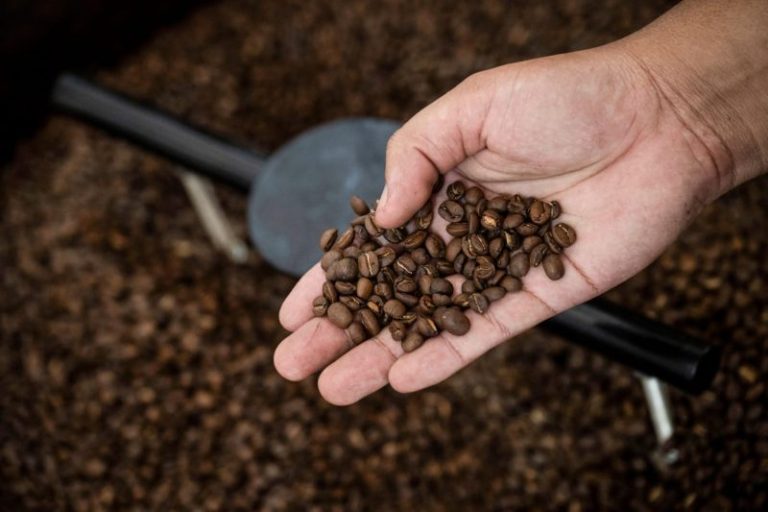
President Donald Trump’s proposed 50% tariff on Brazilian imports is bad news for coffee drinkers.

Brazil, the largest U.S. supplier of green coffee beans, accounts for about a third of the country’s total supply, according to data from the U.S. Department of Agriculture.

Coffee beans need to grow in a warm, tropical climate, making Hawaii and Puerto Rico the only suitable places in the United States to farm the crop. But, as the world’s top consumer of coffee, the U.S. requires a massive supply to stay caffeinated. Mintel estimates that the U.S. coffee market reached $19.75 billion last year.

The increase in trade duties could leave consumers with even higher costs after several years of soaring coffee prices. Inflation-weary consumers have seen prices for lattes and cold brew climb as droughts and frost hit the global coffee supply, particularly in Brazil. Earlier this year, coffee bean futures hit all-time highs. They rose 1% on Thursday, although still well below the record set in February.

To be sure, there’s still time for Brazil to strike a deal with the White House before the tariffs go into effect on Aug. 1. Plus, food and beverage makers are hoping that the Trump administration will grant exemptions for key commodities. U.S. Department of Agriculture Secretary Brooke Rollins said in an interview in late June that the White House is considering exemptions for produce that can’t be grown in the U.S. — including coffee.

But if that doesn’t happen, coffee companies like Folgers owner J.M. Smucker, Keurig Dr Pepper, Starbucks and Dutch Bros will face much higher costs for the commodity. Giuseppe Lavazza, chair of Italian roaster Lavazza, said on Bloomberg TV on Thursday morning that the latest tariff could mean “a lot of inflation” for the coffee industry.

Roasters will try to mitigate the impact of the higher tariff, but it won’t be easy.

“Every company is always trying to eke out the next efficiency, to dial into their operations or find the way to minimize inflationary pressures, but a 50% tariff on a commodity that fundamentally is not available in the U.S. — you can’t really do much with that,” Tom Madrecki, vice president of supply chain and logistics for the Consumer Brands Association, a trade group that represents the consumer packaged goods industry.

One mitigation tactic could be to import beans from countries other than Brazil, but companies will likely still be paying more for the commodity.

“A characteristic of tariffs, especially when you have tariffs on multiple countries at once, is that not just the inbound cost rises. It allows the pricing floor to also rise,” Madrecki said. “If you have cheaper coffee in a country different than Brazil, you’re not inclined to sell it at a 30% lower cost. You’re going to try to bump your coffee up a bit more, too.”

At-home coffee brands, like JM Smucker’s Dunkin’ and Kraft Heinz’s Maxwell House, have already been hiking their prices this year in response to spiking commodity costs. More price increases could be on the way for consumers, although retailers may push back.

Keurig Dr Pepper would consider additional price hikes in the latter half of the year to mitigate the impact of tariffs, CEO Tim Cofer said in late April, after Trump introduced his initial round of so-called reciprocal duties.

And Smuckers warned investors on its quarterly conference call in early June that tariffs on coffee were weighing on its profits. Coffee accounts for roughly a third of the company’s revenue.

“Green coffee is an unavailable natural resource that cannot be grown in the continental United States due to its reliance on a tropical climate,” Smuckers CEO Mark Smucker said. “We currently purchase approximately 500 million pounds of green coffee annually, with the majority coming from Brazil and Vietnam, the two largest coffee-producing countries.”

Vietnam, which announced a tentative trade deal with the White House earlier this month, supplies about 8% of the U.S.’s green coffee beans. Under the agreement, the U.S. will impose a 20% duty on Vietnamese imports.

Consumers who prefer a caramel macchiato from Starbucks for their caffeine hit will likely see a more muted impact on their wallets.

After several quarters of sluggish U.S. sales, Starbucks CEO Brian Niccol said in late 2024 that the company wouldn’t raise prices in 2025, in the hopes of winning back customers who had complained about how expensive its drinks had gotten. While it waits for its turnaround to take hold, Starbucks might choose to swallow the higher coffee costs.

The coffee giant also benefits from its diversity — both in suppliers and the breadth of its menu, which now includes the popular Refreshers line. Starbucks imports its coffee from 30 different countries, and roughly 10% of its cost of goods sold in North America comes from coffee.

The new trade duty could mean a 0.5% increase in Starbucks’ North American cost of goods sold, assuming about 22% of its beans come from Brazil, TD Cowen analyst Andrew Charles wrote in a note to clients on Thursday. Starbucks’ packaged drinks, which are distributed by Nestle, could see their cost of goods sold increase 3.5%. Altogether, that represents a 5-cent drag on annual earnings per share, according to Charles.

For rival Dutch Bros, higher coffee costs also wouldn’t hurt its bottom line much. Coffee accounts for less than a tenth of the drive-thru coffee chain’s cost of goods sold. Assuming that Dutch Bros sources more than half of its coffee from Brazil, its cost of goods sold would rise just 1.3%, according to Charles’ estimates.

This post appeared first on NBC NEWS

Statistics Canada released its June Labour Force Survey on Friday (July 11). The data indicated that 83,000 new jobs were added to the workforce, led by 34,000 new employees in the wholesale and retail trade category and a 17,000 worker rise in the healthcare and social assistance category.

In other positive news for the Canadian job market, the overall employment rate rose by 0.1 percent to 60.9 percent, while the unemployment rate declined by 0.1 percent to 6.9 percent.

The strong labour report came as a surprise to analysts who had been expecting employment rates to be flat month-over-month and the unemployment rate to increase to 7.1 percent. The June data signifies the first notable improvement in the job market since January and breaks a three-month rising trend in the unemployment rate.

Late on Thursday (June 10), US President Donald Trump threatened Canada with a 35 percent tariff on all exports starting on August 1. In his letter to Prime Minister Mark Carney, Trump said that Canada had imposed unfair trade practices, citing a 400 percent tariff on dairy products.

However, Canada has a trade deficit with the US when it comes to dairy. Imports in 2024 reached a record C$877 million, while exports of Canadian dairy totaled just C$358 million. Canada imposes a tariff rate quota, which limits the amount of duty-free dairy products that can enter Canada. Tariffs are only applied once the quota is exceeded.

Trump also pointed to continued flows of fentanyl into the US, saying, “If Canada works with me to stop the flow of fentanyl, we will, perhaps, consider an adjustment to this letter.”

The president has used fentanyl as a reason for imposing tariffs against Canada since the start of his term, although the Canadian government is already taking action to secure the border further and the flow of the drug through the northern border remains a fraction of what it is at the southern border.

So far in the 2025 fiscal year, which started in October 2024, there have been 58 pounds of fentanyl seized at the Canada-US border. While the quantity of drugs seized coming from Canada has increased from 43 pounds the prior year, the number of events recorded has fallen to 38 from 67 in fiscal year 2024.

In December 2024, Canada announced C$1.3 billion in additional funding for increased security at the border, which included new and expanded detection capacity for illegal drugs. Between February and March, the Canada Border Services Agency conducted a one month drug-seizure operation focused on air, land and sea shipments named Operation Blizzard.

In May, the agency reported it seized 1.73 kilograms of fentanyl during the operation, 1.44 kilograms of which were en route to the United States. Additionally, 67.5 percent of the 2,600 seizures related to any drug ‘were of illegal narcotics coming to Canada from the United States,’ with only 17.5 percent going in the other direction.

Trump also announced on Tuesday (July 8) a 50 percent tariff on copper imports into the United States. The levies were imposed under section 232 of the Trade Expansion Act, which is designed to give the president the power to levy tariffs on imports deemed to be critical to national security.

According to the United States Geological Survey, Canada is the second largest exporter of refined copper to the United States behind Chile and top exporter of copper ore to the country.

The effects of the tariffs may take some time to work into the market. Still, British Columbia and Ontario will feel the impact as the two largest copper-producing provinces.

The copper price skyrocketed on the news to a fresh all-time high of US$5.72 per pound on the COMEX.

Markets and commodities react

In Canada, equity markets were mixed this week. While the S&P/TSX Composite Index (INDEXTSI:OSPTX) fell 0.04 percent to close at 27,023.25 on Friday (July 11), the S&P/TSX Venture Composite Index (INDEXTSI:JX) fared better, gaining 4.01 percent to 784.42, and the CSE Composite Index (CSE:CSECOMP) climbed 6.53 percent to 129.79.

US equity markets ended the week largely flat overall, with the S&P 500 (INDEXSP:INX) gaining just 0.21 percent to close Thursday at 6,259.74, the Nasdaq 100 (INDEXNASDAQ:NDX) climbing 0.13 percent to 22,780.60 and the Dow Jones Industrial Average (INDEXDJX:.DJI) falling 0.44 percent to 44,371.52.

In precious metals, the gold price rose 0.56 percent over the week to US$3,356.14 by Friday at 4 p.m. EDT. The silver price reached US$38.53, its highest price since 2011, near the end of trading Friday, before pulling back slightly to end the week up 3.38 percent at US$38.41.

In base metals, copper pulled back slightly from its fresh all-time high mentioned above, but still ended the week with a 10.24 percent gain to US$5.58. The S&P GSCI (INDEXSP:SPGSCI) lost 0.98 percent to close at 551.38.

Top Canadian mining stocks this week

How did mining stocks perform against this backdrop?

Take a look at this week’s five best-performing Canadian mining stocks below.

Stock data for this article was retrieved at 4 p.m. EDT on Friday using TradingView’s stock screener. Only companies trading on the TSX, TSXV and CSE with market capitalizations greater than C$10 million are included. Mineral companies within the non-energy minerals, energy minerals, process industry and producer manufacturing sectors were considered.

1. Avanti Gold (CSE:AGC)

Weekly gain: 158.33 percent
Market cap: C$10.92 million
Share price: C$0.155

Avanti Gold is an exploration and development company working to advance its flagship Misisi gold project in the Democratic Republic of the Congo (DRC).

The project consists of three mining licenses covering an area of 133 square kilometres in the Kibara gold belt and is a 73.5/21.5 joint venture between Avanti and Chinese mining company MMG (HKEX:1208), with the DRC government retaining a 5 percent interest.

An August 2023 technical report demonstrated an inferred mineral resource estimate of 3.11 million ounces of contained gold from 40.8 million metric tons of ore with an average grade of 2.37 g/t.

Shares in Avanti rose this week after the company announced on Thursday that it settled the payment dispute between itself, Arc Minerals (LSE:ARCM) and Regency Mining, which Avanti acquired in December 2022.

Prior to its acquisition by Avanti, in April 2022 then-private company Regency agreed to purchase Arc subsidiary Casa Mining, owner of the 73.5 percent interest in the Misisi project. Under the terms of the original deal, Regency agreed to pay Arc in part with US$1.25 million in shares of a public company, which was never fulfilled.

The new settlement agreement will enable Avanti to reduce the amount it owes if it pays within certain timeframes: US$562,500 if it pays Arc by August 31, or US$625,000 by October 31 or US$750,000 by December 31. If the payment is not completed this year, the amount owed will revert to the original US$1.25 million and be due on January 1, 2026.

2. Silver Mountain Resources (TSXV:AGMR)

Weekly gain: 139.68 percent
Market cap: C$27.87 million
Share price: C$1.51

Silver Mountain Resources is an exploration and development company working to restart production at the Reliquias underground mine in Central Peru.

The mine is part of the larger Castrovirreyna project, which consists of three blocks of mineral concessions. The main Reliquias block consists of 245 concessions covering an area of 24,093 hectares. The site also hosts a 2,000 metric ton per day processing plant, with an operating tailings dam.

A May 2024 preliminary economic assessment demonstrated project viability with an after-tax net present value of C$85 million, an internal rate of return of 51 percent and a payback period of 1.8 years.

The included mineral resource estimate showed measured and indicated grades of 4.25 ounces per metric ton silver, 0.41 grams per metric ton (g/t) gold, 2.02 percent lead, 3.09 percent zinc and 0.32 percent copper from 1.31 million metric tons of ore.

Shares in Silver Mountain gained significantly this week after it announced on Tuesday (July 8) that it was finalizing an agreement with global commodities supplier Trafigura for a US$10 million prepayment facility to advance work at Reliquias.

The company said it would provide further details once definitive documentation is completed.

3. Altima Energy (TSXV:ARH)

Weekly gain: 100 percent
Market cap: C$23.99 million
Share price: C$0.49

Altima Energy is a light oil and natural gas exploration and development company with operations in Alberta, Canada.

Its primary asset is the Richdale property in Central Alberta. The property consists of five producing light oil wells and sits on 5,920 acres of long-term reserves. The property hosts combined proved and probable reserves of just under 2 billion barrels of oil equivalent, with a pre-tax net present value of C$25.8 million.

The company also owns two wells at its Twinning light oil site near Nisku, seven producing wells at its Red Earth property in Northern Alberta and two multi-zone wells at its Chambers Ferrier liquid gas production property.

Shares in Altima gained this week after it released news on Tuesday that it had completed a private placement for proceeds of up to C$5.5 million. Under the terms of the deal, the company will issue 20 million units at C$0.275 per unit, which each include one common share and one warrant allowing the holder to purchase a common share for C$0.40.

The company said that part of the proceeds would be used to complete field upgrades at its Red Earth and Richdale properties.

4. McFarlane Lake Mining (CSE:MLM)

Weekly gain: 83.33 percent
Market cap: C$14.88 million
Share price: C$0.055

McFarlane Lake Mining is a gold exploration company working to advance a portfolio of properties in Southern Ontario, Canada, with options agreements in place to earn 100 percent interests in the projects.

Its primary focus has been on its McMillan property southwest of Sudbury. The site consists of 12 mining leases over 268 hectares and hosted historic mining in the 1930s.

McFarlane Lake explored the property throughout the first half of 2025. On July 3, the company shared assay results from the final drill hole of its drill program at the project. The drill hole intersected a broad interval of 1.3 g/t gold over 29.5 meters, which included intersections of 6.6 g/t gold over 4.55 meters and 20.1 g/t over 1.45 meters.

In the same announcement, the company reported that a downhole electromagnetic survey of the drill hole located an electromagnetic ‘superconductor’ nearby.

Shares in McFarlane were up this week after it was announced on Monday (July 7) that it would be acquiring the Juby Gold project from Aris Mining (TSX:ARIS) for a total consideration of US$22 million, including US$10 million in cash.

The transaction includes Aris’ 100 percent stake in Juby and its 25 percent stake in the adjacent Knight property, in which Orecap Invest holds the other 75 percent interest.

In a follow-up release on Tuesday, the company said the property is one of Ontario’s largest undeveloped gold properties and highlighted a historical indicated mineral resource of 775,000 ounces of gold from 21.31 million metric tons of ore with an average grade of 1.13 g/t gold, plus an inferred resource of 1.49 million ounces of contained gold from ore grading 0.98 g/t.

5. World Copper (TSXV:WCU)

Weekly gain: 75 percent
Market cap: C$14.63 million
Share price: C$0.07

World Copper is an exploration and development company focused on its Zonia copper project in Central Arizona, US. It also owns the Escalones copper project in Chile.

The Zonia property, acquired following a merger with Cardero Resources in January 2022, has seen extensive exploration dating back 100 years and hosted open-pit mining operations until 1975.

In November 2024, the company released an amended resource estimate for the project, showing a total indicated resource of 668 million pounds of contained copper from 112.2 million short tons of ore with an average grade of 0.297 percent, and an inferred resource of 320 million pounds from 62.9 million short tons of ore with an average grade of 0.255 percent.

On February 19, World Copper reported it had entered into a binding agreement to sell Zonia to an arm’s length third party for cash considerations of C$26 million. However, on May 6, World Copper announced that it terminated the agreement.

The company has not released news since. Shares gained this week against a backdrop of US copper tariffs and a surging copper price.

FAQs for Canadian mining stocks

What is the difference between the TSX and TSXV?

The TSX, or Toronto Stock Exchange, is used by senior companies with larger market caps, and the TSXV, or TSX Venture Exchange, is used by smaller-cap companies. Companies listed on the TSXV can graduate to the senior exchange.

How many mining companies are listed on the TSX and TSXV?

As of February 2025, there were 1,572 companies listed on the TSXV, 905 of which were mining companies. Comparatively, the TSX was home to 1,859 companies, with 181 of those being mining companies.

Together the TSX and TSXV host around 40 percent of the world’s public mining companies.

How much does it cost to list on the TSXV?

There are a variety of different fees that companies must pay to list on the TSXV, and according to the exchange, they can vary based on the transaction’s nature and complexity. The listing fee alone will most likely cost between C$10,000 to C$70,000. Accounting and auditing fees could rack up between C$25,000 and C$100,000, while legal fees are expected to be over C$75,000 and an underwriters’ commission may hit up to 12 percent.

The exchange lists a handful of other fees and expenses companies can expect, including but not limited to security commission and transfer agency fees, investor relations costs and director and officer liability insurance.

These are all just for the initial listing, of course. There are ongoing expenses once companies are trading, such as sustaining fees and additional listing fees, plus the costs associated with filing regular reports.

How do you trade on the TSXV?

Investors can trade on the TSXV the way they would trade stocks on any exchange. This means they can use a stock broker or an individual investment account to buy and sell shares of TSXV-listed companies during the exchange’s trading hours.

Article by Dean Belder; FAQs by Lauren Kelly.

Securities Disclosure: I, Dean Belder, hold no direct investment interest in any company mentioned in this article.

Securities Disclosure: I, Lauren Kelly, hold no direct investment interest in any company mentioned in this article.

This post appeared first on investingnews.com
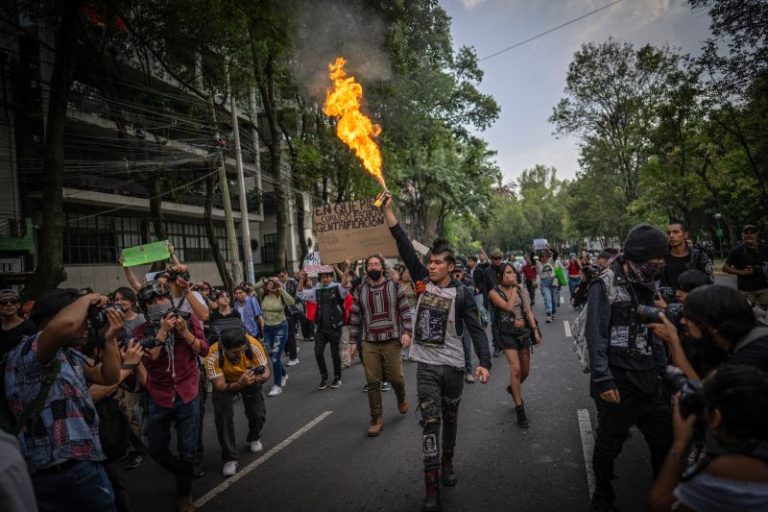
The words “Get out of Mexico” are still visible on one shop window as protestors violently kicked in the glass pane. In another clip, “Kill a gringo” is spray-painted on a wall in Mexico City as demonstrators carried placards demanding western foreigners “stop stealing our home.”

These were some of the striking scenes at a mass protest last week against gentrification and the rising cost of living in the Mexican capital city, which some have blamed on an influx of foreigners from the United States and Europe.

While the demonstration was largely peaceful and reflected growing anger about inequality in the Mexican capital, those who vandalized stores in the city’s wealthier neighborhoods and used anti-immigration language were criticized by Mexican President Claudia Sheinbaum as being xenophobic.

“No to discrimination, no to racism, no to classism, no to xenophobia, no to machismo, no to discrimination. All human beings, men and women, are equal, and we cannot treat anyone as less,” Sheinbaum said at a Monday press conference.

The US Department of Homeland Security, which has been carrying out an immigration crackdown in the US, reacted to Friday’s protests with an ironic post on X: “If you are in the United States illegally and wish to join the next protest in Mexico City, use the CBP Home app to facilitate your departure.”

The rallies in Mexico City mirror protests that have erupted in cities like Barcelona and Paris against skyrocketing costs, which have been blamed on overtourism, short-term home rentals, and an influx of people and businesses with higher purchasing power.

Frente Anti Gentrificación Mx, one of several groups that helped organize the protest on Friday, compared gentrification on its social media to a new form of colonization in which “the state, institutions, and companies, both foreign and local, provide differential treatment to those with greater purchasing power.”

Anti-gentrification activists say thousands of people in the Mexican capital have been forced out of their homes in recent years as tourists and remote workers, many of whom are believed to be American, take over popular neighborhoods like Roma and Condesa.

But a spokesperson for Frente Anti Gentrificación Mx pushed back against Sheinbaum’s suggestion that their campaign was xenophobic, saying the demonstration was meant to highlight the plight of those priced out of their homes and to demand reforms from the government.

“In Mexico, housing costs have risen 286% since 2005 … while real wages have decreased by 33%,” said Morales, citing data from the National Institute of Statistics and Geography and the Federal Mortgage Society.

She acknowledged that many people have been moving to Mexico for a variety of reasons, from the appeal of its culture to the relative affordability of its houses. At the same time, she urged potential newcomers to consider how such a move could affect the local community.

Not a new phenomenon

Immigration is not the sole cause of Mexico City’s gentrification, which is a phenomenon that has happened for decades, say experts.

“In the debates, there’s a confusion about gentrification being when foreigners arrive. And that’s not true,” activist and lawyer Carla Escoffié said, noting that other causes include inequality, deficiencies in housing policy and land privatization.

“Not all foreigners gentrify, nor are only those who gentrify foreigners, nor is a significant migration process necessary for gentrification to occur. Gentrification is based on inequalities in such a way that it’s not the same thing,” she added.

But the arrival of short-term rentals like Airbnb, and remote work policies during the pandemic, have turbo-charged the gentrification debate in recent years.

“Since 2020, a new phase of gentrification has begun, one that has worsened,” said Escoffié. “It’s been driven by digital nomads and short-term rental platforms like Airbnb.”

Airbnb defended its activities in Mexico City on Tuesday, saying it helped generate more than $1 billion in the local economy last year, and arguing that guests who booked accommodations also spent money on shops and services in the capital.

Mexico City’s government signed an agreement with Airbnb and UNESCO in 2022 to promote the capital as “a global hub for digital nomads and creative tourism.” Sheinbaum, who was the mayor of Mexico City at the time, presented the initiative as a way to boost the local economy.

The appeal was especially attractive for US citizens, who can stay in Mexico without a tourist visa for less than six months before requiring a special temporary residency permit, according to experts. In 2022, 122,758 temporary residency permits were granted to foreigners for Mexico, according to the National Institute of Migration, up from 97,825 in 2019.

But for many residents, the Mexico City initiative was another sign of the displacement happening around them.

A global trend

Anger about gentrification is not unique to Mexico City. Local governments from tourist destinations in Europe, such as Spain’s Canary Islands, Lisbon and Berlin, have announced restrictions on short-term rentals in the past decade.

Barcelona’s leftist mayor, Jaume Collboni, said that by November 2028, the government will scrap the licenses of the 10,101 apartments currently approved as short-term rentals in the popular tourist destination.

Residents in the Catalan capital have documented how renting by the day is more profitable for landlords than renting by the month, which has triggered evictions and the transformation of homes into short-term tourist accommodations.

In Mexico City, Airbnb has over 26,500 listings, according to the rental platform, many of which are concentrated in the areas most affected by gentrification. These listings are concentrated in the central neighborhoods of Condesa, Roma, Juárez and Polanco, according to Inside Airbnb, a project that provides data about Airbnb’s impact on residential communities.

In response to mounting criticism and the protests of 2022, the local government introduced new regulations, but experts argue they fall far short.

Airbnb, meanwhile, says the city needs regulations that support home sharing, not prohibition. It argues that many people in Mexico City rely on the platform as a financial lifeline, with 53% of its hosts saying the service helped them stay in their homes and 74% of hosts saying it helped cover essential expenses.

Activists are now bracing for when Mexico opens its doors to soccer fans for the next World Cup in 2026, which Morales fears could result in the state prioritizing business dealings over residents. “Given the critical state we’re in, who would come up with this?” she asked.

This post appeared first on cnn.com

European Commission President Ursula von der Leyen survived a no-confidence vote in the European Parliament on Thursday, brought by mainly far-right lawmakers who alleged she and her team undermined trust in the EU through unlawful actions.

As expected, the motion failed to get the two-thirds majority it needed to pass. Only 175 members of parliament backed the motion, while 360 voted against and 18 abstained.

Romanian nationalist Gheorghe Piperea, the lead sponsor of the motion, had criticized among other things the Commission’s refusal to disclose text messages between von der Leyen and the chief executive of vaccine maker Pfizer during the COVID-19 pandemic.

“The decision-making has become opaque and discretionary, and raises fears of abuse and corruption. The cost of obsessive bureaucracy of the European Union such as (tackling) climate change has been a huge one,” Piperea told the parliament on Monday.

During the debate on her leadership, von der Leyen defended her record in parliament, rejecting criticism of her management of the pandemic and asserting that her approach ensured equal vaccine access across the EU.

Although the censure motion had little chance of success, it was a political headache for von der Leyen as her Commission negotiates with US President Donald Trump’s administration to try to prevent steep US tariffs on EU goods.

It was the first time since 2014 that a Commission president has faced such a motion. Then President Jean-Claude Juncker also survived the vote.

This post appeared first on cnn.com

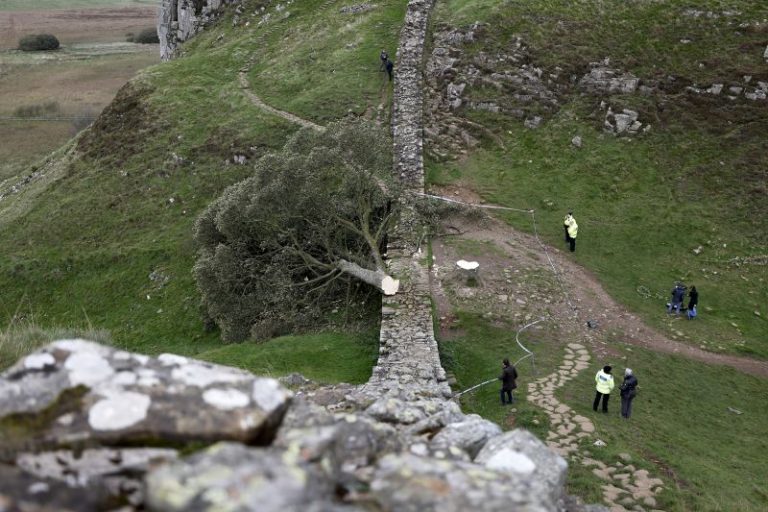
The remains of a famous sycamore tree, which stood on Britain’s Roman-built Hadrian’s Wall in northern England for more than 200 years, has found a new home nearly two years after it was illegally felled.

The removal of the tree from its spot known as “Sycamore Gap,” a pronounced dip in Hadrian’s Wall, in September 2023 sparked global outrage. Sycamore Gap was considered one of the most photographed trees in England and was made famous to millions when it appeared in Kevin Costner’s 1991 blockbuster film “Robin Hood: Prince Of Thieves.”

In May, two men were found guilty of criminal damage for felling the landmark tree.

Now, a section of it will be put on permanent display at The Sill: National Landscape Discovery Centre, about two miles (three kilometers) from where it once stood.

The UK’s National Trust gave the largest remaining piece of the salvaged trunk to the Northumberland National Park, where the tree was located.

“In the days and months after the tree was felled, The Sill became a place of celebration and memory. Visitors left post-it notes, letters, drawings and messages expressing grief, love, and hope,” the park said in a press release Thursday.

A public consultation was held in the aftermath of the felling on the future of the tree trunk. “The resulting exhibit honours the tree’s natural form while inviting people to engage with it in a deeply personal way,” The Sill said in a press release Thursday.

Tree trunk ‘is huggable’

The trunk is positioned upright, as it once was, and is surrounded by tree oak benches and streams of wood bent to form a canopy in the shape of a huge leaf – recreating the shelter the tree once offered for people to sit and reflect.

Some tributes from the local community have been carved into the wood.

“The original tree may be gone in the form we knew it, but its legacy remains, and what has come since has been endlessly positive, affirming our belief that people nature and place cannot be separated and are interdependent,” said Tony Gates, chief executive of Northumberland National Park Authority, in the release.

“This commission has been the biggest honour of my career,” said Charlie Whinney, the artist behind the new exhibition, in the release.

“I really hope what we’ve done in some small way allows the people of Northumberland and those who held this tree close to their hearts to process the loss they still feel from that day in September 2023, when the tree was illegally cut down,” he added.

“The work looks forward with hope, the tree is regrowing, and Sycamore Gap will always be a magical place to visit,” Whinney continued.

This post appeared first on cnn.com