
Author

admin

Browsing

Here’s a quick recap of the crypto landscape for Wednesday (July 9) as of 9:00 p.m. UTC.

Get the latest insights on Bitcoin, Ethereum and altcoins, along with a round-up of key cryptocurrency market news.

Bitcoin and Ethereum price update

Bitcoin’s (BTC) price peaked at US$111,744 as the market wrapped, a 2.7 percent increase in the last 24 hours. The day’s range for the cryptocurrency also brought a low of US$108,644.

Crypto analyst TradingShot believes Bitcoin may not experience another rally this cycle, despite projections exceeding US$160,000. This assessment is based on Bitcoin’s historical four year patterns.

According to TradingShot, Bitcoin has not broken out of its current upward channel to trigger the explosive rallies seen in 2017 and 2021. If the four year cycle holds, time is running out for such a breakout.

Ethereum (ETH) is priced at US$2,772.50, up by 6.3 percent over the past 24 hours. On Wednesday, the cryptocurrency hit a low of US$2,635.74 before rallying to finish the day at its peak, mirroring a broader market trend.

Altcoin price update

Bitcoin price performance, July 9, 2025.

Chart via TradingView.

  • Solana (SOL) was priced at US$157.12, up by 3.7 percent over 24 hours. Its lowest valuation as of Wednesday was US$153.45.
  • XRP was trading for US$2.42, up 4.5 percent in the past 24 hours. The cryptocurrency’s lowest valuation was US$2.36
  • Sui (SUI) was trading at US$3.05, up by 4.9 percent over the past 24 hours. Its lowest valuation was US$2.93.
  • Cardano (ADA) is priced at US$0.6217, up by 5.6 percent in the last 24 hours. Its lowest valuation as of Wednesday was US$0.6027

Today’s crypto news to know

US Senate committee gathers for hearing on digital assets

The US Senate Banking Committee held a hearing on Wednesday dubbed ‘From Wall Street to Web3’ to discuss proposed legislation regarding digital assets, including the Clarity Act.

Massachusetts Democrat Elizabeth Warren, a longtime crypto critic, said she is in favor of laws regulating digital assets that strengthen the financial system in the US, but criticized aspects of the Clarity Act that she said would allow non-crypto companies to “put their stocks on the blockchain,’ evading US Securities and Exchange Commission guidelines.

“That is a serious problem for our country,” she warned.

Ahead of the hearing, Warren sent a statement to analytical publication the Block, accusing Republicans of enabling “industry handouts” to crypto lobbyists. Other vocal critics of the bill include New York Attorney General Letitia James and the ranking member of the House Financial Services Committee Maxine Waters.

Both she and Warren have questioned the ethics of US President Donald Trump’s business ties to the industry. At the hearing, former chief White House ethics lawyer Richard Painter, who was invited to speak by Warren, said:

“We cannot have the people who are in charge of passing legislation and enforcing legislation, implementing legislation, have conflicts of interest with their official responsibilities. You should be divesting from crypto if you’re going to be regulating crypto.”

Lawmakers are now facing a September 30 deadline to define cryptocurrencies, address Trump’s crypto interests and finalize industry rules.

RLUSD gains traction via Transak integration and BNY Mellon custody

Transak, a Web3 onboarding infrastructure provider allowing users to buy and sell digital assets using traditional payment methods, officially integrated Ripple’s US-dollar pegged stablecoin, RLUSD.

The move expands the token’s reach to 8.3 million additional users across 64 countries.

“Transak has always strived to make finance truly accessible and that includes bringing on assets like RLUSD that balance blockchain ethos with compliance requirements,” said Sami Start, CEO and co-founder of Transak.

“With this integration, users gain access to one of the most thoughtfully designed stablecoins in the market, now available through a seamless and trusted fiat-to-crypto experience.”

The news was announced the same day Ripple chose Bank of New York Mellon to custody its USD reserves. This move by a traditional financial giant lends significant institutional credibility to Ripple’s stablecoin, which was built as an enterprise-grade stablecoin to improve the efficiency of cross-border transactions.

“As primary custodian for RLUSD, we’re proud to support the growth of digital assets by providing a differentiated platform, designed to meet the evolving needs of institutions in the digital assets ecosystem,” said Emily Portney, global head of asset servicing at Bank of New York Mellon.

South Korea to reclassify crypto businesses as venture companies

South Korea’s Ministry of SMEs and Startups announced Wednesday that it will lift current restrictions preventing crypto-related businesses from qualifying as venture companies. Firms in the virtual asset sector are currently restricted in their eligibility for various tax breaks and financial support due to crypto regulations implemented last year.

However, the minister said that the proposed amendment reflects “a shift in perception” regarding the industry.

“It is expected that the virtual asset business operators based on new technologies with innovation and business viability will be newly recognized as venture companies, and existing venture companies will also be able to promote virtual asset-related businesses,” the statement explains, “which will lead to the activation and expansion of the venture ecosystem and promote the fostering of the virtual asset industry.”

This change will be supported by the establishment of “legal and institutional safeguards” designed to protect users. Public comments on the proposal will be accepted by the ministry until August 18.

Tether reveals it holds US$8 billion in gold in private Swiss vault

Tether, the issuer behind the world’s largest stablecoin, USDT, has disclosed it holds nearly 80 metric tons of gold worth US$8 billion in a private Swiss vault, according to a Bloomberg report.

The company, which manages over US$159 billion in circulating stablecoins, says most of the gold is directly owned by Tether, making it one of the world’s largest private gold holders outside of sovereign institutions.

CEO Paolo Ardoino confirmed the gold is stored in a highly secure location in Switzerland, though he declined to disclose the exact facility for safety reasons.

The firm also operates a gold-backed token called XAUT, with each coin redeemable for one ounce of physical gold.

Tether’s increasing exposure to gold comes amid rising demand for safe-haven assets and ongoing concerns about US debt sustainability. However, new regulations in the US and EU may force the company to divest gold from USDT’s reserves if it seeks formal approval in those markets.

Trump Media files for Crypto Blue Chip ETF

Trump Media & Technology Group (NASDAQ:DJT) has filed to launch its third crypto-focused exchange-traded fund (ETF) under the Truth Social brand. Called the “Crypto Blue Chip ETF,’ the fund will aim to allocate 70 percent to Bitcoin, 15 percent to Ether and the remainder to Solana, Cronos and XRP.

This marks the latest move by the Trump-affiliated media company to expand its crypto investment footprint following two prior filings focused more narrowly on Bitcoin and Ether.

The ETF is set to trade on NYSE Arca, and is being developed in partnership with Crypto.com.

The company had earlier disclosed plans to raise US$2.5 billion to directly acquire Bitcoin. While Trump Media shares rose nearly 3 percent on the day of the announcement, it remains down over 40 percent year-to-date.

Sequans soars 43 percent on Bitcoin treasury strategy

Chipmaker Sequans Communications (NYSE:SQNS) saw its share price jump 43 percent after announcing a major pivot to a Bitcoin-based treasury reserve strategy. The firm raised US$384 million through equity and debt instruments to begin acquiring Bitcoin as a long-term corporate asset, emphasizing Bitcoin’s scarcity and independence from central banks as reasons behind the move and its potential to strengthen the company’s financial footing.

More than 40 institutional investors backed the fundraising, including convertible debentures and warrants that could bring in another US$57 million. The company plans to allocate future cash flows toward Bitcoin purchases.

Securities Disclosure: I, Giann Liguid, hold no direct investment interest in any company mentioned in this article.

Securities Disclosure: I, Meagen Seatter, hold no direct investment interest in any company mentioned in this article.

This post appeared first on investingnews.com

Rick Rule, proprietor at Rule Investment Media, shares his latest thoughts on the resource space, including the sectors where he sees the most hate — and the most opportunity.

Click here to download recordings from the Rule Symposium.

Securities Disclosure: I, Charlotte McLeod, hold no direct investment interest in any company mentioned in this article.

This post appeared first on investingnews.com

NVIDIA (NASDAQ:NVDA) became the first publicly traded company to hit a US$4 trillion market cap this week.

Meanwhile, Apple (NASDAQ:AAPL) made headlines with a major leadership change as rumors of a lineup of upcoming product releases circulated, and Meta Platforms (NASDAQ:META) deepened ties with one of its hardware partners.

In the chip market, Huawei is trying to capitalize on the gap left by NVIDIA’s chips in China, while a startup is stepping up its efforts to help meet its ambitious plans to expand artificial intelligence (AI) chip delivery to Saudi Arabia.

1. Apple announces leadership shift

On Tuesday (July 8), Apple announced that Jeff Williams, its longtime chief operating officer, will retire at the end of 2025, ending a tenure that spanned decades and included overseeing hardware, software and operations.

“Jeff and I have worked alongside each other for as long as I can remember, and Apple wouldn’t be what it is without him,” said Apple CEO Tim Cook in a press release. “He’s helped to create one of the most respected global supply chains in the world; launched Apple Watch and overseen its development; architected Apple’s health strategy; and led our world-class team of designers with great wisdom, heart, and dedication.’

Williams will be succeeded by Sabih Khan, Apple’s senior vice president of operations, who has played a key role in managing Apple’s global supply chain.

In other Apple news, Bloomberg reported on Wednesday (July 9) that Apple plans to release its first hardware upgrade to the Vision Pro headset later this year. Anonymous sources say the upgrades will include a a new strap for added comfort, will incorporate the same M4 processor powering newer versions of the iPad Pro, MacBook Pri and iMac, and will incorporate a great number of cores in the neural engine to run AI more effectively.

The company is also working on a lighter version slated for release in 2027, according to the people.

The company is planning a series of product upgrades for the first half of 2026, including a new entry-level iPhone 17e, refreshed MacBook Pros and MacBook Airs with M5 chips and potentially a new external display, according to multiple reports this week. Entry-level iPad and iPad Air will reportedly also receive updates.

2. Meta makes eyewear bet

Meta acquired a nearly 3 percent stake in luxury eyewear maker EssilorLuxottica (EPA:EL), the creator of Ray-Bans and the manufacturing partner for Meta’s smart glasses, including the Ray-Ban Meta and Oakley Meta lines. This is according to a Tuesday report from Bloomberg that cites unnamed sources with knowledge of the matter.

The stake is reportedly worth around 3 billion euros. According to the people, Meta is considering increasing its stake to approximately 5 percent “over time,” but noted that the plans could change.

3. Huawei seeks to step in amid US restrictions

Huawei is reportedly developing a new class of AI chips designed to support more generalized AI workloads, according to the Information, which broke the news on July 5.

According to the report, Huawei’s chip will be built around an architecture resembling that of NVIDIA’s GPU architecture (like Hopper or Blackwell) and Advanced Micro Devices’ CDNA architecture (used in their Instinct GPUs), which would allow Chinese developers to seamlessly incorporate the alternative.

Huawei’s pivot reflects China’s broader effort to bolster domestic chip capabilities as export restrictions from the US limit its access to advanced semiconductors. NVIDIA’s highly sought-after Blackwell GPUs are difficult for Chinese developers to legally acquire, leading to the development of downgraded, China-specific versions and a drive by Chinese firms to secure the chips through other means or source high-end alternatives.

Illustrating these efforts, recent Bloomberg analysis reveals ambitious plans by Chinese companies to acquire over 115,000 high-end NVIDIA chips for dozens of new AI data centers rising in the remote desert regions of Yiwu.

4. Harmonic raises US$100 million for ‘Superintelligence’

Harmonic AI, a stealth-mode AI company co-founded by Robinhood (NASDAQ:HOOD) CEO Vlad Tenev, has raised US$100 million in a Series B funding round led by Kleiner Perkins. Sequoia Capital, Index Ventures and Paradigm also participated in the round, which brought the company’s valuation to US$875 million.

Founded in 2023 by Tenev and Tudor Achim, who previously led autonomous driving startup Helm.ai, the startup is focused on building “smarter” AI models using a concept it calls “Mathematical Superintelligence.’

Its flagship model, Aristotle, is being trained to generate answers grounded in formal mathematical logic. On Bloomberg News, Tenev has said the company’s goal was to build AI systems that can solve the type of complex math problems that currently elude chatbots, eventually expanding its capabilities to physics and computer science.

Harmonic also aims to eliminate chatbot hallucinations through formal verification, a mathematical method that guarantees correct AI system function.

The startup wants to make the model available to researchers and the general public later this year.

5. Groq seeks US$6 billion valuation to fuel Saudi AI ambitions

The Information reported on Wednesday that Groq, a US-based AI chip startup and challenger to NVIDIA, is seeking to raise between US$300 million and US$500 million in a new funding round that would value it at US$6 billion.

Groq’s language processing units (LPUs) are known for their fast inferencing technology.

Unlike general-purpose GPUs, which were originally made for graphics and then adapted for AI, Groq’s LPUs were designed specifically to process language.

According to the report, the funding would help Groq fulfill a US$1.5 billion deal to deliver advanced AI chips to Saudi Arabia. With its ambitious Vision 2030, Saudi Arabia is actively pursuing a role as a global AI and technology hub, driving its interest in obtaining cutting-edge chips.

Securities Disclosure: I, Meagen Seatter, hold no direct investment interest in any company mentioned in this article.
This post appeared first on investingnews.com


(TheNewswire)


TORONTO, ON TheNewswire – July 14 2025 –Silver Crown Royalties Inc. (‘Silver Crown’, ‘SCRi’, the ‘Corporation’, or the ‘Company’) (Cboe:SCRI,OTC:SLCRF; OTCQX:SLCRF; FRA:QS0) is pleased to announce that the Company has successfully closed the final tranche (‘Final Tranche’) of its non-brokered offering of units (‘Units’) that was previously announced on May 20, 2025 (the ‘Offering’) and issued 132,693 Units at a price of C$6.50 per Unit, for gross proceeds of approximately C$862,505.50.


  Each Unit consists of one common share (‘Common Share’) and one Common Share purchase warrant (‘Warrant’), with each Warrant exercisable to acquire one additional Common Share at an exercise price of C$13.00 for a period of three years from the closing date. A total of 235,531Units were issued in accordance with the Offering for cumulative gross proceeds of C$1,530,951.50.  


  The proceeds from the Final Tranche will be used to fund the Company’s silver royalty acquisition on the Igor 4 project in Peru, as well as general and administrative expenses. All securities issued are subject to a statutory hold period of four months plus one day from the date of issuance, in accordance with applicable securities legislation. The closing was subject to customary conditions, including the approval of Cboe Canada Inc.  


  ABOUT Silver Crown Royalties INC.  


  Founded by industry veterans, Silver Crown Royalties (   Cboe:   SCRI |   OTCQX:   SLCRF |   BF:   QS0   ) is a publicly traded, silver royalty company. Silver Crown (SCRi) currently has four silver royalties of which three are revenue-generating. Its business model presents investors with precious metals exposure that allows for a natural hedge against currency devaluation while minimizing the negative impact of cost inflation associated with production. SCRi endeavors to minimize the economic impact on mining projects while maximizing returns for shareholders.   For further information, please contact:  


  Silver Crown Royalties Inc.  


  Peter Bures, Chairman and CEO  


  Telephone: (416) 481-1744  


  Email:   pbures@silvercrownroyalties.com  


  FORWARD-LOOKING STATEMENTS  


  This release contains certain ‘forward looking statements’ and certain ‘forward-looking information’ as defined under applicable Canadian and U.S. securities laws. Forward-looking statements and information can generally be identified by the use of forward-looking terminology such as ‘may’, ‘will’, ‘should’, ‘expect’, ‘intend’, ‘estimate’, ‘anticipate’, ‘believe’, ‘continue’, ‘plans’ or similar terminology. The forward-looking information contained herein is provided for the purpose of assisting readers in understanding management’s current expectations and plans relating to the future. Readers are cautioned that such information may not be appropriate for other purposes. Forward-looking statements and information include, but are not limited to, SCRi anticipates that Elk Gold will pay this residual amount owing on or before March 31, 2025. Forward-looking statements and information are based on forecasts of future results, estimates of amounts not yet determinable and assumptions that, while believed by management to be reasonable, are inherently subject to significant business, economic and competitive uncertainties and contingencies. Forward-looking information is subject to known and unknown risks, uncertainties and other factors that may cause the actual actions, events or results to be materially different from those expressed or implied by such forward-looking information, including but not limited to: the impact of general business and economic conditions; the absence of control over mining operations from which SCRi will purchase gold and other metals or from which it will receive royalty payments and risks related to those mining operations, including risks related to international operations, government and environmental regulation, delays in mine construction and operations, actual results of mining and current exploration activities, conclusions of economic evaluations and changes in project parameters as plans continue to be refined; accidents, equipment breakdowns, title matters, labor disputes or other unanticipated difficulties or interruptions in operations; SCRi’s ability to enter into definitive agreements and close proposed royalty transactions; the inherent uncertainties related to the valuations ascribed by SCRi to its royalty interests; problems inherent to the marketability of gold and other metals; the inherent uncertainty of production and cost estimates and the potential for unexpected costs and expenses; industry conditions, including fluctuations in the price of the primary commodities mined at such operations, fluctuations in foreign exchange rates and fluctuations in interest rates; government entities interpreting existing tax legislation or enacting new tax legislation in a way which adversely affects SCRi; stock market volatility; regulatory restrictions; liability, competition, the potential impact of epidemics, pandemics or other public health crises on SCRi’s business, operations and financial condition, loss of key employees. SCRi has attempted to identify important factors that could cause actual results to differ materially from those contained in forward-looking statements, there may be other factors that cause results not to be as anticipated, estimated or intended. There can be no assurance that such statements will prove to be accurate, as actual results and future events could differ materially from those anticipated in such statements. Accordingly, readers are advised not to place undue reliance on forward-looking statements or information. SCRi undertakes no obligation to update forward-looking information except as required by applicable law. Such forward-looking information represents management’s best judgment based on information currently available.  


  This document does not constitute an offer to sell, or a solicitation of an offer to buy, securities of the Company in Canada, the United States   or any other jurisdiction. Any such offer to sell or solicitation of an offer to buy the securities described herein will be made only pursuant to subscription documentation between the Company and prospective purchasers. Any such offering will be made in reliance upon exemptions from the prospectus and registration requirements under applicable securities laws, pursuant to a subscription agreement to be entered into by the Company and prospective investors. There can be no assurance that forward-looking statements will prove to be accurate, as actual results and future events could differ materially from those anticipated in such statements. Accordingly, the reader is cautioned not to place undue reliance on forward-looking statements.  


  CBOE CANADA DOES NOT ACCEPT RESPONSIBILITY FOR THE ADEQUACY OR ACCURACY OF THIS NEWS RELEASE.  


Copyright (c) 2025 TheNewswire – All rights reserved.


News Provided by TheNewsWire via QuoteMedia

This post appeared first on investingnews.com

Here’s a quick recap of the crypto landscape for Friday (July 11) as of 9:00 p.m. UTC.

Get the latest insights on Bitcoin, Ethereum and altcoins, along with a round-up of key cryptocurrency market news.

Bitcoin and Ethereum price update

Bitcoin (BTC) was priced at US$118,036 at the end of the trading day, its highest valuation on Friday and a 4.1 percent increase in the last 24 hours. Earlier on Friday, Bitcoin saw a low of US$116,847.

Bitcoin price performance, July 11, 2025.

Chart via TradingView.

Bitcoin’s surge to a new all-time high of US$118,000 confirms a breakout above key resistance levels.

Glassnode confirms a US$4.4 billion increase in realized cap, indicating real capital inflows rather than just speculative trading. Based on data from the MVRV oscillator over the past four years, market analyst Axel Adler Jr. suggests that Bitcoin could reach approximately US$130,900 when the MVRV ratio hits 2.75, a level historically linked to profit taking and distribution. This would mark a 17 percent increase from current prices.

Some analysts have upside targets as high as US$150,000 in the weeks ahead.

The popular cryptocurrency’s rise came as investors cheered bipartisan US Senate passage of the GENIUS Act — a bill that would establish regulatory guardrails for stablecoins. The act would codify requirements for fiat-pegged stablecoins, offering investor protections while legitimizing the sector in the eyes of institutional capital.

Optimism was also supported by a softer US dollar and the Trump administration’s crypto-friendliness.

Bitcoin exchange-traded funds tracking Bitcoin have posted record volumes, drawing billions in net inflows.

Ethereum (ETH) was priced at US$3,001.99, up by 6.6 percent over the past 24 hours and just shy of an earlier peak of US$3,003.01. Its lowest valuation on Friday was US$2,593.05. ETH’s recent breakout is supported by bullish indicators suggesting a potential rally to US$3,400 if it can overcome resistance levels.

Altcoin price update

  • Solana (SOL) was priced at US$164.25, up by 3.1 percent over 24 hours. Its lowest valuation on Friday was US$162.25, and its highest was US$167.55.
  • XRP was trading for US$2.85, up 13.9 percent in the past 24 hours. The cryptocurrency’s lowest valuation was US$2.69 as the markets opened, and its highest was US$2.91.
  • Sui (SUI) is trading at US$3.51, up by 2.7 percent over the past 24 hours. Its lowest valuation was US$3.45, and its highest was US$3.56.
  • Cardano (ADA) is priced at US$0.7419, up by 13.7 percent in the last 24 hours. Its lowest valuation on Friday was US$0.7281, and its highest was US$0.7721.

Today’s crypto news to know

Ties between Trump coin and Binance under scrutiny

According to a Friday Bloomberg report citing three people familiar with the matter, cryptocurrency exchange Binance helped write the code behind USD1, the stablecoin issued by World Liberty Financial.

World Liberty Financial is one of the crypto businesses tied to US President Donald Trump and his family.

The report cites Abu Dhabi-based investment firm MGX’s announcement of a US$2 billion investment in Binance on March 12 using a then-unnamed stablecoin. Later, in May, co-founder Eric Trump said that the company would settle the investment using USD1, which was minted on the BNB chain on March 24.

The report found that 90 percent of the USD1 coins used in that transaction were still in Binance’s wallets as of Friday, where they are potentially generating tens of millions of dollars in interest for Trump and his family.

The report comes with three stablecoin bills poised for Congressional hearings and votes next week. Members of Congress have been divided over certain aspects of the legislation, with Trump’s financial ties to the industry a topic of scrutiny across the political spectrum and among various stakeholders in the financial and crypto communities.

Changpeng Zhao, former CEO of Binance, served four months in federal prison after pleading guilty to one felony count of violating anti-money laundering laws as part of a settlement with US authorities in 2023.

In May, Zhao said he was seeking a presidential pardon from Trump. In response to the new report, Zhao denied Binance’s involvement with World Liberty Financial, as well as the purchase of any World Liberty Financial coins.

Trump-linked $WLFI token gets US$100 million buy from anonymous entity

A little-known group called Aqua 1 Foundation became the largest public investor in World Liberty Financial’s crypto token $WLFI, buying US$100 million worth of the token in late June.

According to Reuters, though the foundation says it is based in the United Arab Emirates, public records offer no clarity on the group’s financial backers or its supposed founder Dave Lee.

The token purchase directly benefits the Trump family, which reportedly receives 75 percent of all $WLFI proceeds; the family’s estimated crypto earnings have now topped US$500 million.

While Aqua 1 said in a brief statement it was backed by ‘mission-aligned partners,’ it declined to offer transparency on its structure, citing privacy. US ethics experts have raised concerns over potential conflicts of interest, despite the White House stating Trump’s assets are in a trust managed by his children.

World Liberty and Trump Media & Technology Group (NASDAQ:DJT) did not respond to press inquiries.

HIVE Digital shares pop on new milestone

Hive Digital Technologies (TSXV:HIVE,NASDAQ:HIVE) opened higher on Friday after the company announced a milestone hashrate of 12 exahashes per second (EH/s), effectively doubling its output since the beginning of the year.

The company anticipates further scaling its operations to achieve 18 EH/s.

This increase in hashrate is already generating over US$250 million in annualized revenue for HIVE Digital. Projections indicate this figure could rise to US$400 million once the 18 EH/s hashrate is achieved.

“We’re building high-performance campuses at hyper speed, turning Paraguay into a global hub for sustainable Bitcoin mining data centers and laying the groundwork for the AI data center era now soaring,” said Frank Holmes, co-founder and executive chair of HIVE, in a press release.

HIVE’s rapidly expanding operations in Paraguay, a region strategically chosen for its abundant and affordable hydroelectric power, are a major driver of its growth and a focal point for the company’s future.

Beyond the technological advancements and production increases, the company is also committed to making a difference in the local communities. “We’re not just building data centers — we’re creating economic opportunity, delivering social impact by lighting the streets of Valenzuela at night and installing air conditioning in local grade schools, and developing digital infrastructure on a scale few thought possible,” said Gabriel Lamas, HIVE’s country president.

EU regulator warns crypto firms over misleading investors

The European Securities and Markets Authority (ESMA) warned crypto platforms against blurring the distinction between regulated and unregulated products under MiCA, the EU’s new crypto framework.

ESMA said many crypto firms are offering both compliant and non-compliant services on the same platform, creating investor confusion and undermining MiCA’s consumer protections. Under MiCA, only firms licensed as crypto asset service providers are allowed to market specific financial products across the EU.

However, direct investments in commodities or crypto lending still fall outside the scope of those protections. ESMA also criticized some firms for using their regulated status as a marketing tactic to legitimize riskier services.

Securities Disclosure: I, Giann Liguid, hold no direct investment interest in any company mentioned in this article.

Securities Disclosure: I, Meagen Seatter, hold no direct investment interest in any company mentioned in this article.

This post appeared first on investingnews.com

LONDON/NEW YORK, July 11 (Reuters) – Suppliers to Walmart WMT.N have delayed or put on hold some orders from garment manufacturers in Bangladesh, according to three factory owners and correspondence from a supplier seen by Reuters, as U.S. President Donald Trump’s threat of a 35% tariff on the textile hub disrupts business.

Bangladesh is the third-largest exporter of apparel to the United States, and it relies on the garment sector for 80% of its export earnings and 10% of its GDP. The factory owners all said they expected orders to fall if the August 1 tariffs go into effect, as they are unable to absorb that 35% rate.

Iqbal Hossain, managing director of garment manufacturer Patriot Eco Apparel Ltd, told Reuters an order for nearly 1 million swim shorts for Walmart was put on hold on Thursday due to the tariff threat.

“As we discussed please hold all below Spring season orders we are discussing here due to heavy Tariff % imposed for USA imports,” Faruk Saikat, assistant merchandising manager at Classic Fashion, wrote in an email to Hossain and others seen by Reuters. Classic Fashion is a supplier and buying agent that places orders for retailers.

“As per our management instruction we are holding Bangladesh production for time being and IN case Tariff issues settled then we will continue as we planned here.”

The hold was not decided by Walmart, Saikat told Reuters, but by Classic Fashion itself.

Walmart did not respond to a request for comment.

Bangladesh is currently in talks with the United States in Washington to try to negotiate a lower tariff. Trump in recent days has revived threats of higher levies on numerous nations.

“If the 35% tariff remains for Bangladesh, that will be very tough to sustain, honestly speaking, and there will not be as many orders as we have now,” said Mohiuddin Rubel, managing director at jeans manufacturer Denim Expert Ltd in Dhaka.

Rubel, whose company produces jeans for H&M HMb.ST and other retailers, said he expects clients will ask him to absorb part of the tariff, but added this would not be possible financially. Manufacturers have already absorbed part of the blanket 10% tariff imposed by the U.S. on April 2.

“Only probably the big, big companies can a little bit sustain (tariffs) but not the small and medium companies,” he said.

Retailers have front-loaded orders since Trump returned to the White House, anticipating higher tariffs. Jeans maker Levi’s LEVI.N, which imports from Bangladesh, said on Thursday it has 60% of the inventory it needs for the rest of 2025.

U.S. clothing imports from Bangladesh totaled $3.38 billion in the first five months of 2025, up 21% from the year-earlier period, according to U.S. International Trade Commission data.

Another Dhaka-based garment factory owner said an importer with whom he was negotiating a spring 2026 order of trousers for Walmart asked him on Thursday to wait a week before the order would be confirmed due to the tariff risk.

Hossain said he may look for more orders from European clients to make up for lost orders if the U.S. 35% tariff gets implemented, even if he has to cut prices to stimulate demand.

(Reuters reporting by Helen Reid in London and Siddharth Cavale in New York; Editing by David Gaffen and Matthew Lewis)

This post appeared first on NBC NEWS

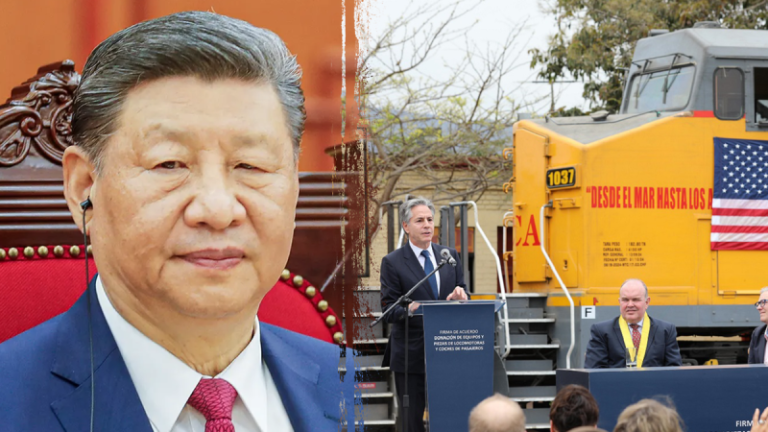
A key China ally with presidential ambitions in Peru traveled late last month to California to participate in a sending-off ceremony for a batch of trains donated by the Biden administration, according to reporting by Peruvian news outlets.

Peruvian outlet Justo Medio reported at the time that Lima Mayor Rafael Lopez Aliaga, who is rumored to be considering a run for president of Peru in 2026, was in California late last month to discuss the transport of a batch of CalTrain locomotives, which were donated to Lima by the U.S. government under the Biden administration.  

Nate Picarsic and Emily de La Bruyère, a senior fellow at the Foundation for Defense of Democracies (FDD), recently published a study on Lopez Aliaga’s ‘deep’ financial ties to China through his company PeruRail, which has seen its revenue rise to over $65 million per year due to increased shipments from Minera Las Bambas, a Chinese-owned joint venture counting state-owned mining giant China Minmetals as its majority backer.

The report alleged that China has been ‘cultivating’ Lopez Aliaga for higher office in Peru in hopes of growing its mineral and battery supplies harvesting in South America. The report goes so far as to dub Lopez Aliaga ‘China’s man in Peru.’

‘China’s mining presence in Peru is a direct boon for López Aliaga,’ the report said, giving Beijing ‘a powerful beachhead in Peru.’

The report said, ‘This leaves an influential Peruvian political leader aligned with and linked to China, its resource project, and the broader Belt and Road Initiative of which it is part.’

In the last several years, Chinese investment in South America, and Peru especially, has significantly increased. 

According to NBC News, China invested $1.3 billion in a massive deepwater port in Chancay, Peru, just north of Lima. 

Chinese President Xi Jinping participated in the port’s opening ceremony in 2024, during which he called the port the start of China’s 21st-century maritime Silk Road, according to the outlet.

According to Picarsic, China has also been investing heavily in Lima’s infrastructure, most notably dominating its electricity industry, all of which Lopez Aliaga has been a ‘linchpin’ piece in moving Chinese dominance forward.

Now, with Lopez Aliaga possibly entering Peru’s presidential race, Picarsic explained that this all ‘looks like a telltale sign of China’s handiwork.’

He also called the U.S.’s donation of trains to Peru ‘too little, too late’ to combat China’s growing influence in the region.

‘We’re coming with a donation of some number of decommissioned rail cars. But this guy, who is in cahoots with China, who’s coming to take them and he’s taking them back to run on Chinese rail feeding into a Chinese port, helping to move goods from a Chinese mine.’

Former Secretary of State Antony Blinken participated in a train-donation ceremony last November in Lima, Peru, where he praised the project as an opportunity to ‘strengthen the ties between Peru and the United States’ and said the trains ‘are not just a symbol, but the practical manifestation of possibilities – the possibilities that come when we connect to each other.’

‘This agreement is a testament to the strength and durability of the U.S. and Peru’s longstanding and mutually beneficial relationship,’ he added. ‘I am so proud to have Caltrain be a member of that mutually beneficial relationship.’

This post appeared first on FOX NEWS

President Trump once famously quipped that he could shoot a man on 5th Avenue and his strongest supporters would stay with him. For nearly a decade this has seemed true, but today, the president may have stumbled on the exception, in the sickening form of the Jeffrey Epstein case.

It turns out that Epstein is a major test for Trump in the eyes of his MAGA warriors. They want real answers from this administration, not fumbled document dumps and dismissive comments from the president himself, as we saw this week.

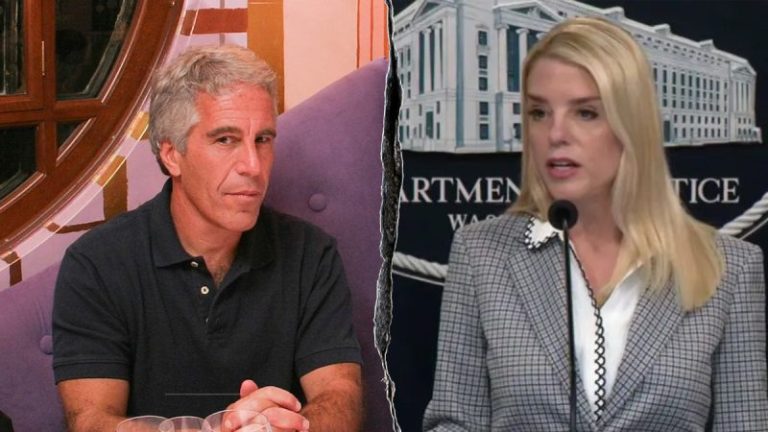
Now, we have FBI Deputy Director Dan Bongino who is apparently threatening to resign over the debacle, if Attorney General Pam Bondi doesn’t go first and a bewildered MAGA base that feels it is being insulted and lied to by its government, again. 

To be sure, Epstein was an awful human being who preyed on poor underage girls for decades, according to testimony from the Ghislane Maxwell trial (which I covered in the courthouse), as well as a wealth of other evidence. But for most Americans, his crimes and suspicious death are a mere curiosity at this point.

It is much, much more for hard-core MAGA. For them, it is nothing less than a test to determine whether or not the Swamp that has lied to our faces for decades is still in control.

This week, Steve Bannon said the only way the Epstein story goes away is if ‘the 5 to 10 to 15 percent of the Trump movement, the Pepes and hardcores,’ finally just say, ‘I’ve had enough of it.’ He added that the basic question is, ‘who is running the country?’

Likewise, at the TPUSA convention in Florida this weekend, which is led by Trump ally Charlie Kirk and is as pure a distillation of the core MAGA movement as exists, my sources tell me that Epstein is very much the top topic of concern.

But why did this curious case of this infamous creep and his private island become a synecdoche for all government lies in the mind of MAGA? In other words, how did Epstein become the symbol of deep government corruption?

For one thing, the notion Epstein was allowed to kill himself inside a federal prison has always strained credulity. From missing video to conflicting medical exams, there have been legitimate questions about how a man rumored to have damaging information on powerful people and ties to the intelligence community could turn up dead in federal custody. While officials assured the nation there was nothing to see, MAGA seethed. ‘Epstein didn’t kill himself’ became not just a meme and a mantra, but a declaration that we’ve been gaslit by our government.

There is also the matter of Bondi seeming to indicate that there was an Epstein client list in a Fox News Channel interview, only to now say it doesn’t exist. She says she was talking about the file writ large, but it didn’t sound that way at the time.

Bongino, in recent weeks, along with FBI Director Kash Patel, told us that a video from the prison is proof positive that this was suicide, but it turns out there was a missing minute of footage, and the video may have been doctored.

This was after Bondi all but hijacked a group of influencers in the spring at the White House, handing out binders purporting to share new bombshell information that turned out to be as exciting as a list of grandma’s baking recipes. 

On top of all of this, we have President Trump himself, visibly annoyed in the White House, this week when asked about Epstein, ‘Are you still talking about this guy…this creep?’ Trump asked. Well, yes, Mr. President, they are.

All in all, the administration’s handling of the Epstein case has been about as transparent as a brick wall, one that appears to be crumbling.

Trump has expressed concern in the past about innocent people being listed in Epstein documents, as happened to attorney Alan Dershowitz and others, and according to Elon Musk, both Trump and Bannon appear in this evidence, though Musk offers no proof of this.

This may be a reasonable concern, but after decades of blatant lies and stalled prosecutions of Epstein, Trump’s hardcore supporters want more than assurances. They want to see the documents. They want to see everything.

And this is a central part of Trump’s appeal, his promise to open up the hood and expose the broken-down, deep-state engine of government. But promises are not enough. Where are the results? When are we going to Fort Knox as promised, for example?

A breathtaking hallmark of the second Trump term has been extreme transparency. The president takes questions almost daily, and answers with candor. Except, it seems, when it comes to Jeffrey Epstein.

For a quarter-century now, the Epstein case has been a combustible cocktail of power, greed, private islands and sexual abuse. It has ushered in both careful examination and wild conspiracy theories, and the only way to separate the two is with complete sunlight onto the evidence.

For President Trump, this may be the first time he is risking the loyalty of his longest, strongest supporters, and for a populist political movement that is pure poison. 

The time to release everything is now, the future of MAGA may depend on it.

This post appeared first on FOX NEWS

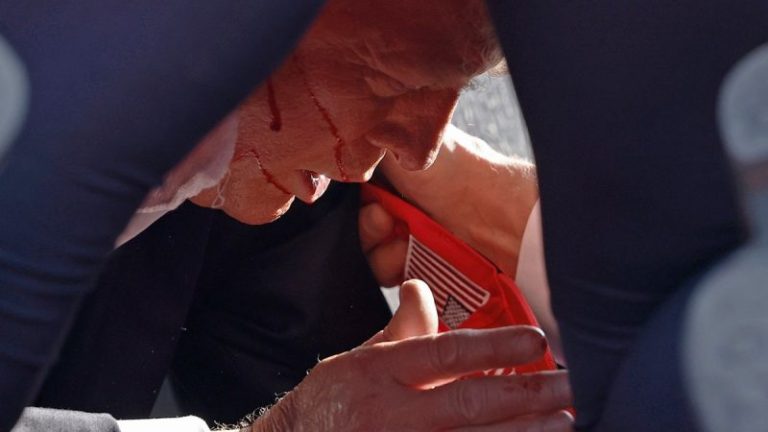
While the 2024 assassination attempt against President Donald Trump in Butler, Pennsylvania, has resulted in a host of changes to bolster the Secret Service’s security practices, the agency has its work cut out for it in an era of unprecedented threats against the president, according to former Secret Service agents. 

Trump faces a plethora of threats, ranging from violent extremists backed by proxy groups, to domestic actors inspired to incite violence amid heightened political rhetoric, according to experts.

‘No U.S. president has been under so much threat of violence,’ Bill Gage, who served as a Secret Service special agent during Presidents George W. Bush and Barack Obama’s administrations, told Fox News Digital Wednesday. ‘The threat on President Trump is the greatest that any president has ever faced.’

Twenty-year-old gunman Thomas Matthew Crooks opened fire on Trump from a rooftop during the rally — with one of the eight bullets shot grazing Trump’s ear. In addition to injuring two people, the gunman also shot and killed Corey Comperatore, a 50-year-old firefighter, father and husband attending the rally. 

Months later, another man was apprehended and charged with attempting to assassinate Trump at his Trump International Golf Club in West Palm Beach, Florida. Both incidents are under investigation. 

Political rhetoric from the left that paints Trump as a threat to democracy is dangerous and could provide fodder for political radicals to believe assassinating the president is the way to save the country — potentially leading to a similar assassination attempt seen in Pennsylvania, Gage said.

Other factors contributing to the heightened threat levels include policies related to immigration or funding cuts from the newly created Department of Government Efficiency (DOGE) that are unpopular with the left, as well as hostile proxy groups who are backed by actors like Iran who oppose Trump, Gage said. 

‘That increases the threat level on Trump,’ Gage said. ‘There’s probably dozens and dozens of threats every day, just sort of insider threats, or threats within our own borders that the Secret Service has to run down.’ 

Specifically, Gage pointed to comments from leaders like Democratic California Gov. Gavin Newsom, who delivered an address to the nation in June where he claimed ‘democracy is under assault,’ following the Trump administration’s decision to dispatch thousands of National Guard troops and hundreds of Marines to respond to the immigration riots in the Golden State and place them under federal command, rather than state command. 

‘Right now there is someone out there reading Newsom’s quotes, someone who wishes President Trump harm,’ Gage said in an email in June to Fox News Digital. ‘It is up to the USSS to stop them. Hopefully those wishing the President harm will not slip through the cracks.’

A spokesperson for Newsom did not immediately respond to a request for comment from Fox News Digital. 

Trump isn’t the only subject that’s a potential target for politically motivated violence. 

Attacks against federal immigration officials are on the rise and a gunman opened fire against Border Patrol agents Monday at an annex in McAllen, Texas. Authorities have yet to identify a motive. 

However, lawmakers have not minced their words on Trump’s immigration agenda. In June, Rep. Pramila Jayapal, D-Wash., accused ICE of acting ‘like a terrorist force’ — comments she has since defended. 

Rep. Michael Guest, R-Miss., who oversees the House Homeland Security committee’s subcommittee on border security and enforcement, said in a Wednesday statement to Fox News Digital that ‘radical anti-law enforcement rhetoric’ has prompted the surge in violence against federal immigration officials.  

Meanwhile, threats continue to change, creating additional challenges for security forces like the Secret Service as they adapt. 

Although the Secret Service is taking action to enhance its security measures, the agency still faces ‘considerable vulnerabilities given the rising complexity and sophistication of the threats it faces,’ Tim Miller, who served as a Secret Service agent during Presidents George H.W. Bush and Bill Clinton’s administrations, said in an email Wednesday to Fox News Digital.

‘The FBI has consistently warned about homegrown violent extremists, which remains a major concern,’ Miller said. 

While Miller characterized Butler as a ‘wake-up’ call for the Secret Service and said the incident is sharpening the agency’s ability to handle threats, there is still a lot of work that must be done, he said. 

‘The Secret Service is also still playing catch-up when it comes to adopting critical technology — especially in the areas of secure communications, drone surveillance, and real-time intelligence tools,’ Miller said. ‘These are not luxuries; they are vital to modern protective operations.’

A bipartisan House task force that investigated the attack found that the attempted assassination was ‘preventable,’ and determined various mistakes were not an isolated incident. 

At the top of the list of mistakes, the report identified that the Secret Service did not secure a ‘high-risk area’ next to the rally, the American Glass Research (AGR) grounds and building complex. Failure to secure this area ‘eventually allowed Crooks to evade law enforcement, climb on and traverse the roof of the AGR complex, and open fire.’ 

Other faults the task force found included handing over advance planning roles to inexperienced Secret Service personnel, along with various technology and communication breakdowns. 

‘Moreover, relevant threat information known by members of the intelligence community was not escalated to key personnel working the rally,’ the House task force said in its report. 

As a result, the agency has spearheaded a series of reforms. 

According to former Secret Service acting director Ronald Rowe, immediate changes to the agency following Butler, Pennsylvania, included expanding the use of drones for surveillance purposes, and also incorporating greater counter-drone technology to mitigate kinetic attacks from other drones. 

The agency also overhauled its radio communications networks and interoperability of those networks with Secret Service personnel, and state and local law enforcement officers, Rowe told lawmakers on a bipartisan House task force investigating the assassination attempt in December 2024.  Updates to these radio communications are a significant change, according to Gage, who noted that he could carry up to five radios at a time because an integrated system didn’t exist.

Rowe also told lawmakers that the Secret Service was aiming to up its staffing in the next year, and had placed more special agents in Trump’s security detail. Some of the additional $231 million in funding that Congress approved for the Secret Service in a stopgap spending bill in September 2024 to hire 1,000 new agents and officers in 2025 would go toward these increased hiring plans, Rowe said. 

A few other changes are in the pipeline, including possibly building a precise replica of the White House. Historically, agents have trained using Tyler Perry’s White House replica at his Atlanta film studio. 

Secret Service director Sean Curran said in an interview on Fox News’ ‘My View with Lara Trump’ in April that the agency is working with the White House to install such a building at the James J. Rowley Training Center, a 500-acre center in Laurel, Maryland. 

‘In order for our officers and agents to train up properly, they have to see what it’s like to be at the White House,’ Curran said. ‘It’s an important complex to know. There’s a lot of ins and outs, and something as simple as the local fire department showing up to help with a fire, and they need to know where they are going.’ 

Altogether, Congressional oversight bodies issued nearly 50 recommendations to the Secret Service following the assassination attempt, including ones related to better radio communications and planning for events. The agency reported Thursday that it has executed 21 of those recommendations, and is in the process of implementing 16 others. 

‘The reforms made over this last year are just the beginning, and the agency will continue to assess its operations, review recommendations and make additional changes as needed,’ the Secret Service said in a news release Thursday.

This post appeared first on FOX NEWS