Author

admin

Browsing

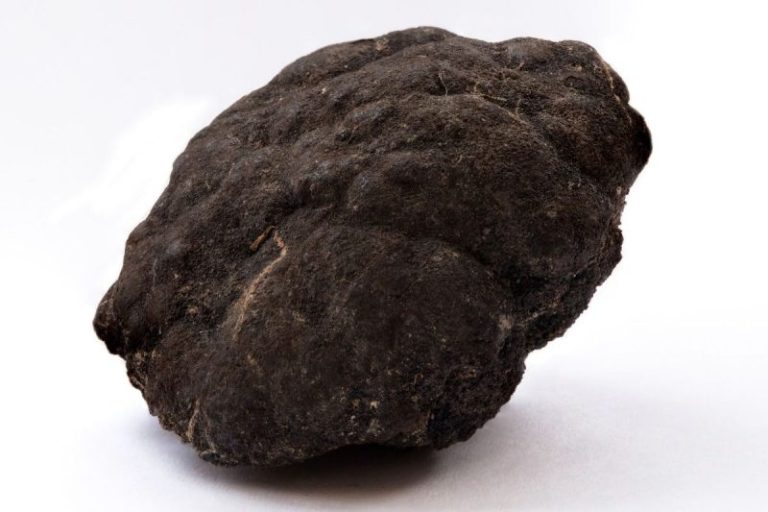
Tungsten-focused Almonty Industries (TSX:AII,ASX:AII,NASDAQ:ALM) saw its shares rise on Monday (July 14) in its first day of trading on the Nasdaq, buoyed by a US$90 million public offering.

The company’s share price climbed roughly 7 percent under its new “ALM’ ticker symbol, opening at US$4.50; Almonty was trading at US$4.80 by midday in New York.

Almonty, which is redomiciling from Canada to Delaware, holds a 15 year contract with a US defense contractor to supply tungsten — an essential metal used in armor plating, missiles and electronics.

Starting in 2027, the US will ban tungsten produced or refined in China, Russia or North Korea from entering the Pentagon’s supply chains. This development has made Almonty a critical supplier in waiting.

“Our US listing also reflects our emerging status as America’s tungsten supplier, further supported by our ongoing redomiciling initiatives,” Almonty CEO Lewis Black said in a Monday release.

“The capital from this offering funds the development of our Sangdong tungsten oxide facility, enabling Almonty to continue to rise in prominence as a leading supplier of tungsten for the defense needs of the US and its allies.”

Almonty’s Sangdong tungsten mine

Located in South Korea, Almonty’s Sangdong tungsten mine is among the largest-known tungsten deposits outside of China and is expected to be a cornerstone of the company’s growth. The site, which was mothballed for decades after once being the world’s largest producer, is now central to US-allied efforts to secure critical supply chains.

The company holds a 15-year offtake agreement with a US defense contractor for over 90 percent of its Phase I production. The mine is expected to begin soft commissioning in 2025, with commercial output scaling thereafter.

Almonty also operates the Panasqueira mine in Portugal, another non-Chinese source of high-grade tungsten, providing additional geographic diversification at a time of heightened geopolitical risk.

Investors back ‘mineral nationalism’ strategy

Almonty’s successful offering illustrates investor appetite for plays tied to resource nationalism and US defense modernization. According to a recent report by GBC Research, the company could supply up to 43 percent of non-Chinese tungsten demand by 2027. The firm is projecting net income of US$212 million by that year, supported by long-term contracts and rising prices for critical materials.

Tungsten is essential in a variety of applications, including missile casings, turbine blades, armor plating and semiconductors — markets that are seeing rapid budget growth, particularly in the US

The listing comes at a time of rising scrutiny over US reliance on China for materials key to both civilian technology and military systems. According to the most recent US Geological Survey, the US was 100 percent import reliant for 12 of the 50 designated critical minerals in 2024, with tungsten high on the list.

Another 28 had import reliance above 50 percent.

Efforts to address this gap have accelerated under the current administration and continued into the Trump administration’s second term, including supply chain reviews, trade realignments and procurement restrictions.

Almonty continues to trade on the Toronto Stock Exchange under the ticker “AII,” as well as on the Australian Securities Exchange and Frankfurt Stock Exchange.

The company said proceeds of the offering will be used primarily for the development of Sangdong, along with general working capital needs and corporate purposes.

Securities Disclosure: I, Giann Liguid, hold no direct investment interest in any company mentioned in this article.

This post appeared first on investingnews.com

The resource investing community descended on Boca Raton, Florida, during the first full week of July for another edition of the Rule Symposium, hosted by veteran investor and speculator Rick Rule.

The five day event featured an illustrious array of speakers, panelists and companies sharing a wealth of investor knowledge. As in years past, gold remained a top focus, with many presenters stressing the value it offers investors.

Opening the conference, Rule provided a sobering overview of the current economic trajectory. He urged investors to set aside political narratives and instead focus on the raw arithmetic of America’s financial condition.

“It’s not about politics, it’s about math,” said Rule.

He pointed to three figures that define the US financial landscape: US$141 trillion in aggregate private net worth, a US$27.71 trillion GDP and a personal savings rate of just 4 percent. That’s set against mounting obligations — US$36.6 trillion in federal debt held by bondholders and over US$100 trillion in unfunded federal entitlements.

Rule cautioned that the imbalance between assets and liabilities points to a looming reckoning, potentially echoing the inflationary erosion of the 1970s, when the US dollar lost 75 percent of its purchasing power.

“There’s no way out of this without reducing the value of the dollar,” he told the audience. “(The) increase in gold (prices) will mirror the decrease in purchasing power of the US dollar.’

To hedge against this risk, Rule encouraged attendees to adopt a more self-reliant approach.

He advised listeners to question government guarantees, focus on building personal financial resilience and consider investing in inflation-sensitive assets such as gold and silver. “The math doesn’t lie — it’s time to prepare, not just react,” said Rule. ”I need you not to panic when the time is right, but rather to pounce.”

Watch a recap of key Rule Symposium takeaways.

Tailwinds turning to headwinds

In addition to strategically allocating to gold, geopolitical uncertainty was as a key theme at the Rule Symposium.

During his presentation “Back to the Old Drawing Board: First Principles and the Lost Art of Investing Through Crisis,” author and publisher Grant Williams made the case that longstanding tailwinds — globalization, demographic expansion and low interest rates — have reversed, giving way to persistent uncertainty.


Williams provides an overview of shifting market dynamics.

He traced the last four decades of wealth creation to a rare alignment of forces that pushed asset prices, particularly US equities, sharply higher. However, since 2020, a new macro regime has emerged, defined by tighter monetary policy, rising geopolitical risk and fading confidence in the US dollar.

Like many speakers at the Rule Symposium, Williams also underscored the massive gold purchases central banks are making. During Q1 of this year, central banks added 244 metric tons of gold to their official reserves, a 24 percent increase above the five year quarterly average, according to World Gold Council data.

For Williams, this shift signals growing concern within the financial system — a trend investors shouldn’t overlook.

“When central banks are exchanging their reserves for gold in record amounts, if they feel the sudden urgent need to own more gold, you better believe that we should feel that too,” he noted.

The expert went on to illustrate how major economic and societal cycles are converging, suggesting more volatility ahead. A live poll of the audience taken during his session revealed growing unease among attendees, with many already adjusting their portfolios and long-term goals. In response, Williams called for a return to key principles: scarcity, durability, resilience, trust, patience and a clear-eyed acceptance of uncertainty.

These, he said, should now anchor any sound investment approach. He urged Rule Symposium attendees to shift their mindset from chasing returns to preserving capital by reducing overexposure to US equities, diversifying by geography and asset class and focusing on businesses with real staying power.

The investment playbook of the past no longer fits the world we’re entering, he stressed.

Navigating what Williams calls an “age of headwinds” will require humility, discipline and a willingness to rethink what truly creates and protects wealth.

Hard assets set to shine

Economist, author and former Wall Street executive Dr. Nomi Prins laid out a case for what she calls the “real asset uprising,” a global shift in value and power driven by hard assets like gold, silver, copper, uranium and rare earths.

Drawing on her experience in high-level banking and her current work in the mining sector, Prins argued that rising geopolitical friction, shifting trade dynamics and financial system strain are fueling a renewed focus on tangible resources. She pointed to surging institutional interest in commodities, noting that Wall Street deal flow tied to real assets is up 24 percent year-on-year, while hiring in commodity finance roles has increased by 15 percent.

Gold, once dismissed on trading desks, is now seen as a strategic monetary tool.

According to Prins, the yellow metal will not replace the US dollar as the reserve currency, but it will play a central role in bilateral trade and power negotiations. Gold’s jurisdiction — where it is stored and mined — is now more important than ever, she explained, as nations seek to shield assets from sanctions and instability.

Silver, copper, uranium and rare earths are all finding support through similar structural tailwinds, Prins pointed out.

Silver demand is rising due to its industrial applications, and limited aboveground supply is driving long-term contracts.

For its part, copper has become so strategically important that the US is conducting a Section 232 national security investigation into its supply chain, a move historically reserved for defense resources. Major buyers like China and India are stockpiling copper in anticipation of supply constraints.

Uranium is also surging back into focus, driven by bipartisan support for nuclear energy. Legislation and executive orders are fast tracking uranium permitting and enrichment, with utility demand expected to outstrip supply.

Rare earths = real assets

Prins highlighted rare earths as a critical new front in the ongoing global shift in value and power.

‘Rare earths are intrinsic to the nation,’ she said, pointing to their essential role in defense, electronics and energy technologies. With 85 percent of processing controlled by China, the US has launched Section 232 investigations to assess domestic vulnerabilities — reports on copper and rare earths are expected this fall.

Prins described her decision to join the board of a rare earths company as a natural extension of her belief in physical assets: “It’s not just about the asset — it’s about controlling the asset, the processing and the movement.”

That theme underpins the investment case: security of supply, efficient processing and strategic jurisdiction are key to value creation. She also noted a dramatic capital rotation, saying that US$330 billion has exited bonds over the past year, while US$230 billion has flowed into commodities.

“Wall Street is following the real asset story,” Prins emphasized.


Rule sits down with Porter Stansberry to discuss his investment strategy.

Prins then said real upside now lies not just in owning resources, but in having processing capability.

New technologies, like advanced rare earths separation methods, are increasing economic viability and attracting private capital. “Where private money and public power combine, that’s where the investment opportunity is,” she said.

With key policy announcements and trade shifts looming in the fall, she warned investors this is a “very critical time” in the real asset uprising. For Prins, the message is clear: investors, policymakers and mining leaders must position accordingly, because, in today’s world, “whoever controls the ground controls the game.’

Securities Disclosure: I, Georgia Williams, hold no direct investment interest in any company mentioned in this article.

This post appeared first on investingnews.com

Defense manufacturer Lockheed Martin (NYSE:LMT) is in early talks with undersea mining companies to open access to two dormant seabed exploration licenses it has held since the 1980s

The move signals a renewed US push to tap the ocean floor for critical minerals.

The licenses, which cover swaths of the eastern Pacific seabed in international waters, were awarded to Lockheed by US regulators decades ago during a previous wave of interest in deep-sea mining.

Though the projects never progressed to extraction, they are now gaining fresh attention as nations and corporations seek alternative sources of key minerals used in electric vehicles, defense technologies, and clean energy systems.

“We are in early stages of conversations with several companies about giving them access to our licences and allowing them to process those materials,” Frank St. John, Lockheed’s chief operating officer, told the Financial Times.

While St. John declined to quantify the potential value of the deposits, he added that interested parties have “done the homework and determined there is value there.”

Lockheed’s seabed licenses could represent a strategic foothold in a mineral-rich region, containing polymetallic nodules that can hold commercially viable concentrations of key metals.

The timing also coincides with recent executive action from the White House.

USPresident Donald Trump, who returned to office in January, signed an executive order in April asserting US rights to issue mining licenses in international waters and encouraging the stockpiling of seabed metals as strategic resources.

The order bypasses ongoing negotiations at the International Seabed Authority (ISA), the UN agency tasked with regulating deep-sea mining, and instead relies on the 1980 US Deep Seabed Hard Mineral Resources Act as the legal foundation.

It emphasizes the need to “establish the US as a global leader in seabed mineral exploration and development both within and beyond national jurisdiction.” While the US has not ratified the UN Convention on the Law of the Sea — the treaty from which the ISA derives its authority — it has signed a 1994 agreement recognizing the treaty’s seabed provisions and operates its own permitting system through the National Oceanic and Atmospheric Administration.

Lockheed said it welcomes the renewed policy attention. “We believe the US has the opportunity to develop a gold standard for commercial recovery of nodules in an environmentally responsible manner.”

Court upholds TMC disclosures on deep-dea mining risks

Lockheed is not alone in navigating the legal uncertainties surrounding seabed mining.

The Metals Company (TMC) (NASDAQ:TMC), a deep-sea mining startup, recently survived a shareholder lawsuit alleging it had misled investors about the environmental impacts and financial backing of its operations.

US District Judge Eric Komitee dismissed the claims, ruling that the company’s comparisons to conventional mining methods were not misleading, even if deep-sea mining still carries environmental risks.

“It is eminently possible that (1) deep-sea mining causes meaningful environmental harm, and yet (2) such harm is significantly less than the harm caused by existing methods,” the judge wrote.

TMC had disclosed in filings that deep-sea mining could result in damage and that the regulatory path remained uncertain. Its legal win may encourage others — like Lockheed — to proceed more openly with their seabed plans, albeit cautiously.

Deep-sea mining industry cautiously awakens

The growing pursuit of potentially extracting resources from the world’s oceans comes at a critical juncture for the seabed-mining industry. For decades, a de facto moratorium on mining in international waters has been in place due to regulatory uncertainty and environmental concerns.

The ISA has issued more than 30 exploratory permits, but has yet to finalize commercial extraction rules. That delay has prompted frustration from some parties, while drawing calls from others for a pause or outright ban.

Currently, the ISA is holding key assemblies in Jamaica to hash out the long-awaited mining code to regulate commercial activity on the ocean floor with provisions for environmental safeguards, royalties, and tax obligations.

But a growing number of countries — 37 at last count — have pushed for a precautionary pause, citing risks to deep-sea ecosystems that remain largely uncharted. Scientists warn that mining these habitats could cause irreversible damage.

In 2023, Lockheed appeared to step back from the sector by selling two UK-sponsored exploration licenses in the Pacific, a move interpreted by analysts as signaling reduced confidence in deep-sea mining.

However, its retained US licenses suggest it never fully exited the space.

The Trump administration’s executive order marks the most assertive US step yet to undermine the ISA’s multilateral approach, raising fears among diplomats that the agency may lose legitimacy.

China, which has also invested heavily in seabed mining, responded sharply to the move.

“The US authorization violates international law and harms the overall interests of the international community,” Chinese foreign ministry spokesman Guo Jiakun said earlier this year.

Securities Disclosure: I, Giann Liguid, hold no direct investment interest in any company mentioned in this article.

This post appeared first on investingnews.com

Geopolitical tensions are rising in several regions of the world, and governments are expected to increase their defense spending in the years ahead. This has investors looking to aerospace and defense stocks.

The entrenched Russia-Ukraine war, widespread conflict in the Middle East, military posturing in the ongoing US-China trade conflict and the spread of cybersecurity attacks on critical infrastructure — all of these developments and more are driving demand in the global defense market.

In 2024, the five countries spending the most on their militaries were the United States, China, Russia, Germany and India, according to data from the Stockholm International Peace Research Institute.

For the most part, the aerospace and defense industry provides equipment, technologies and services to national governments through contracts. The players in this space are typically defense contractors that design and manufacture aircraft, satellites, electronic systems, software, missiles, drones, autonomous vehicles, tanks and marine vessels.

Global aerospace and defense revenue reached record highs in 2024, according to PwC in its latest annual sector report, totaling US$922 billion across the top 100 companies. However, the firm reports that increased demand is outpacing supply and capacity from defense companies.

5 Biggest US Defense Stocks

Today, the US accounts for the largest share of global defense spending, representing about 37 percent of worldwide military outlays. In fact, military spending represents about 12 percent of the US federal budget for fiscal year 2025. Worsening geopolitical tensions are expected to increase the US government’s spending on defense technology.

1. RTX (NYSE:RTX)

Market cap: US$189.46 billion

One of the most well-known American defense companies, RTX operates in the defense, aviation, space, electronics and cybersecurity sectors. The company captured more than US$80.7 billion in revenue for 2024, up 17.15 percent from the previous year.

The company’s defense solutions arm Raytheon was awarded a US$250 million contract in June 2025 from Japan’s Mitsubishi Electric (TSE:6503) for licensed production of ESSM Block 2 short to medium-range guided missiles.

‘Under the Direct Commercial Sale contract, Raytheon will provide missile kits, parts, and components as well as technical support for missile production at (Mitsubishi Electric) in Japan,’ the press release stated.

2. The Boeing Company (NYSE:BA)

Market cap: US$151.52 billion

Another heavyweight in the aerospace and defense industry, Boeing designs and manufactures airplanes, rotorcraft, rockets, satellites, telecommunications equipment and missiles.

Revenue for the company declined by 14.5 percent in 2024 over the previous year to come in at US$66.5 billion. The majority of that loss was driven by its airplane segment; its defense segment revenue dropped 4 percent over the same period. The company’s aviation sector has faced heavy scrutiny in recent years after several disastrous incidents linked to the Boeing 737.

As for its defense business, in March 2025, Boeing reported that production of its air defense systems, Patriot Advanced Capability-3 seekers, reached an all-time high in 2024. According to the release, the company produces the seekers as a subcontractor for Lockheed Martin and has sold them to 17 countries, including the US and Ukraine.

3. Honeywell International (NASDAQ:HON)

Market cap: US$144.57 billion

Engineering and technology company Honeywell International develops and manufactures technological solutions for a variety of sectors. The company’s four business divisions are aerospace technologies, building automation, energy and sustainability solutions, and industrial automation. Honeywell’s sales came in at US$38.5 billion in 2024, up 5 percent from the previous year.

Honeywell has numerous defense contracts with government agencies around the world, including right at home with the US Department of Defense (DoD) and US Armed Forces. In May 2025, the company’s JetWave X satellite communication system was selected for use in the advanced US Army aircraft ARES.

4. Lockheed Martin (NYSE:LMT)

Market cap: US$107.57 billion

Lockheed Martin’s business is concentrated on aerospace products and advanced defense technology systems. The F-16 Fighting Falcon fighter jet is among its most notable products, but Lockheed is also well known for its space launchers, ballistic missiles and satellites. The company’s 2024 net sales increased by 5.15 percent from the previous year to just over US$71 billion.

Unsurprisingly, about half of Lockheed Martin’s annual sales are made to the US DoD. However, governments around the world have purchasing contracts with the company to supply their militaries with defense products such as F-16 and F-35 fighter jets. In April 2025, the Royal Norwegian Air Force received the last two F-35 fighter jets of the 52 ordered in its most recent supply contract.

5. General Dynamics (NYSE:GD)

Market cap: US$76.57 billion

Although best known for its Gulfstream business jets, General Dynamics designs and manufactures wheeled and tracked combat vehicles, submarines, weapons and communications systems, as well as munitions. The company garnered more than US$47.72 billion in revenue for 2024, up 12.88 percent from the previous year.

General Dynamics is a major defense contractor for the US military as well as allied nations abroad. In April 2025, the company was awarded US$12 billion in contract modifications for the construction of two Virginia-class submarines for the US Navy, bringing the potential value of the contract to US$17.2 billion. This type of sub is designed for anti-submarine and surface ship warfare and special operations support.

5 Biggest US Defense ETFs

Investors looking to mitigate the risk of investing in individual stocks can diversify their portfolio with defense ETFs. While ETFs aren’t without risk, they are often considered a more stable investment compared to stocks as they allocate funds across a variety of stocks that are rebalanced by an asset manager to meet the return goals of the fund.

The biggest US Defense ETFs by assets under management are listed below according to data from ETF Database.

1. iShares U.S. Aerospace & Defense ETF (BATS:ITA)

Assets under management: US$7.83 billion

The iShares U.S. Aerospace & Defense ETF launched in May 2006. This fund invests in large, generally stable companies in the aerospace and defense sector, particularly those with the majority of their revenues based on long-term government contracts.

The ETF has 40 holdings and an expense ratio of 0.4 percent. IShares U.S. Aerospace & Defense ETF’s top holdings include RTX, Boeing, Lockheed Martin and General Dynamics as well as another important name in the industry, L3Harris Technologies (NYSE:LHX).

2. Invesco Aerospace & Defense ETF (NYSEARCA:PPA)

Assets under management: US$5.41 billion

Invesco Aerospace & Defense ETF launched in October 2005. Like ITA, it also tracks large, stable aerospace and defense stocks with steady revenue streams from long-term government contracts.

While it has more holdings than ITA at 57, it also has a higher expense ratio at 0.58 percent. Unlike ITA, Honeywell is listed among Invesco Aerospace & Defense ETF’s top holdings in addition to the other biggest US defense stocks.

3. SPDR S&P Aerospace & Defense ETF (NYSEARCA:XAR)

Assets under management: US$3.76 billion

SPDR S&P Aerospace & Defense ETF, which launched in September 2011, offers exposure to large cap stocks in this sector. It has the lowest expense ratio on this list at 0.35 percent.

Of the 40 holdings XAR tracks, the most heavily weighted US defense stocks include RTX, Boeing, Lockheed Martin and General Dynamics as well as Rocket Lab (NASDAQ:RKLB) and AeroVironment (NASDAQ:AVAV).

4. Global X Defense Tech ETF (NYSEARCA:SHLD)

Assets under management: US$2.69 billion

Launched in September 2023, Global X Defense Tech ETF is the newest defense ETF on the market. While it does offer a geographic diversity of exposure to the overall defense sector, its holdings are just over 50 percent based in the United States. This ETF has an expense ratio of 0.50 percent.

SHLD has 43 holdings, including the biggest US defense stocks such as Lockheed Martin and General Dynamics, but is also heavily weighted in Palantir Technologies (NASDAQ:PLTR) and L3Harris Technologies.

5. Direxion Daily Aerospace & Defense Bull 3X Shares (NYSEARCA:DFEN)

Assets under management: US$249.19 million

Direxion Daily Aerospace & Defense Bull 3X Shares launched in May 2017 with the goal of tripling the daily return of an index of major defense industry stocks.

DFEN has the highest expense ratio on this list at 0.95 percent. Some of the most heavily weighted stocks of its 39 holdings are Boeing, Lockheed Martin and RTX.

Securities Disclosure: I, Melissa Pistilli, hold no direct investment interest in any company mentioned in this article.

This post appeared first on investingnews.com

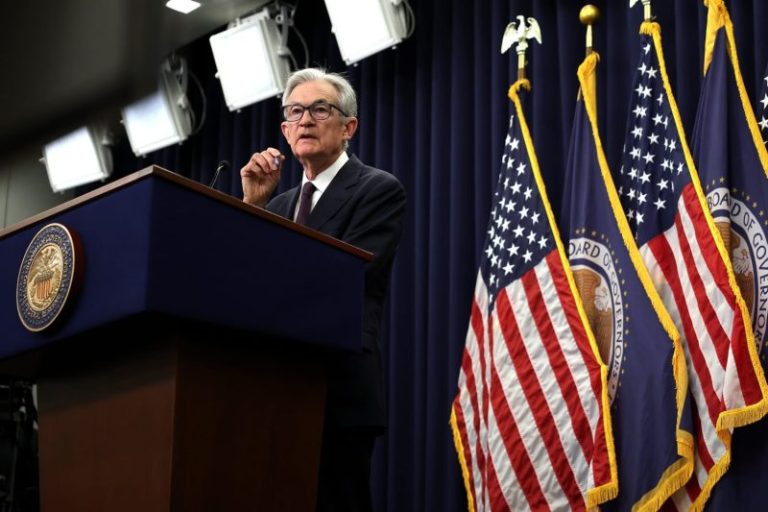
The Federal Reserve has brought in its inspector general to review a building expansion that has drawn fire from the White House, according to a source familiar with the issue.

Fed Chair Jerome Powell asked for the review, following blistering criticism of the project, initially pegged at $2.5 billion but hit by cost overruns that have brought accusations from President Donald Trump and other administration officials of “fundamental mismanagement.”

“The idea that the Fed could print money and then spend $2.5 billion on a building without real congressional oversight, it didn’t occur to the people that framed the Federal Reserve Act,” Kevin Hassett, director of the National Economic Council, said Monday on CNBC’s “Squawk Box.” “We’ve got a real problem of oversight and excess spending.”

The inspector general serves the Fed and the Consumer Financial Protection Bureau and is responsible for looking for fraud, waste and abuse. Powell’s request was reported first by Axios.

In a letter posted to social media last week, Russell Vought, head of the Office of Management and Budget, also slammed the project, which involves two of the Fed’s three Washington, D.C., buildings including its main headquarters known as the Eccles Building.

Vought, during a CNBC interview Friday, likened the building to the Palace of Versailles in France and charged that Powell was guilty of “fiscal mismanagement” at the Fed.

For its part, the central bank has posted a detailed frequently asked questions page on its site, highlighting key details and explaining why some of the specifications were changed or “scaled back or eliminated” at least in part due to higher-than-expected construction costs.

“The project also remediates safety issues by removing hazardous materials such as asbestos and lead and will bring the buildings up to modern code,” the page explains. “While periodic work has been done to keep the buildings occupiable, neither building has seen a comprehensive renovation since they were constructed.”

The Fed is not a taxpayer-funded institution and is therefore not under the OMB’s supervision. It has worked with the National Capital Planning Commission in Washington on the project, but also noted on the FAQ page that it “does not regard any of those changes as warranting further review.”

In separate comments, former Fed Governor Kevin Warsh, speaking Sunday on Fox News, called the renovation costs “outrageous” and said it was more evidence the central bank “has lost its way.” Warsh is considered a strong contender to succeed Powell when the latter’s term as chair expires in May 2026.

This post appeared first on NBC NEWS

The Pentagon is reportedly pressuring Indo-Pacific allies Japan and Australia to clarify what roles they would play in the event of a war with China over Taiwan.

Elbridge Colby, the Pentagon’s policy chief, raised the question during recent meetings with Japanese and Australian defense officials, the Financial Times first reported.

While the United States has long urged Indo-Pacific allies to increase defense spending as China escalates its military activity around Taiwan, this push for specific wartime commitments is a new development — and reportedly caught foreign officials off guard.

Australia responded by stressing it would not commit troops in advance of any conflict.

‘The decision to commit Australian troops to a conflict will be made by the government of the day, not in advance,’ Defense Minister Pat Conroy told the Australian Broadcasting Corporation. ‘We won’t discuss hypotheticals.’

Australia and the U.S. are currently leading a major joint exercise in Sydney involving 30,000 troops from 19 countries.

Pentagon officials have cited NATO’s efforts to boost European defense spending as a model for what Asian allies should consider. At the same time, Colby has advised European allies to prioritize threats closer to home rather than focus on the Indo-Pacific, sources told Fox News Digital.

‘Some among our allies might not welcome frank conversations,’ Colby posted on X in response to the report.

‘But as the department has made abundantly and consistently clear, we at DOD are focused on implementing the president’s America First, common-sense agenda of restoring deterrence and achieving peace through strength. That includes urging allies to step up their defense spending and other efforts related to our collective defense.’

The question of allied commitments is further complicated by the U.S. policy of strategic ambiguity, under which Washington does not explicitly state whether it would defend Taiwan if China invades.

‘As Secretary Hegseth said, the Department of Defense is focused on preventing war, with a strong shield of deterrence,’ Pentagon spokesperson Sean Parnell wrote on X in defense of Colby’s approach. ‘That requires strength — but it is a simple fact that our allies must also do their part. We do not seek war. What we are doing is ensuring the United States and its allies have the military strength to underwrite diplomacy and guarantee peace.’

Former President Joe Biden had repeatedly said the U.S. would defend Taiwan, only for White House staff to later walk back those comments and insist that U.S. policy has not changed.

President Donald Trump has maintained the tradition of ambiguity, refusing to publicly declare how he would respond. However, new audio obtained by CNN revealed that Trump told donors last year he threatened both Russia and China with military force.

‘With Putin I said, ‘If you go into Ukraine, I’m going to bomb the [expletive] out of Moscow,’’ Trump said. ‘‘I’m telling you. I have no choice.’ And then [Putin] goes, like, ‘I don’t believe you.’ But he believed me 10%.’

‘I said the same thing to [Xi],’ Trump added. ‘I said, ‘If you go into Taiwan, I’m going to bomb the [expletive] out of Beijing.’ I said, ‘I have no choice. I’ve got to bomb you.’’

At other times, Trump has criticized the cost of defending Taiwan and argued the island should dedicate 10% of its budget to defense.

Wargaming simulations suggest Japan would be the most crucial ally to the U.S. and Taiwan, as South Korea has not authorized American forces to launch combat operations from its territory. Australia does not permit permanent foreign military bases, but the U.S. is expanding its rotational presence at Australian facilities.

‘Japan is always critical, and when I say critical, like we can’t win the war without them,’ Mark Cancian, defense expert at the Center for Strategic and International Studies who regularly briefs lawmakers on China wargames, told Fox News Digital. 

‘Their forces are important, but our ability to use our bases in Japan is critical,’ he said, adding that other U.S. bases in the Indo-Pacific like Guam were too far away to serve as a hub. 

Whether Japan allows the U.S. to center its wartime operations on its territory would be a critical question certain to come up in preparations for a wartime contingency. 

The U.S. and Japan have practiced moving forces down the Japanese Ryukyu island chain, the closest of which is only 80 miles off the coast of Taiwan. 

Colby’s push for defined allied roles comes on the heels of his initiation of a review of the AUKUS security pact, which aims to supply Australia with U.S.-built nuclear-powered submarines.

The Pentagon recently defended Colby after reports emerged that he had temporarily halted military aid to Ukraine — an order quickly reversed by Trump.

Under the AUKUS agreement, Australia would purchase several Virginia-class submarines in the early 2030s, while a new class of submarines would be jointly developed by the U.S., U.K., and Australia. Production in Australia is expected to begin in the 2040s. However, the U.S. is already struggling to produce enough submarines for its own Navy.

This post appeared first on FOX NEWS

Democratic lawmakers are lining up with new vigor to demand the release of all files on Jeffrey Epstein as the topic continues to fracture the right.

Some prominent figures within the GOP’s rightmost flank are up in arms after a leaked Department of Justice (DOJ) memo reportedly showed there was little more to Epstein’s case than already known.

Rep. Marc Veasey, D-Texas, announced he would be filing a resolution on Monday to demand the Trump administration release all files related to the late pedophile’s case.

‘Either [President Donald Trump] and his acolytes fueled the rumors of the significance of these Epstein files to help his campaign, or something is there!’ Veasey wrote on X. ‘Put up or Shut up!’

Rep. Ro Khanna, D-Calif., similarly posted on Saturday, ‘Why are the Epstein files still hidden? Who are the rich & powerful being protected? On Tuesday, I’m introducing an amendment to force a vote demanding the FULL Epstein files be released to the public. The Speaker must call a vote & put every Congress member on record.’

Meanwhile, progressive Rep. Alexandria Ocasio-Cortez, D-N.Y., caused a firestorm of controversy online when she referenced past allegations of sexual assault against the president, all of which Trump previously denied.

‘Wow who would have thought that electing a rapist would have complicated the release of the Epstein Files?’ she wrote.

Sen. Jon Ossoff, D-Ga., who is running for re-election in a swing state that voted for Trump in 2024, took a similar swing during a recent campaign stop.

‘He promised to release the Epstein files. Did anyone really think the sexual predator president who used to party with Jeffrey Epstein was going to release the Epstein files?’ Ossoff said. 

A civil war has broken out within the GOP over the Trump administration’s handling of Epstein’s case, with figures like Steve Bannon and Laura Loomer accusing Attorney General Pam Bondi of mishandling something that’s long been seen as a priority for Trump’s base.

Others, however, like attorney Mike Davis and even Trump himself, are defending the attorney general and calling for an end to the Republican infighting.

‘If predators or victims won’t talk, then what? The Trump Justice Department has to deal with evidence that exists. Not evidence they wish they had. Nor conspiracy theories. Do you think Pam, Kash, and Bongino are covering for… Bill Clinton?’ Davis wrote on X.

Trump released a statement on Truth Social over the weekend, ‘LET PAM BONDI DO HER JOB – SHE’S GREAT! The 2020 Election was Rigged and Stolen, and they tried to do the same thing in 2024 – That’s what she is looking into as AG, and much more.’

And Democrats appear to have seized on the public back-and-forth as a political cudgel.

Rep. Jimmy Gomez, D-Calif., shared a heated exchange with the White House on X over the weekend over an Immigrations and Customs Enforcement (ICE) raid on what authorities say was a marijuana farm – but Gomez contended the migrants there were picking strawberries.

‘If you’re now concerned about child exploitation, release the Epstein Files. Your base wants to know,’ Gomez replied at one point.

It was reported Friday that Deputy FBI Director Dan Bongino was considering resigning amid the fallout.

Bondi and FBI Director Kash Patel, however, have signaled they are confident in their work and will remain in place.

‘The conspiracy theories just aren’t true, never have been. It’s an honor to serve the President of the United States [Donald Trump] – and I’ll continue to do so for as long as he calls on me,’ Patel wrote on X.

When reached for comment on Democrats’ latest push, White House spokesman Harrison Fields told Fox News Digital, ‘President Trump has assembled an incredible team of Law and Order patriots who are committed to Making America Safe Again and restoring the integrity of our criminal justice system.’

‘Attorney General Bondi, Director Patel, Deputy Director Bongino, and the countless other heroes of our law enforcement community are dedicated to executing President Trump’s agenda of protecting civil rights, safeguarding communities, holding criminals accountable, and defending victims. This work will continue in lockstep and with unprecedented success,’ Fields said.

This post appeared first on FOX NEWS

Senate Republicans are planning to take another crack at the budget reconciliation process after narrowly passing President Donald Trump’s ‘big, beautiful bill’ earlier this month.

The $3.3 trillion legislative behemoth, which permanently extended many of the provisions of the president’s 2017 Tax Cuts and Jobs Act and included reforms and work requirements for Medicaid and food assistance programs, and billions in spending for defense and border security, only passed the Senate with the aid of Vice President JD Vance.

Now, lawmakers are eying another shot at the grueling process.

Sen. Ron Johnson, one of the key holdouts that eventually backed the bill, said he gained a fair amount of confidence from the White House, Trump and Senate GOP leadership that Republicans would ‘have a second bite of the apple.’

‘I think I pretty well have a commitment,’ the Wisconsin Republican said. ‘They’re going to do that, and we’re going to set a process, line by line, program by program.’

‘Another reason why I definitely had to vote ‘yes’ is I would have just dealt myself out of being involved in that process, and I want to be highly involved in that for the next process,’ he continued.

And Sen. Rick Scott, R-Fla., another fiscal hawk that was wary of supporting the bill but ultimately voted for it, told Fox News Digital, ‘I think we still have to definitely do one more this year, so we’ll see if that’s what happens.’

Johnson speculated that lawmakers could tackle the process, which allows Republicans to skirt the 60-vote filibuster threshold in the Senate but must comply with stringent Senate rules, in the upcoming fiscal year, which begins in October.  

The senator has an ally in House Speaker Mike Johnson, R-La., who shortly after the ‘big, beautiful bill’ passed out of the House and onto Trump’s desk said, ‘We’re going to do this again.’  

‘We’re gonna have a second reconciliation package in the fall and a third in the spring of next year,’ Johnson said on Fox News’ ‘The Ingraham Angle.’

Rep. Ralph Norman, R-S.C., another fiscal hawk who criticized the Senate’s changes to the initial reconciliation bill but voted for it in the end, said another reconciliation bill was ‘absolutely’ feasible.

He’s gunning for more spending cuts and more ends to ‘government giveaways,’ but noted the looming 2026 election season put them on a short timeline, however.

‘[Trump will] have a better chance now, because you don’t have to deal with the filibuster, where you can get 50% plus one. If there’s ever a chance to do it, we need to do it now, because the midterms are coming up in the middle of next year. So really we need to push for the next eight months,’ Norman said.

Initially, Senate Republicans had pushed for a two-bill track, something that the speaker said would not be feasible in the House because of the varying factions, and red lines, throughout the conference.

But now Senate leadership may be more cautious given the series of hurdles facing the upper chamber in the coming months, including advancing a $9.4 billion clawback package this week which is already facing headwinds among pockets of Senate Republicans.  

A senior GOP aide told Fox News Digital that Senate Majority Leader John Thune, R-S.D., was open to another reconciliation package, but ‘is heavily focused on selling the last bill and highlighting all it does.’

‘At this point it’s premature to even think of what could be in a second one,’ the aide said.

Sen. Markwayne Mullin, R-Okla., told Fox News Digital that ‘we want to do one more reconciliation package,’ and echoed the speaker’s sentiment that more could be done.

First, however, lawmakers have to get through the looming government funding fight with Senate Democrats.

Currently, Senate spending panels are going through mark-ups on the dozen funding bills needed to keep the government’s lights on, but Mullin, who chairs the Legislative Branch Appropriations Subcommittee, believed that another government funding extension was on the horizon.

‘It looks like we’re screaming straight toward a [continuing resolution], and we have to have, we’re going to have to figure out how to avoid a Schumer shutdown, because they’re not going to be helpful in passing it,’ he said.

Getting every Senate Republican, or even a majority, to go forward with reconciliation once more may be a challenge.

Sen. Lisa Murkowski, R-Alaska, was the key vote that advanced the Senate’s first crack at reconciliation back to the House, after hours of floor negotiations and rewritten provisions that would give a boost to Alaska were added to the package.

But she seemed disinterested in taking another crack at the intensive process.

‘No, no,’ Murkowski told Fox News Digital. ‘I want to legislate.’ 

This post appeared first on FOX NEWS

Former President Joe Biden’s chief of staff issued final approval for multiple high-profile preemptive pardons during Biden’s final days in office, according to a new report. 

Biden’s alleged use of the autopen has become a sticking point for months, as President Donald Trump has said thousands of pardons Biden signed were void and claimed that the former president did not know what documents he was signing through the automated device. 

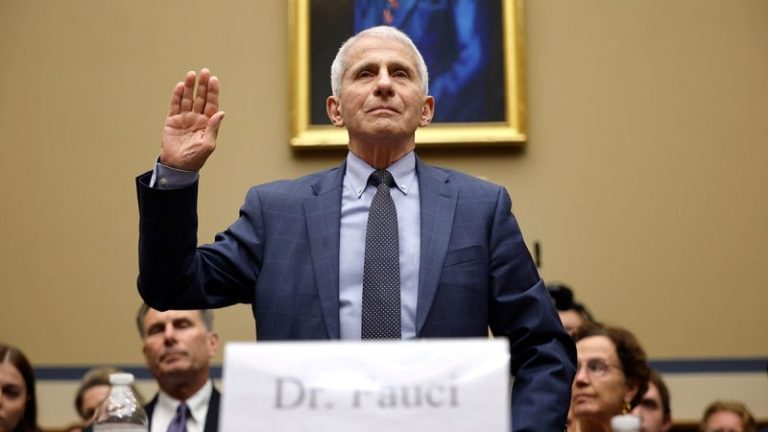
Biden issued a series of preemptive pardons on his final day to officials, including former chief medical advisor to the president Anthony Fauci and former chairman of the Joint Chiefs of Staff Gen. Mark Milley, in an attempt to safeguard them from retribution from Trump. 

In an article intended to be his defense for the autopen issue, it emerged that, although Biden reportedly made the decision in a meeting, Biden’s chief of staff Jeff Zients is the one who gave final approval for the use of the autopen, at least in the case of Fauci and Milley, the New York Times reported. 

On Biden’s final day as president, Jan. 19, Biden had a meeting with his aides until nearly 10 p.m. to talk about various preemptive pardons, the Times reports. Emails obtained by the Times show that an aide sent a summary draft of the decisions formalized during that meeting to Zient’s assistant at 10:03 p.m. 

The assistant sent the email to Zients and others present in the meeting, requesting approval from Zients and White House deputy chief of staff Bruce Reed at 10:28 p.m., the Times reported. Zients replied all to the email three minutes later, the outlet said. 

‘I approve the use of the autopen for the execution of all of the following pardons,’ Zients said in the email, according to the Times. 

Zients could not be immediately reached for comment by Fox News Digital. 

Additionally, the Times report said Biden did not personally approve each name included in the broad, categorical pardons. 

‘Rather, after extensive discussion of different possible criteria, he signed off on the standards he wanted to be used to determine which convicts would qualify for a reduction in sentence,’ the Times reported. 

When asked about the Times’ report, Trump told reporters at the White House Monday that Biden’s alleged use of the autopen amounted to possibly ‘one of the biggest scandals that we’ve had in 50 to 100 years.’ 

‘I guarantee you he knew nothing about what he was signing, I guarantee you,’ Trump said. 

Additionally, the White House said the report shed light on Biden’s trustworthiness, and accused the Biden administration of engaging in a cover-up. 

‘The same president who lied through his teeth to the American people for four years about everything from his health to the state of the economy should not be trusted again,’ White House spokesperson Harrison Fields said in an email to Fox News. ‘The Biden administration conducted the most egregious cover-up scheme in American politics… The truth will come out about who was, in fact, running the country sooner or later, just as the truth is emerging about the state of Joe Biden’s cognitive and physical health.’ 

Biden granted a total of 4,245 acts of clemency during his administration, 96% of which were granted during his final months in office between October 2024 and January, according to the Pew Research Center.

Trump first accused Biden of using an autopen to sign important clemency documents in March. He has continued to bring up the issue, and sent a memo ordering Attorney General Pam Bondi to launch an investigation into Biden’s autopen use in June, and to probe if the usage stemmed from a decline in Biden’s mental acuity. 

‘In recent months, it has become increasingly apparent that Biden’s aides abused the power of presidential signatures through the use of an autopen to conceal Biden’s cognitive decline and assert Article II authority,’ Trump wrote in the memo. 

‘This conspiracy marks one of the most dangerous and concerning scandals in American history. The American public was purposefully shielded from discovering who wielded the executive power, all while Biden’s signature was deployed across thousands of documents to effect radical policy shifts.’

A White House official previously told Fox News Digital that Trump uses his hand signature for every legally operational or binding document. Even so, Trump has admitted that he uses an autopen for letters. 

An autopen is a machine that physically holds a pen and features programming to imitate a person’s signature. Unlike a stamp or a digitized print of a signature, the autopen has the capability to hold various types of pens like a ballpoint to a permanent marker, according to descriptions of autopen machines available for purchase. 

Fox News’ Andrea Margolis and Pat Ward contributed to this report. 

This post appeared first on FOX NEWS