Author

admin

Browsing


Trading resumes in:


Company:  Prismo Metals Inc.  


CSE Symbol: PRIZ  


All Issues: Yes  


Resumption (ET):   8:00 AM   7/21/2025   


CIRO can make a decision to impose a temporary suspension (halt) of trading in a security of a publicly-listed company. Trading halts are implemented to ensure a fair and orderly market. CIRO is the national self-regulatory organization which oversees all investment dealers and trading activity on debt and equity marketplaces in Canada .


SOURCE Canadian Investment Regulatory Organization (CIRO) – Halts/Resumptions


  View original content: http://www.newswire.ca/en/releases/archive/July2025/18/c4294.html  


News Provided by Canada Newswire via QuoteMedia

This post appeared first on investingnews.com

The gold price saw both peaks and troughs this week, reacting to the release of June consumer and producer price index data out of the US, as well as renewed discussions about whether President Donald Trump may fire Federal Reserve Chair Jerome Powell.

Silver was the real precious metals star, pushing past the US$39 per ounce level once again.

What’s happened is we broke through that US$37 to US$37.30 resistance level — after failing there, by the way — which is also a technical bullish sign. And then we rallied all the way to the US$39s, but we hit resistance between US$39 and US$40, which is not really unexpected, because it was a really quick move from US$37 to US$39.

I think US$40 is a big, round number that doesn’t have a lot of resistance on the long-term chart, but it’s still there in people’s minds.

It’s going to take a little bit to get through US$40. But once you’re by US$40, then it’s absolutely go time if you don’t think it is already.

Take a watch for more on silver, as well as the gold, platinum and copper markets.

Bullet briefing — MP shares rise, Barrick and Discovery talk Hemlo

MP Materials signs deal with Apple

MP Materials (NYSE:MP) was in the headlines after announcing a US$500 million partnership with Apple (NASDAQ:AAPL). The companies said on Tuesday (July 15) that they have entered into a definitive long-term agreement through which MP will supply Apple with rare earth magnets.

The magnets will be made in the US, and will use 100 percent recycled materials.

The news follows last week’s new partnership between MP and the US Department of Defense. A key component is a 10 year deal that sets up a price floor commitment of US$110 per kilogram for MP’s neodymium-praeseodymium products, a move geared at creating supply chain stability.

The defense department will also become MP’s largest shareholder, buying US$400 million worth of preferred stock and receiving warrants to purchase additional common stock.

Shares of MP spiked on the news and have stayed high since then.

MP describes itself as the only fully integrated rare earths producer in the US, and the moves from Apple and the defense department reflect a growing push to diversify away from China.

Investors are taking note of the rare earths opportunity too. Here’s how Rick Rule of Rule Investment Media described the sector’s potential in a recent interview:

If you want a gamier suggestion, I really like the high-quality rare earths space. Nobody understands it, nobody cares. There are probably 50 pretenders in rare earths, but there are two or three speculations that, while you could easily lose 30 percent of your money, you could also easily enjoy 20 baggers.

Watch the interview for more, including Rule’s favorite ASX-listed mining stocks.

Barrick, Discovery Silver in Hemlo talks

Major miner Barrick Mining (TSX:ABX,NYSE:B) is reportedly looking to sell Hemlo, its last remaining Canadian gold mine, to Discovery Silver (TSX:DSV,OTCQX:DSVSF).

According to Bloomberg, the companies are in ‘advanced talks’ about a deal.

Located in Ontario, Hemlo’s 2025 output is forecast at 140,000 to 160,000 ounces of gold at an all-in sustaining cost of US$1,600 to US$1,700 per ounce.

The move to sell Hemlo comes as Barrick hones in on tier-one assets and broadens its focus. It changed its name from Barrick Gold to Barrick Mining earlier this year, with its latest divestment being the sale of its 50 percent stake in the Alaska-based Donlin gold project for US$1 billion in cash.

For its part, Discovery Silver has been on an expansion path, closing its acquisition of Newmont’s (TSX:NGT,NYSE:NEM) Porcupine complex this past April.

In addition to Porcupine, Discovery holds the Cordero silver project in Mexico.

Securities Disclosure: I, Charlotte McLeod, hold no direct investment interest in any company mentioned in this article.

This post appeared first on investingnews.com


(TheNewswire)


Vancouver, British Columbia, July 18, 2025 TheNewswire – Prismo Metals Inc. (‘ Prismo ‘ or the ‘ Company ‘) (CSE: PRIZ,OTC:PMOMF) (OTCQB: PMOMF) is pleased to announce that further to its news release dated July 3, 2025, the Company has upsized and closed its previously announced non-brokered private placement of units of the Company (‘ Units ‘) at an issue price of $0.05 per Unit  (the ‘Private Placement’ ). Due to strong investor demand, the Private Placement was increased from 5,000,000 Units to the issuance of 11,500,000 Units for gross proceeds of $575,000.


  Each Unit consists of one common share of the Company (a ‘   Share   ‘) and one-half of one common share purchase warrant of the Company (each whole warrant, a ‘   Warrant   ‘). Each Warrant entitles the holder to purchase one Share for a period of twenty-four (24) months from the date of issue at an exercise price of $0.10.  


  The Company further announces that it intends to complete a second closing of the Private Placement through the issuance of up to 2 million additional Units at an issue price of $0.05 per Unit for additional gross proceeds of up to $100,000 (the ‘   Second Closing   ‘). The Company intends to use the proceeds from the Second Closing for general corporate purposes.  


  ‘The upsizing of the private placement reflects investors’ interest in our recently optioned silver projects in Arizona, the historical high-grade Silver King and Ripsey mines,’ said Alain Lambert, CEO. ‘Our Chief Exploration Officer, Dr. Craig Gibson, has already put in place a comprehensive first year exploration plan at Silver King which includes a phase one drill program of a minimum of 1,000 meters.’  


  Dr. Craig Gibson said: ‘We are about to begin a detailed mapping and sampling program at both projects at surface exposures and in accessible underground workings. A drill program is planned for Silver King, with about 1,000 meters initially. The Silver King drill program is designed to test the mineralized body at four elevations as well as lateral to the pipelike body. De-watering of the Silver King shaft to gain access to the upper levels may also be undertaken as submersible pumps are in place.’


  The Company intends to use the proceeds from the Private Placement for exploration activities at its recently optioned historical Silver King and Ripsey silver mines in Arizona and for general corporate purposes. There may be circumstances, however, where, for sound business reasons, a reallocation of funds may be necessary. Additionally, the   Company issued 150,724   Shares at an issue price of $0.05 to an arm’s length creditor in full and final settlement of accrued and outstanding indebtedness in the amount of $7,536.20.  


  In connection with the closing of the Private Placement, the Company issued an aggregate of   231,000   finder’s warrants (the   ‘Finder’s Warrants’   ) and paid finder’s commissions of $   11,550   to certain qualified finders. Each Finder’s Warrant is exercisable for a period of 24 months from the date of issuance to purchase one Share at a price of $0.10.  


  All securities issued or issuable in connection with the Private Placement and the Second Closing are subject to a four-month hold period from the closing date under applicable Canadian securities   laws, in addition to such other restrictions as may apply under applicable securities laws of jurisdictions outside Canada.  


  Multilateral Instrument 61-101  


  The Company has issued an aggregate of   1,410,000   Units pursuant to the Private Placement to certain ‘related parties’ of the Company (the ‘   Interested Parties   ‘), in each case constituting, to that extent, a ‘related party transaction’ as defined under Multilateral Instrument 61-101 –   Protection of Minority Securityholders in Special Transactions   (‘   MI 61-101   ‘). The Company is exempt from the requirements to obtain a formal valuation and minority shareholder approval in connection with the participation of the Interested Parties in the Private Placement in reliance on sections 5.5(a) and 5.7(1)(a) of MI 61-101, as neither the fair market value of the Private Placement nor the securities issued in connection therewith, in so far as the Private Placement involves the Interested Parties, exceeds 25% of the Company’s market capitalization. The Company did not file a material change report more than 21 days before the expected closing of the Private Placement as the details of the Private Placement and the participation therein by the Interested Parties therein were not settled until recently and the Company wishes to close on an expedited basis for sound business reasons.  


  About Silver King and Ripsey  


Discovered in 1875, the Silver King mine is one of Arizona’s most important historical producers, yielding nearly 6 million ounces of silver at grades of up to 61 oz/t. Selected samples from small-scale production in the late 1990s returned historical grades as high as 644 oz/t silver (18,250 g/t) and 0.53 oz/t gold (15 g/t). Additionally, the presence of freibergite (AgCuSbS) suggests a potential for antimony, a critical mineral with growing strategic demand.


The Ripsey mine, located 20 km west of Hot Breccia, is also a historical gold-silver-copper producer, having returned historical grades of up to 15.85 g/t gold and 276 g/t silver. However, no modern exploration has been conducted.


  Strategic Location  


The Silver King mine sits only 3 km from the main shaft of the Resolution Copper project — a joint venture between Rio Tinto and BHP and recognized as one of the world’s largest unmined copper deposits. (1) This unique land position is fully surrounded by Resolution Copper’s claim block, offering strategic upside.


The Silver King mine was discovered in 1875 and produced as much as 10,000 ounces per ton silver in near surface workings. (2) Underground production through 1889 is estimated at almost 6 million ounces of silver at grades of between 61 and 21 ounces per ton. During a second period of production from 1918 to 1928, 230,000 ounces were produced at a grade of 18.7 ounces per ton.  No significant production has occurred after 1928.


Silver King is a steeply west-dipping pipelike stockwork and breccia zone that was mined on eight levels to about 300 meters depth below a glory hole at the surface. The pipe is described as a dense stockwork with local breccia zones and a quartz core, and that due to variations in mineralogy, much of the upper portion of the body has not been mined (3) . The current owners from whom the Company has optioned the project rehabilitated the main shaft in the late 1990s, opened the upper levels of the mine and produced a small tonnage. Assay certificates from this period show selected samples with 400 to 600 ounces per ton silver with 0.2-0.5 oz/t gold and some base metals. Virtually no modern exploration has been carried out at the mine providing significant exploration upside and multiple drill targets.


The Ripsey mine is a historical gold-silver-copper producer located about 20 km west of the Hot Breccia project. Historical mine workings consisting of tunnels and shafts on several levels were developed along a vein over about 400 meters of strike length and 160 meters vertically. A small tonnage of mineral was reportedly produced by the optionor in the late 1990’s. Sampling by Dr. Craig Gibson from the mine workings has yielded 15.9 g/t gold and 275 g/t silver over 0.75 meters and 8.7 g/t gold, 181 g/t silver, 3% copper and 9% zinc over 1 meter. No modern exploration has been carried out at the project (see News Release of July 4, 2025), providing significant exploration upside and multiple drill targets.


With respect to the Resolution deposit, the QP has been unable to verify the information, and the information is not necessarily indicative to the mineralization on the Silver King property.


   1)      https://resolutioncopper.com/about-us/    


  2)   Galbraith, F, 1935, Geology of the Silver King area, Superior, Arizona, Univ. of Arizona thesis, 153p plus plates   .  


  3)   Blake, W.P., 1883, Description of the Silver King Mine, Arizona, New Haven, 48p plus plates.  


  Qualified Person  


  All scientific and technical information in this news release has been reviewed and approved by Dr. Craig Gibson, Chief Exploration Officer of the Company, PhD., CPG, and a ‘qualified person’ for the purposes of National Instrument 43-101.    Other than the sampling conducted by Dr. Craig Gibson as indicated herein, the data presented in this press release was obtained from public sources, should be considered incomplete and is not qualified under NI 43-101, but is believed to be accurate. The Company has not verified the historical data presented and it cannot be relied upon, and it is being used solely to aid in exploration plans.   


  About Prismo Metals Inc.  


   Prismo (CSE: PRIZ,OTC:PMOMF) is mining exploration company focused on three silver projects (Palos Verdes, Silver King and Ripsey) and a copper     project in Arizona (Hot Breccia).   


   Please follow @PrismoMetals on     ,     ,     ,      Instagram      , and   


   Prismo Metals Inc.   


   1100 – 1111 Melville St., Vancouver, British Columbia V6E 3V6   


   Phone: (416) 361-0737   


   Contact:   


   Alain Lambert, Chief Executive Officer     alambert@cpvcgroup.ca   


  Gordon Aldcorn, President     gordon.aldcorn@prismometals.com    


  Neither the Canadian Securities Exchange nor its Market Regulator (as that term is defined in the policies of the Canadian Securities Exchange) accepts responsibility for the adequacy or accuracy of this release.  


  Cautionary Note Regarding Forward-Looking Information  


  This release includes certain statements and information that may constitute forward-looking information within the meaning of applicable Canadian securities laws. Forward-looking statements relate to future events or future performance and reflect the expectations or beliefs of management of the Company regarding future events. Generally, forward-looking statements and information can be identified by the use of forward-looking terminology such as ‘intends’ or ‘anticipates’, or variations of such words and phrases or statements that certain actions, events or results ‘may’, ‘could’, ‘should’, ‘would’ or ‘occur’. This information and these statements, referred to herein as ‘forward‐looking statements’, are not historical facts, are made as of the date of this news release and include without limitation, statements regarding discussions of future plans, estimates and forecasts and statements as to management’s expectations and intentions with respect to, among other things, the intended use of any proceeds raised under the Private Placement; the completion of and use of proceeds from the Second Closing;   the implementation of the objectives, goals and future plans of the Company including the proposed advancement of the Silver King and Ripsey projects as currently contemplated; the expectation that exploration activities (including drill results) will accurately predict mineralization; the expectation that the Company will implement its drilling, geoscience and metallurgical work on its properties and work plans generally; the benefits of the Company’s approach to exploration; and management’s belief that the historical resource could be indicative of the presence of mineralization on the deposits   .  


  These forward‐looking statements involve numerous risks and uncertainties and actual results might differ materially from results suggested in any forward-looking statements. These risks and uncertainties include, among other things, the potential inability of the Company to utilize the anticipated proceeds of the Private Placement as anticipated; the risk that the Company will not complete the Second Closing;   capital and operating costs varying significantly from estimates; the preliminary nature of metallurgical test results; the ability of exploration results to predict mineralization, prefeasibility or the feasibility of mine production; the risk that assay results will not be as anticipated or received when anticipated; delays in obtaining or failures to obtain required governmental, environmental or other project approvals; uncertainties relating to the availability and costs of financing needed in the future; changes in equity markets; inflation; fluctuations in commodity prices; delays in the development of projects; the other risks involved in the mineral exploration and development industry; and those risks set out in the Company’s public disclosure record on SEDAR+ (     www.sedarplus.com     ) under the Company’s issuer profile   .  


  Although management of the Company has attem   pted to identify important factors that could cause actual results to differ materially from those contained in forward-looking statements or forward-looking information, there may be other factors that cause results not to be as anticipated, estimated or intended. There can be no assurance that such statements will prove to be accurate, as actual results and future events could differ materially from those anticipated in such statements. Accordingly, readers should not place undue reliance on forward-looking statements and forward-looking information. Readers are cautioned that reliance on such information may not be appropriate for other purposes. The Company does not undertake to update any forward-looking   statement, forward-looking information or financial out-look that are incorporated by reference herein, except in accordance with applicable securities laws. We seek safe harbor.  


  NOT FOR DISTRIBUTION TO UNITED STATES NEWS WIRE SERVICES
OR FOR DISSEMINATION IN THE UNITED STATES


Copyright (c) 2025 TheNewswire – All rights reserved.


News Provided by TheNewsWire via QuoteMedia

This post appeared first on investingnews.com

Statistics Canada released June’s consumer price index (CPI) data on Tuesday (July 15). The report showed that year-over-year inflation gained momentum during the month, rising to 1.9 percent from the 1.7 percent recorded in May.

The increase was attributed in part to the 13.4 percent year-over-year decline in gas prices seen in June, as it was a smaller drop than May’s 15.5 percent decrease caused by the removal of the consumer carbon tax.

Other factors contributing to the rise included a 2.7 percent increase in durable goods, with passenger vehicles posting the largest gains at 4.1 percent. Grocery prices also increased 2.8 percent, although they eased off from a 3.3 percent increase in May.

While economists had predicted a larger 2 percent rise in CPI, the figures still make it unlikely that the Bank of Canada will cut its benchmark rate at its next meeting on July 30. Canada’s central bank has cut its interest rates seven times since June 2024, lowering it from 5 percent to 2.75 percent in March.

South of the border, the US Bureau of Labor Statistics also released its June CPI data the same day, reporting year-over-year growth of 2.7 percent, sharply up from the 2.4 percent gain posted in May. On a monthly basis, CPI rose 0.3 percent, also higher than May’s 0.1 percent.

Analysts have attributed the gain to an increase in prices resulting from US President Donald Trump’s tariff policy, as vendors restocked shelves with inventories purchased after tariffs were applied.

Goods and services increased across the board, except for new and used vehicles, which declined by 0.3 percent and 0.7 percent on a monthly basis. Energy rose 0.9 percent, including a 1 percent increase in gasoline prices, a reversal from May’s energy and gas price decreases of 1 percent and 2.6 percent respectively.

The data will likely play a role in what the US Federal Reserve decides during its next rate meeting on July 29 and 30. Economist consensus is that the central bank will continue to hold at the current 4.25 to 4.5 percent range.

Markets and commodities react

In Canada, equity markets were mostly positive this week. The S&P/TSX Composite Index (INDEXTSI:OSPTX) gained 1 percent to close at 27,314.01 on Friday (July 18) and set a new all-time high during the week. The S&P/TSX Venture Composite Index (INDEXTSI:JX) fared even better this week, gaining 2.53 percent to 797.75. However, the CSE Composite Index (CSE:CSECOMP) fell 2.6 percent to 126.84.

As for US equity markets, the S&P 500 (INDEXSP:INX) gained 0.66 percent to close Friday at 6,296.78 and the Nasdaq 100 (INDEXNASDAQ:NDX) climbed 1.35 percent to 23,065.47, with both also setting new record highs during the week. On the other hand, the Dow Jones Industrial Average (INDEXDJX:.DJI) fell 0.1 percent to 44,342.20.

In precious metals, the gold price rose 0.78 percent over the week to US$3,349.66 by Friday at 5 p.m. EDT. Meanwhile, the silver price continued to trade near 11-year highs, climbing 3.13 percent on the week to US$38.15 per ounce.

In base metals, copper ended the week were it started out, but was still trading near all time highs at US$5.60 per pound. The S&P GSCI (INDEXSP:SPGSCI) posted a 1.26 percent gain to finish the week at 551.61.

Top Canadian mining stocks this week

How did mining stocks perform against this backdrop?

Take a look at this week’s five best-performing Canadian mining stocks below.

Stock data for this article was retrieved at 4 p.m. EDT on Friday using TradingView’s stock screener. Only companies trading on the TSX, TSXV and CSE with market capitalizations greater than C$10 million are included. Mineral companies within the non-energy minerals, energy minerals, process industry and producer manufacturing sectors were considered.

1. Altima Energy (TSXV:ARH)

Weekly gain: 97.96 percent
Market cap: C$43.99 million
Share price: C$0.97

Altima Energy is a light oil and natural gas exploration and development company with operations in Alberta, Canada.

Its primary asset is the Richdale property in Central Alberta. The property consists of five producing light oil wells and sits on 5,920 acres of long-term reserves. The property hosts combined proved and probable reserves of just under 2 billion barrels of oil equivalent, with a pre-tax net present value of C$25.8 million.

The company also owns two wells at its Twinning light oil site near Nisku, seven producing wells at its Red Earth property in Northern Alberta and two multi-zone wells at its Chambers Ferrier liquid gas production property.

Shares in Altima started to gain after it released news on July 8 that it had completed a private placement for proceeds of up to C$5.5 million. Under the terms of the deal, the company will issue 20 million units at C$0.275 per unit, which each include one common share and one warrant allowing the holder to purchase a common share for C$0.40.

The company said that part of the proceeds would be used to complete field upgrades at its Red Earth and Richdale properties.

2. Kirkland Lake Discoveries (TSXV:KLDC)

Weekly gain: 81.82 percent
Market cap: C$11.26 million
Share price: C$0.10

Kirkland Lake Discoveries is a gold and copper exploration company focused on projects in its district-scale land package located in the Kirkland Lake area of Ontario, Canada.

Its holdings span an area of approximately 38,000 hectares in the Abitibi Greenstone Belt that has been host to past-producing gold and copper mines. It is broadly divided into KL West and KL East, which contain the Goodfish-Kirana and Lucky Strike gold projects, respectively, among others.

On April 29, the company announced it entered into a mining option agreement with Val-d’Or Mining (TSXV:VZZ) to acquire a 100 percent interest in the Winnie Lake and Amikougami properties, as well as mining claim purchase agreements with two vendors to acquire further claims around the Winnie Lake Pluton. The properties expand KL West’s southern portion.

Following the agreement, the company conducted grab samples at the Winnie Lake property and reported the results on July 9. One grab sample collected near the historic Winnie Shaft zone yielded grades of 1.6 grams per metric ton (g/t) gold, 28.2 g/t silver, 5.7 percent copper, 5.3 percent zinc and 1.65 g/t tellurium.

The company also discovered a quartz-veined intrusive outcrop 150 meters west of the shaft during field prospecting, with samples displaying characteristics of magmatic-hydrothermal copper-gold systems, including visible malachite and strong potassic alteration.

Additionally, Kirkland Lake reported it has received full drill permits for Winnie Lake and plans to initiate activities at the site this summer, focusing on the newly defined zones.

3. Happy Creek Minerals (TSXV:HPY)

Weekly gain: 70 percent
Market cap: C$10.33 million
Share price: C$0.085

Happy Creek Minerals is an exploration company focused on advancing a portfolio of assets in British Columbia, Canada.

Its primary focus has been on its Fox tungsten property located in the South Caribou region of the province. It comprises 135.9 square kilometers of mineral tenure and hosts deposits containing tungsten, molybdenum, zinc, indium, gold and silver. In total, 21,125 meters of exploration drilling have been carried out at the site, primarily in shallow holes, for resource definition.

Happy Creek’s share price began climbing Tuesday after the company announced a non-brokered private placement to raise gross proceeds of up to C$3.25 million in flow-through units at C$0.07 per share and non-flow-through units at C$0.05 per share.

The following day, Happy Creek upsized the offering to C$3.75 million.

The company plans to use the gross proceeds for drilling, exploration and development at Fox, as well as other exploration work in the Caribou.

4. Camino Minerals (TSXV:COR)

Weekly gain: 56.52 percent
Market cap: C$13.5 million
Share price: C$0.36

Camino Minerals is a copper exploration and development company with a portfolio of projects in Chile and Peru.

Earlier in 2025, the company shifted its focus to its newly acquired, construction-ready Puquois copper project in Chile.

In October 2024, Camino entered a definitive agreement to create a 50/50 joint venture with Nittetsu Mining (TSE:1515) that would acquire Cuprum Resources, which owns the Puquios project. The partners completed the acquisition April 17 and said they would turn their attention to project financing.

On March 17, Camino filed a prefeasibility study for the project. The study results demonstrate a post-tax net present value of US$118 million, with an internal rate of return of 23.4 percent and a payback period of 3.1 years at a fixed copper price of US$4.28. It also outlines all-in sustaining costs of US$2.00 per pound over a 14.2 year mine life.

In addition to the economic details, the included mineral resource estimate shows a measured and indicated resource of 149,000 metric tons of copper from 32.16 million metric tons of ore grading 0.46 percent copper.

Camino also owns the Los Chapitos project, which has been a long-time focus of the company. The project covers approximately 22,000 hectares near the coastal town of Chala, Peru, and hosts near-surface mineralization.

Camino has been conducting exploration efforts at Los Chapitos throughout the first half of 2025. On Wednesday, it reported trench results from the newly identified Mirador zone, including 1.07 percent copper over 90 meters, with a four-meter section containing 3.05 percent copper.

5. Solstice Gold (TSXV:SGC)

Weekly gain: 56.25 percent
Market cap: C$29.38 million
Share price: C$0.125

Solstice Gold is an exploration company focused on its flagship Strathy gold project in Ontario, which it acquired in June 2024.

The project consists of 45 claims covering an area of 45 square kilometers in the Temagami Greenstone belt. Historical documents report six gold showings in the central portion of the project areas, with documented mineralization at the Leckie prospect.

In its latest project update on July 2, Solstice announced it had wrapped up its spring drill program, which focused on four target areas. In total, the company completed 3,125 meters of drilling across 14 holes, and results are expected in July.

The company also reported that it had entered into an agreement to acquire 17 additional claims, which would increase the project area by 50 percent. It added that targets identified from its IP program may extend along strike into these claims.

FAQs for Canadian mining stocks

What is the difference between the TSX and TSXV?

The TSX, or Toronto Stock Exchange, is used by senior companies with larger market caps, and the TSXV, or TSX Venture Exchange, is used by smaller-cap companies. Companies listed on the TSXV can graduate to the senior exchange.

How many mining companies are listed on the TSX and TSXV?

As of February 2025, there were 1,572 companies listed on the TSXV, 905 of which were mining companies. Comparatively, the TSX was home to 1,859 companies, with 181 of those being mining companies.

Together the TSX and TSXV host around 40 percent of the world’s public mining companies.

How much does it cost to list on the TSXV?

There are a variety of different fees that companies must pay to list on the TSXV, and according to the exchange, they can vary based on the transaction’s nature and complexity. The listing fee alone will most likely cost between C$10,000 to C$70,000. Accounting and auditing fees could rack up between C$25,000 and C$100,000, while legal fees are expected to be over C$75,000 and an underwriters’ commission may hit up to 12 percent.

The exchange lists a handful of other fees and expenses companies can expect, including but not limited to security commission and transfer agency fees, investor relations costs and director and officer liability insurance.

These are all just for the initial listing, of course. There are ongoing expenses once companies are trading, such as sustaining fees and additional listing fees, plus the costs associated with filing regular reports.

How do you trade on the TSXV?

Investors can trade on the TSXV the way they would trade stocks on any exchange. This means they can use a stock broker or an individual investment account to buy and sell shares of TSXV-listed companies during the exchange’s trading hours.

Article by Dean Belder; FAQs by Lauren Kelly.

Securities Disclosure: I, Dean Belder, hold no direct investment interest in any company mentioned in this article.

Securities Disclosure: I, Lauren Kelly, hold no direct investment interest in any company mentioned in this article.

This post appeared first on investingnews.com

The U.S. shipbuilding industry is looking for help. A South Korean company is answering the call.

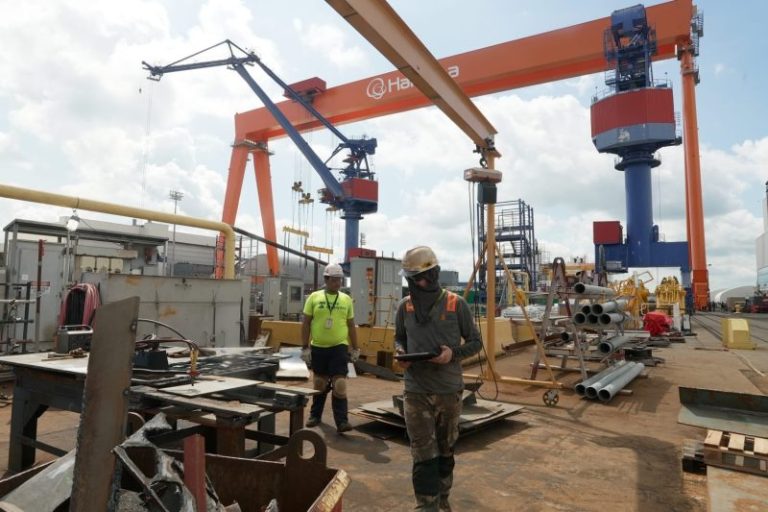
Hanwha Philly Shipyard CEO David Kim, nodding to the gargantuan vessels under construction just off the Delaware River, on Wednesday offered the kind of vision that has brought some optimism back to the U.S. shipbuilding community.

“You take that level of experience, the technology that we have, the know-how, the process expertise, and so clearly, we believe we have a lot to bring to the Philly Shipyard, as well as to the U.S. maritime industrial base, in terms of modernization capacity,” he said on a walkthrough of the shipyard.

Hanwha Philly Shipyard CEO David Kim.Obtained by NBC News

Hanwha Group bought the Philly Shipyard in December for $100 million and plans to invest multiple times that amount in the yard, training over a thousand new workers and bringing in new high-tech equipment. The company hopes to build naval ships and become the first U.S. builder of specialized liquefied natural gas tankers.

Shipbuilding in the United States has been all but dormant. China, South Korea, Japan and Europe all produce far more ships than the United States, with the few shipyards still operating in the country concentrating on military ships.

Revitalizing shipbuilding has been one of the areas President Donald Trump has pointed to as part of a broader effort to bring manufacturing back to the United States — a move some see as shortsighted considering the costs associated with building the kind of gigantic modern ships that remain a core part of how goods and commodities move around the planet.

This post appeared first on NBC NEWS

President Donald Trump said Wednesday that Coca-Cola in the United States will begin to be made with cane sugar, but the company did not explicitly say that was the case when it was asked later about Trump’s claim.

Trump said Wednesday afternoon on Truth Social that he had been speaking to Coca-Cola about using cane sugar in the sodas sold in the United States and that the company agreed to his idea.

‘This will be a very good move by them — You’ll see. It’s just better!’ Trump wrote in the post.

But Coca-Cola did not commit to the change when NBC News asked it later about Trump’s post.

‘We appreciate President Trump’s enthusiasm for our iconic Coca-Cola brand,’ a company spokesperson said in a statement. ‘More details on new innovative offerings within our Coca-Cola product range will be shared soon.’

Donald Trump drinks a Diet Coke during the ProAm of the LIV Golf Team Championship at Trump National Doral Golf Club, on Oct. 27, 2022, in Doral, Fla.Lynne Sladky / AP file

It remains unclear whether Coca-Cola agreed to Trump’s proposal or whether the beloved soda will still be made with corn syrup.

The Trump administration’s Make America Healthy Again initiative, named for the social movement aligned with Health Secretary Robert F. Kennedy Jr., has pushed food companies to alter their formulations to remove ingredients like artificial dyes.

Coca-Cola produced for the U.S. market is typically sweetened with corn syrup, while the company uses cane sugar in some other countries, including Mexico and various European countries.

Coca-Cola announced in 1984 it was going to “significantly increase” the amount of corn syrup it was using in its U.S. products, The New York Times reported at the time.

Coca-Cola said it would use corn syrup to sweeten bottled and canned Coke, as well as caffeine-free Coke, but left itself “flexibility” to use other sweeteners, like sugar or high-fructose corn syrup, the Times reported.

Kennedy has criticized how much sugar is consumed in the American diet and has said updated dietary guidelines released this summer will advise people to ‘eat whole food.’

Trump has been known to enjoy Coca-Cola products. The Wall Street Journal reported that a Diet Coke button, which allows him to order the soda on demand, has joined him in the Oval Office for both of his terms.

This post appeared first on NBC NEWS

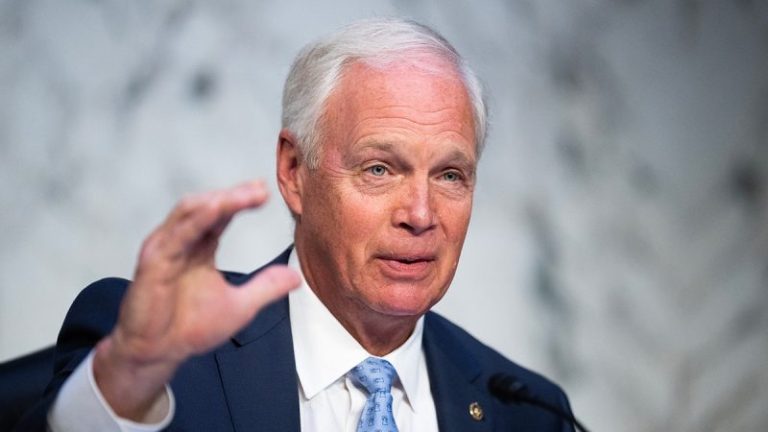
Sen. Ron Johnson is demanding the National Archives turn over all records related to former President Joe Biden’s ‘mental and physical health and cognitive decline,’ Fox News Digital has learned.

Fox News Digital exclusively obtained a letter Johnson, R-Wis., sent to Secretary of State Marco Rubio, who is serving as the acting archivist of the United States.

Johnson, who leads the Senate Permanent Subcommittee on Investigations, said he is now conducting an investigation into ‘the cover-up of former President Biden’s health and cognitive decline.’

‘My office has been reviewing the allegations that former President Biden, cabinet members, and his staff covered up his declining mental and physical health over the course of his presidency,’ Johnson wrote to Rubio, adding that the allegations ‘raise serious questions about who was making key presidential decisions if the former president was incapable of doing so.

‘One of these key decisions may have involved the presidential power to grant clemency or pardons — a matter that the White House Counsel’s Office, among other entities, are currently investigating,’ Johnson wrote.

Fox News Digital exclusively reported Tuesday that the White House Counsel’s Office, in conjunction with the Justice Department, is investigating Biden’s use of an autopen and already is reviewing more than 27,000 documents turned over by the National Archives and Records Administration (NARA).

‘The reporting further suggests that these records represent only a portion of the information in NARA’s possession that may be related to the coverup of former President Biden’s alleged mental and physical decline,’ Johnson wrote to Rubio, referring to the Fox News Digital exclusive report.

Johnson is now demanding that NARA turn over all records provided to the White House Counsel’s Office referring to or relating to Biden’s mental or physical health or the alleged cover-up, including all communications.

Johnson also is demanding communications between or among any former White House officials, members of Biden’s Cabinet or their staff or other staff relating to Biden’s mental or physical health.

Specifically, Johnson is demanding records belonging to former White House chief of staff Ron Klain, former White House chief of staff Jeff Zients, former advisor Mike Donilon, former counselor to the president Steve Ricchetti, Biden personal attorney Bob Bauer, Biden senior advisor Anita Dunn, former White House Physician Kevin O’Connor and others.

Johnson gave Rubio until July 30 to turn over the records.

Trump sent a memo in June to the Department of Justice directing Attorney General Pam Bondi to investigate the autopen use and to determine whether it was related to a decline in Biden’s mental state.

The White House Counsel’s Office is investigating Biden’s use of an autopen, a machine that physically holds a pen and features programming to imitate a person’s signature. Unlike a stamp or a digitized print of a signature, the autopen has the capability to hold various types of pens, from a ballpoint to a permanent marker, according to descriptions of autopen machines available for purchase. 

Biden used an autopen to sign a slew of documents while in office. He also used an autopen to sign final pardons, including preemptive pardons for members of his family, Dr. Anthony Fauci, Gen. Mark Milley and members and staff of the House committee investigating the Jan. 6, 2021, Capitol riots. He only signed one pardon by hand, for his son Hunter, after vowing to the American people for months he would not pardon Hunter.

In his final weeks in office, Biden granted clemency and pardoned more than 1,500 individuals in what the White House described at the time as the largest single-day act of clemency by a U.S. president.

Biden, in a recent interview with The New York Times, defended his use of an autopen, saying he ‘made every decision’ on his own.

‘We’re talking about (granting clemency to) a whole lot of people,’ Biden said. 

However, the Times reported that Biden ‘did not individually approve each name for the categorical pardons that applied to large numbers of people,’ according to the former president and his aides.

Congressional committees, like the House Oversight Committee, are also investigating the autopen use and Biden’s health while in office. 

A senior administration official recognized the simultaneous efforts but stressed that the White House Counsel’s investigation is separate from any congressional probes. 

Officials told Fox News Digital the investigation is a ‘massive effort,’ and one that they hope to finish ‘as soon as possible.’ 

As for Trump, officials told Fox News Digital he does not use an autopen for anything that could be considered official business.

The only time Trump may use the autopen is for unofficial business, including correspondence, letters for birthdays or commissioned records for widely shared documents, his office said.  

This post appeared first on FOX NEWS

The White House dismissed comments that the Trump administration’s efforts to yank already approved federal funds for foreign aid and public broadcasting pose a public safety threat. 

The rescissions package the Senate approved early Thursday pulls more than $1 billion from the Corporation for Public Broadcasting (CPB) that provides federal funding for NPR and PBS.

‘These are not honest news organizations,’ Leavitt told reporters Thursday. ‘These are partisan, left-wing outlets that are funded by the taxpayers. And this administration does not believe it’s a good use of the taxpayers’ time and money.’

PBS and NPR could not be immediately reached for comment by Fox News Digital. 

Additionally, the rescissions package revokes nearly $8 billion in already approved funding for the U.S. Agency for International Development (USAID), which the Trump administration dismantled amid concerns the formerly independent organization did not advance U.S. interests. The organization is not part of the State Department. 

The Senate narrowly approved the rescission measure, 51-48, which would revoke funding the Congress previously approved. Republican Sens. Susan Collins of Maine and Lisa Murkowski of Alaska voted alongside Democrats to oppose the package. 

‘Look, $9 billion worth of crap that was in our federal funding is now being rescinded,’ Leavitt said. ‘This is a good thing for the American people and the American taxpayer.’ 

Republican lawmakers like Senate Majority Leader John Thune, R-S.D., have touted the measure as a step toward ‘fiscal sanity’ as the Trump administration seeks to weed out waste, fraud and abuse. 

‘I appreciate all the work the administration has done in identifying wasteful spending,’ Thune said in a speech ahead of the vote. ‘And now it’s time for the Senate to do its part to cut some of that waste out of the budget. It’s a small but important step toward fiscal sanity that we all should be able to agree is long overdue.’

But Democrats claim that the cuts to foreign aid benefit Russia and China, and that the rescission package jeopardizes national security. Likewise, Democrats are concerned that further rescissions could spread to areas beyond foreign aid and public broadcasting. 

‘If Republicans slash more American aid, it will create a dangerous vacuum that the Chinese Communist Party will continue to eagerly fill,’ Senate Minority Leader Chuck Schumer, D-N.Y., said Tuesday on the Senate floor.

‘They’re letting Donald Trump decide for himself which programs to defund, and that puts everything at risk – healthcare, education, food assistance, public health,’ Schumer said. ‘Everything – everything – becomes at risk. That is what happens if a package like this is allowed to become law.’ 

Fox News’ Alex Miller contributed to this report. 

This post appeared first on FOX NEWS

An environmental advocacy group accused of trying to manipulate judges organized a years-long, nationwide online forum with jurists to promote favorable info and litigation updates regarding climate issues – until the email-styled group chat was abruptly made private, Fox News Digital found.

The Climate Judiciary Project (CJP) was founded in 2018 by a left-wing environmental nonprofit, the Environmental Law Institute (ELI), and pitches itself as a ‘first-of-its-kind effort’ that ‘provides judges with authoritative, objective, and trusted education on climate science, the impacts of climate change, and the ways climate science is arising in the law.’

But critics, such as Sen. Ted Cruz, R-Texas, say CJP is funded by China and left-wing activists for one purpose.

‘They fund CJP to train judges,’ Cruz said during a June hearing. ‘So, quote, unquote, train in climate science and make them agreeable to creative climate litigation tactics. Then, these left-wing bankrollers turn around and fund the climate litigators who will bring these bogus cases before those same judges that they’ve just indoctrinated.

‘This is like paying the players to play and paying the umpire to call the shots the way you want.’

The group, however, says it provides ‘neutral, objective information to the judiciary about the science of climate change as it is understood by the expert scientific community and relevant to current and future litigation.’

One of the efforts CJP launched included rolling out an email-styled listserv by which leaders from the Climate Judiciary Project could message directly with judges, documents obtained by Fox News Digital show. The listserv was launched in September 2022 and maintained until May 2024, according to the documents. A portal website page for the forum was previously publicly available, with an archived link saved in July 2024 showing there were 29 members in the group. 

‘Judicial Leaders in Climate Science,’ the archived website link reviewed by Fox Digital reads, accompanied by a short description that the group was a ‘Forum for Judicial Leaders in Climate Science to share resources.’

A link to the forum now leads to an error warning, stating, ‘Sorry, but that group does not exist.’ 

Fox News Digital obtained the archived chat history of the forum, which detailed numerous messages between at least five judges and CJP employees trading links on climate studies, congratulating one another on hosting recent environmental events, sharing updates on recent climate cases that were remanded to state courts, and encouraging each other to participate in other CJP meet-ups. 

One message posted by Delaware Judge Travis Laster, vice chancellor of the Delaware Court of Chancery, features a YouTube video of a 2022 climate presentation delivered by a Delaware official and a Columbia University professor that focused on the onslaught of climate lawsuits since the mid-2000s. It also included claims that such lawsuits could one day bankrupt the fuel industry. 

Laster shared the video in the group with a disclaimer to others: ‘Please do not forward or use without checking with me’ as the video is ‘unlisted’ on YouTube and not publicly available. 

A handful of other judges responded to Laster’s video and message, praising it as ‘great work.’

‘This is great work/great stuff, Travis; congrats on a job well-done, & thank you so much for sharing this!,’ Indiana Court of Appeals Judge Stephen Scheele responded, according to documents obtained by Fox News Digital. 

Another judge in a Nebraska county court added that he had not watched the video yet but said the state court administrator’s office was interested in a similar program focused on ‘litigation and climate change.’ The Nebraska judge said he ‘may need to lean on all of you for guidance and direction.’

The judges’ correspondence on the forum included their typical email signatures, showcasing their job titles as ‘judge’ as well as which court they preside over. 

The climate activists also posted messages directed to the judges on the listserv, Fox News Digital found, including a science and policy analyst at the Environmental Law Institute posting a lengthy message on Nov. 15, 2023. The message encouraged judges and climate activists alike to review the government’s publication of the Fifth National Climate Assessment that year, which the environmental crusader said contained ‘good news and bad news.’

‘The bad news is that the impacts of climate change are being felt throughout all regions of the United States, and these impacts are expected to worsen with every fraction of a degree of additional warming. The report finds that climate change will continue to affect our nation’s health, food security, water supply, and economy,’ the message read. 

‘The good news is that the report also notes that it isn’t too late for us to act,’ the message continued, before encouraging the 28 other members of the group to go over CJP’s climate curricula, such as ‘Climate Science 101’ and ‘Climate Litigation 101,’ and send over any feedback. 

‘As you know, our Climate Judiciary Project exists to be as beneficial to judges as possible, so any insights you might have for us would be very helpful!’ the message added when asking members to review the curricula. 

In another message, CJP’s manager, Jared Mummert, sent a message to the group in May 2024 praising the judges for their mentorship of a second group of ‘Judicial Leaders in Climate Science’ – which included 14 judges from 12 states and Puerto Rico – as part of a partnership between CJP and the National Judicial College. The National Judicial College provides judicial training for judges across the country from its Reno, Nevada, campus. 

‘We want to give a special ‘thank you’ to those who are serving as mentors to this second cohort!’ the message read. It added that CJP was ramping up its number of ‘engagement opportunities’ to ‘every six months for both cohorts of judges to come together to share updates and connect with one another.’

Fox News Digital reached out to five of the judges on the listserv for comment, four of whom did not respond. 

Scheele’s office told Fox News Digital on Thursday that he first joined the 2022 National Judicial Conference on Climate Science, more than two years before he was appointed to the Court of Appeals of Indiana, after another delegate was unable to attend. 

‘At the last minute, when another appointed delegate was unexpectedly unable to attend, Judge Scheele was asked by Indiana’s state court administration to fill in as Indiana’s representative, and he accepted the invitation. As is normal in conferences attended by our judges, this conference addressed emerging, hot button issues that might come before the courts,’ Scheele’s office said. 

It added: ‘Judge Scheele does not recall any substantive communication on the ‘listserv’ mentioned. He, like all of our Court of Appeals of Indiana judges, is dedicated to the unbiased, apolitical administration of justice in the State. He, like all of our judges, educates himself on emergent topics in the law and applies his legal training to evaluate the legal issues before him.’

CJP, for its part, said the now-defunct email list was created in September 2022 to help members of its Judicial Leaders in Climate Science program communicate and network with one another for the duration of the program.

The one-year program, established by CJP in coordination with the National Judicial College, ‘trains state court judges on judicial leadership skills integrated with consensus climate science and how it is arising in the law,’ the group told Fox News Digital.

Judges quietly working behind the scenes with climate and environmental activists have drawn criticism from conservative lawmakers in recent years as climate-focused suits increased, including those who have accused CJP of manipulating the justice system.

Cruz, for example, has been at the forefront of condemning CJP for joining forces with the National Judicial College. Cruz argued in a 2024 opinion piece that he is ‘concerned that this collaboration means court staff are helping far-left climate activists lobby and direct judges behind closed doors.’ 

Cruz again railed against CJP during a Senate subcommittee hearing in June, called ‘Enter the Dragon – China and the Left’s Lawfare Against American Energy Dominance,’ where the Texas Republican argued there is a ‘systematic campaign’ launched by the Chinese Communist Party and American left-wing activists to weaponize the court systems to ‘undermine American energy dominance.’ CJP, Cruz said, is a pivotal player in the ‘lawfare’ as it works to secure ‘judicial capture.’ 

Cruz said CJP’s claims of neutrality are bluster, and the group instead allegedly promotes ‘ex parte indoctrination, pressuring judges to set aside the rule of law, and rule instead according to a predetermined political narrative.’

Judges have previously landed in hot water over climate-related issues in group forums, including in 2019, when a federal judge hit ‘reply all’ to an email chain with 45 other judges and court staff regarding an invitation to a climate seminar for judges hosted by the Environmental Law Institute. The judge was subsequently chastised by colleagues for sharing ‘this nonsense’ and suggested it was an ethics violation, while others defended that flagging the event to others was not unethical. 

Fox News Digital spoke with Heritage Foundation senior legal fellow Zack Smith, who explained there has been an overarching increase in courts promoting trainings for judges on issues they would eventually be asked to preside over impartially, pointing to the Administrative Office of the U.S. Courts’ DEI trainings for judges during the Biden era. The office works as the administrative agency for the U.S. court system, handling issues from finances to tech support. 

‘There’s a problem right now with many courts putting forward, seeming to take sides on issues they will be asked to address through the trainings that they’re putting forward. And this was a particular problem with the DEI trainings that different federal district courts were putting on, that the Administrative Office of U.S. courts were sponsoring. It appeared that the judiciary itself was encouraging violations of the Constitution, violations of federal law, and most problematically was taking sides in issues they would eventually be asked to sit and preside over impartially,’ he said. 

Justice Department officials did not respond to Fox News Digital’s requests for comment on the CJP program in question, or other efforts to educate judges more directly on climate issues. 

Still, news of the program’s outreach comes as the U.S. has seen a sharp uptick in climate-related lawsuits in recent years, including cases targeting oil majors Shell, BP and ExxonMobil for allegedly engaging in ‘deceptive’ marketing practices and downplaying the risks of climate change, as well as lawsuits bought against state governments and U.S. agencies, including the Interior Department, for failing to adequately address risks from pollution or adequately protect against the harm caused by climate change, according to plaintiffs who filed the suits.

CJP’s educational events are done ‘in partnership with leading national judicial education institutions and state judicial authorities, in accordance with their accepted standards,’ a spokesperson for the group said in an emailed statement. ‘Its curriculum is fact-based and science-first, grounded in consensus reports and developed with a robust peer review process that meets the highest scholarly standards.’

‘CJP’s work is no different than the work of other continuing judicial education organizations that address important complex topics, including medicine, tech and neuroscience,’ this person added.

The number of climate-related lawsuits in the U.S. has increased significantly in recent years, including during the last two years of the Biden administration. To some extent, the educational efforts led by CJP appear to have been enacted in earnest to address real questions or concerns judges might have in presiding over these cases for the first time – many of which seek tens of millions of dollars in damages.

The Supreme Court agreed earlier this month to grant a request from ExxonMobil and Chevron to consider whether to transfer two Louisiana lawsuits from state to federal court. 

While the move itself is not immediately significant, it will be closely watched by oil and gas majors, as they look to navigate the complex landscape of environmental lawsuits, including lawsuits filed by state and local governments. Oil majors typically prefer to have their cases heard by federal courts, which are seen as more sympathetic to their interests. 

Since Trump’s re-election in 2024, the cases appeared to have died down, at least to an extent. U.S. appeals courts have declined to take up many challenges filed on behalf of plaintiffs in several states who have sued claiming government inaction and failure to act to protect against known harms from fossil fuel extraction and production in the U.S.

CJP’s program is run by ELI in partnership with the Federal Judicial Center, the latter of which bills itself as the ‘research and education center’ for judges across the country.

Their work includes partnerships with myriad outside groups beyond the CJP aimed at informing and educating judges on a range of issues, including neuroscience and bioscience, constitutional law, and bankruptcy, among other things. 

According to their website, the effort is important to help judges understand relevant case law and ethics, sentencing guidelines, and other types of issue-specific programs they might be encountering for the first time. 

Fox News Digital has previously reported on CJP’s cozy relationship with judges, including when the group’s president, Jordan Diamond, detailed in a Wall Street Journal letter to the editor in September that the group ‘doesn’t participate in litigation, support or coordinate with any parties in litigation, or advise judges on how they should rule in any case.’

A subsequent Fox News Digital review published in December found that several CJP expert lawyers and judges continued to have close ties to the curriculum and are deeply involved in climate litigation, including tapping insight from university professors who have also filed several climate-related amicus briefs. 

‘CJP doesn’t participate in litigation, support or coordinate with any parties in litigation, or advise judges on how they should rule in any case,’ an ELI spokesperson defended in a comment to Fox News Digital in December. ‘Our courses provide judges with access to evidence-based information about climate science and trends in the law.’

Fox News Digital’s Andrew Mark Miller contributed to this piece. 

This post appeared first on FOX NEWS

The Trump administration reversed a Biden-era legal opinion from the Department of Justice on Thursday that permitted taxpayer dollars to be used for ancillary services associated with helping someone obtain an abortion, such as transportation costs. 

The policy was particularly used in aiding unaccompanied minor migrants to get abortions, according to the Trump administration.

In the wake of the Supreme Court’s decision to overturn Roe v. Wade in 2022, the Health and Human Services Department took the view that taxpayer dollars – even though prohibited by Congress from being used to pay for abortions directly under the Hyde Amendment – could be used to provide transportation services for patients seeking an abortion. The Justice Department’s Office of Legal Counsel (OLC), charged with interpreting the laws for the president and executive branch agencies, agreed at the time under the Biden administration.    

However, that interpretation and opinion have been upended after Trump’s OLC issued a new one Thursday that bars taxpayer funds from going toward any ‘ancillary services’ that might help someone get an abortion. 

The 2022 Biden-era OLC opinion formed the basis for HHS’s Office of Refugee Resettlement (ORR) to use federal funds to help unaccompanied minors obtain transportation and other services in support of getting an abortion, according to the July 11 opinion released Thursday.

‘Current regulations require ORR to ‘ensure that all unaccompanied children in ORR custody… be provided with… access to… family planning services,’ and recognize that ‘transportation across State lines and associated ancillary services’ may be ‘necessary to access’ such ‘family planning services,” the new opinion stated.

‘Where such transportation services are necessary for an individual to obtain an abortion, the associated costs constitute the kind of indirect expense that the post-1993 Hyde Amendment limits,’ the opinion continues. ‘Under current circumstances, interstate transportation expenses could dwarf the cost of the abortion procedure itself. It would thus be inconsistent with longstanding congressional policy – as reflected in the Hyde Amendment’s textual bar on ‘expend[itures] for any abortion’ – for HHS to fund such expenses merely because they do not go directly to the person or entity performing the abortion.’

In 1993, Congress changed the statutory language of the Hyde Amendment, which resulted in years of disputes over the measure’s interpretation. 

The new OLC opinion released Thursday argues that the 1993 change expanded the Hyde Amendment to include anything done in service of someone receiving an abortion, not just the abortion itself.

Fox News Digital did not receive a response from the Justice Department prior to publication of this story.

The move to strengthen the Hyde Amendment’s protections follows the president’s Executive Order 14182, instructing agencies to ‘end the forced use of Federal taxpayer dollars to fund or promote elective abortion.’

This post appeared first on FOX NEWS