Author

admin

Browsing

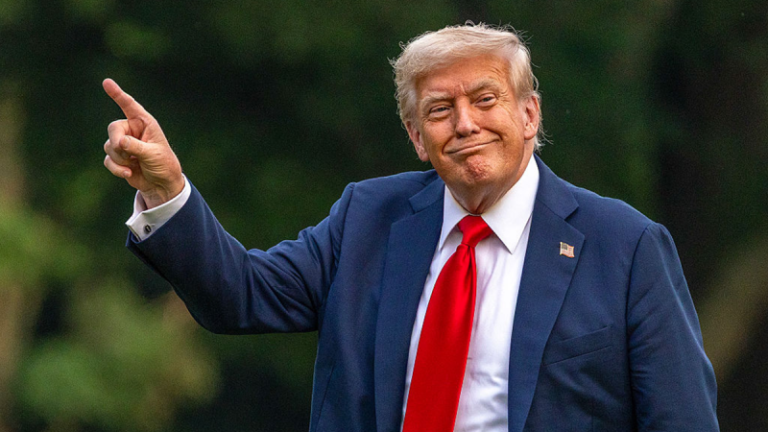
President Trump has been in office for six months, delivering on campaign promises, securing his ‘big beautiful bill’ by his self-imposed deadline and taking decisive action on the world stage.

The president was sworn into office Jan. 20, and the Trump administration has operated at warp speed since Day One.

Key tenets of Trump’s first 100 days included imposing harsh tariffs on Chinese imports, starting and continuing peace negotiations between Russia and Ukraine, and cracking down on border security amid a mass deportation initiative. 

The next chapter of the second Trump administration began, with the House of Representatives, as promised, passing Trump’s ‘One Big Beautiful Bill,’ before Memorial Day, sending it to the Senate for weeks of negotiations.

The Senate made its changes, approved the legislation and kicked it back to the House just in time for the lower chamber to pass the bill before Trump’s self-imposed Fourth of July deadline. 

The president welcomed House and Senate Republican leadership to the White House July 4 for a signing ceremony on his landmark legislation, which included key provisions that would permanently establish individual and business tax breaks included in his 2017 Tax Cuts and Jobs Act, and incorporate new tax deductions to cut duties on tips and overtime pay. 

Trump’s second administration has also focused on the new Department of Government Efficiency (DOGE), which was run by Elon Musk. DOGE proposed cuts to programs that the Trump administration chalked up to wasteful and excessive government spending.

Congressional lawmakers prepped a rescissions package — a bill to codify those DOGE cuts into law. Congress passed that package by its deadline. 

Trump signed the package Friday, which blocks $8 billion in funding to the U.S. Agency for International Development (USAID) and $1 billion to the Corporation for Public Broadcasting for the remainder of the fiscal year. The dollars had been allocated by Congress for the duration of fiscal year 2025.

As for Musk, his ‘special government employee’ window expired, and he returned to the private sector. Shortly after, Musk started a short-lived feud with the president, who chose not to prolong the tensions. Trump only hit his former ally briefly, and carried on with business as usual, leaving Musk to a lonely rant on social media.

Meanwhile, on the world stage, the president ordered strikes on Iran’s nuclear facilities. 

Trump’s historic precision strikes on Iran’s nuclear sites in June hit their targets and ‘destroyed’ and ‘badly damaged’ the facilities’ critical infrastructure — an assessment agreed upon by Iran’s Foreign Ministry, Israel and the United States. 

But Iranian Supreme Leader Ayatollah Ali Khamenei recently issued his latest threat against the U.S. and ‘its dog on a leash, the Zionist regime (Israel),’ saying that Iran’s attack on U.S. Al Udeid Air Base in Qatar was just the beginning of what Tehran could throw at Washington. He warned that ‘an even bigger blow could be inflicted on the U.S. and others.’

Iran has until the end of August to agree to a nuclear deal with the United States and its allies, Fox News has learned. 

Secretary of State Marco Rubio and the foreign ministers of France, Germany and the United Kingdom set the de facto deadline, according to three sources with knowledge of a call Wednesday among the officials. 

If Iran fails to agree to a deal, it would trigger the ‘snapback’ mechanism that automatically reimposes all sanctions previously imposed by the United Nations Security Council. 

The sanctions were lifted under the 2015 Iran deal. 

In his first six months as president, Trump also signed a sweeping order blocking travel to the U.S. from nearly 20 countries identified as high-risk for terrorism, visa abuse and failure to share security information.

The travel restrictions — announced under executive order 14161 — apply to nationals from 12 countries, including Afghanistan, Iran, Somalia, Libya and Yemen, all deemed ‘very high risk’ due to terrorist activity, weak or hostile governments, and high visa overstay rates. 

Domestically, the president has focused efforts on securing the border, with border crossings at a record low.

U.S. Customs and Border Protection reported the lowest number of border crossings in recorded history in June. Nationwide, there were 25,228 CBP encounters, the lowest monthly number the agency has recorded, including a ‘historical low’ of 8,024 apprehensions. Encounters include legal ports of entry, whereas apprehensions are arrests of those coming into the United States illegally. 

As for tariffs, the Trump administration had leveled tariffs as high as 145% on Chinese goods following the president’s reciprocal tariff plans in April, when China retaliated against the U.S. with tariffs of its own. China and the U.S. reached a preliminary trade agreement in May, which Trump said China violated in a Truth Social post at the end of May.  

An agreement was reached between the U.S. and China in June, which includes China supplying rare earth materials to the U.S., and that Trump will ‘work closely’ with Chinese President Xi Jinping ‘to open up China to American Trade.’

‘Full magnets, and any necessary rare earths, will be supplied, up front, by China,’ Trump said in June. ‘Likewise, we will provide to China what was agreed to, including Chinese students using our colleges and universities (which has always been good with me!). We are getting a total of 55% tariffs, China is getting 10%. Relationship is excellent!’ 

The president also celebrated the U.S. Army’s 250th birthday with a massive parade in Washington June 14 — kicking off a yearlong extravaganza leading up to America’s 250th birthday.

Outside the White House, Trump administration agencies have delivered on promises. 

The Department of Education unveiled plans to scale down its workforce, terminating nearly 1,400 Education Department employees. The Supreme Court upheld Trump’s move.

The Justice Department released the audio of former President Joe Biden’s interview with former Special Counsel Robert Hur. Hur was investigating Biden for alleged improper retention of classified records.

Congressional lawmakers had been demanding the audio of that interview be released since 2024, after the transcript of Biden’s interview was littered with mistakes and revealed significant memory lapses.

The Department of Justice also has started an investigation into Biden’s pardons his final days in office to determine whether they are valid. Fox News Digital has learned the pardons, in his final weeks in office, were signed by autopen, with just one signed by hand — the pardon for his son Hunter. 

Trump has also directed Attorney General Pam Bondi to make public any relevant grand jury testimony relating to the Jeffrey Epstein case. 

Over at the FBI, CIA and the Office of the Director of National Intelligence, intelligence officials and political appointees are in the process of declassifying all records related to the Trump–Russia investigation, also known as ‘Crossfire Hurricane.’

Fox News Digital also exclusively reported that former FBI Director James Comey and former CIA Director John Brennan are under criminal investigation relating to their actions tied to the Trump–Russia probe.

Fox News’ Emma Colton, Diana Stancy, Elizabeth Elkind and Louis Casiano contributed to this report. 
This post appeared first on FOX NEWS

Democrats have railed against potential Medicaid cuts since President Donald Trump won the 2024 presidential election. Now that his ‘big, beautiful bill’ has passed through Congress, they are making Medicaid a top talking point ahead of competitive midterm elections expected in 2026. 

Republicans, meanwhile, are doubling down on Medicaid reform included in Trump’s megabill, which also includes sweeping legislation on taxes, immigration and energy. 

‘My policy is if you’re an able-bodied worker, get a damn job,’ Rep. Nancy Mace, R-S.C., told Fox News Digital. ‘If you want government benefits, go to work and get a job.’

A provision in the megabill requires able-bodied, childless adults between the ages of 18 and 64 to work at least 80 hours a month to be eligible to receive Medicaid benefits. Individuals can also meet the requirement by ​​participating in community service, going to school or engaging in a work program.

Fox News Digital asked lawmakers on Capitol Hill if taxpayers should have to pay for Medicaid bills for able-bodied workers who are under 65 and unemployed. 

Sen. Angus King, an independent from Maine, said in both Arkansas and Georgia, where work requirements have already been imposed, it ended up costing taxpayers more money to administer the work requirements. 

‘We’re talking about a very small population, and in the two cases where they tried it, it ended up, number one, disqualifying people who met all the requirements but gave up on the paperwork. These aren’t people that are used to filling out a lot of paperwork every month. And it also cost the state a lot to administer,’ King said. 

The New England Journal of Medicine found that Arkansas’ Medicaid work requirement from 2018 to 2019 ‘found no evidence of increased employment … and a significant loss of Medicaid coverage among low-income adults.’

Similarly, the Georgia Budget & Policy Institute (GBPI) reported that 80% of the $58 million spent in the first year of Georgia’s Pathways to Coverage program went toward administrative costs. 

But Sen. Katie Britt, R-Ala., emphasized that Republicans ‘want these programs to be around for the people who need them.’ She said Medicaid reform is about ‘strengthening and preserving these programs at the rate that they’re growing.’

‘These programs were intended to be safety nets, not hammocks that people stay in, and the success of these programs should be measured by how many people we get off of them,’ Britt said. 

Sen. Bill Cassidy, R-La., agreed, telling Fox News Digital, ‘What you don’t want is for somebody to become dependent. I’d tell people: safety nets should bounce you to your feet. They shouldn’t be like flypaper in which you stick and can never get off.’

‘We’re not saying, ‘Hey, we’re not throwing you out.’ All right, but you gotta go get a job. You either get a job, or actually you can even volunteer, all right? And that will satisfy the requirements for work,’ Rep. Carlos Gimenez, R-Fla., explained. 

But Democrats who spoke to Fox News Digital continued to push back against the work requirements included in the ‘big, beautiful bill.’ 

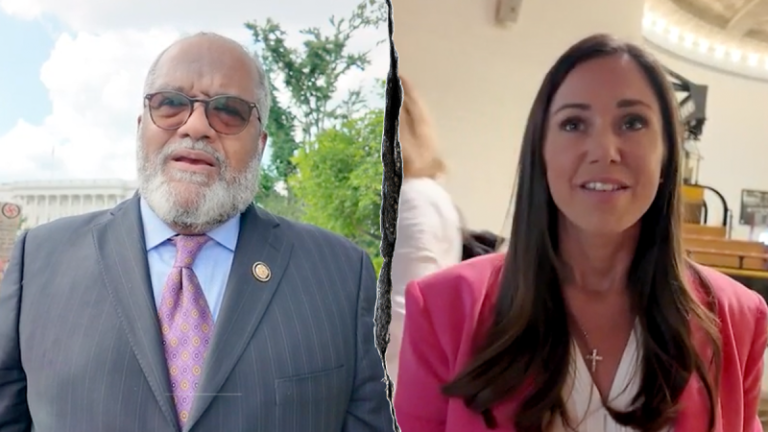
‘I think people [who] are able to work, trust me, they’d rather work than to get the piddling dollars that they get from Medicaid. It’s insulting to suggest that a person would rather sit at home rather than work and get this meager amount of money. All of this has just been totally expanded to fit a narrative that allows them to cut into those people who really deserve Medicaid,’ Rep. Troy Carter, D-La., said. 

And Rep. Lateefah Simon, D-Calif., said, ‘We need to be able to have an infrastructure in this country that supports the elderly and the sick and the widows and the child. This bill, it violates all those basic principles.’

Fox News’ Peter Pinedo contributed to this report. 

This post appeared first on FOX NEWS

Investors honed in on tech stocks again as Q2 earnings season kicked off on Monday (July 14).

Some experts believe the rallying market is showing signs of frothiness.

Apollo Global Management (NYSE:APO) Chief Economist Torsten Sløk highlighted concerns about overvaluation mid-week, comparing the current tech craze to the dotcom bubble of the 1990s.

“The difference between the IT bubble in the 1990s and the AI bubble today is that the top 10 companies in the S&P 500 today are more overvalued than they were in the 1990s,” he wrote in a note on Wednesday (July 16).

Similar thoughts were expressed by Moor Insights & Strategy founder Patrick Moorhead last week.

However, Sanctuary Wealth’s chief investment strategist, Mary Ann Bartels, told CNBC’s Power Lunch team that valuations are justified by the technology that’s being unleashed. Major financial firms like Citigroup (NYSE:C), Bank of America (NYSE:BAC) and Morgan Stanley (NYSE:MS) also said they are increasingly exploring digital asset offerings, signaling traditional finance’s growing involvement in crypto and the broader adoption of innovative technologies.

These announcements came alongside positive earnings reports and mixed inflation data that helped lift markets to renewed highs, culminating in global manufacturer 3M (NYSE:MMM) raising its full-year profit forecast on Friday.

The company is projecting a smaller tariff-related hit to its 2025 earnings.

1. TSCM, ASML release latest quarterly results

This week saw semiconductor giants Taiwan Semiconductor Manufacturing Company (NYSE:TSM) and ASML Holding (NASDAQ:ASML) report their latest quarterly earnings.

The companies received vastly different reactions from the market. Contract chipmaker TSMC saw its valuation soar on Thursday (July 17) morning after it posted record profits that exceeded expectations and raised its full-year revenue forecast by 30 percent due to demand for artificial intelligence (AI) chips.

While the chipmaker addressed minor concerns about US tariffs and inventory, AI-driven growth dominated investor sentiment. Shares of TSMC opened 4.51 percent higher from Wednesday’s (July 16) closing price.

Positive sentiment spilled over into other chip stocks, with NVIDIA (NASDAQ:NVDA) and Broadcom (NASDAQ:AVGO) also seeing gains. TSMC maintained its position to close up 5.87 percent for the week.

TSMC and ASML performance, July 15 to 18, 2025.

Chart via Google Finance.

Conversely, ASML, a lithography systems monopolist, saw its share price plunge more than 8 percent ahead of Wednesday’s open, despite solid Q2 numbers, due to a cautious outlook for late 2025 and 2026.

In a statement, the company said it cannot confirm growth in 2026 due to current macroeconomic and geopolitical developments. ASML closed the week 7.39 percent below its Monday opening price.

The divergence highlights their supply chain positions: TSMC directly benefits from the immediate AI boom, while the prospects for ASML, a step removed, remain uncertain.

2. US announces major investments in Pennsylvania

US President Donald Trump joined Pennsylvania Senator Dave McCormick (R) at the inaugural Energy and Innovation Summit at Carnegie Mellon University in Pittsburgh on Tuesday (July 15).

He announced an investment amounting to over US$90 billion in AI and energy infrastructure in the state.

The announcement from Trump covers several multibillion-dollar spending plans from the likes of Google (NASDAQ:GOOGL), Blackstone (NYSE:BX), Anthropic, GE Verona (NYSE:GEV) and others for power generation and grid modernization. It also includes natural gas production to help power data centers.

Additionally, the preview mentions AI training programs and apprenticeships for businesses.

“These commitments will create tens of thousands of construction jobs and thousands of permanent jobs, signaling Pennsylvania’s readiness to power the AI and energy revolution, further strengthening America’s resilience and independence,” McCormick’s office wrote in a press release.

Separately, Google and Brookfield Asset Management (NYSE:BAM) announced on Tuesday that they have entered into a framework agreement to provide up to 3,000 MW megawatts of domestically produced hydropower from Brookfield’s Holtwood and Safe Harbor hydroelectric facilities in Pennsylvania. The agreement allows for future expansion, with an initial focus on the mid-Atlantic and mid-continent electricity markets.

3. NVIDIA resumes chip sales to China

On Monday, NVIDIA CEO Jensen Huang said his company will resume H20 GPUs sales to China after productive meetings with government officials from the US and Beijing earlier this month.

In a press release, the company said it has been assured by the US government that licenses will be granted.

NVIDIA performance, July 15 to 18, 2025.

Chart via Google Finance.

Shares of the chipmaker opened 4.27 percent higher on Tuesday and closed the week up 4.25 percent.

4. Apple to invest in US rare earths miner

On Tuesday, Apple (NASDAQ:AAPL) said it will invest US$500 million in rare earths miner MP Materials (NYSE:MP) as part of an effort to strengthen the American rare earths supply chain.

MP is the only fully integrated rare earths miner operating in the US. Last week, the US Department of Defense said it would buy a direct equity stake in the company, becoming its largest shareholder.

The company’s Apple collaboration also includes plans to build out MP’s neodymium magnet manufacturing lines at its Texas factory specifically for Apple products. This expansion is slated to boost production and create jobs in advanced manufacturing and research and development, helping to meet global demand.

Apple and MP will also collaborate to establish a rare earths recycling line in Mountain Pass, California, and will develop new magnet materials and processing technologies to improve magnet performance.

“American innovation drives everything we do at Apple, and we’re proud to deepen our investment in the U.S. economy,” said Tim Cook, Apple’s CEO.

5. OpenAI and AWS launch new AI agent features

Open AI has launched a powerful new Agent mode in ChatGPT for pro, plus and team users.

It can autonomously complete tasks across the web, and also includes productivity tools.

The new feature enables AI agents that can help automate workflow by creating and editing spreadsheets and presentations, generating reports, analyzing data and managing calendars on users’ desktops; agents can also browse websites and fill out forms with user approval. The company has plans to add e-commerce checkouts.

Aside from that, the Financial Times reported this week that OpenAI plans to take a cut of online shopping purchases made within its chatbot as a way to generate revenue from people using AI for shopping inspiration.

Amazon (NASDAQ:AMZN) also made major announcements around AI agents this week. At its Amazon Web Services (AWS) Summit in New York, the company launched Bedrock AgentCore, a suite of enterprise-grade services that will allow developers to build, deploy and run scalable agents. AWS also introduced AI Agents & Tools, a new category on AWS Marketplace. It features pre-built agents from partners like Anthropic, IBM (NYSE:IBM) and Stripe.

Securities Disclosure: I, Meagen Seatter, hold no direct investment interest in any company mentioned in this article.

This post appeared first on investingnews.com

Elon Musk’s health tech company Neuralink labeled itself a “small disadvantaged business” in a federal filing with the U.S. Small Business Administration, shortly before a financing round valued the company at $9 billion.

Neuralink is developing a brain-computer interface (BCI) system, with an initial aim to help people with severe paralysis regain some independence. BCI technology broadly can translate a person’s brain signals into commands that allow them to manipulate external technologies just by thinking.

Neuralink’s filing, dated April 24, would have reached the SBA at a time when Musk was leading the Trump administration’s Department of Government Efficiency. At DOGE, Musk worked to slash the size of federal agencies.

MuskWatch first reported on the details of Neuralink’s April filing.

According to the SBA’s website, a designation of SDB means a company is at least 51% owned and controlled by one or more “disadvantaged” persons who must be “socially disadvantaged and economically disadvantaged.” An SDB designation can also help a business “gain preferential access to federal procurement opportunities,” the SBA website says.

The Department of Justice has previously fined companies for making false claims about their SDB status.

Musk, the world’s wealthiest person, is CEO of Tesla and SpaceX, in addition to his other businesses like artificial intelligence startup xAI and tunneling venture The Boring Company. In 2022, Musk led the $44 billion purchase of Twitter, which he later named X before merging it with xAI.

Jared Birchall, a Neuralink executive, was listed as the contact person on the filing from April. Birchall, who also manages Musk’s money as head of his family office, didn’t immediately respond to a request for comment.

Neuralink, which incorporated in Nevada, closed a $650 million funding round in early June at a $9 billion valuation. ARK Invest, Peter Thiel’s Founders Fund, Sequoia Capital and Thrive Capital were among the investors. Neuralink said the fresh capital would help the company bring its technology to more patients and develop new devices that “deepen the connection between biological and artificial intelligence.”

Under Musk’s leadership at DOGE, the initiative took aim at government agencies that emphasized diversity, equity and inclusion (DEI). In February, for example, DOGE and Musk boasted of nixing hundreds of millions of dollars worth of funding for the Department of Education that would have gone towards DEI-related training grants.

This post appeared first on NBC NEWS

The State Department says it is working swiftly to distribute tens of thousands of tons of food aid around the globe, pushing back on reports that the U.S. was preparing to incinerate hundreds of tons of stockpiled supplies before they could be delivered.

According to figures shared with Fox News Digital, the agency currently has 59,305 metric tons of in-kind food commodities stored in warehouses across the United States and abroad. 

‘We have already programmed all the food expiring before October 2026,’ a senior State Department official said. ‘The idea that we have tons of expiring food we are letting go to waste is simply false.’

The State Department says it has approved 44,422 metric tons of food to be transferred or reprogrammed through partnerships with the World Food Program (WFP), Catholic Relief Services, Mercy Corps, and Cultivating New Frontiers in Agriculture (CNFA). That includes 30,000 tons of short-dated food supplies already programmed for delivery to crisis zones like Syria, Bangladesh, and Sudan.

An additional 12,000 tons of aid is awaiting final reprogramming, a delay the department attributes to a temporary hold by the Office of Management and Budget (OMB) on Title II apportionments — an issue officials say has now been resolved. 

‘To the extent there is a delay that is causing operational problems, it is not from the State Department,’ the official said. ‘All of the food expiring in the next 16 months is accounted for.’

The official also dismissed recent media coverage, arguing that the focus on a limited amount of food near expiration distorts the larger picture. ‘The very small portion — less than 1% of USAID’s food stockpiles — addressed by the mainstream media was the exception that distracts from a very extensive and orderly process we directed to ensure that all of the food was accounted for in an efficient and strategic manner.’

The public defense comes after several outlets reported that the Trump administration ordered the incineration of roughly 500 metric tons of emergency food stored in Dubai as it neared expiration.

According to Reuters, while 622 tons were successfully redirected to countries including Syria, Bangladesh, and Myanmar, another 496 tons — valued at $793,000 — were destroyed, with an additional $100,000 in disposal costs.

The incident occurred as part of a broader restructuring of U.S. foreign aid policy. In early July, the Trump administration officially dissolved USAID, transferring authority over development and humanitarian programs to the State Department. That shift has been accompanied by efforts to rescind billions of dollars in foreign assistance.

A temporary aid pause in January prompted the former State Department inspector general to warn that as much as $500 million worth of food aid was at risk of expiring. However, the department says assistance is now back online under a restructured model.

With USAID phased out, the State Department is now responsible for managing large-scale aid programs, and it is under pressure to deliver. Lawmakers and aid groups are closely watching to see whether the newly reprogrammed food aid reaches intended recipients.

Democrats seized on the incineration reports during congressional hearings this week, accusing the Trump administration of turning its back on urgent humanitarian needs. The reports were first published by The Atlantic.

Earlier this month, Secretary of State Marco Rubio outlined the administration’s vision for foreign assistance, saying he was abandoning what he called a ‘charity-based model’ in favor of empowering growth and self-reliance in developing nations.

‘We will favor those nations that have demonstrated both the ability and willingness to help themselves,’ Rubio wrote, ‘and will target our resources to areas where they can have a multiplier effect and catalyze durable private sector — including American companies — and global investment.’

The new approach is designed to emphasize trade and investment over direct aid, and to position the U.S. to better counter China’s growing global influence.

This post appeared first on FOX NEWS

At Attorney General Pam Bondi’s direction, the Department of Justice (DOJ) on Friday formally moved to unseal long-secret grand jury transcripts from the Jeffrey Epstein case, citing what it called intense public interest in the notorious sex trafficking investigation.

Deputy Attorney General Todd Blanche submitted the motion in Manhattan federal court, urging a judge to release the transcripts from Epstein’s 2019 grand jury proceedings and those from the prosecution of Epstein’s convicted associate, Ghislaine Maxwell, as part of a new transparency push by the department.

Earlier this month, the DOJ and FBI issued a memorandum describing an ‘exhaustive review’ of their Epstein investigative files. That internal review sought to determine if any evidence could justify charging additional individuals, but it concluded that ‘no such evidence was uncovered’ against any uncharged third parties. 

Since the memo’s July 6 release, officials say, public interest in its conclusions has remained high.

While the department maintains it stands by the memo’s findings, the filing emphasizes that ‘transparency to the American public is of the utmost importance to this Administration.’ Given the intense public interest, the DOJ told the court it is moving to unseal the underlying grand jury transcripts to shed light on its investigative work in the Epstein matter.

The DOJ said it will work with prosecutors to redact all victim names and personal identifying information from the transcripts before any release. 

‘Transparency in this process will not be at the expense of our obligation under the law to protect victims,’ the motion assured.

Epstein, 66, was indicted by a New York grand jury July 2, 2019, on sex trafficking charges. Just over a month later, on Aug. 10, 2019, he died by suicide in his jail cell while awaiting trial, and the case was dismissed.

Epstein’s longtime confidant, Ghislaine Maxwell, was indicted by a grand jury in 2020 on multiple counts related to trafficking and coercing minors.

She was convicted in December 2021 and sentenced to 20 years in prison. Maxwell’s convictions were upheld on appeal in 2024, and she is petitioning the U.S. Supreme Court to review her case.

Grand jury proceedings are ordinarily secret by law, or as the motion says, ‘a tradition of law that proceedings before a grand jury shall generally remain secret.’ But the filing notes this tradition ‘is not absolute.’

Federal courts have recognized ‘certain ‘special circumstances’’ where releasing grand jury records is appropriate even outside the usual exceptions, like when a case holds significant public or historical importance.

The DOJ argues Epstein’s case is exactly such a special circumstance given its unparalleled notoriety.

‘Public officials, lawmakers, pundits, and ordinary citizens remain deeply interested and concerned about the Epstein matter,’ the motion notes. 

The motion points out that a Florida judge last year ordered the release of some Epstein grand jury records after concluding the financier was ‘the most infamous pedophile in American history’ and that the facts of Epstein’s case ‘tell a tale of national disgrace.’

By the DOJ’s account, the sealed grand jury transcripts are ‘critical pieces of an important moment in our nation’s history,’ and ‘[t]he time for the public to guess what they contain should end.’ 

The motion stresses that Epstein’s death means any privacy interests on his side are now ‘substantially diminished.’ And even though Maxwell is still fighting her conviction, prosecutors said the extraordinary public scrutiny around the Epstein saga justifies pressing ahead with unsealing now.

For these reasons, the DOJ is urging the court to conclude that the Epstein and Maxwell cases qualify as matters of public interest and to grant the unsealing of the grand jury transcripts while lifting any protective orders. 

The unsealing would shine unprecedented light on one of America’s most notorious criminal cases, a move the department says is legally justified and necessary in the name of public accountability.

The DOJ did not immediately respond to Fox News Digital’s request for comment.

Fox News’ Mike Ruiz contributed to this report.

This post appeared first on FOX NEWS

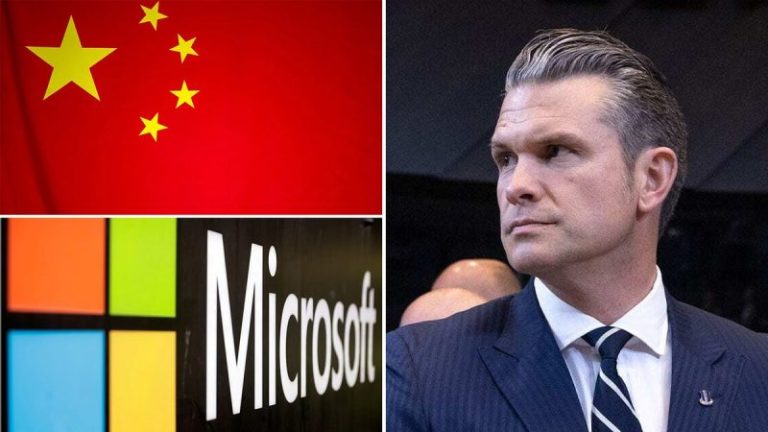
Microsoft said it will cease using China-based computer engineering teams for work on Pentagon cloud systems and other classified systems after an investigation this week led to national security concerns at the highest levels over a program that Microsoft has used since 2016.

A ProPublica report released Tuesday accused Microsoft of allowing China-based engineers to assist with Pentagon cloud systems with inadequate guardrails in an effort to scale up its government contracting business. 

The report got the attention of GOP lawmakers and the Trump administration, with Defense Secretary Pete Hegseth insisting Friday that foreign engineers from ‘any country … should NEVER be allowed to maintain or access DOD systems.’ He added that the Defense Department would be ‘looking into this ASAP.’

After Hegseth’s indication that the Pentagon would be looking into the matter, Fox News Digital reached out to Microsoft, which responded that it would be ceasing its use of China-based computer engineers providing assistance to sensitive Defense Department cloud ‘and related’ services.

‘In response to concerns raised earlier this week about U.S.-supervised foreign engineers, Microsoft has made changes to our support for U.S. government customers to assure that no China-based engineering teams are providing technical assistance for DOD government cloud and related services,’ Frank Shaw, chief communications officer at Microsoft, said.

‘We remain committed to providing the most secure services possible to the U.S. government, including working with our national security partners to evaluate and adjust our security protocols as needed.’

The ProPublica report released earlier this week, which spurred Microsoft’s action, cited current and former employees and government contractors who worked on a cloud computing program deployed by Microsoft in 2016. The program, meant to meet federal contracting regulations, used a system of ‘digital escort’ chaperones for global cybersecurity officials, such as those based in China, meant to create a security buffer so that they can work on agency computing systems. DOD guidelines require that people handling sensitive data be U.S. citizens or permanent residents.

According to sources who spoke to ProPublica, including some who had intimate familiarity with the hiring process for the $18-per-hour ‘digital escort’ positions, the tech employees being hired to do the supervising lacked the adequate tech expertise to prevent a rogue Chinese employee from hacking the system or turning over classified information to the CCP.

The sources elaborated that the escorts, often former military personnel, were hired for their security clearances more than their technical abilities and often lacked the skills to evaluate code being used by the engineers they were supervising.

Microsoft used its escort system to handle sensitive government information that falls below ‘classified,’ the ProPublica report indicated. That includes ‘data that involves the protection of life and financial ruin.’ At the Defense Department, the data is categorized as ‘Impact Level’ four and five, which ProPublica reported includes materials directly supporting military operations.

People in China are governed by sweeping laws compelling government cooperation with data collection efforts.

Before Microsoft’s announcement Friday that it would be ceasing its use of China-based engineers for sensitive Defense Department programs, the company defended its ‘digital escort’ program, noting all personnel and contractors with privileged access must pass federally approved background checks. The company also pointed to a response from the Defense Information Systems Agency, which said that ‘digital escorts’ are used ‘in select unclassified environments.’     

‘For some technical requests, Microsoft engages our team of global subject-matter experts to provide support through authorized U.S. personnel, consistent with U.S. government requirements and processes,’ a company spokesperson told Fox News Digital Tuesday. ‘In these instances, global support personnel have no direct access to customer data or customer systems.’

The spokesperson added at the time that Microsoft adheres to the federal security requirements outlined by the Defense Department and the Federal Risk and Authorization Management Program established in 2011 to address the risks associated with moving from entirely government-controlled servers to cloud-based computing.

‘We establish layers of mitigation at the platform level with security and monitoring controls to detect and prevent threats. This includes approval workflows for system changes and automated code reviews to quickly detect and prevent the introduction of vulnerabilities,’ the spokesperson said. ‘This production system support model is approved and regularly audited by the U.S. government.’

Fox News Digital reached out to the Pentagon to inquire whether Microsoft’s action changes its planned investigation but did not receive a response by publication time.

This post appeared first on FOX NEWS

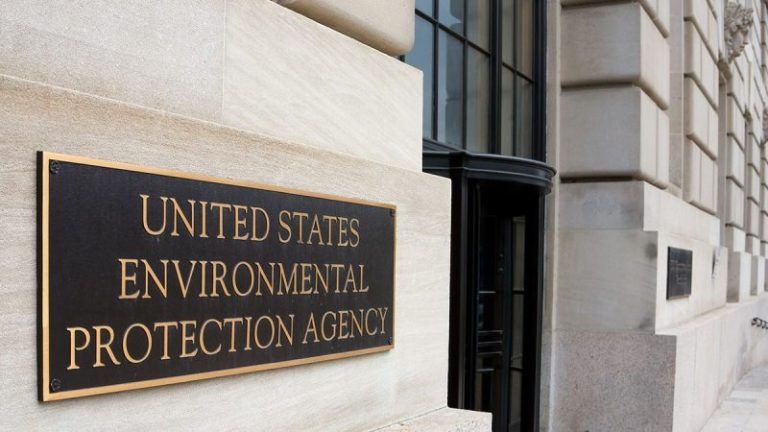
The U.S. Environmental Protection Agency (EPA) said Friday it plans to reduce its workforce by 23% and close its research and development office. 

The loss of more than 3,000 employees comes after layoffs and incentives to leave the agency amid the Trump administration’s broad effort to streamline the federal government. 

‘Under President Trump’s leadership, EPA has taken a close look at our operations to ensure the agency is better equipped than ever to deliver on our core mission of protecting human health and the environment while Powering the Great American Comeback,’ EPA Administrator Lee Zeldin said in a statement. 

‘This reduction in force will ensure we can better fulfill that mission while being responsible stewards of your hard-earned tax dollars.’

The EPA said the cuts will save the government $748.8 million.

As part of the restructuring, the EPA said it plans to open a new Office of Applied Science and Environmental Solutions to replace the Office of Research and Development, saying the new office would allow it to focus on research ‘more than ever before.’

This comes a week after the Supreme Court issued a ruling clearing the way for the administration to conduct mass layoffs.

Justin Chen, president of American Federation of Government Employees Council 238, which represents thousands of EPA employees, called the research and development office the ‘heart and brain of the EPA.’ 

‘Without it, we don’t have the means to assess impacts upon human health and the environment,” Chen said. ‘Its destruction will devastate public health in our country.’

Fox News Digital has reached out to the EPA for comment. 

This announcement also comes two weeks after 139 employees signed a ‘declaration of dissent’ claiming the Trump administration was hurting the agency’s mission. 

The administration claimed the employees were ‘unlawfully undermining’ the president’s agenda. 

Reuters and The Associated Press contributed to this report. 

This post appeared first on FOX NEWS

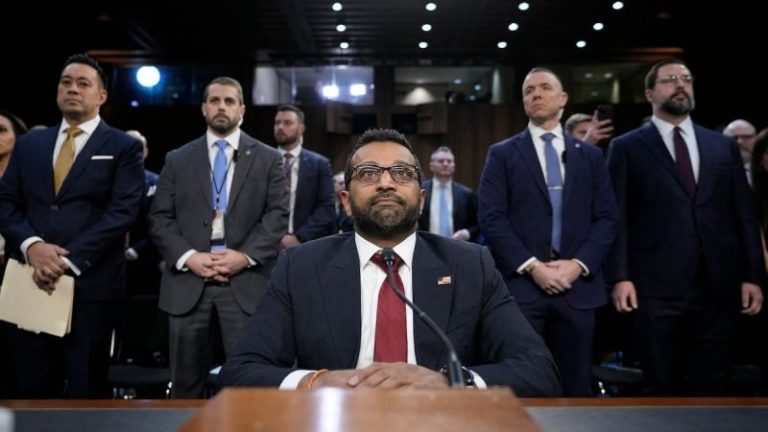
A $250 million fraud scheme that exploited a federally funded children’s nutrition program during the COVID-19 pandemic has been described by FBI Director Kash Patel as ‘one of the worst’ in Minnesota history.

The FBI director told Fox News in a statement that 70 people in Minnesota have been indicted for their role in the sprawling ‘Feeding our Future’ fraud scheme during the COVID-19 pandemic, which exploited a federal program designed to reimburse states for the cost of feeding children. 

Conspirators falsely claimed to have served millions of meals during the pandemic, but instead used the money for personal gain. Of the individuals indicted, 38 have pleaded guilty, FBI officials told Fox News Digital. More than a dozen of the individuals are awaiting criminal trial, with the next trial beginning in August.

‘Stealing over $250 million from hungry kids during a pandemic to fund mansions and luxury cars is as shameless as it gets,’ FBI Director Kash Patel said in a statement. ‘I’m proud of the FBI and our partners for dismantling this web of corruption, holding dozens accountable, and sending a clear message: if you exploit the most vulnerable, we will find you and bring you to justice.’

Conspirators charged in the scheme are accused of fabricating invoices, submitting fake attendance records, and falsely distributing thousands of meals from hundreds of so-called food distribution ‘sites’ across the state — taking advantage of the U.S. Department of Agriculture’s decision to waive, for the duration of the pandemic, many of its standard requirements for participation in the Federal Child Nutrition Program — including relaxing its requirement for non-school based distributors to participate in the program.

Charging documents show that roughly 300 ‘food sites’ in the state served little or no food, with the so-called ‘food vendors’ and organizations fabricated to launder money intended to reimburse the cost of feeding children.

FBI officials told Fox News that the investigation and resulting trials and indictments continue to impact the state, and have already touched off legislative reform in Minnesota.

They added that the investigation into the fraud remains ongoing, and that additional charges are expected, though they did not immediately share more details.

The next trial in the state is scheduled to begin on August 11.

‘Stealing from the federal government equates to stealing from the American people — there is no simpler truth,’ FBI’s special agent in charge, Alvin Winston, told Fox News Digital in a statement. 

‘The egregious fraud unveiled in the Feeding our Future case epitomizes a profound betrayal of public trust. These individuals misappropriated hundreds of millions in federal funds intended to nourish vulnerable children during a time of crisis, redirecting those resources into luxury homes, high-end vehicles, and extravagant lifestyles while families faced hardship,’ he added. 

‘We will uncover their schemes, dismantle their networks, and ensure that they are held accountable to the fullest extent of the law,’ he said. 

This post appeared first on FOX NEWS

Defense Secretary Pete Hegseth said the Pentagon was ‘looking into’ a cloud computing program run by Microsoft utilizing foreign workers from China, which was criticized this week for potentially lacking adequate safeguards, which could provide the CCP easy access to classified defense data and systems.

A ProPublica report released Tuesday accused Microsoft of allowing China-based engineers to assist with Pentagon cloud systems with inadequate guardrails in an effort to scale up its government contracting business. 

In response, Sen. Tom Cotton, R-Ark., sent a letter to Hegseth Thursday asking for information and documents about the program, including a list of all Department of Defense (DOD) contractors that hire Chinese personnel to provide maintenance or other services to DOD systems, a list of subcontractors that hire Microsoft’s American-born ‘digital escorts’ required to supervise foreign computer scientists while they work on DOD systems and documents on the training these supervisors receive to identify suspicious activity.   

‘In light of recent and concerning reports about Microsoft using engineers in China to maintain DOD systems, I’ve asked the Secretary of Defense to look into the matter,’ Cotton said in a post on X sharing his letter to Hegseth. ‘We must guard against all threats within our military’s supply chain.’

A few hours after Cotton’s X post, Hegseth responded, ‘Spot on senator.’

‘Agree fully,’ Hegseth said in his own X post responding to Cotton. ‘Our team is already looking into this ASAP. Foreign engineers — from any country, including of course China — should NEVER be allowed to maintain or access DOD systems.’

The ProPublica report cited current and former employees and government contractors who worked on a cloud computing program deployed by Microsoft in 2016, which involved a ‘digital escort’ framework. The program, meant to meet federal contracting regulations, used a system of ‘digital escort’ chaperones for global cybersecurity officials, such as those based in China, meant to create a security buffer so that they can work on agency computing systems. DOD guidelines require that people handling sensitive data be U.S. citizens or permanent residents.

According to sources who spoke to ProPublica, including some who had intimate familiarity with the hiring process for the $18-per-hour ‘digital escort’ position, the tech employees being hired to do the supervising lacked the adequate tech expertise to prevent a rogue Chinese employee from hacking the system or turning over classified information to the CCP.

The sources elaborated that the escorts, often former military personnel, were hired for their security clearances more than their technical abilities and often lacked the skills to evaluate code being used by the engineers they were supervising.

In China, people are governed by sweeping laws compelling government cooperation with data collection efforts. 

‘If ProPublica’s report turns out to be true, Microsoft has created a national embarrassment that endangers our soldiers, sailors, airmen and marines. Heads should roll, those responsible should go to prison and Congress should hold extensive investigations to uncover the full extent of potential compromise,’ said Michael Lucci. Lucci is the CEO and founder of State Armor Action, a conservative group with a mission to develop and enact state-level solutions to global security threats. 

‘Microsoft or any vendor providing China with access to Pentagon secrets verges on treasonous behavior and should be treated as such,’ Lucci added.

A Microsoft spokesperson defended the company’s ‘digital escort’ model Tuesday, saying all personnel and contractors with privileged access must pass federally approved background checks. 

‘For some technical requests, Microsoft engages our team of global subject-matter experts to provide support through authorized U.S. personnel, consistent with U.S. government requirements and processes,’ the spokesperson added. ‘In these instances, global support personnel have no direct access to customer data or customer systems.’

The Defense Information Systems Agency’s (DISA) public information office was initially unaware of the program when ProPublica began asking questions about it, but it eventually followed up to point out that ‘digital escorts’ are used ‘in select unclassified environments’ at the Defense Department for ‘advanced problem diagnosis and resolution from industry subject-matter experts.’

In Cotton’s letter to Hegseth, the Republican senator requested answers to his questions by the end of the month. 

Microsoft did not immediately respond to Fox News Digital’s requests for comment on this article. 

This post appeared first on FOX NEWS