Author

admin

Browsing

Joe Cavatoni, senior market strategist, Americas, at the World Gold Council, explains that market risk and uncertainty are driving gold, with H1 2025 seeing multiple record highs.

‘Think strategically when you think about gold, and keep that allocation in mind,’ he said.

He also shares thoughts on the importance of central bank allocations and the potential impact of tariffs and US economic conditions on gold during the second half of 2025.

Securities Disclosure: I, Georgia Williams, hold no direct investment interest in any company mentioned in this article.

This post appeared first on investingnews.com

Here’s a quick recap of the crypto landscape for Wednesday (July 23) as of 9:00 p.m. UTC.

Get the latest insights on Bitcoin, Ethereum and altcoins, along with a round-up of key cryptocurrency market news.

Bitcoin and Ethereum price update

Bitcoin (BTC) was priced at US$118,148, down by 0.7 percent over the last 24 hours. Its highest valuation on Wednesday was US$118,462, while its lowest valuation was US$117,583.

Bitcoin price performance, July 23, 2025.

Chart via TradingView.

Bitcoin traded lower over the past 24 hours, hovering between $117,000 and $120,000 amid several market pressures.

A major whale moved over US$1.2 billion in dormant BTC, sparking speculation of potential selling.

After a rotation into altcoins, investors took profits following recent highs, while outflows from spot exchange-traded funds (ETFs) signaled weaker institutional demand.

Ethereum (ETH) was priced at US$3,592.65, down by 1.9 percent over the past 24 hours. Its lowest valuation as of Wednesday was US$3,568.86, and its highest was US$3,657.02.

Altcoin price update

  • Solana (SOL) was priced at US$188.86, down by 5.5 percent over 24 hours. Its lowest valuation on Wednesday was US$186.95, and its highest was US$192.58.
  • XRP was trading for US$3.25, down 8.9 percent in the past 24 hours. Its lowest valuation of the day was US$3.18, and its highest valuation was US$3.36.
  • Sui (SUI) is trading at US$3.70, down 5.5 percent over the past 24 hours. Its lowest valuation of the day was US$3.67, and its highest was US$3.84.
  • Cardano (ADA) was trading at US$0.8152, down by 6.9 percent over 24 hours. Its lowest valuation on Wednesday was US$0.8058, and its highest was US$0.8370.

Today’s crypto news to know

PNC Bank and Coinbase partner to advance digital asset solutions

PNC Bank and Coinbase Global (NASDAQ:COIN) have announced a strategic partnership to broaden access to digital asset solutions for PNC’s clients and institutional investors.

The collaboration will leverage Coinbase’s crypto-as-a-service platform, enabling PNC to offer secure and scalable cryptocurrency access. PNC clients will be able to buy, hold and sell cryptocurrencies directly through PNC’s platform.

PNC will also provide essential banking services to Coinbase, signifying a mutual commitment to strengthening the digital financial system. Both companies emphasize that this partnership will meet the increasing demand for secure and streamlined digital asset access.

Goldman Sachs and BNY to launch tokenized money market funds

Goldman Sachs (NYSE:GS) and BNY (NYSE:BK) are preparing to offer institutional investors access to tokenized money market funds, aiming to enhance capital markets with real-time settlement, 24/7 access and increased efficiencies.

BNY clients will soon be able to invest in money market funds with ownership recorded on Goldman Sachs’ private blockchain, as per a Wednesday news release.

“As the financial system transitions toward a more digital, real-time architecture, BNY is committed to enabling scalable and secure solutions that shape the future of finance,” said Laide Majiyagbe, global head of liquidity, financing and collateral at BNY, adding that mirrored tokenization of money market funds is the first step.

This initiative involves major players such as BlackRock (NYSE:BLK), Fidelity Investments, Federated Hermes and the asset management divisions of Goldman and BNY.

Tokenized money market funds offer a contrast to interest-bearing stablecoins, which are specifically prohibited under the GENIUS Act, which was signed into law last week. They provide yield, which makes them a low-volatility tool for hedge funds, pensions and corporations.

SEC halts Bitwise crypto index ETF conversion for review

On Tuesday (July 22), the US Securities and Exchange Commission’s (SEC) Division of Trading and Markets approved the Bitwise 10 Crypto Index to convert to an ETF, only to immediately pause it for review.

In a letter issued later that day, SEC Assistant Secretary Sherry Haywood said that the order will remain “stayed until the Commission orders otherwise.” Bloomberg ETF analyst Eric Balchunas has suggested that the SEC might be delaying its approval until it establishes a listing standard for crypto ETFs.

Bitwise had applied for this conversion in November for its fund, which offers exposure to a range of cryptocurrencies.

Nate Geraci, president of NovaDius Wealth Management, described the situation as “bizarre,” drawing parallels to the Grayscale Digital Large Cap ETF conversion, which experienced a similar approval and subsequent pause on July 1.

Bitcoin millionaires surge by 16,000 in 2025, according to report

Nearly 16,000 new Bitcoin wallets have crossed the million-dollar threshold since Donald Trump assumed the presidency in January 2025, according to a Finbold report. The number of Bitcoin millionaires is up from 132,842 in November 2024 to 192,205 as of July 20, marking a 45 percent increase in just eight months.

Large holders with over US$10 million in BTC also saw gains exceeding 16 percent in the same period.

The surge has been linked to renewed investor optimism following Trump’s re-election, along with clear signals of regulatory support and clarity for digital assets.

A significant boost came this week when the US House passed the Genius Act. The legislation, expected to streamline compliance for institutions, is widely seen as the most comprehensive federal crypto framework to date.

The rapidly changing policy environment has encouraged capital inflows and bolstered confidence in US-based crypto markets, with the resulting daily average tallying to 88 new Bitcoin millionaires in 2025 alone.

South Korea warns fund managers to reduce exposure to crypto stocks

South Korea’s Financial Supervisory Service (FSS) has issued informal warnings to asset managers over their exposure to crypto-related stocks and ETFs. According to the Korea Herald, firms with significant holdings in US-listed crypto companies such as Coinbase and Strategy (NASDAQ:MSTR) were reportedly told to scale back.

The directive follows the FSS’s longstanding 2017 stance prohibiting direct investment in virtual assets by financial institutions, despite recent global shifts in crypto regulation. While the agency has been reviewing possible easing of crypto rules, officials reportedly said that licensed entities must continue observing current guidelines.

The FSS has not yet issued a formal statement regarding the report.

PayPal unveils cross-border wallet platform

PayPal (NASDAQ:PYPL) has launched PayPal World, a cross-border payments network that integrates several of the world’s largest digital wallets, aiming to simplify international commerce for billions.

The platform’s initial partners include India’s UPI (via NPCI International), China’s Weixin Pay (via Tenpay Global) and PayPal’s own services including Venmo.

A memorandum of understanding has also been signed with Mercado Pago in Latin America.

According to PayPal CEO Alex Chriss, the initiative allows users to pay with their native wallets regardless of location. Chriss called it a potential “game changer” for frictionless payments in travel and e-commerce.

“The challenge of moving money across borders is incredibly complex, and yet this platform will make it so simple for nearly two billion consumers and businesses,’ Chriss said a recent press release.

Securities Disclosure: I, Giann Liguid, hold no direct investment interest in any company mentioned in this article.

Securities Disclosure: I, Meagen Seatter, hold no direct investment interest in any company mentioned in this article.

This post appeared first on investingnews.com

Corporations are continuing to spend on business travel, but are being strategic about how they allocate those dollars amid ongoing trade uncertainties, according to new reports from the travel and expense platform Navan and the Global Business Travel Association.

Corporate travel spending activity increased 15% year over year in the second quarter of 2025, according to a business travel index published Tuesday from Navan.

Navan’s index, backed by Nasdaq, is derived from millions of corporate business transactions on its platform. It examines the amount spent and number of transactions relating to airline travel, hotel reservations and expense transactions from corporate cards.

Amy Butte, Navan’s CFO, said during an interview that from talking with other chief financial officers over the past few months, she never got the sense that corporate leaders would stop spending on business travel altogether. Instead, they are in “wait and see” mode.

“If you’re making choices about where you’re being cautious, we’re not seeing people be cautious in the area of relationship building, either with their customers or with their teammates. We’re still seeing the spend allocated towards travel as a key component of any business strategy,” Butte said.

But while global business travel is expected to reach a new high of $1.57 trillion in 2025, according to a Monday report by the Global Business Travel Association, that total represents 6.6% year-over-year growth, which is less than the 10.4% increase that was previously predicted. GBTA cited trade tensions, policy uncertainty and economic pressures as the reasons for the more moderate growth.

A string of sentiment polls by GBTA also shows that corporate travel optimism for the rest of 2025 appears muted. The percentage of respondents who said they were optimistic about the overall outlook for the business travel industry in 2025 dropped sharply from 67% in November 2024 to 31% in April and declined slightly again this month to 28%.

The findings from both reports, grouped together with commentary from airline CEOs last week, show C-suite leaders are still largely left in wait-and-see mode amid President Donald Trump’s fluid tariff policies, but companies appear now to have a better read on how they will manage the uncertainty.

“Historically, corporate travel has been the first thing, one of the easiest things, to minimize if you’re a company,” Delta Air Lines CEO Ed Bastian said during the company’s earnings call this month, adding that corporate travel on the airline has been flat on a year-over-year basis.

But Butte said that Navan has not seen a drop-off in business travel. Instead, businesses are shifting how they are spending.

For example, Butte said businesses are continuing to commit to individual, face-to-face meetings, rather than spending on large group outings. The Navan index shows that spending on personal meals, meaning one-on-one meetings held over a meal, was up 9.8% from last year, while spending on team events and meals was the only category in the report that declined.

Navan did see some compression earlier in the year in the share of higher-priced airline tickets purchased that were first class or business class, Butte said, but she added that the platform has since seen an acceleration as uncertainty has lessened.

Airfare prices have also declined so far this year, which means business and consumers alike are spending less on plane tickets. Airfare fell 3.5% in June from a year earlier while inflation overall rose, according to the Bureau of Labor Statistics.

GBTA CEO Suzanne Neufang said during an interview that CFOs have not cut travel spending off entirely, but are looking for efficient ways to get employees on the road. This may look like booking multicity trips, scheduling multiple meetings per trip or booking fewer trips per month, she said.

Neufang said the business travel industry has been focused over the past five years on making sure every trip has a purpose and delivers a return on investment.

“Gone are the days when there’s really frivolous business traveling,” Neufang said.

The new findings on business travel spending also come as airlines are reporting their quarterly earnings.

When Delta reported earnings on July 10, Bastian said he expects both consumer and corporate confidence to improve in the second half of the year, creating an environment for travel demand to accelerate.

Delta and other airlines saw travel demand come in weaker than expected at the beginning of the year, especially from price-sensitive customers traveling domestically. Bastian said back in April that Trump’s trade policies were hurting bookings.

Bastian took a more positive tone this month, telling CNBC that corporate travel has stabilized as businesses have more clarity and confidence than they did earlier this year. But he said corporate travel is in line with last year, not the 5% to 10% growth Delta expected at the start of the year.

Meanwhile, Delta President Glen Hauenstein said on an earnings call this month that corporate travel trends are “choppy” and overall corporate volumes are expected to be “flattish” over last year.

United Airlines reported earnings last week. CEO Scott Kirby said during the company’s call with analysts that so far this month, the airline has seen a double-digit acceleration in business demand as uncertainty has declined.

Andrew Nocella, United’s executive vice president and chief commercial officer, added that the business traffic growth is “across the board” and not restricted to any singular hub or vertical, which he said reflects lessening macroeconomic uncertainty.

Southwest Airlines, Alaska Airlines and American Airlines are scheduled to report their quarterly results this week.

This post appeared first on NBC NEWS

There’s a new player making waves in an industry dominated by big banks.

Imprint, the 5-year-old credit card startup, beat out banks in a competitive bidding process for a new co-branded card from online shopping platform Rakuten, CNBC has learned.

The deal is the most recent sign that Imprint is gaining traction in the co-branded credit card industry.

The New York-based startup also just raised $70 million in additional capital, boosting its valuation by 50% to $900 million less than a year from its previous round, according to Imprint CEO Daragh Murphy.

Credit card partnerships with retailers, airlines and hotels are some of the most hotly contested deals in finance. Brands often go through extensive bidding processes to select a card company, while the companies compete for the right to issue cards to millions of loyal customers. The industry’s largest players include JPMorgan Chase, Capital One, Citigroup and Synchrony.

“We’re talking to Fortune 500 companies about being their partner and them choosing us over Synchrony, over Barclays, over U.S. Bank,” Murphy said in an interview. “We have to kind of walk and talk like we’re a big, important company, even though we still have a startup ethos.”

That’s why the company recently raised capital, bringing its total to $330 million, most of which is held on the firm’s balance sheet, according to Murphy. Those funds help show potential partners that Imprint has staying power, he said.

Imprint also has about $1.5 billion in credit lines from banks including Citigroup, Truist and Mizuho, which it uses to extend loans to card customers, Murphy said. The startup is behind the cards from brands including Eddie Bauer, Brooks Brothers and Turkish Airlines.

To offer its credit cards, Imprint usually partners with one of two small banks, First Electronic Bank or First Bank and Trust. Imprint handles the customer experience, including the technology and credit decisions, while using the credit card rails of regulated banks.

In the case of the Rakuten card, Imprint is relying on the American Express network, which allows users to get Amex purchase protections and other perks. It is using First Electronic Bank to help issue the cards.

“Though we’re not a regulated bank, we’re effectively building a bank,” Murphy said. “We have to do all the same things as a bank. We’re a capital markets company; we’re a compliance company; we’re a risk and credit and fraud company; we’re a technology company.”

To gain a toehold in the market for co-branded cards, which can be used anywhere credit cards are accepted, Imprint decided it would focus on a seamless digital experience for customers, Murphy said. That requires technology integration that is difficult for established players who rely on third-party companies including Fiserv to complete transactions, he said.

“The banks are in trouble because they don’t own the technology that the credit card runs on,” Murphy said. “Every credit card in your wallet, whether it’s Chase … or from Citi or Synchrony, they rely on two or three different third parties to power the technology.”

Imprint also decided to set itself apart by making it easy for customers to pay off their loans, Murphy said. Card companies including Bread Financial and Synchrony make a far larger percentage of revenue from late fees than Imprint does, he said.

“You shouldn’t have all these regressive late fees, and you shouldn’t make it hard to pay,” Murphy said. “The easier we make it to pay, the more likely you are to use the card, and the more likely you are to use the card, the better it is for everybody.”

Finally, Murphy said the company’s low customer acquisition costs allow it to fund more rewards for card users.

The new Rakuten card, for instance, offers users an extra 4% in cash back in addition to what customers earn through shopping on the online portal, capped at $7,000 in spending per year.

Users also earn 10% in cash back while dining at Rakuten’s partner restaurants, and 2% cash back on groceries and non-partner restaurants.

The previous Rakuten credit card was issued by Synchrony and discontinued in 2022.

This post appeared first on NBC NEWS

WASHINGTON — Bleach maker Clorox said Tuesday that it has sued information technology provider Cognizant over a devastating 2023 cyberattack, alleging that the hackers pulled off the intrusion simply by asking the tech company’s staff for employees’ passwords.

Clorox was one of several major companies hit in August 2023 by the hacking group dubbed Scattered Spider, which specializes in tricking IT help desks into handing over credentials and then using that access to lock them up for ransom. The group is often described as unusually sophisticated and persistent, but in a case filed in California state court on Tuesday, Clorox said one of Scattered Spider’s hackers was able to repeatedly steal employees’ passwords simply by asking for them.

“Cognizant was not duped by any elaborate ploy or sophisticated hacking techniques,” according to a copy of the lawsuit reviewed by Reuters. “The cybercriminal just called the Cognizant Service Desk, asked for credentials to access Clorox’s network, and Cognizant handed the credentials right over.”

Cognizant did not immediately return a message seeking comment on the suit, which was not immediately visible on the public docket of the Superior Court of Alameda County. Clorox provided Reuters with a receipt for the lawsuit from the court.

Three partial transcripts included in the lawsuit allegedly show conversations between the hacker and Cognizant support staff in which the intruder asks to have passwords reset and the support staff complies without verifying who they are talking to, for example by quizzing them on their employee identification number or their manager’s name.

“I don’t have a password, so I can’t connect,” the hacker says in one call. The agent replies, “Oh, ok. Ok. So let me provide the password to you ok?”

The 2023 hack caused $380 million in damages, Clorox said in the suit, about $50 million of which were tied to remedial costs and the rest of which were attributable to Clorox’s inability to ship products to retailers in the wake of the hack.

Clorox said the clean-up was hampered by other failures by Cognizant’s staff, including failure to de-activate certain accounts or properly restore data.

This post appeared first on NBC NEWS

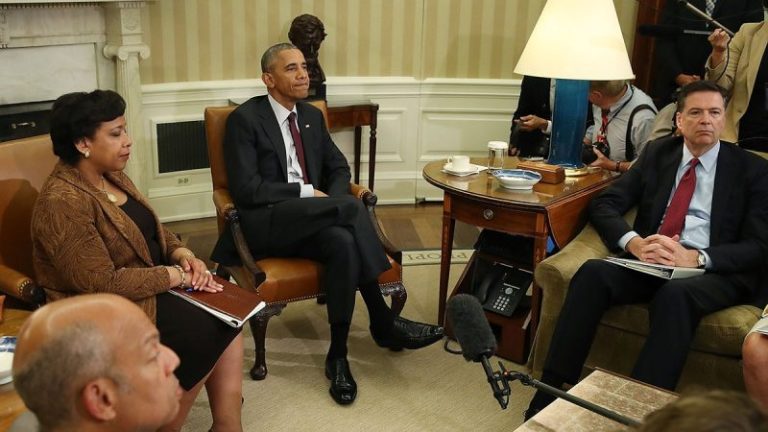
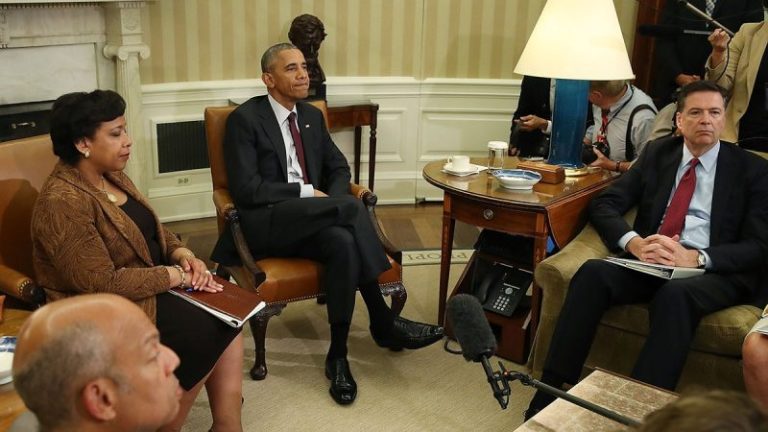
President Donald Trump claimed that former President Barack Obama was the ‘ringleader’ of Russiagate, calling for him to be criminally investigated amid new claims that members of his administration allegedly ‘manufactured’ intelligence that prompted the Trump–Russia collusion narrative.

Director of National Intelligence Tulsi Gabbard recently declassified documents revealing ‘overwhelming evidence’ that claimed that after Trump won the 2016 election against Hillary Clinton, then-President Obama and his national security team allegedly laid the groundwork for what would be the yearslong Trump–Russia collusion probe.

Gabbard said the documents revealed that Obama administration officials ‘manufactured and politicized intelligence’ to allegedly create the narrative that Russia was attempting to influence the 2016 presidential election, despite information from the intelligence community stating otherwise.

The new documents name Obama, top officials on his National Security Council, Director of National Intelligence James Clapper, CIA Director John Brennan, national security advisor Susan Rice, Secretary of State John Kerry, Attorney General Loretta Lynch and Deputy FBI Director Andrew McCabe, among others.

Gabbard, on Monday, sent a criminal referral to the Justice Department related to those findings. Department of Justice officials did not share further details on whom the criminal referral was for.

As for Gabbard’s criminal referral, Trump was asked which specific figures should be under criminal investigation, to which he replied: ‘President Obama. He started it.’

‘And Biden was there with him, and Comey was there, and Clapper, the whole group was there. Brennan. They were all there in the room right here. This is the room,’ Trump said from the Oval Office Tuesday during a meeting with the president of the Philippines. ‘It was President Obama. It was lots of people all over the place.’

None of the former Obama-era officials have responded to Fox News Digital’s request for comment.

The president went on to say that his administration has ‘all of the documents, and from what Tulsi told me, she’s got thousands of additional documents coming.’

‘So President Obama, it was his concept – his idea,’ Trump said Tuesday. ‘But he also got it from crooked Hillary Clinton – crooked as a $3 bill, and Hillary Clinton and her group, the Democrats, spent $12 million to Christopher Steele to write up a report that was a total fake report.’

Steele authored the discredited anti-Trump dossier, which was paid for by the Clinton campaign and the Democratic National Committee through law firm Perkins Coie.

The anti-Trump dossier served as the basis for Foreign Intelligence Surveillance Act (FISA) warrants against former Trump campaign aide Carter Page.

The intelligence community, at the time, widely viewed the dossier as ‘internet rumor,’ but top officials, like Comey, McCabe and Brennan, reportedly pushed for its inclusion in the 2017 Intelligence Community Assessment.

‘It took two years to figure that out, but it came out that it was a total fake report – it was made-up fiction – and they used that,’ Trump said. ‘The Steele report was a disaster – all lies, all fabrication, all admitted fraud.’

Meanwhile, Trump said ‘we caught Hillary Clinton, we got Barack Hussein Obama. They’re the ones. And then you have many, many people under them. Susan Rice – they’re all the names.’

‘I guess they figured they’re going to put this in as classified information and nobody will ever see it again – but it doesn’t work that way,’ Trump said. ‘It is the most unbelievable thing I think I’ve ever read.’ 

Trump added: ‘Never has a thing like this happened in the history of our country.’ 

On July 28, 2016, Brennan briefed President Obama on a plan from one of Clinton’s campaign foreign policy advisors ‘to vilify Donald Trump by stirring up a scandal claiming interference by the Russian security service,’ meeting notes said. 

‘We’re getting additional insight into Russian activities from (REDACTED),’ read Brennan’s handwritten notes, exclusively obtained by Fox News Digital in October 2020. ‘CITE (summarizing) alleged approved by Hillary Clinton a proposal from one of her foreign policy advisers to vilify Donald Trump by stirring up a scandal claiming interference by the Russian security service.’

After that briefing, the CIA properly forwarded that information through a Counterintelligence Operational Lead (CIOL) to Comey and Deputy Assistant Director of Counterintelligence Peter Strzok, with the subject line: ‘Crossfire Hurricane.’

Former Special Counsel Robert Mueller was appointed to take over the FBI’s original ‘Crossfire Hurricane’ investigation. After nearly two years, Mueller’s investigation, which concluded in March 2019, yielded no evidence of criminal conspiracy or coordination between the Trump campaign and Russian officials during the 2016 presidential election.

Shortly after, John Durham was appointed as special counsel to investigate the origins of the ‘Crossfire Hurricane’ probe.

Durham found that the FBI ‘failed to act’ on a ‘clear warning sign’ that the bureau was the ‘target’ of a Clinton-led effort to ‘manipulate or influence the law enforcement process for political purposes’ ahead of the 2016 presidential election.

Comey and Brennan are currently under criminal investigation, launched by FBI Director Kash Patel. 

This post appeared first on FOX NEWS

Former President Barack Obama denied President Donald Trump’s ‘bizarre allegations’ that he was the Russiagate ‘ringleader,’ in a rare public statement Tuesday evening. 

Trump, earlier on Tuesday, claimed that former President Barack Obama was the ‘ringleader’ of Russiagate, calling for him to be criminally investigated amid new claims that members of his administration allegedly ‘manufactured’ intelligence that prompted the Trump–Russia collusion narrative.

‘Out of respect for the office of the presidency, our office does not normally dignify the constant nonsense and misinformation flowing out of this White House with a response,’ Obama spokesman Patrick Rodenbush said in a statement. ‘But these claims are outrageous enough to merit one.’ 

‘These bizarre allegations are ridiculous and a weak attempt at distraction,’ Obama’s spokesman continued. ‘Nothing in the document issued last week undercuts the widely accepted conclusion that Russia worked to influence the 2016 presidential election but did not successfully manipulate any votes.’ 

He added: ‘These findings were affirmed in a 2020 report by the bipartisan Senate Intelligence Committee, led by then-Chairman Marco Rubio.’ 

Rodenbush’s statement on behalf of Obama comes after Director of National Intelligence Tulsi Gabbard recently declassified documents revealing ‘overwhelming evidence’ that claimed that after Trump won the 2016 election against Hillary Clinton, then-President Obama and his national security team allegedly laid the groundwork for what would be the yearslong Trump–Russia collusion probe.

Gabbard said the documents revealed that Obama administration officials ‘manufactured and politicized intelligence’ to allegedly create the narrative that Russia was attempting to influence the 2016 presidential election, despite information from the intelligence community stating otherwise.

The new documents name Obama, top officials on his National Security Council, Director of National Intelligence James Clapper, CIA Director John Brennan, national security advisor Susan Rice, Secretary of State John Kerry, Attorney General Loretta Lynch and Deputy FBI Director Andrew McCabe, among others.

Gabbard, on Monday, sent a criminal referral to the Justice Department related to those findings. Department of Justice officials did not share further details on whom the criminal referral was for.

As for Gabbard’s criminal referral, Trump was asked which specific figures should be under criminal investigation, to which he replied: ‘President Obama. He started it.’

‘And Biden was there with him, and Comey was there, and Clapper, the whole group was there. Brennan. They were all there in the room right here. This is the room,’ Trump said from the Oval Office Tuesday during a meeting with the president of the Philippines. ‘It was President Obama. It was lots of people all over the place.’

No other former Obama-era officials have responded to Fox News Digital’s request for comment.

The president went on to say that his administration has ‘all of the documents, and from what Tulsi told me, she’s got thousands of additional documents coming.’

‘So President Obama, it was his concept — his idea,’ Trump said Tuesday. ‘But he also got it from crooked Hillary Clinton — crooked as a $3 bill, and Hillary Clinton and her group, the Democrats, spent $12 million to Christopher Steele to write up a report that was a total fake report.’

Steele authored the discredited anti-Trump dossier, which was paid for by the Clinton campaign and the Democratic National Committee through law firm Perkins Coie.

The anti-Trump dossier served as the basis for Foreign Intelligence Surveillance Act (FISA) warrants against former Trump campaign aide Carter Page.

The intelligence community, at the time, widely viewed the dossier as ‘internet rumor,’ but top officials, like Comey, McCabe and Brennan, reportedly pushed for its inclusion in the 2017 Intelligence Community Assessment.

‘It took two years to figure that out, but it came out that it was a total fake report — it was made-up fiction — and they used that,’ Trump said. ‘The Steele report was a disaster — all lies, all fabrication, all admitted fraud.’

Meanwhile, Trump said ‘we caught Hillary Clinton, we got Barack Hussein Obama. They’re the ones. And then you have many, many people under them. Susan Rice — they’re all the names.’

‘I guess they figured they’re going to put this in as classified information and nobody will ever see it again — but it doesn’t work that way,’ Trump said. ‘It is the most unbelievable thing I think I’ve ever read.’ 

Trump added: ‘Never has a thing like this happened in the history of our country.’ 

On July 28, 2016, Brennan briefed President Obama on a plan from one of Clinton’s campaign foreign policy advisors ‘to vilify Donald Trump by stirring up a scandal claiming interference by the Russian security service,’ meeting notes said. 

‘We’re getting additional insight into Russian activities from (REDACTED),’ read Brennan’s handwritten notes, exclusively obtained by Fox News Digital in October 2020. ‘CITE (summarizing) alleged approved by Hillary Clinton a proposal from one of her foreign policy advisers to vilify Donald Trump by stirring up a scandal claiming interference by the Russian security service.’

After that briefing, the CIA properly forwarded that information through a Counterintelligence Operational Lead (CIOL) to Comey and Deputy Assistant Director of Counterintelligence Peter Strzok, with the subject line: ‘Crossfire Hurricane.’

Former Special Counsel Robert Mueller was appointed to take over the FBI’s original ‘Crossfire Hurricane’ investigation. After nearly two years, Mueller’s investigation, which concluded in March 2019, yielded no evidence of criminal conspiracy or coordination between the Trump campaign and Russian officials during the 2016 presidential election.

Shortly after, John Durham was appointed as special counsel to investigate the origins of the ‘Crossfire Hurricane’ probe.

Durham found that the FBI ‘failed to act’ on a ‘clear warning sign’ that the bureau was the ‘target’ of a Clinton-led effort to ‘manipulate or influence the law enforcement process for political purposes’ ahead of the 2016 presidential election.

Comey and Brennan are currently under criminal investigation, launched by FBI Director Kash Patel. 

Fox News’ Mike Emanuel contributed to this report. 

This post appeared first on FOX NEWS

Continued fallout from the handling of Jeffrey Epstein’s case has partially paralyzed House Republicans’ agenda this week.

Frustrated GOP lawmakers have found themselves in a political minefield over the late pedophile, pointing fingers at each other, Democrats and even the Trump administration as members of President Donald Trump’s base continue to clamor for immediate transparency.

‘We ought to be consistent and transparent. So we have consistently asked for the release of the Epstein files, and that shouldn’t stop now that we are in charge,’ one House Republican told Fox News Digital under the condition of anonymity.

‘This issue is not going away. The quicker we deal with it and nip it in the bud, then we take it off the table as an issue the Democrats can use against us and can be used, as you see, procedurally, to stop other good legislation from going through.’

A Department of Justice (DOJ) memo earlier this month declaring the Epstein case closed ignited a civil war within the GOP, with figures on the far right accusing Trump officials of stonewalling despite promises of transparency.

Days later, Trump called on a federal judge to release grand jury testimony in Epstein’s case.

Democrats, meanwhile, have seized on the discord with newfound calls to ‘release the Epstein files,’ as Rep. Jim McGovern, D-Mass., the top Democrat on the House Rules Committee, put it on multiple occasions.

Democrats on the panel – which serves as the final gatekeeper to legislation that requires a simple majority vote – have used their ability to introduce an unlimited number of amendments during committee hearings to force Republicans to take politically sticky votes on releasing information about Epstein.

‘There is a list, that list is a victim list. And you’ve got to carefully walk through a victims list, because it involved Epstein. Epstein was involved with minors,’ said Rep. Ryan Zinke, R-Mont. ‘I think the other thing is, I find ironic just out of circumstance, that the Democrats are pushing so hard for an Epstein file that the Biden administration had for four years.’

It led to House GOP leaders advancing a nonbinding resolution calling on the Trump administration to release the files, though it’s not clear when that will receive a chamber-wide vote.

But Democrats pledged to work from the same playbook during a Monday night Rules Committee hearing to kick off the GOP agenda. Republicans responded by forcing those proceedings to grind to a halt.

House leaders canceled a planned day of voting on Thursday – sending lawmakers to August recess a day early.

‘The rules committee will not be meeting, and rightfully so. They were going to use the whole time, and they told us, just amendment after amendment. They think they’ve got a wedge in this – they don’t,’ committee member Rep. Ralph Norman, R-S.C., told Fox News Digital.

He’s one of several House Republicans who told Fox News Digital they were giving deference to the Trump administration on handling the issue – while praising how the White House has handled it so far.

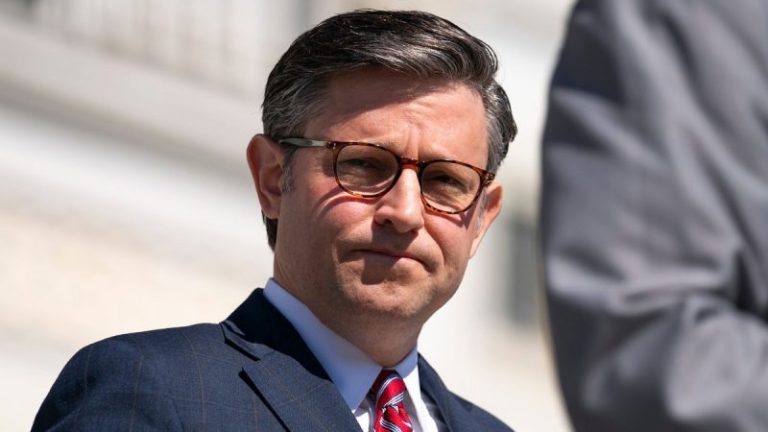
Multiple lawmakers told Fox News Digital that Speaker Mike Johnson, R-La., urged Republicans in their Tuesday morning closed-door conference to allow the administration to do its work and not demand the release of information that could risk harming Epstein’s victims.

One person said, ‘We don’t want to embarrass ourselves, keep asking and asking for something, then it comes out, and it’s like – ‘We didn’t want that.’ But I mean, we’ve got to trust the administration.’

‘The administration has done a great job. All the wins that they have – I’m not going to let this waylay them,’ Norman said. ‘In 45 days or two months, if nothing happens, that’ll be a problem. But that won’t happen. We’re going to get it out.’

Moments later he took to X to demand an immediate vote on the nonbinding Epstein resolution, however.

‘The American people deserve action, not excuses. Let’s vote on it before August recess and get it DONE!!’ Norman said.

The South Carolina Republican, who is considering a bid for governor, is one of several conservatives pushing the issue, despite GOP leaders’ pleas to stay quiet on the matter.

Rep. Thomas Massie, R-Ky., teamed up with Rep. Ro Khanna, D-Calif., on a measure that could force a House-wide vote on releasing Epstein-related documents – if it netted a majority of the chamber’s support. That mechanism, called a discharge petition, could force House GOP leaders into a difficult position when they are back in early September.

Several Republican lawmakers have signed onto Massie’s measure in support.

Meanwhile, the House Oversight Committee unanimously approved a move by Rep. Tim Burchett, R-Tenn., to call for imprisoned ex-Epstein associate Ghislaine Maxwell to be subpoenaed.

Three more House Republicans, however, told Fox News Digital they believe most lawmakers want the matter to dissipate.

One locked in on Massie and his nonbinding resolution, ‘He’s doing all of this for self-promotion and attention, and it’s sad and pathetic.’

Even Johnson took aim at Massie during his weekly press conference when asked about his discharge petition.

‘It’s interesting to me that he chose the election of President Trump to bring this, to team up with the Democrats and bring this discharge petition,’ the speaker said.

‘I also try to follow the Scripture. You know it says, Bless those who persecute you. So let me just say about Thomas Massie: Could you just accept my Southern, bless his heart.’

He also pointed out the administration was in the process of sifting through what information it could release.

‘There’s no purpose for Congress to push an administration to do something that they’re already doing. And so this is for political games. I’m very, very resolute on this. We can both call for full transparency and also protect victims,’ Johnson said.

Rep. Marjorie Taylor Greene, R-Ga., a Trump ally who is backing Massie’s discharge petition, told reporters, ‘I’m all for transparency, but we just have to be a little patient with the court.’

Several people noted that any bombshell information implicating Trump or other high-level figures would have leaked by now.

But the two other House Republicans who spoke with Fox News Digital said they and their colleagues were frustrated with how the Trump administration has handled the matter so far.

‘We need to give it the opportunity to simmer down,’ one of the two lawmakers said. ‘I will say, for me, when you say the list is on your desk, and there’s no list – you can’t take that one back. And I think that’s probably the genesis of the whole thing.’

That was in reference to Bondi telling Fox News Channel of Epstein’s client list in February, ‘It’s sitting on my desk right now to review.’

Another GOP lawmaker told Fox News Digital, ‘You can’t set up all these expectations and then not expect some criticism on the backend when you decide to not move forward with it… I don’t understand it at all.’

And Massie, for his part, has remained fixed in his course while arguing that doing otherwise will cost Republicans the 2026 elections. He also accused Johnson of telling Republicans to ‘stick your head in the sand’ and defer to the Trump administration.

‘If we don’t take the right side of this issue, it’s going to cost us votes in the midterms. People are becoming despondent. They’re apathetic. Why would they go vote if they gave us the House, the Senate and the White House and the transparency and justice they were promised doesn’t happen?’ Massie said. ‘And I think it could be a real problem for us. That’s why it would behoove the speaker to bring this to the floor. It would be in the best interest of this institution just to vote this out and give it to the Senate and let them do their thing.’

When reached for comment, the White House responded with a lengthy statement touting Trump’s accomplishments that did not mention Epstein.

‘Under President Trump’s leadership, the Republican Party has achieved unprecedented unity and strength. After securing the largest share of votes ever for a Republican presidential nominee and winning majorities in both the House and Senate, President Trump has delivered the most impactful first six months of any presidency. He has fulfilled numerous campaign promises – and then some!’ said spokesman Harrison Fields.

Indeed, Republicans have had a number of significant legislative successes this year, even with a razor-thin majority.

When reached for comment, a DOJ spokesperson pointed Fox News Digital to Deputy Attorney General Todd Blanche’s statement on Tuesday, digging in on the department’s earlier memo.

‘[I]n the recent thorough review of the files maintained by the FBI in the Epstein case, no evidence was uncovered that could predicate an investigation against uncharged third parties. President Trump has told us to release all credible evidence. If Ghislane Maxwell has information about anyone who has committed crimes against victims, the FBI and the DOJ will hear what she has to say,’ Blanche said. ‘Therefore, at the direction of Attorney General Bondi, I have communicated with counsel for Ms. Maxwell to determine whether she would be willing to speak with prosecutors from the Department.’

This post appeared first on FOX NEWS

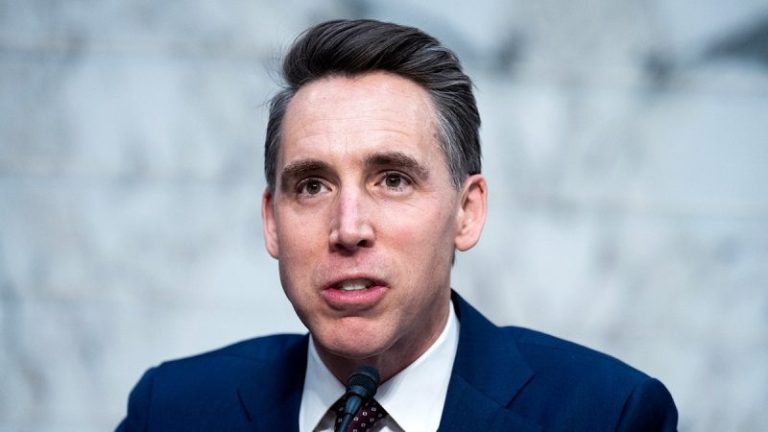
Sen. Josh Hawley, R-Mo., is pushing a resolution that would indicate that the Senate denounces the persecution of Christians in Muslim-majority nations, while Rep. Riley Moore, R-W.V., and several other House Republicans are pushing a House version that would declare the lower chamber’s condemnation of such persecution.

The resolutions urge the president to prioritize the defense of persecuted Christians in America’s foreign policy, including via ‘diplomatic engagement with Muslim-majority countries’ as well as ‘efforts to stabilize the Middle East.’

The proposed resolutions also urge the president to leverage the diplomatic toolkit ‘to advance the protection of persecuted Christians worldwide and within Muslim-majority countries.’

Fox News Digital reached out to the White House, which did not provide comment.

‘Our country was founded on religious liberty. We cannot sit on the sidelines as Christians around the world are being persecuted for declaring Jesus Christ as their Lord and Savior. We must condemn these heinous crimes,’ Hawley said, according to press releases issued by the offices of Hawley and Moore.

‘Year after year, the number of Christians murdered by extremists in Nigeria has numbered in the thousands. Millions more have been displaced. We cannot allow this to continue. I urge my colleagues to join me in condemning the persecution of Christians around the world by supporting this resolution.’

Original cosponsors in the House included GOP Reps. Greg Steube of Florida, Michael Guest of Mississippi, Glenn Grothman of Wisconsin, Addison McDowell of North Carolina, Brandon Gill of Texas, Pat Harrigan of North Carolina, and Anna Paulina Luna of Florida.

While not an original cosponsor, Rep. Warren Davidson, R-Ohio, is a cosponsor of the resolution in the House, according to congress.gov.

‘Around the world, our brothers and sisters in Christ face rampant persecution for simply acknowledging the name of Jesus. That is unacceptable. In Nigeria alone, more than 50,000 Christians have been martyred and more than 5 million have been displaced simply for professing their faith. During a Divine Liturgy in Damascus last month, an islamic jihadist opened fire on worshippers and detonated an explosive device — killing at least 30 and wounding dozens more. These examples illustrate the violence and death Christians face on a daily basis,’ Moore said, according to press releases.

‘Unfortunately, decades of U.S. foreign policy blunders have exacerbated this crisis, with ethno-religious cleansing accelerating in Iraq after our failure to stabilize the country following the 2003 invasion. We as lawmakers cannot continue to sit idly by. I urge my colleagues to join me in condemning the persecution of Christians across the globe.’

This post appeared first on FOX NEWS

Senators are set to take a key vote on Tuesday that could determine the outcome of government funding in the coming months and whether a partial government shutdown is on the horizon. But the vote on appropriations bills – normally a collegial process – is turning acrimonious, as some Democrats feel burned by how Republicans worked to pass spending cuts.

Lawmakers in the upper chamber will vote on their first tranche of appropriations bills for this fiscal year, but whether the typically popular and bipartisan measures pass remains unclear as Senate Democrats seem prepared to derail the process in protest of recent partisan moves by Republicans – moves they say have eaten away at the trust that binds the appropriations process.

Senate Republicans last week passed President Donald Trump’s $9 billion clawback package that slashes funding from foreign aid programs and public broadcasting, including NPR and PBS.

That came after Senate Minority Leader Chuck Schumer, D-N.Y., warned that advancing the bill could have consequences for the typically bipartisan government funding process in the upper chamber. Meanwhile, Office of Management and Budget Director Russ Vought said that more rescissions would be on the way.

Senate Majority Leader John Thune, R-S.D., noted that any consideration of spending bills would require ‘cooperation’ from Democrats, and that the forthcoming vote would give Republicans a glimpse of where their colleagues stood on funding the government ahead of the Sept. 30 deadline.

‘It was deeply disappointing to hear the Democrat leader threaten to shut down the government if Republicans dared to pass legislation to trim just one-tenth of 1% of the federal budget,’ Thune said.

Schumer scoffed at Thune calling for more bipartisanship in appropriations and accused Thune of ‘talking out of both sides of his mouth.’ 

‘We will see how the floor process evolves here on the floor given Republicans’ recent actions undermining bipartisan appropriations,’ he said. ‘Nothing is guaranteed.’ 

Among the bills that could be considered are spending bills that fund military construction and the VA, agriculture and the Food and Drug Administration, and the legislative branch. The bills will need at least 60 votes to blow through the first procedural hurdle in the Senate.

Senate Democrats are set to meet Tuesday afternoon ahead of the vote to determine whether they’ll support the expected bill package.

Sen. Chris Murphy, D-Conn., a member of the Senate Appropriations Committee, said that he and his colleagues had yet to receive guidance from Democratic leadership, but noted that the threat of Democratic resistance was a problem of the GOP’s own making. He said that the GOP had ‘an obligation to give Democrats answers to how…they can guarantee that our votes mean anything.’

‘I think Republicans have created a crisis, and they need to figure out how to solve it,’ the Connecticut Democrat said. ‘We can’t do appropriations bills with this escalating promise from the administration to cancel all Democratic spending as soon as we vote for it.’

Sen. Mike Rounds, also a member of the spending panel, hoped that lawmakers could make the appropriations process work this year, but acknowledged that Democratic resistance could lead Congress to once again turn to another government funding extension, known as a continuing resolution.

He contended that if Democrats were willing to give up on a bipartisan process it would only be to the advantage of the Trump administration.

‘So, part of it is, do we actually want an appropriations process,’ he said.

This post appeared first on FOX NEWS