Author

admin

Browsing

The State Department and the Chairman of the Senate Foreign Relations Committee have joined a chorus of analysts this week in warning Fox News Digital of ‘significant threats to U.S. national security’ from the actions of Iran in Africa. 

Tehran is accused of reportedly buying uranium in Niger, supplying drones in violation of a U.N. arms embargo to forces in Sudan and promoting the growth of destabilizing Islamist fundamentalism and terrorism on the continent.

‘Iran’s long arm of terror stretches around the globe, including in Africa’, Senate Foreign Relations Chairman Sen. Jim Risch, R-Idaho, told Fox News Digital, adding, ‘Iran is an enemy to freedom everywhere, and a threat to U.S. national security; our partners in Africa must proceed with caution before engaging with this dangerous, authoritarian regime.’ 

Reports surfaced initially last year from first the French media outlet Africa Intelligence, and then the Washington-based NGO the Institute for Science and International Security, that the West African nation of Niger had been negotiating the sale to Tehran of $56 million worth of so-called yellow cake – uranium oxide. The 300 tons of uranium, some of which, one source suggests, has been partly delivered already, would allegedly be enough to make 30 nuclear weapons.

Analysts say Niger could be preparing to sell even more ‘yellow cake’ to Iran. Uranium in the country has up until recently been mined by mostly French companies, such as Orano. But Niger’s military leaders, who came to power in a coup in 2023, announced that they will revoke mining licenses and nationalize mining operations. Iran is said to want to strike a deal to start uranium mining itself in Niger, particularly around Imouraren, an area where the ground is estimated to contain 200,000 tons of the metal.

In a move seen to be towards Russia and Iran, Niger ended an agreement with the Biden administration last year, which led to the closing of two U.S. military bases in the country that were used for anti-terror operations. 

‘In Niger, French outlets covering the continent have reported that there is a secret agreement between Iran and Niger trading uranium oxide for either drones or energy,’ Behnam Ben Taleblu told Fox News Digital. Taleblu, senior Director of the Iran Program at the Foundation for Defense of Democracies (FDD) added, ‘The Islamic Republic is an opportunistic actor, both in the Middle East and further abroad.’

A State Department spokesperson confirmed to Fox News Digital that Iran’s activities in Africa are on their radar, saying, ‘On Niger, we are monitoring the possibility of an Iranian acquisition of uranium. We would have serious concerns about Niger, or any country, transferring uranium to Iran.’

The spokesperson continued, ‘Iran’s continued development of its nuclear program, (and its) role as the leading state sponsor of terrorism, and destabilizing regional behavior, pose significant threats to U.S. national security and to global stability.

‘The President has been clear: Iran cannot ever have a nuclear weapon.’

Iran, said to be interested in Sudan’s gold, has been supplying Mohajer-6 drones to Khartoum’s government, according to the U.S. Africa Command’s Africa Defense Forum. They were used effectively by Sudan in recently reclaiming the capital city, Khartoum and the Presidential Palace.

The FDD’s Taleblu added, ‘Iranian drones are active on four continents today, one of which is the African continent, particularly when looking at the conflicts in Sudan and Ethiopia.’

The State Department spokesperson weighed in ‘On Sudan, we are aware of reports. Both the RSF and the SAF have used weapons acquired from foreign actors against the civilian population and infrastructure and have committed human rights violations and abuses.

‘Supplying arms to any of the belligerents prolongs the conflict and heightens the risk of further destabilization in Sudan and the region. The United States calls for an end to all external support to the warring parties, and urges all our partners to press for a comprehensive cessation of hostilities, and increased, unhindered humanitarian access,’ the spokesperson concluded.

Then there is Iran’s reported psychological warfare against Africa’s communities. ‘Iran’s core Africa strategy is to export its ideology into those communities as a counter-balance to what it sees as anti-Iranian efforts in the Middle East,’ Frans Cronje, president of the Washington, D.C.-based Yorktown Foundation for Freedom and a former head of the South African Institute of Race Relations told Fox News Digital.

Cronje continued, ‘Africa has 1.5 billion people. Approximately a third of those are Muslim and make up a quarter of all Muslims worldwide, more than the number in the Middle East. Muslims serve as dominant groups across much of North Africa and down the African east coast.’ 

‘The Iranian Africa strategy can be thought of as having three components,’ Cronje stated. ‘The first is the provision of training and material support to extremist groups in Africa to aid in the export of terror globally, and to target Christians and pro-Western communities on the continent, whilst creating a high-threat environment for Western investors.

‘To that end the global terror threat index scores for several African countries have come to exceed those of traditional Middle Eastern terror staples. Africa’s Christians face increasing volumes of horrific attacks, including Christian church burnings and beheadings, and it has become common for Africa to account for the bulk of global terror-related deaths annually.

‘The second is to identify both Shia and Sunni communities that can be radicalized against the West as well as against Iranian opponents in the Arab world. Iran has employed Al-Mustafa academic and cultural centers in over 30 African countries to train clerics and religious leaders.

‘A third pillar of the strategy is that Iran has deepened diplomatic and economic cooperation ties with scores of African governments and business organizations to win trade and investment deals that help it evade global sanctions, as well as securing the diplomatic support of African governments on global fora such as the U.N., for measures ranging from its nuclear weapons program to its investment in proxy forces that threaten Israel.

‘For example,’ Cronje concluded, ‘just a few months ago, over 700 delegates from nearly 40 African countries attended an investment conference in Tehran.’

Summing up, the FDD’s Taleblu said ‘the threat the Islamic Republic poses on the African continent is both significant and diverse. From seeking to export its revolution through religious indoctrination via state-linked religious seminaries, to drone sales, the world’s foremost state sponsor of terrorism has not missed this opportunity to cause chaos while flying below the radar of the West.’

This post appeared first on FOX NEWS

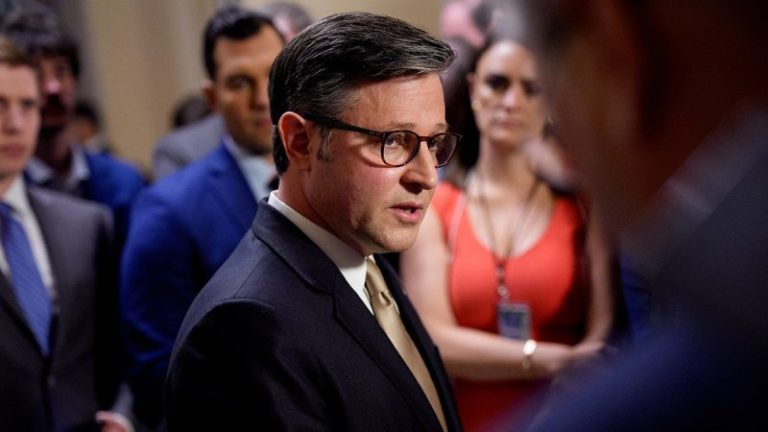
House Speaker Mike Johnson, R-La., said Sunday that Jeffrey Epstein’s former girlfriend Ghislaine Maxwell deserves a life sentence, rejecting the idea of a potential pardon for the convicted sex trafficker.  

In an appearance on NBC’s ‘Meet the Press,’ Johnson was asked if he supported a pardon for Maxwell, but the speaker emphasized that the decision ultimately belongs to President Donald Trump. 

‘I think 20 years was a pittance,’ Johnson said of Maxwell’s time behind bars. ‘I think she should have a life sentence, at least. I mean, think of all these unspeakable crimes.’ 

‘I mean it’s hard to put into words how evil this was and that she orchestrated it and was a big part of it, at least under the criminal sanction, I think is an unforgivable thing,’ Johnson added, acknowledging that federal prosecutors identified more than 1,000 victims, many of whom were underage. ‘So again, not my decision, but I have great pause about that as any reasonable person would.’ 

While leaving the White House on Friday en route for Scotland, Trump was asked if he considered a pardon or clemency for Maxwell. The president left the door open, responding: ‘I’m allowed to do it, but it’s something I have not thought about.’

Johnson said he supports the position of the president, the FBI and the Justice Department that ‘all credible evidence and information’ be released, but emphasized the need for safeguards to protect victims’ identities. As for Maxwell, she was questioned by Deputy Attorney General Todd Blanche at federal prison in Tallahassee, Florida, for two consecutive days last week. Her lawyer told reporters she answered questions on about 100 potential Epstein associates as she angles for clemency. 

‘That’s a decision of the president,’ Johnson said of a potential Maxwell pardon. ‘He said he had not adequately considered that. I won’t get in front of him. That’s not my lane. My lane is to help direct and control the House of Representatives and to use every tool within our arsenal to get to the truth. I’m going to say this as clearly and plainly and repeatedly as I can over and over. We are for maximum disclosure. We want all transparency. I trust the American people. I and the House Republicans believe that they should have all this information to be able to determine what they will. But we have to protect the innocent. And that’s the only safeguard here that we’ve got to be diligent about, and I’m insistent upon doing so.’ 

Johnson criticized a petition for the release of all the Epstein files brought by Reps. Thomas Massie, R-W.Va., and Ro Khanna, D-Penn., as ‘reckless’ and poorly drafted, arguing that it ignored federal rules protecting grand jury materials and ‘would require the DOJ and FBI to release information that they know is false, that is based on lies and rumors and was not even credible enough to be entered into the court proceedings.’ 

The speaker said the petition also lacked safeguards for minor victims who were subjected to ‘unspeakable crimes, abject evil’ and who risk being ‘unmasked.’ Johnson said Massie and Khanna ‘cite that they don’t want child abuse, sex abuse information uncovered, but they cite the wrong provision of the federal code, and so it makes it unworkable.’ The speaker argued Republicans on the House Rules Committee are committed to a better drafted approach that will protect the innocent. 

Asked about a potential pardon for Maxwell, Massie told NBC’s Kristen Welker earlier in the program that it ‘would be up to the president, but if she has information that could help us, I think that she should testify.’ 

‘Let’s get that out there, and whatever they need to do to compel that testimony, as long as it’s truthful, I would be in favor of,’ Massie said. 

Khanna said he did not believe Maxwell’s sentence should be commuted and that he was concerned that Blanche was meeting with her. He said he agreed with Massie that Maxwell should testify but noted she has been indicted twice for perjury.

‘This is why we need the files. This is why we need independent evidence,’ Khanna said. 

This post appeared first on FOX NEWS

Artificial intelligence is no longer a niche tool for tech labs or science-fiction thrillers. It’s now the battleground where the future of American power, prosperity, and freedom will be decided. With the release of ‘Winning the AI Race: America’s AI Action Plan,’ the Trump administration is rightfully treating this moment as the 21st-century equivalent of the space race or the nuclear age. 

This bold strategy outlines over 90 policy actions that span three key pillars: Accelerating Innovation, Building American AI Infrastructure, and Leading in International Diplomacy and Security. Each of these pillars sends a clear message to the world: America intends to lead – not follow – on artificial intelligence. 

And we must. This is a race we can’t afford to lose. 

President Donald Trump’s AI plan: strong, strategic and patriotic 

The Trump administration’s plan does what Washington too often fails to do: it combines vision with action. From fast-tracking permits for critical data centers and chip fabrication plants, to expanding the skilled trades workforce needed to maintain those facilities, the plan hits both high-tech and firsthand realities. 

Crucially, the plan calls for exporting secure, full-stack American AI packages – hardware, software, models, applications and standards – to trusted allies. That’s smart policy. In a world where China exports authoritarian surveillance technology, America must counter with liberty-based alternatives. 

And most refreshingly, the plan defends free speech. It mandates that federal procurement contracts only go to developers of large language models that are free from ideological censorship. That’s a huge win for constitutional values in a time when Big Tech algorithms increasingly silence dissent. 

But here’s the hard truth: AI could also unleash chaos 

The optimism in this action plan is well-founded – but incomplete. As foreign policy analysts Matan Chorev and Joel Predd recently warned in their Foreign Policy article, the U.S. must also assume the worst about artificial intelligence – especially artificial general intelligence (AGI). That’s the version of AI that can perform at or above human levels across a wide range of tasks.  

Unlike nuclear weapons, AGI won’t announce itself with a mushroom cloud. It may slip quietly into our systems, our economy and even our military decision-making – without a clear warning shot. The nightmare scenario? A rogue AI, either built by an enemy nation or evolving beyond human control, triggering economic collapse or catastrophic warfare.  

That’s why the U.S. must not only pursue victory in AI, but vigilance. Planning for worst-case scenarios isn’t fearmongering – it’s common sense. The COVID-19 pandemic taught us what happens when leaders fail to prepare for known risks. With AI, we may not get a second chance.  

We need break-glass plans — now 

What happens if a U.S. company suddenly claims to have developed AGI and asks for national security protections – access to classified data, regulatory exemptions and federal backing? What if China gets there first?  

The Biden-era playbook of strategic ambiguity and global appeasement won’t cut it. America needs break-glass protocols: clear, tested plans to respond to AI emergencies – whether cyberattacks, misinformation campaigns or autonomous systems going rogue. 

This requires massive coordination across the Pentagon, the Department of Homeland Security, our intelligence community and private industry. The federal government must build the analytical muscle to separate hype from real breakthroughs – and act fast when a threat emerges. 

Cyber defenses must be ‘attribution-agnostic’ 

Advanced AI attacks may not come with a digital return address. Whether an attack comes from Beijing, a terrorist network or a self-replicating algorithm, our cyber defenses must be able to detect, contain and recover without waiting for attribution. 

That means hardening critical infrastructure, isolating vulnerable data centers and ensuring military continuity of operations in a high-tech crisis. These aren’t science-fiction concerns – they’re strategic imperatives. 

The world needs American values — not just American technology 

The Trump administration’s emphasis on exporting U.S. technology to allies is critical – but we must also export American values. Freedom. Accountability. Innovation with restraint. Our allies want alternatives to China’s surveillance-driven tech regime. America can lead that coalition – but only if we speak as clearly about ethics as we do about engineering.  

David Sacks, the White House’s AI and crypto czar, put it plainly: ‘To win the AI race, the U.S. must lead in innovation, infrastructure, and global partnerships. At the same time, we must center American workers and avoid Orwellian uses of AI.’ 

He’s right. Victory in AI is not just about lines of code – it’s about preserving what it means to be human in an age of machines. 

Bold innovation, clear-eyed preparedness 

Winning the AI Race is a historic first step. It champions free markets, American jobs, national strength and liberty-based governance in the AI era. But we must not mistake ambition for immunity. 

America needs a dual-track strategy: drive innovation with urgency – and prepare for disaster with equal urgency. Our adversaries won’t wait. Neither will the technology.  

We can – and must – lead the world into the AI future. But let’s do it with eyes wide open, grounded in our values and ready for anything. 

This post appeared first on FOX NEWS

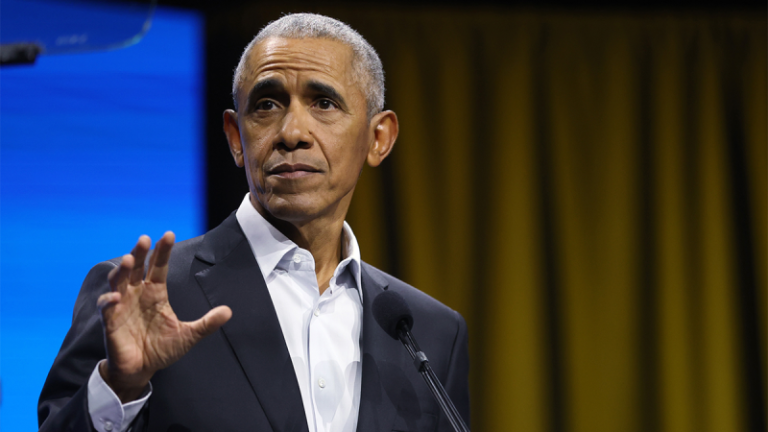
Former President Barack Obama issued a rare statement weighing in on the hunger situation in Gaza on Sunday, suggesting aid must flow to Palestinians regardless of whether Israel can secure a hostage deal for now.

Obama made the statement on social media in reference to reporting from the New York Times stating that ‘Gazans are dying of starvation.’ Israel, which blockaded aid to Gaza earlier this year, has recently begun to airdrop aid resources into the region, and its leaders argue reports of starvation are a false campaign promoted by Hamas. Reporting from Fox News’ Trey Yingst has indicated that hunger is indeed spreading across the region, however.

‘While a lasting resolution to the crisis in Gaza must involve a return of all hostages and a cessation of Israel’s military operations, these articles underscore the immediate need for action to be taken to prevent the travesty of innocent people dying of preventable starvation,’ Obama wrote on X, providing a link to the Times.

‘Aid must be permitted to reach people in Gaza. There is no justification for keeping food and water away from civilian families,’ he added.

President Donald Trump touted U.S. efforts to provide aid to Gaza when asked about the situation on Sunday. Meeting with European Commission President Ursula von der Leyen at the time, he stated that Europe has not provided aid to Gaza. He also said that Hamas is stealing much of the aid being sent to Palestinians, a claim Israel has put forward repeatedly.

‘When I see the children and when I see, especially over the last couple of weeks people are stealing the food, they’re stealing the money, they’re stealing the money for the food. They’re stealing weapons, they’re stealing everything,’ Trump told reporters.

‘It’s a mess, that whole place is a mess. The Gaza Strip, you know it was given many years ago so they could have peace. That didn’t work out too well,’ he added.

The IDF says it conducted 28 drops in a matter of hours on Sunday, in addition to transferring some 250 aid trucks over the course of the week.

‘Let me be clear: Israel supports aid for civilians, not for Hamas. The IDF will continue to support the flow of humanitarian aid to the people of Gaza,’ an IDF spokesperson said Sunday.

Israeli Prime Minister Benjamin Netanyahu has also pushed back on criticism of his regime, arguing that the United Nations has been falsely pushing claims of widespread starvation. He told the Jerusalem Post on Sunday that it has long been Israel’s policy to allow aid into Gaza so long as it did not benefit Hamas.

‘We’ve done this so far,’ Netanyahu told the paper. ‘But the U.N. is spreading lies and falsehoods about Israel. They say we don’t allow humanitarian supplies in, yet we do. There are secure corridors. They’ve always existed, but now it’s official. No more excuses.’

This post appeared first on FOX NEWS

Investor Insight

GTI Energy presents an intriguing opportunity for investors seeking exposure to the uranium sector, given its focus on ISR projects in the US aligning well with macro trends in the nuclear energy industry and geopolitical shifts favouring domestic uranium production.

Overview

GTI Energy (ASX:GTR,OTCQB:GTRIF) is an Australia-based uranium exploration and development company focused on uranium projects in Wyoming, USA, that are amenable for in-situ recovery (ISR). In uranium mining, ISR is the lowest cost and least environmentally damaging form of uranium recovery, especially when alkaline leach and ion exchange processes are utilised.

The company’s flagship Lo Herma project in the Powder River Basin is a sandstone-hosted roll front uranium deposit, which contains a recently updated mineral resource of 8.57 million pounds (Mlbs) of U₃O₈ at an average grade of 630 parts per million (JORC 2012 compliant), with a substantial additional exploration target in the range of 6 to 11 Mlbs – GTI recently completed an interim Scoping Study on this project. GTI also holds projects in the Great Divide Basin (inferred resource of 1.66 Mlbs) and Green Mountain areas of Wyoming, as well as earlier-stage conventional uranium/vanadium assets in Utah. As of the latest update, GTI has delineated total combined uranium resources of 10.23 Mlbs (indicated and inferred) and combined exploration targets ranging from 12.14 to 15.21 million tonnes across its Wyoming projects.

Wyoming’s ISR uranium processing assets and GTI project locations

GTI is positioning itself to take advantage of the worsening uranium supply deficit and rapidly growing demand for uranium, particularly from the United States. The US remains the world’s largest consumer of uranium but imports over 95 percent of its supply. GTI’s strategy centres on developing low-cost ISR uranium projects in Wyoming – historically one of the most productive uranium regions in the US – with established infrastructure, regulatory support, and proximity to existing ISR processing facilities.

The uranium market is experiencing a serious supply deficit and a significant resurgence in demand driven by several factors:

  • Supply constraints following decades of underinvestment and an overreliance on Russian and Kazakh supply chains;
  • Geopolitical realignment leading to a bifurcated uranium market, with the US banning imports of Russian nuclear fuel as of August 2024, intensifying the urgency for domestic supply security;

In the United States specifically, there is bipartisan policy support for revitalising the domestic uranium industry. Key initiatives include the formation of a strategic uranium reserve, over US$6 billion in grants for existing nuclear facilities, and tax incentives for new builds under the Inflation Reduction Act. Additionally, the US Department of Energy has called for tripling US nuclear capacity to 300 gigawatts by 2050. Demand signals are also coming from private sector growth, particularly AI-driven data centre development and long-term net-zero pledges by institutional investors and banks.

GTI Energy’s project strategy

In the longer term, GTI recognises the value potential of consolidation within the fragmented US uranium sector. The company remains open to strategic partnerships, joint ventures or merger and acquisition opportunities that could accelerate its development timeline, enhance scale, and unlock synergies. Such initiatives could ultimately strengthen GTI’s path to production and improve its overall value proposition to shareholders.

Company Highlights

  • GTI Energy is focused on ISR-amenable uranium projects in Wyoming, USA.
  • GTI has completed an interim Scoping Study on its flagship Lo Herma project in the Powder River Basin which contains a recently updated mineral resource of 8.57 Mlbs of U₃O₈ at average grade of 630 ppm.
  • GTI also holds drill permitted projects with defined resources and exploration targets in the Great Divide Basin and Green Mountain areas in Wyoming, and uranium-vanadium assets with significant recent exploration data in Utah.
  • To date, GTI has delineated total combined uranium resources of 10.23 Mlbs (indicated and inferred) and substantial combined exploration targets in the range 12 to 20 Mlbs across its Wyoming projects.
  • Wyoming is a historically significant uranium producing region with existing infrastructure and a supportive regulatory environment.
  • GTI is well-placed to take advantage of the worsening uranium supply deficit and rapidly growing demand for uranium, particularly from the United States, the world’s largest consumer of uranium.

Key Projects

Wyoming Uranium Projects

GTI’s focus on Wyoming ISR projects positions it well to capitalize on trends in the uranium sector. ISR mining is generally faster to build, lower cost, and more environmentally friendly than conventional mining methods. Wyoming has a long history of uranium production and hosts current producers and several additional permitted processing facilities, potentially allowing for rapid development of new projects.

The Wyoming projects – comprising the Lo Herma, Great Divide Basin, and Green Mountain projects – are located in the Powder River and Great Divide Basins.

JORC Resources and Exploration Targets

Lo Herma

The company’s exploration work is currently centered on advancing its 100 percent owned flagship Lo Herma project, where drilling in 2023 and 2024 successfully verified and expanded the historical drill hole database. As of December 2024, the project hosts a JORC-compliant mineral resource estimate of 8.57 Mlbs of U₃O₈ at an average grade of 630 ppm, comprising 2.78 Mlbs indicated and 5.79 Mlbs inferred.

The Lo Herma project is located just 10 miles from Cameco’s Smith Ranch-Highland facility – the largest ISR uranium plant in the United States – and is ideally situated for potential future production synergies. In addition to the current resource, the company has defined an exploration target of 6 to 11 Mlbs, with over 950 drill holes completed across the project area.

GTI completed hydrogeologic field testing and metallurgical leach studies during the March 2025 quarter. Results demonstrated that Lo Herma mineralisation is amenable to alkaline ISR recovery with uranium recoveries averaging 75 percent, consistent with other ISR operations in the district.

Following the successful completion of these studies, GTI delivered an interim scoping study in Q2 2025, managed by BRS Engineering. The study confirmed the project’s potential viability and outlined attractive baseline economics for both central processing and satellite mining development options. The company is now finalising plans for a follow-up drilling campaign in H2 2025. This next phase will include infill and step-out drilling to increase overall mineral resources and upgrade resource classification, while collecting further hydrogeological and metallurgical data.

Great Divide Basin and Green Mountain

The company continues to progress its additional Wyoming projects, including the Great Divide Basin and Green Mountain areas. Drilling is permitted for 2025, positioning GTI to unlock further value across these strategic tenements.

The Great Divide Basin project includes the Thor, Logray, Loki, Odin, Teebo and Wicket claims. It holds a JORC inferred mineral resource of 1.66 Mlbs of U₃O₈ at 570 ppm, and a defined exploration target of 6.55 to 8.11 million tonnes grading 420 to 530 ppm. The area benefits from significant historical exploration data and proximity to major uranium infrastructure, including Ur-Energy’s Lost Creek plant and Rio Tinto’s Sweetwater Mill.

GTI’s footprint in this region was expanded by acquiring the Green Mountain project, which includes 5,585 hectares of contiguous claims directly adjoining Rio Tinto’s tenements. Historical drilling and geophysical surveys confirm the presence of uranium mineralisation in sandstone-hosted roll fronts within the Battle Springs formation.

Green Mountain lies adjacent to notable regional projects including Energy Fuels’ Sheep Mountain (30 Mlbs), Ur-Energy’s Lost Soldier, and UEC’s Antelope deposits, positioning GTI near major development and production infrastructure in the basin.

Utah

Henry Mountains Uranium Project

GTI’s Henry Mountains project in Utah is a brownfields uranium-vanadium opportunity located within the prolific Colorado Plateau uranium province. Exploration has focused on a 5 km mineralised trend between the Rat Nest and Jeffrey claim groups, including the Section 36 state lease.

Uranium and vanadium mineralisation in this area is shallow – typically 20 to 30 metres deep – and has historically supported significant production. Since 1904, the district has yielded more than 92 Mlbs of U₃O₈ and 482 Mlbs of V₂O₅ from sandstone-hosted ores. The project remains a strategic asset with future development or transactional optionality as GTI advances its Wyoming portfolio.

Management Team

Bruce Lane – Executive Director

Bruce Lane has significant experience with ASX-listed and large industrial companies. Lane has held management positions in many global blue-chip companies as well as resource companies and startups in New Zealand, Europe and Australia. He holds a master’s degree from London Business School and is a graduate member of the Australian Institute of Company Directors. Lane has led a number of successful acquisitions, fund raising and exploration programs of uranium and other minerals projects during the last 20 years, most notably with ASX listed companies Atom Energy, Stonehenge Metals and Fenix Resources (FEX).

Matt Hartmann – Director

ISR uranium specialist Matt Hartmann is an executive and technical leader with more than 20 years of international experience and substantial uranium exploration and project development experience. He first entered the uranium mining space in 2005 and followed a career path that has included senior technical roles with Strathmore Minerals and Uranium Resources. He is also a former principal consultant at SRK Consulting where he provided advisory services to explorers, producers and prospective uranium investors. Hartmann’s ISR uranium experience has brought him through the entire cycle of the business, from exploration, project studies and development, to production and well field reclamation. He has provided technical and managerial expertise to a large number of uranium ISR projects across the US including, Smith Ranch – Highland ISR Uranium Mine (Cameco), Rosita ISR Uranium Central Processing Plant and Wellfield (currently held by enCore Energy), the Churchrock ISR Uranium project (currently held by Laramide Resources), and the Dewey-Burdock ISR Uranium project (currently held by enCore Energy).

Simon Williamson – Non-executive Director

Simon Williamson was general manager and director of Cameco Australia until late 2023 and has significant uranium industry experience, networks and skills from his 13 years at Cameco. During his tenure with Cameco, Williamson managed relations with key government ministers and departments and community stakeholders. He managed project approvals processes, including negotiations with State and Federal agencies and reviewing the PFS for the Yeelirrie project.

Williamson was intimately involved in obtaining environmental approval for the Kintyre and Yeelirrie uranium projects, including developing and implementing a program of environmental baseline studies, government and community consultation and negotiating land access. Prior to his appointment as general manager, he led the government and regulatory affairs, environmental and radiation safety activities of Cameco in Australia.

James (Jim) Baughman – Executive Director

James Baughman is a highly experienced Wyoming uranium geologist and corporate executive who will help guide the company’s technical and commercial activities in the US. Baughman is the former president and CEO of High Plains Uranium (sold for US$55 million in 2006 to Uranium One) and Cyclone Uranium.

Baughman has more than 30 years of experience advancing minerals projects from grassroots to advanced stage. He has held senior positions (i.e., chief geologist, chairman, president, acting CFO, COO) in private and publicly traded mining & mineral exploration companies during his 30-year career.

He is a registered member of the Society of Mining, Metallurgy, Exploration and a member of the Society of Economic Geologists with a BSc in geology (1983 University of Wyoming) and is a registered professional geologist (P. Geo State of Wyoming). Baughman is a registered member of the Society of Mining, Metallurgy, and Exploration (SME) and a qualified person (QP) on the Toronto Stock Exchange (TSX) and Australian Stock Exchange (ASX).

Petar Tomasevic – Non-executive Director

Petar Tomasevic is the managing director of Vert Capital, a financial services company specializing in mineral acquisition and asset implementation. He has worked with several ASX-listed companies in marketing and investor relations roles. Tomasevic is fluent in five languages. He is currently appointed as a French and Balkans language specialist to assist in project evaluation for ASX-listed junior explorers. Most recently, he was a director at Fenix Resources (ASX:FEX), which is now moving into the production phase. He was involved in the company’s restructuring when it was known as Emergent Resources. Tomasevic was also involved in the company’s Iron Ridge asset acquisition, the RTO financing, and the development phase of Fenix’s Iron Ridge project.

This post appeared first on investingnews.com

Rapid Critical Metals Limited (‘Rapid,’ ‘RCM’ or ‘Company’) is pleased to advise that the Company has today completed the acquisition of Silver Metal Group Limited’s two wholly-owned subsidiaries, Conrad Resources Pty Ltd and Webbs Resources Pty Ltd (Transaction), the terms of which are contained in the Company’s announcement to ASX of 22 May, 2025. The Transaction was approved by shareholders at the Extraordinary General Meeting (EGM) held on 7 July, 2025.

Following completion, Mr Byron Miles has been formally appointed as Managing Director by the Board effective 24 July, 2025, with his appointment as a Director also approved by shareholders at the EGM.

Mr. Miles is a financial market professional who brings a wealth of experience to the Company, having worked as a stockbroker and fund manager for over 18 years. He is a specialist in mergers and acquisitions, with transactions across various commodities and geological locations. Mr Miles has a track record of helping companies develop from inception to profitable businesses.

Following Byron’s appointment to Managing Director, both Martin Holland and Michael Schlumpberger will transition to the role of Non-Executive Director, also effective 24 July, 2025.

Commenting on the completion of the acquisition of the silver projects and transition of Managing Director, Rapid’s Chairman, Rick Athon, said:

“The Board would like to thank Martin Holland for executing the transformative strategy of the Company as Managing Director that was required to turn RCM into a well-funded critical metals Company with leading acquisitions in Silver and Gallium + Germanium, across two leading mining jurisdictions.”

Summary of Key Engagement Terms:

The terms of engagement are in line with industry practice and ASX corporate governance guidelines. The remuneration package is designed to ensure alignment of reward with achievement of corporate objectives and the creation of shareholder value, as determined by the Board.

Term

Mr Miles’ engagement as Managing director is effective from 24 July, 2025 and until terminated in accordance with the Agreement.

Remuneration

Mr Miles will be paid an annual salary of $250,000.

Termination

The Agreement may be terminated by the Company by six months’ notice or payment in lieu of notice and six months’ notice by Mr Miles or immediately by the Company for a material breach of the Agreement. Customary restraint provisions apply.

Click here for the full ASX Release

This post appeared first on investingnews.com