
Author

admin

Browsing

From established players to up-and-coming firms, Canada’s pharmaceutical company landscape is diverse and dynamic.

Canadian drug companies are working to discover and develop major innovations amidst an increasingly competitive global landscape. Rising technologies such as artificial intelligence are playing a role in the landscape as well.

Read on to learn about what’s been driving the share prices of the best-performing Canadian pharma stocks.

1. Cipher Pharmaceuticals (TSX:CPH,OTC:CPHRF)

Year-over-year gain: 48.2 percent
Market cap: C$330.79 million
Share price: C$12.33

Cipher Pharmaceuticals is a specialty pharma company with a diverse portfolio of treatments, including a range of dermatology and acute hospital care products. The company has out-licensed some of its offerings as well. Cipher began trading on the OTCQX Best Market under the symbol CPHRF in early 2024.

In addition to its current portfolio, Cipher has acquired Canadian rights to CF-101, a dermatology treatment for moderate to severe plaque psoriasis is currently expected to undergo Phase III clinical trials. The company is also conducting proof-of-concept studies on DTR-001, a topical treatment for removing tattoos.

In 2024, Cipher announced it had signed a definitive asset purchase agreement with ParaPRO for its US-based Natroba operations and global product rights, and the news caused Cipher’s share price to spike significantly.

During its Q1 results reporting in May 2025, the company announced a US$15 million debt repayment.

2. HLS Therapeutics (TSX:HLS)

Year-over-year gain: 42.03 percent
Market cap: C$154.95 million
Share price: C$4.90

HLS Therapeutics focuses on drugs for cardiovascular and central nervous system problems, often through partnerships. The company specializes in acquiring and commercializing pharmaceuticals that address unmet needs. Key commercial products include Vascepa, Clozaril for treatment-resistant schizophrenia and cholesterol-lowering therapies NEXLETOL and NEXLIZET.

Additionally, the company generates revenue from a diversified portfolio of royalty interests on various products marketed by third parties.

3. Medexus Pharmaceuticals (TSX:MDP,OTC:MEDXF)

Year-over-year gain: 23.25 percent
Market cap: C$92.9 million
Share price: C$2.81

Medexus Pharmaceuticals specializes in bringing drugs to treat rare diseases to North America. The company manages the entire process through its fully integrated operations, from acquiring and developing drugs to marketing and selling them. Some of its key products include treatments for hemophilia B and rheumatoid arthritis, as well as a line of drugs for autoimmune diseases like lupus and allergy treatments.

In November 2024, Medexus Pharmaceuticals announced it had successfully negotiated with the pan-Canadian Pharmaceutical Alliance to make treosulfan, which Medexus commercialized in Canada under the name Trecondyv, available to publicly funded drug programs and patients. Trecondyv is indicated as part of conditioning treatment prior to bone marrow transplants in patients with certain types of blood cancers.

In addition to Canada, Medexus has the exclusive commercialization rights to treosulfan in the US, where it received approval from the US Food and Drug Administration (FDA) in January 2025.

4. Satellos Bioscience (TSXV:MSCL,OTC:MSCLF)

Year-over-year gain: 18 percent
Market cap: C$102.26 million
Share price: C$0.59

Satellos Bioscience is a Canadian pharmaceutical company expanding treatment options for muscle disorders. The company has focused specifically on Duchenne muscular dystrophy, developing therapies to regenerate and repair muscle tissue by targeting the specific biological pathways involved. Its lead candidate SAT-3247 targets a protein called AAK1, which regulates the activity of stem cells that activate and differentiate new muscle fibers.

The company began enrolment for a multiple-ascending-dose arm of the Phase 1 study for SAT-3247 last November after no drug-related adverse events were reported in the single-ascending-dose group.

In May of this year, Satellos announced results from its Phase 1b trial, reporting SAT-3247 has shown positive safety and pharmacokinetic data and encouraging early functional results, clearing the path for a planned Phase 2 trial.

5. NurExone Biologic (TSXV:NRX,OTC:NRXBF)

Year-over-year gain: 1.41 percent
Market cap: C$44.18 million
Share price: C$0.72

NurExone Biologic is the biopharmaceutical company behind ExoTherapy, a drug delivery platform that uses exosomes, which are nano-sized extracellular vesicles, to create treatments for central nervous system disorders, spinal cord injuries and traumatic brain injuries. It is a less invasive alternative to cell transplantation, which requires surgery and carries the risk of rejection.

NurExone’s first nano-drug, ExoPTEN, uses a proprietary sIRNA sequence delivered with the ExoTherapy platform to treat spinal cord injuries. ExoPTEN received orphan drug designation from the US Food and Drug Administration (FDA) in October 2023, meaning it has been recognized as a potential treatment for rare medical conditions. The designation makes it eligible for incentives such as market exclusivity and regulatory assistance aimed at accelerating its development and approval.

The company released preclinical results from animal testing evaluating the efficacy of its nano-drug ExoPTEN in restoring lost vision at the end of 2024. In July 2025, preclinical studies indicated that ExoPTEN could improve walking quality in patients with spinal cord injuries.

Securities Disclosure: I, Meagen Seatter, hold no direct investment interest in any company mentioned in this article.

This post appeared first on investingnews.com

“Whatever is out of favor and hated at the moment, that’s probably what you need to buy,” he said. “Buy it when it’s boring and no one cares, then you get to ride the wave up.”

Barton also broke down his current portfolio, which holds a 30 percent weighting in precious metals—particularly gold—citing concerns over currency policies and the long-term upside for gold and silver.

Watch the interview above for more from Barton on the similarities between poker and resource investing.

Securities Disclosure: I, Georgia Williams, hold no direct investment interest in any company mentioned in this article.

This post appeared first on investingnews.com

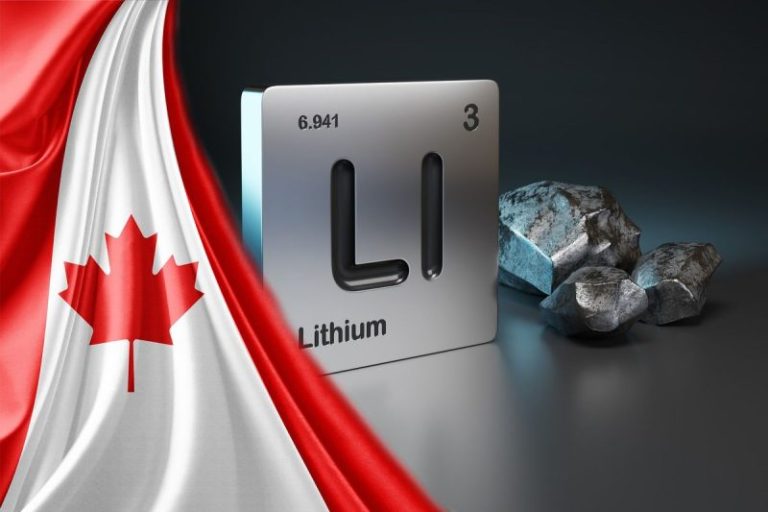
As the global push toward electrification accelerates, lithium remains a critical piece of the energy transition.

Continued oversupply remained a persistent headwind for lithium prices through the first half of 2025. Demand for the battery metal jumped 29 percent year-over-year in 2024, fueled by surging electric vehicle sales and rising power needs from sectors like data centers and heavy industry.

Fastmarket’s analysts expect lithium demand to grow 12 percent annually through 2030, supported by structural trends such as renewable energy integration and battery energy storage.

However, a rapid increase in global supply — particularly from China, Australia and South America — has driven prices to multi-year lows, raising concerns about project economics and the sustainability of new production.

Against this backdrop, Canadian lithium stocks are gaining attention as investors look for companies positioned to benefit from long-term demand growth while navigating short-term price pressure.

1. NOA Lithium Brines (TSXV:NOAL)

Year-to-date gain: 58.82 percent
Market cap: C$488.32 million
Share price: C$0.30

NOA is a lithium exploration and development company with three projects in Argentina’s Lithium Triangle region. The company’s flagship Rio Grande project and prospective Arizaro and Salinas Grandes land packages total more than 140,000 hectares.

As NOA works to advance its flagship asset, the company brought on Hatch in April to lead the preliminary economic assessment (PEA).

The PEA will evaluate the project’s economic and development potential with a target production of 20,000 metric tons of lithium carbonate equivalent (LCE) annually, with a scalable plant design that could double capacity to 40,000 metric tons per year.

NOA has also been working to secure a water source in the arid region through a drilling program targeting fresh water. In late June, the company discovered a fresh water source at the project, located near high-grade lithium zones in the project’s northeast area. According to the company, the location means the water source could support future production facilities or evaporation ponds.

The well, drilled to 190 meters in the northern part of the property, is being tested and developed.

Shares of NOA reached a year-to-date high C$0.425 on July 17, 2025.

2. Wealth Minerals (TSXV:WML)

Year-to-date gain: 40 percent
Market cap: C$23.93 million
Share price: C$0.07

Wealth Minerals is focused on the acquisition and development of lithium projects in Chile, including the Yapuckuta project in Chile’s Salar de Atacama, as well as the Kuska Salar and Pabellón projects near the Salar de Ollagüe.

Wealth Minerals’ shares spiked to a year-to-date high of C$0.095 on February 9, 2025, following the company’s acquisition of the Pabellón project.

According to Wealth, Pabellón has been shortlisted by Chile’s Ministry of Mining as a potential site for a Special Lithium Operation Contract based on its geological and environmental suitability. Located in Northern Chile near the Bolivia border, the project spans 7,600 hectares across 26 exploration licenses about 70 kilometers south of the Salar de Ollagüe.

In May, Wealth formed a joint venture with the Quechua Indigenous Community of Ollagüe to advance the Kuska project. The new entity, Kuska Minerals SpA, is 95 percent owned by Wealth and 5 percent by the community, which also holds anti-dilution rights and a seat on the five-member board.

3. Avalon Advanced Materials (TSX:AVL)

Year-to-date gain: 37.5 percent
Market cap: C$38.26 million
Share price: C$0.055

Avalon Advanced Materials is a Canadian mineral development company focusing on integrating the Ontario lithium supply chain. Avalon is developing the Separation Rapids and Snowbank lithium projects near Kenora, Ontario, and the Lilypad lithium-cesium project near Fort Hope, Ontario.

Separation Rapids and Lilypad are part of a 40/60 joint venture between Avalon and SCR Sibelco, with Sibelco serving as the operator.

Avalon started the year with a revised mineral resource estimate for the Separation Rapids project, which boosted resources in the measured and indicated category by 28 percent.

Company shares rose to C$0.07, a year-to-date high, on July 15, the day after Avalon released its results for its fiscal quarter ended May 31.

A week later, Avalon announced an additional C$1.3 million in funding through its C$15 million convertible security agreement with Lind Global Fund II. The drawdown, expected to close within two weeks, will support project development and general corporate needs, according to the company.

4. Frontier Lithium (TSXV:FL)

Year-to-date gain: 20 percent
Market cap: C$125.41 million
Share price: C$0.54

Pre-production mining company Frontier Lithium aims to be a strategic and integrated supplier of premium spodumene concentrates as well as battery-grade lithium salts in North America.

The company’s flagship PAK lithium project, which is a joint venture with Mitsubishi (TSE:8058), holds the “largest land position and resource” in a premium lithium mineral district located in the Great Lakes region of Ontario, Canada. Frontier also owns the Spark deposit, located northwest of the PAK project.

Shares of Frontier Lithium reached a year-to-date high of C$0.79 on March 4. The stock uptick coincided with a government release reporting the federal and provincial governments supported the company’s plans to build a critical minerals refinery in Northern Ontario.

Once complete, the proposed lithium conversion facility will process lithium from the PAK mine project into approximately 20,000 metric tons of lithium salts per year.

In late May, Frontier released a definitive feasibility study for the mine and mill segment of its PAK project. The study outlines a 31 year mine life with average production of 200,000 metric tons of spodumene concentrate. As for the economics, it projects net revenue of C$11 billion, an after-tax NPV of C$932 million and a 17.9 percent internal rate of return.

5. Century Lithium (TSXV:LCE)

Year-to-date gain: 17.31 percent
Market cap: C$51.58 million
Share price: C$0.30

US-focused Century Lithium is currently advancing its Angel Island lithium project in Esmeralda County, Nevada. The company is also engaged in the pilot testing phase at its on-site lithium extraction facility, which will process material from the lithium-bearing claystone deposit.

On May 6, Century Lithium announced the successful completion of testwork on the direct lithium extraction (DLE) process at its demonstration plant.

The results exceeded expectations, showing 91.6 percent lithium recovery and an eluate grade of 575 milligrams per liter (mg/L) from a 328 mg/L lithium concentrate feed. The company says these improvements could significantly reduce capital and operating costs at its Angel Island project.

Shares of Century Lithium registered a year-to-date high of C$0.49 on May 19.

Recently, the company participated in First Phosphate’s (CSE:PHOS,OTCQB:FRSPF) successful production of commercial-grade lithium iron phosphate (LFP) 18650 battery cells.

As noted in the press release, the cells were made using North America-sourced materials, including lithium carbonate from Century’s Angel Island project in Nevada that was processed at its demonstration plant alongside high-purity phosphoric acid and iron from First Phosphate’s Bégin-Lamarche project in Québec, Canada.

Securities Disclosure: I, Georgia Williams, hold no direct investment interest in any company mentioned in this article.
This post appeared first on investingnews.com

July 29 (Reuters) – Union Pacific said on Tuesday it would buy smaller rival Norfolk Southern in an $85-billion deal to create the country’s first coast-to-coast freight rail operator and reshape the movement of goods from grains to autos across the U.S.

If approved, the deal would be the largest-ever buyout in the sector and combine Union Pacific‘s stronghold in the western two-thirds of the United States with Norfolk’s 19,500-mile network that primarily spans 22 eastern states.

The two railroads are expected to have a combined enterprise value of $250 billion and would unlock about $2.75 billion in annualized synergies, the companies said.

The $320 per share price implies a premium of 18.6% for Norfolk from its close on July 17, when reports of the merger first emerged.

The companies said on Thursday they were in advanced discussions for a possible merger.

The deal will face lengthy regulatory scrutiny amid union concerns over potential rate increases, service disruptions and job losses. The 1996 merger of Union Pacific and Southern Pacific had temporarily led to severe congestion and delays across the Southwest.

The deal reflects a shift in antitrust enforcement under U.S. President Donald Trump’s administration. Executive orders aimed at removing barriers to consolidation have opened the door to mergers that were previously considered unlikely.

A Norfolk Southern freight train passes through Homestead, Pa.Gene J. Puskar / AP file

Surface Transportation Board Chairman Patrick Fuchs, appointed in January, has advocated for faster preliminary reviews and a more flexible approach to merger conditions.

Even under an expedited process, the review could take from 19 to 22 months, according to a person involved in the discussions.

Major railroad unions have long opposed consolidation, arguing that such mergers threaten jobs and risk disrupting rail service.

“We will weigh in with the STB (regulator) and with the Trump administration in every way possible,” said Jeremy Ferguson, president of the SMART-TD union‘s transport division, after the two companies said they were in advanced talks last week.

“This merger is not good for labor, the rail shipper/customer or the public at large,” he said.

The companies said they expect to file their application with the STB within six months.

The SMART-TD union‘s transport division is North America’s largest railroad operating union with more than 1,800 railroad yardmasters.

The North American rail industry has been grappling with volatile freight volumes, rising labor and fuel costs and growing pressure from shippers over service reliability, factors that could further complicate the merger.

Union Pacific‘s shares were down about 1.3%, while Norfolk fell about 3%.

The proposed deal had also prompted competitors BNSF, owned by Berkshire Hathaway BRKa.N, and CSX CSX.O, to explore merger options, people familiar with the matter said.

Agents at the STB are already conducting preparatory work, anticipating they could soon receive not just one, but two megamerger proposals, a person close to the discussions told Reuters on Thursday.

If both mergers are approved, the number of Class I railroads in North America would shrink to four from six, consolidating major freight routes and boosting pricing power for the industry.

The last major deal in the industry was the $31-billion merger of Canadian Pacific CP.TO and Kansas City Southern that created the first and only single-line rail network connecting Canada, the U.S. and Mexico.

That deal, finalized in 2023, faced heavy regulatory resistance over fears it would curb competition, cut jobs and disrupt service, but was ultimately approved.

Union Pacific is valued at nearly $136 billion, while Norfolk Southern has a market capitalization of about $65 billion, according to data from LSEG.

(Reuters reporting by Shivansh Tiwary and Sabrina Valle, additional reporting by Abhinav Parmar, Nathan Gomes and Mariam Sunny; Reuters editing by Sriraj Kalluvila, Pooja Desai, Dawn Kopecki and Cynthia Osterma)

This post appeared first on NBC NEWS

The Senate confirmed its first nominee of the week ahead of what is expected to be a jam-packed schedule to ram through as many of President Donald Trump’s picks as possible.

David A. Wright, Trump’s pick to lead the Nuclear Regulatory Commission (NRC) for a five-year term, was confirmed in the upper chamber on a 50to 39 vote on Monday. It’s not Wright’s first time as chair of the commission, having first served in the role beginning in 2020.

Trump had previously tapped Wright during his first term, and again selected him to lead the NRC earlier this year. His new term is set to end in 2030.

The NRC is an independent regulatory agency tasked with regulating commercial nuclear power plants, reactor licensing and renewal and other elements related to protecting public health and safety when it comes to nuclear energy. Wright’s confirmation comes on the heels of Trump’s announcement that the U.S. and European Union were entering a trade deal that would see the bloc purchase $750 billion of U.S. energy over the next three years. 

While the commission is independent from other arms of the government, Senate Democrats have balked at recent attempts to make the regulatory body, in their view, more partisan.

Earlier this year, Trump signed an executive order that demanded the agency consider making its safety standards less stringent, shortening the timelines for environmental reviews and a quadrupling of the nation’s nuclear power capacity by 2050: all part of the president’s quest to ensure America’s energy dominance. 

Senate Environment and Public Works Committee Chair Shelley Moore Capito, R-W.V., argued that over the last seven years that Wright has been a part of the commission, first as a commissioner beginning in 2018 and then as chair, he would fulfill the president’s wishes. 

‘Achieving this will require experienced and highly qualified Commissioners who are empowered to lead the Agency through a period of high expectations,’ she said in a statement. ‘Well, David Wright meets that mark.’

Then Trump fired a Democratic member of the commission last month, and a staffer from the president’s Department of Government Efficiency (DOGE) was reportedly detailed from the Department of Energy to the regulatory agency.  

That prompted Sen. Sheldon Whitehouse, the top Democrat on the Senate Environment and Public Works Committee, to warn of a ‘hostile takeover’ of the commission by the Energy Department.

The move hurt what began as bipartisan support for Wright’s nomination — Whitehouse initially backed him but changed his position.

‘I hoped to see Chairman Wright rise to the occasion, but circumstances right now at the NRC continue to deteriorate,’ he said in a statement. ‘I cannot presently support his renomination.’

Still, Wright’s confirmation is a win for both Senate Republicans and the White House after Trump called on the Senate GOP to ram his nominees through blockades set up by Senate Democrats.

There are now over 140 pending ‘civilian’ nominations for positions across the gauntlet of federal agencies, ambassadorships and judgeships. The Senate has moved at a blistering clip over the last six months to confirm nominees—they’ve clocked nearly 100 so far — the president has called on Senate Republicans to consider canceling the forthcoming August break to get more done. 

Senate Majority Leader John Thune, R-S.D., warned that if his colleagues across the aisle continued to slow walk the process in the upper chamber for the slew of remaining ‘uncontroversial’ nominees, or be prepared to stick around Washington. 

‘Or they can rein in their reflexive anti-Trump sentiment and allow some of his rank-and-file nominees to proceed by unanimous consent or voice vote — just as Republicans did when the roles were reversed,’ he said. ‘And I’d remind my colleagues about the dangerous and ugly precedent that they’re setting here. But the choice is theirs. But whether it’s the slow way or the fast way, we’re getting President Trump’s nominees confirmed.’

This post appeared first on FOX NEWS

Senate Republicans have received marching orders from President Donald Trump to ram through his remaining nominees, but Democrats are slow-walking the process over some key nominations.

Some of the nominees giving Senate Democrats the most heartburn include Jeanine Pirro, Emil Bove, Mike Waltz and Paul Ingrassia, all of whom Trump tapped for key roles in his administration.

Most of them have all slowly moved through the process, but they are just a few of many other, less controversial figures that are being held up by delay tactics.

There are now over 140 pending ‘civilian’ nominations for positions across the gauntlet of federal agencies, ambassadorships and judgeships. While the Senate has moved at a blistering rate over the last six months to confirm nominees — they’ve clocked nearly 100 so far — Trump has called on Republicans to stay in town rather than leave Washington for a roughly month-long break.

Republicans are trying to hammer out a deal with Democrats to see that more low-hanging fruit nominees, like ambassadors, get the green light for a faster process on the Senate floor, and are willing to keep lawmakers in town over the weekend if their counterparts don’t relent.

‘Democrats want to get out of here for August recess, then fine, give us a certain amount of en blocs that we can go through with non-controversial nominees,’ Sen. Markwayne Mullin, R-Okla., said.

Bove, who currently works at the Justice Department but previously served as Trump’s personal attorney, has been a particular target for Democrats. Trump nominated him to serve a lifetime appointment to the 3rd U.S. Circuit Court of Appeals, and he is nearing the end of his confirmation process.

Democrats have accused Bove of being unfit for the role, and listed whistleblower allegations that he suggested the Trump administration could ignore judicial orders, among other sticking points, as reason enough to try to subvert his appointment to the bench.

‘I have never advised a Department of Justice attorney to violate a court order,’ Bove said during his confirmation hearing.

He’s also become a prime target of Senate Majority Leader Chuck Schumer, D-N.Y., and other Democrats, including Democratic members of the Senate Judiciary Committee, who staged a walkout in protest of his nomination during a recent hearing.

‘He’s the extreme of the extreme,’ Schumer said. ‘He’s not a jurist. He’s a Trumpian henchman. That seems to be the qualification for appointees these days.’

Pirro, a former Fox News host who was tapped to be the top federal prosecutor in D.C., has similarly faced resistance — Senate Democrats walked out of the same meeting discussing her and Bove’s nominations — but not near the degree that Bove has.  

Still, she was advanced out of committee on a party-line vote, coming another step closer to taking over the position she holds in the interim on a permanent basis.

Trump tapped Waltz to be the U.S. ambassador to the United Nations, the last cabinet position to be filled by the administration.

Waltz stepped away from his original role as national security advisor following ‘Signalgate,’ a highly publicized blunder that saw him add a journalist to a group chat on the messaging app Signal that included Secretary of Defense Pete Hegseth, Vice President JD Vance and others discussing the plans and execution of a strike against Yemen. He also advanced out of the Senate Foreign Relations Committee.

Ingrassia’s nomination as special counsel, a position that would see him lead the government watchdog Office of the Special Counsel, was derailed last week when his name was pulled from a list of other nominees slated to have a hearing before the Senate Homeland Security and Governmental Affairs Committee.

Ingrassia has come under scrutiny for his connections with Nick Fuentes, a white nationalist, and his limited career as a lawyer — he graduated from law school three years ago.

Fox News Digital reached out to the Senate panel for comment on Ingrassia’s hearing cancellation. 

This post appeared first on FOX NEWS

A federal judge in Boston on Monday blocked the Trump administration from ending federal Medicaid reimbursements for Planned Parenthood clinics nationwide, ruling that the effort is likely unconstitutional and in violation of the group’s First Amendment protections. 

U.S. District Judge Indira Talwani, an Obama appointee in Boston, granted Planned Parenthood’s request for a nationwide preliminary injunction. ‘Patients are likely to suffer adverse health consequences where care is disrupted or unavailable,’ she said in her order on Monday.

‘In particular, restricting members’ ability to provide healthcare services threatens an increase in unintended pregnancies and attendant complications because of reduced access to effective contraceptives, and an increase in undiagnosed and untreated STIs,’ she added.

Judge Talwani said Monday that Planned Parenthood had sufficiently demonstrated to the court that they were ‘likely to succeed on the merits’ of their lawsuit— one of the ways in which judges evaluate emergency requests for injunctive relief—citing the harm that patients and clinics would likely suffer as a result of the lost Medicaid funding.

Attorneys for Planned Parenthood had sued over the Medicaid cuts earlier this month, which were enacted under a provision of the ‘one big beautiful bill’ narrowly cleared by the Republican-led Congress and signed into law by President Donald Trump on July 4. 

Plaintiffs argued in their filing that the cuts would cause ‘grave’ health risks to as many as one million patients nationwide. 

They also pointed to possible increases in cancer and in undetected sexually transmitted infections, especially in low-income communities.

Many areas could also see an increase in unplanned pregnancies as a result of the lost contraception access their clinics provide, they noted.

Judge Talwani’s order is expected to apply to the nearly 600 health centers operated across the country by Planned Parenthood. It is almost certain to be appeared by the Trump administration, which could even ask the higher courts to grant it an administrative stay in the interim while lower court battles continue to play out.

The administration has also found success in filing emergency orders to the Supreme Court. As of earlier this month, the high court has ruled in Trump’s favor in the majority of cases filed via the ‘shadow docket’ or via emergency application.

Fox News’s Ashley Oliver contributed to this report. 

This post appeared first on FOX NEWS

Thailand and Cambodia reached a ceasefire deal ‘through trade,’ President Donald Trump announced Monday, ending a burgeoning conflict that displaced 260,000 people. 

The declaration from Trump comes after he said over the weekend that he had spoken to the leaders of Cambodia and Thailand, urging a ceasefire, adding the U.S. would not get back to the ‘trading table’ with the southeast Asian countries until fighting stops. 

The fighting began Thursday after a land mine explosion along the border wounded five Thai soldiers. Both sides blamed each other for starting the clashes that have killed at least 35 people and displaced more than 260,000 people on both sides. 

‘Numerous people were killed and I was dealing with two countries that we get along with very well, very different countries from certain standpoints. They’ve been fighting for 500 years intermittently. And, we solved that war … we solved it through trade,’ Trump told reporters during his trip to Scotland. 

‘I said, ‘I don’t want to trade with anybody that’s killing each other.’ So we just got that one solved. And I’m going to call the two prime ministers who I got along with very, very well and speak to them right after this meeting and congratulate them. But it was an honor to be involved in that. That was going to be a very nasty war. Those wars have been very, very nasty,’ Trump also said. 

‘By ending this War, we have saved thousands of lives. I have instructed my Trade Team to restart negotiations on Trade. I have now ended many Wars in just six months — I am proud to be the President of PEACE!’ Trump added in a post on Truth Social.

As part of the ceasefire deal, military commanders from both sides will begin to hold talks Tuesday to defuse tensions while Cambodia will host a border committee meeting on Aug. 4, according to Malaysian Prime Minister Anwar Ibrahim. 

He added that the foreign and defense ministers of Malaysia, Cambodia and Thailand have also been instructed to ‘develop a detailed mechanism’ to implement and monitor the ceasefire to ensure sustained peace. 

It is ‘time to start rebuilding trust, confidence and cooperation going forward between Thailand and Cambodia,’ Cambodian Prime Minister Hun Manet said during a press conference in Malaysia alongside Thai Acting Prime Minister Phumtham Wechayachai. 

Secretary of State Marco Rubio wrote on X that the U.S. ‘applauds the ceasefire declaration between Cambodia and Thailand announced today in Kuala Lumpur.’ 

‘President Trump made this happen. Give him the Nobel Peace Prize!’ added White House Press Secretary Karoline Leavitt. 

Fox News’ Brie Stimson and the Associated Press contributed to this report. 

This post appeared first on FOX NEWS

President Donald Trump’s new deadline for Russia to end the conflict with Ukraine is an additional ‘step towards war,’ according to former Russian President Dmitry Medvedev.  

Medvedev, now the deputy chairman of the Security Council of Russia, cautioned that Trump’s announcement Monday that Russia must end the conflict with Ukraine in 10 to 12 days would not end well for the U.S. 

‘Trump’s playing the ultimatum game with Russia: 50 days or 10… He should remember 2 things: 1. Russia isn’t Israel or even Iran. 2. Each new ultimatum is a threat and a step towards war. Not between Russia and Ukraine, but with his own country,’ Medvedev said in a post on X on Monday. ‘Don’t go down the Sleepy Joe road!’

While Trump announced on July 14 that he would sign off on ‘severe tariffs’ against Russia if Moscow failed to agree to a peace deal within 50 days, Trump said Monday that waiting that period of time was futile amid stalled negotiations. 

‘I’m going to make a new deadline, of about 10 — 10 or 12 days from today,’ Trump told reporters from Scotland. ‘There’s no reason for waiting. It was 50 days. I wanted to be generous, but we just don’t see any progress being made.’

Trump’s remarks come as his frustration with Putin has grown in recent weeks amid no progress toward peace between Russia and Ukraine, and just a day after Russia launched more than 300 drones, four cruise missiles and three ballistic missiles into Ukraine, according to the Ukrainian air force.


Trump called out Putin for providing lip service during their discussions while not taking proactive steps to end the war. As a result, Trump said he’s grown ‘disappointed’ in the Russian leader and that he’s ‘not so interested in talking anymore’ with Putin. 

‘He talks — we have such nice conversations, such respectful and nice conversation. And then, people die the following night,’ Trump said Monday. 

Following Trump’s announcement about whittling down the deadline for a peace deal, Ukrainian President Volodymyr Zelenskyy thanked Trump for his ‘clear stance and expressed determination’ to resolve the conflict.

‘I thank President Trump for his focus on saving lives and stopping this horrible war,’ Zelenskyy said in a post on X on Monday. ‘Ukraine remains committed to peace and will work tirelessly with the U.S. to make both our countries safer, stronger, and more prosperous.’

Zelenskyy previously came under scrutiny from Vice President JD Vance in February during an Oval Office meeting for not voicing more gratitude for U.S. support for Kyiv as it battles Moscow.

Although Trump has historically boasted about having a solid relationship with Putin, he has publicly voiced increased frustration with Putin in recent weeks as the war rages on between Russia and Ukraine. 

‘We get a lot of bulls— thrown at us by Putin, if you want to know the truth,’ Trump said during a Cabinet meeting on July 8. ‘He’s very nice to us all the time, but it turns out to be meaningless.’

Fox News Digital’s Caitlin McFall contributed to this report.

This post appeared first on FOX NEWS

When the ambulance arrived in the Kensington neighborhood of Philadelphia two years ago, an angry EMT got out and barked at the crowd, ‘Who called this in?’ 

Standing next to my cameraman and above the prone body of a shirtless soul bedecked in boils and not moving, I said, ‘I did.’ He didn’t say a word, he looked at me, then down the street at the dozens of strung out bodies, then back at me as if to say, ‘Look at all this, what do you want me to do?’

I had no answer.

Last week, President Donald Trump did answer that question with a much-welcome executive order (EO) intended to bring back civil commitment, in other words, the ability to put people who are a danger to themselves or others in institutions, even against their will.

Civil libertarians are in a tizzy over the EO. They insist this is an abuse of due process and harkens to the bad old days, when hundreds of thousands of Americans were committed to mental institutions, sometimes for dubious reasons.

But in examining and judging Trump’s proposed policy here, it is important to understand and accept what the status quo on the ground is right now, and it is nothing short of horrific.

I’ve traveled to homeless encampments all over America, from tucked-away Manhattan underpasses to the sprawling chaos of San Francisco’s Tenderloin, a place you literally smell a block before you enter.

In these encampments, your gag reflex is challenged by needles sticking out of necks and mountains of human detritus, but the real soul-crushing, existential sadness comes from knowing that these human beings are just being left to die.

For decades now, Democrats have spent endless dollars on fruitless efforts to fix the homeless problem. In California alone, Gov. Gavin Newsom has spent $20 billion on failing to fix it, and only recently admitted the encampments have to go.

In these encampments, your gag reflex is challenged by needles sticking out of necks and mountains of human detritus, but the real soul-crushing, existential sadness comes from knowing that these human beings are just being left to die.

What the Trump administration realizes is that Democrats refuse to accept is that homelessness is, actually, two very distinct problems. One is financial, the other is a matter of addiction and mental health.

Financial homelessness is fairly easy to address. The evicted mother living in her car can be given temporary housing and job assistance. She really does just need a hand up.

Homelessness related to mental illness and addiction, however, isn’t really a homelessness problem at all, it’s an addiction and mental illness problem, and shockingly, just letting people in tents shoot up in what was once a thriving commercial district doesn’t solve it.

As I have wandered the streets of these hellscapes in city after city, my question hasn’t really been if these people would be better off in an institution, but rather, if they weren’t in a de facto open-air institution already.

What does it matter if these places lack walls and locks? They are cages nonetheless, cruel prisons whether voluntary or not.

As I have wandered the streets of these hellscapes in city after city, my question hasn’t really been if these people would be better off in an institution, but rather, if they weren’t in a de facto open-air institution already.

Opponents of civil commitment insist you cannot take away people’s freedom! But freedom to do what? Shoot fentanyl every day until they die on a curbside, pockets rifled by another desperate junkie?

If it was your child on these broken and brutal streets of death, would you want them to be left in freedom to waste away, or would you want them taken somewhere where they could be protected and helped?

Opponents will say that civil commitment can be abused. They will point to the 1950s when homosexuals were sent to institutions, but it’s not 1950. We aren’t going to institutionalize gay people, and we cannot be paralyzed by a bigoted past when trying to save lives today.

Could there be abuses or mistakes made regarding civil commitment? Sure, but people are dying in the streets right now, and we must trust ourselves to actively help them, without stepping over the line.

Annoyed with me, or not, that day in Kensington, the EMT revived the man at my feet, who, it turns out, wasn’t dead, after all. Instead, he was angry, because the Narcan that woke him up also negated the high he had paid for.

There are really only two sides to be on here: the side that says we are going to do everything we can to save that man’s life, even against his will, or the side that condemns him to an open-air prison of his own making.

President Trump has chosen wisely, and if local governments take heed, it is going to save a lot of lives across America.

This post appeared first on FOX NEWS