Author

admin

Browsing

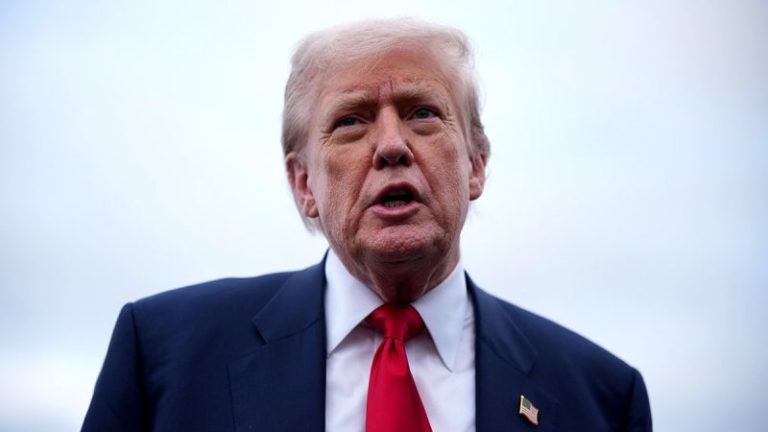
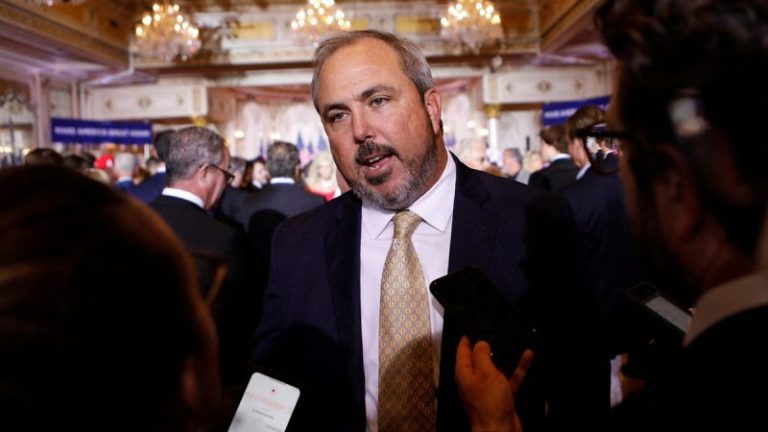
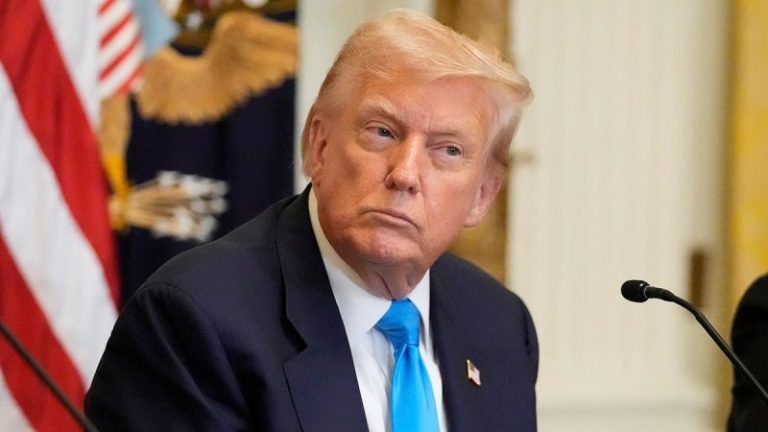
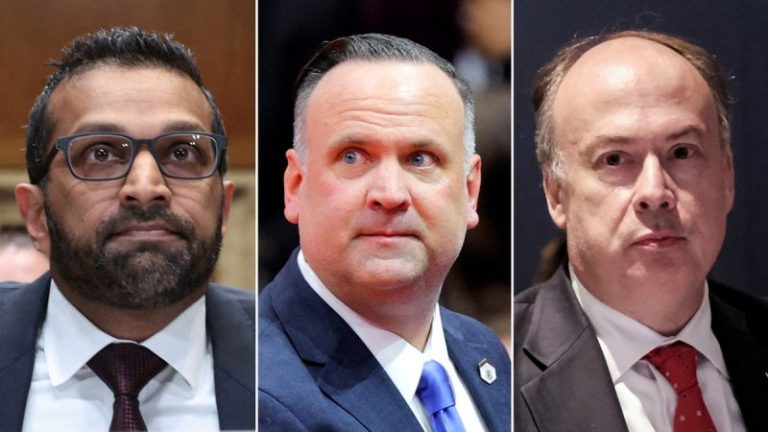
Officials from the first Trump administration are alleging they received notices from Google shortly before they returned to office that they were being probed by the FBI under the Biden administration and the web giant was unable to tell them because of a court order. 

Dan Scavino, who is now White House Deputy Chief of Staff and assistant to the president, described the matter as ‘Biden lawfare’ kicking in after he ‘patriotically and proudly’ served during Trump’s first term. 

‘Google received and responded to a legal process issued by the Federal Bureau of Investigation compelling the release of information related to your Google account. A court order previously prohibited Google from notifying you of the legal process…’ Scavino shared on X from an email he said he received from Google five weeks before Trump returned to the White House. 

‘I’ve never shared this — but this is a small taste of the INSANITY that many of us went through — right here in the United States of America. LAWFARE at its finest. A Complete and Total Disgrace!!!!!’ he added. 

Less than a half-hour after Scavino’s post, FBI Director Kash Patel responded to him saying ‘I got one of those too…’ 

Jeff Clark, the current acting administrator of the Office of Information and Regulatory Affairs, then chimed in Saturday morning, saying that he, too, received a similar message.

‘Indeed, a whole Jack Smith team was assigned to go through my emails after there was a privilege review,’ Clark wrote on X in reference to the former special counsel. 

‘But that group of lawyers ignored my religious pastor privilege, marital privilege, and other privileges and basically shipped all they could to Jack Smith. But it still cost me tens of thousands to try to protect my communications,’ he added. 

Smith was tapped by former Attorney General Merrick Garland to probe allegations that Trump sought to overturn the 2020 election results, and later investigated the handling of classified documents that were uncovered during a raid at Trump’s Mar-a-Lago compound. 

‘My medical records and other private communications had nothing to do with the 2020 election. They were no one’s business. But it didn’t matter to these thugs with law degrees and the willingness to abuse government power,’ Clark said Saturday.  

‘They were trying to bait me to go to court to get them to destroy their secret copies of the emails, so they could try to break even my lawyer-client privilege with President Trump. But my team and I didn’t fall for it,’ Clark also said. ‘Moreover, the whole thing was a blatant attempt to intimidate me. It didn’t work and I didn’t fold under the pressure.’ 

The FBI did not immediately respond Saturday to a request for comment from Fox News Digital. 

Fox News’ Alex Miller contributed to this report. 
This post appeared first on FOX NEWS

President Donald Trump wrapped up his second term’s 28th week in office announcing he would reposition two nuclear submarines amid increased tension with Russia, after just adding new tariffs to a host of countries. 

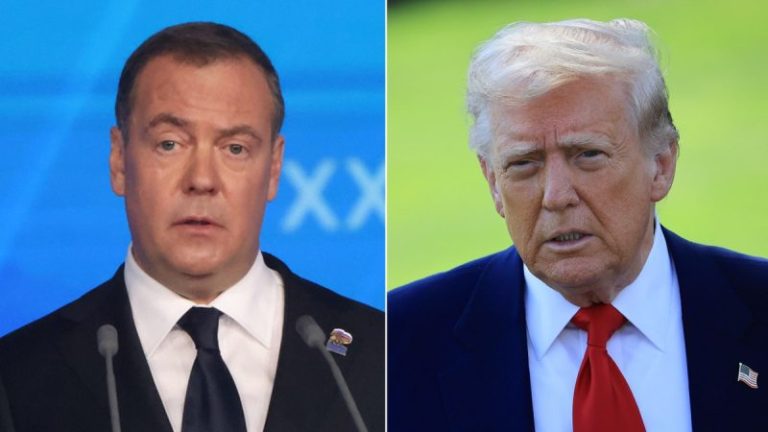
On Monday, Trump unveiled a new deadline for Russia to end its conflict with Ukraine, and former Russian President Dmitry Medvedev said the announcement is an additional ‘step towards war.’ 

In response, Trump made a rare announcement Friday that he would reposition two submarines to best respond to the escalated tension between the two countries. 

‘Based on the highly provocative statements of the Former President of Russia, Dmitry Medvedev, who is now the Deputy Chairman of the Security Council of the Russian Federation, I have ordered two Nuclear Submarines to be positioned in the appropriate regions, just in case these foolish and inflammatory statements are more than just that,’ Trump said in a Friday post on Truth Social. 

Trump did not disclose any additional details regarding the submarines, and defense officials rarely comment on submarine placement given the highly classified nature of their operations. 

Here’s what also happened this week:

New tariffs

Trump also signed several executive orders Thursday related to tariffs, including raising the tariffs on Canada from 25% to 35%. 

The president raised the tariff rate due to Canada’s contribution to the flow of fentanyl and other illicit drugs into the U.S., according to the Trump administration. However, Canada’s Prime Minister Mark Carney challenged that assessment. 

‘Canada accounts for only 1% of U.S. fentanyl imports and has been working intensively to further reduce these volumes,’ Carney said in a Friday statement.  

Trump also modified reciprocal tariffs on a series of countries Thursday, bumping up the tariff rate on Brazil to 50%. 

Meanwhile, Trump reached a trade deal on Thursday with South Korea, driving down tariffs against South Korea from 25% as pitched in the spring to 15%. Additionally, Trump agreed Thursday to continue trade talks with Mexico for another 90 days. 

Veterans housing legislation

Trump also signed the VA Home Loan Program Reform Act into law Wednesday, which would make permanent a partial claims program that seeks to keep veterans from losing their homes to foreclosure. 

The new partial claims program under the Department of Veterans’ Affairs’ (VA) Home Loan Program permits veterans who are behind on mortgage payments to tack on those payments to the tail end of their loans, while also offering them an interest-free loan in the interim. 


‘This legislation provides desperately needed relief to veterans and their families who have fallen behind in their mortgages,’ Trump told reporters Wednesday. ‘It’s a really sort of an amazing situation, and it helps keep our promise to end veterans homelessness. And, we’re going to do that for America. We’re going to do that for our great veterans.’

Estimates suggest the partial claim program could assist up to 3.7 million veterans, according to Trump. 

‘It’s common sense legislation,’ Trump said. ‘My administration is committed to doing everything possible to ensure that our veterans are treated with respect and treated as well as anybody in this country.’

This post appeared first on FOX NEWS

The stock market’s momentum from earlier this week, which saw the S&P 500 (INDEXSP:.INX) and the Nasdaq Composite (INDEXNASDAQ:.IXIC) reach new record highs, came to a halt on Friday (August 1).

Investors were reacting to a series of mixed tech earnings reports. Many were accompanied by cautious forward-looking guidance despite strong top-line numbers. This sentiment was further soured by fresh economic data out of the US showing that while employment remains strong, there are signs inflation is reaccelerating.

The most significant blow, however, came from geopolitical developments that reignited global trade tensions, prompting new fears of retaliatory tariffs and the potential for a renewed surge in inflation.

1. Samsung and Tesla strike deal

Tesla (NASDAQ:TSLA) CEO Elon Musk announced a US$16.5 billion deal with Samsung Electronics (HKEX:2814) that would see the electronics conglomerate produce AI6 semiconductors for the carmaker until 2033.

Production will take place at Samsung’s new fab in Taylor, Texas. The news led to a 6.8 percent rise in Samsung’s shares on Monday (July 28), as well as a 1 percent increase for Tesla. Last week, the carmaker saw its share price decline after reporting a 12 percent drop in revenue, marking its biggest quarterly decline in over 10 years.

Musk called the deal’s strategic importance “hard to overstate’ in a post on X. “Samsung agreed to allow Tesla to assist in maximizing manufacturing efficiency. This is a critical point, as I will walk the line personally to accelerate the pace of progress. And the fab is conveniently located not far from my house,” Musk added in another post.

“The $16.5B number is just the bare minimum,” he also said. “Actual output is likely to be several times higher.”

2. Bell Canada and Cohere partner on sovereign AI

BCE (TSX:BCE,NYSE:BCE) and Canadian artificial intelligence (AI) company Cohere announced a partnership on Monday that will see them work together to provide AI services to Canadian companies and government agencies.

The deal is focused on sovereign AI, meaning all data will stay within Canada.

“At a critical time for Canada, we’re proud to partner with Cohere to create a sovereign, full-stack AI solution, custom-built to support the Canadian government and business. Working together, we will both transform Canadian businesses through cutting-edge AI capabilities, while ensuring that the data remains secure and within Canada,” said Mirko Bibic, president and CEO of BCE, previously known as Bell Canada Enterprises.

“Our partnership with Bell Canada will provide the Canadian government and enterprises with world-class options for sovereign, security-first AI,’ added Aidan Gomez, co-founder and CEO of privately owned Cohere.

This has the potential to be truly transformative for organizations looking to massively increase their productivity and efficiency without any compromise on data security and privacy.’

Under the terms of the deal, Bell will provide the physical infrastructure, including its national network and data centers. Meanwhile, Cohere will provide its powerful AI models to offer a secure, all-in-one AI solution. This helps Canadian organizations adopt new technology. It also ensures their sensitive information is kept safe at home.

3. Palo Alto Networks to acquire CyberArk

On Wednesday (July 30), Palo Alto Networks (NASDAQ:PANW) announced plans to acquire Israeli AI cybersecurity firm CyberArk Software. The Wall Street Journal had reported on Tuesday (July 29) that they were in talks.

Under the terms of the agreement, CyberArk shareholders will receive US$45 cash and 2.2005 shares of Palo Alto per share of CyberArk. Palo Alto expects the transaction to be immediately accretive to its revenue growth and gross margin, and accretive to free cash flow per share in fiscal year 2028.

In a press release announcing the acquisition, Nikesh Arora, chairman and CEO of Palo Alto, said:

“Our market entry strategy has always been to enter categories at their inflection point, and we believe that moment for Identity Security is now. This strategy has guided our evolution from a next-gen firewall company into a multi-platform cybersecurity leader. Today, the rise of AI and the explosion of machine identities have made it clear that the future of security must be built on the vision that every identity requires the right level of privilege controls, not the ‘IAM fallacy’. CyberArk is the definitive leader in Identity Security with durable, foundational technology that is essential for securing the AI era. Together, we will define the next chapter of cybersecurity.”

Udi Mokady, founder and executive chairman of CyberArk, called the news a ‘profound moment in CyberArk’s journey,’ saying that they combination will accelerate the mission it began more than two decades ago.

Palo Alto Networks performance, July 29 to August 1, 2025.

Chart via Google Finance.

The deal is expected to close in the second half of Palo Alto’s 2026 fiscal year, subject to regulatory and CyberArk shareholder approval. Although Palo Alto hit a high of US$210.39 on Tuesday, shares of the company declined by 5 percent following the announcement and closed 17.83 percent below Tuesday’s high.

4. Microsoft, Meta, Amazon and Apple report quarterly results

Microsoft (NASDAQ:MSFT) ended its fourth fiscal quarter of 2025 with record revenue, driven by strong AI and cloud service growth. Microsoft Cloud revenue exceeded US$168 billion, a 23 percent increase, and Intelligent Cloud, including Azure, grew 26 percent to US$29.9 billion, with Azure up 39 percent. Although significant AI investments (over 100 million monthly Copilot users) caused a slight gross margin dip, the firm’s operating income rose 23 percent.

CEO Satya Nadella expressed confidence in long-term growth. For her part, CFO Amy Hood noted that commercial bookings surpassed US$100 billion; she anticipates double-digit revenue and operating income growth in the 2026 fiscal year, though data center capacity may remain constrained through the first half of the period.

Meta Platforms (NASDAQ:META) also had a positive Q2, with revenue up 22 percent to US$47.52 billion and net income up 36 percent to US$18.34 billion. Earnings per share rose 38 percent to US$7.14.

CEO Mark Zuckerberg highlighted the company’s focus on “personal superintelligence.”

The Family of Apps saw daily active people increase 6 percent to 3.48 billion, and advertising revenue grew with impressions up 11 percent and average price per ad up 9 percent.

Q3 revenue is projected to be US$47.5 billion to US$50.5 billion. However, regulatory challenges in the EU could impact European revenue. Meta is also heavily investing in AI and infrastructure, with 2025 capital expenditures narrowed to US$66 billion to US$72 billion, and similar growth expected in 2026.

Microsoft, Apple, Meta Platforms and Amazon performance, July 29 to August 1, 2025. 

Chart via Google Finance.

Amazon (NASDAQ:AMZN) delivered a strong second quarter, with overall net sales growing 13 percent year-on-year to $167.7 billion. The company’s net income also saw a significant increase, rising 35 percent year-on-year to $18.16 billion.

The growth was fueled by strong performance across all three of its major segments. The North America segment, which accounted for 60 percent of total net sales, saw a revenue increase of 11 percent year-on-year to $100.07 billion.

The International segment saw its net sales grow by 16 percent year-on-year to $36.76 billion, with a particularly notable 448 percent increase in operating income. Amazon Web Services continued its steady performance, with net sales reaching $30.87 billion, up 17 percent year-on-year. Despite its strong revenue growth, the company’s trailing 12 month free cashflow declined by 66 percent year-on-year to $18.18 billion.

Finally, Apple (NASDAQ:AAPL) posted strong results for its third fiscal quarter of 2025, with total net sales increasing to US$94.04 billion, up from US$85.78 billion in the same quarter last year.

The company’s net income rose to US$23.43 billion, an increase from US$21.45 billion year-on-year. This performance translated to earnings per share of US$1.57, up from US$1.40 in the prior year. The growth was primarily driven by its products and services, with the iPhone and Mac categories seeing notable increases in net sales. Apple’s services segment also continued its expansion, with sales rising to US$27.42 billion from US$24.21 billion a year ago.

5. Figma makes public debut

Figma’s highly anticipated initial public offering (IPO) generated significant buzz this week, with its share price and valuation surging dramatically on its first day of trading.

On Monday, Figma increased its IPO price range to US$30 to US$32 a share, up from US$25 to US$28. This new pricing valued the company at up to a US$18.7 billion market cap and a US$17.2 billion enterprise value. According to Bloomberg, people familiar with the matter indicated that the IPO was approaching 40 times oversubscribed.

The company had its first day of trading on the NYSE on Thursday (July 31).

Figma’s shares surged by 250 percent from US$33 to US$115 following a blockbuster IPO, with the company raising US$1.22 billion. Its market cap reached US$67 billion by the end of the market’s close. On Friday, Figma opened at US$134.82 before pulling back alongside other major tech stocks and risk assets to finish the week at US$122. Its debut surge and end-of-day valuation made it one of the largest and most successful tech IPOs in recent memory.

Securities Disclosure: I, Meagen Seatter, hold no direct investment interest in any company mentioned in this article.

This post appeared first on investingnews.com

Hours of tense negotiations to strike a deal on President Donald Trump’s nominees blew up Saturday night, and now lawmakers are headed home.

Senate Republicans and Democrats were quick to point the finger at one another for the deal’s demise, but it was ultimately Trump who nuked the talks.

In a lengthy post on his social media platform Truth Social, Trump accused Senate Minority Leader Chuck Schumer, D-N.Y., of ‘demanding over One Billion Dollars in order to approve a small number of our highly qualified nominees.’

‘This demand is egregious and unprecedented, and would be embarrassing to the Republican Party if it were accepted. It is political extortion, by any other name,’ Trump said. ‘Tell Schumer, who is under tremendous political pressure from within his own party, the Radical Left Lunatics, to GO TO HELL!’

‘Do not accept the offer,’ he continued. ‘Go home and explain to your constituents what bad people the Democrats are, and what a great job the Republicans are doing, and have done, for our Country. Have a great RECESS and, MAKE AMERICA GREAT AGAIN!!!’

Instead of finding a pathway to vote on as many as 60 of the president’s nominees, all of which moved through committee with bipartisan support, lawmakers rapid-fire voted on seven before leaving Washington until September.

But Schumer treated Trump’s move as a victory for Senate Democrats. He countered that it was the president who gave up on negotiations while he and Senate Majority Leader John Thune, R-S.D., worked to find a bipartisan solution, ‘provided the White House and Senate Republicans met our demands.’

‘He took his ball, he went home, leaving Democrats and Republicans alike wondering what the hell happened,’ Schumer said, standing next to a poster-sized version of the president’s post. 

‘Trump’s all-caps Tweet said it all,’ he continued. ‘In a fit of rage, Trump threw in the towel, sent Republicans home, and was unable to do the basic work of negotiating.’

But prior to the president’s edict, both sides of the aisle believed they were on the verge of a breakthrough to both meet Trump’s desire to see his nominees confirmed and leave Washington.

said that there were ‘lots of offers’ made between him and Schumer over the course of negotiations.

‘There were several different times where I think either or both sides maybe thought there was a deal in the end,’ he said.

Senate Democrats wanted the White House to unfreeze billions in National Institute of Health and foreign aid funding, in addition to a future agreement that no more clawback packages would come from the White House.

In exchange, they would greenlight several of Trump’s non-controversial nominees.

Sen. Markwayne Mullin, R-Okla., accused Schumer of going ‘too far’ by upping the price tag on his demands.

‘We’ve had three different deals since last night,’ he said. ‘And every time it’s been, every time it’s ‘I want more,’’ Mullin said of Schumer’s demands.

He said that Republicans weren’t caught off guard by Trump’s call to halt talks, and noted that the White House had been heavily involved in negotiations.

‘You get to a realization that there was, it was never about making a deal,’ he continued. ‘They want to go out and say the President’s being unrealistic, and because he can’t answer to his base to make a deal like we have in every other president in history.’

Now, Republicans won’t pursue recess appointments, but Mullin noted that moving ahead with a rule change to the confirmation process when lawmakers return in September was going to happen in response.

‘The asks evolved on both sides quite a bit over time,’ Thune said. ‘But in the end, we never got to a place where we had both sides agree to lock it in.’

Senate Democrats, on the other hand, countered that their offer never changed, and that Republicans kept increasing the number of nominees they wanted across the line, and attempted to include more controversial, partisan picks.

Schumer wouldn’t reveal the details of his demands, but charged that any changes to Senate rules would be a ‘huge mistake,’ and urged Trump to work with Senate Democrats moving forward, particularly as Congress hurtles toward yet another deadline to fund the government in September. 

‘They should stop listening to him,’ Schumer said. ‘If they want to do what’s good for the American people, they shouldn’t be in blind obeisance to Donald Trump.’
 

This post appeared first on FOX NEWS

President Donald Trump issued a full-throated endorsement of Florida state Sen. Joe Gruters for the role of Republican National Committee chair after pre-endorsing him for the role last week.

‘He will be a wonderful Chairman!’ the president declared in a lengthy Truth Social post.

Gruters is currently listed as the RNC’s treasurer.

The president endorsed RNC national committeewoman from New York Jennifer Saul-Rich to take on the Treasurer post.

‘She will be a FANTASTIC Treasurer!’ he declared in the post on Friday.

Current RNC Chairman Michael Whatley announced that he is running for U.S. Senate in North Carolina. Trump has endorsed his campaign.

‘Michael Whatley has my Complete and Total Endorsement – HE WILL NEVER LET YOU DOWN!’ the president said in a Friday post on Truth Social.

Last week, Trump pre-endorsed Whatley and noted that he would back Gruters to helm the RNC.

‘Fortunately, I have somebody who will do a wonderful job as the Chairman of the RNC. His name is, Joe Gruters, and he will have my Complete and Total Endorsement,’ Trump noted in the post last week. ‘So, should Michael Whatley run for the Senate, please let this notification represent my Complete and Total Endorsement. HE WILL NEVER LET YOU DOWN!’

Since GOP Sen. Thom Tillis of North Carolina announced earlier this year that he will not seek re-election, the Senate contest will be an open race.

Former North Carolina Gov. Roy Cooper, a Democrat, is also running for the Senate seat.

This post appeared first on FOX NEWS

President Donald Trump announced Friday that he has ‘ordered two Nuclear Submarines to be positioned in the appropriate regions’ following ‘highly provocative statements’ made by former Russian President Dmitry Medvedev. 

Medvedev said earlier this week that Trump’s new deadline for Russia to end the conflict with Ukraine is an additional ‘step towards war.’

‘Based on the highly provocative statements of the Former President of Russia, Dmitry Medvedev, who is now the Deputy Chairman of the Security Council of the Russian Federation, I have ordered two Nuclear Submarines to be positioned in the appropriate regions, just in case these foolish and inflammatory statements are more than just that,’ Trump said in a post on Truth Social. 

‘Words are very important, and can often lead to unintended consequences, I hope this will not be one of those instances,’ he added. 

There was no immediate response to Trump’s comments from Russia. The Russian Foreign Ministry did not immediately respond Friday to a request for comment from Fox News Digital.

Medvedev, now the deputy chairman of the Security Council of Russia, cautioned that Trump’s announcement Monday that Russia must end the conflict with Ukraine in 10 to 12 days would not end well for the U.S.  

‘Trump’s playing the ultimatum game with Russia: 50 days or 10… He should remember 2 things: 1. Russia isn’t Israel or even Iran. 2. Each new ultimatum is a threat and a step towards war. Not between Russia and Ukraine, but with his own country,’ Medvedev said in a post on X on Monday. ‘Don’t go down the Sleepy Joe road!’ 

While Trump announced on July 14 that he would sign off on ‘severe tariffs’ against Russia if Moscow failed to agree to a peace deal within 50 days, Trump said Monday that waiting that period of time was futile amid stalled negotiations.  

‘I’m going to make a new deadline, of about 10 — 10 or 12 days from today,’ Trump told reporters from Scotland. ‘There’s no reason for waiting. It was 50 days. I wanted to be generous, but we just don’t see any progress being made.’ 

Trump’s remarks come as his frustration with Putin has grown in recent weeks amid no progress toward peace between Russia and Ukraine, and just a day after Russia launched more than 300 drones, four cruise missiles and three ballistic missiles into Ukraine, according to the Ukrainian air force. 

Trump also wrote on Truth Social Friday that ‘I have just been informed that almost 20,000 Russian soldiers died this month in the ridiculous War with Ukraine. 

‘Russia has lost 112,500 soldiers since the beginning of the year. That is a lot of unnecessary DEATH! Ukraine, however, has also suffered greatly. They have lost approximately 8,000 soldiers since January 1, 2025, and that number does not include their missing,’ the president added. ‘Ukraine has also lost civilians, but in smaller numbers, as Russian rockets crash into Kyiv, and other Ukrainian locales. This is a War that should have never happened — This is Biden’s War, not ‘TRUMP’s.’ I’m just here to see if I can stop it!’ 

Fox News’ Diana Stancy contributed to this report. 

This post appeared first on FOX NEWS

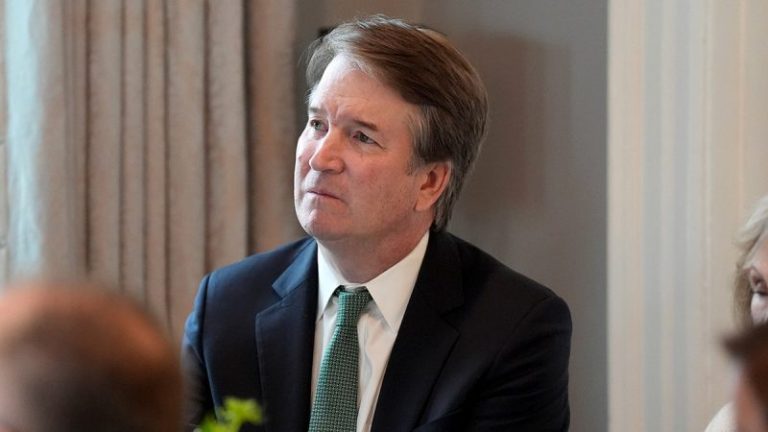
As President Donald Trump has faced an onslaught of legal bids to block his agenda during his second term in office, Trump-nominated Supreme Court Justice Brett Kavanaugh spoke at the U.S. Court of Appeals for the Eighth Circuit judicial conference on Thursday, according to reports.

‘Executive branches of both parties over the last 20 years have been increasingly trying to issue executive orders and regulations that achieve the policy objectives of the president in power,’ Kavanaugh said, according to the New York Times.

‘And I think presidents, whether it’s President Obama – I think the phrase was ‘pen and phone’ – or President Biden or President Trump, have really done more of that, and those get challenged pretty quickly in court,’ he said, according to CNN.

Unlike regular Supreme Court rulings that fully explain the rationale behind the decision, decisions on the high court’s emergency docket may go unexplained.

‘We’ve been doing certainly more written opinions on the interim orders docket than we’ve done in the past,’ Kavanaugh said, according to CNN.

Though he noted that issuing written opinions may pose the ‘risk’ of ‘lock-in effect’ in which that opinion does not ‘reflect the final view,’ reports indicate.

Kavanaugh described the court’s ‘collegiality’ as ‘very strong,’ noting that the nine members on the bench ‘look out for each other’ and consider one another ‘patriots’ and ‘good people,’ according to reports.

Trump nominated Kavanaugh to the Supreme Court during his first term in office. 

He also nominated Amy Coney Barrett and Neil Gorsuch, meaning he chose one third of the current justices.

This post appeared first on FOX NEWS

China is no longer building nuclear weapons solely for deterrence — it’s using them to fuel its ambitions as a dominant power in Asia, seeking to intimidate U.S. allies and undermine American influence across the region, according to a new report. 

The Hudson Institute warns that by the mid-2030s, China is expected to become a nuclear peer of the United States in both quantity and quality, fielding a modern, survivable and diverse arsenal that includes over 1,000 warheads, a fully developed nuclear triad and tactical nuclear capabilities.

However, Beijing’s goal isn’t to win a nuclear war, the report argues. It’s to manipulate and degrade trust in America’s nuclear umbrella, particularly among U.S. allies in East and Southeast Asia. By sowing doubt that Washington would defend them in a crisis, China hopes to pressure countries like Japan, the Philippines and South Korea into strategic passivity, giving Beijing more room to act — including a potential move on Taiwan — without triggering a broader allied response.

‘The purpose of amplifying uncertainty is to manipulate notions of risk to China’s advantage,’ the report states. ‘This is primarily about exacerbating hesitancy among U.S. allies by exploiting persistent fears of abandonment and doubts regarding America’s commitment.’

China’s military strategy blends rapid nuclear modernization with psychological operations and information warfare. The country is investing in advanced technologies such as hypersonic boost-glide vehicles and fractional orbital bombardment systems — space-based platforms that can deliver nuclear strikes from low-Earth orbit with little warning. Its warheads can now be launched from silos, submarines, road-mobile launchers and aircraft.

The report urges the U.S. to ‘abandon the false hope of arms control’ with China and instead embrace a doctrine of strategic ambiguity and instability, one that deters Beijing through strength and unpredictability rather than bilateral disarmament.

President Donald Trump has expressed interest in future arms control talks with both China and Russia, but analysts say Beijing has shown little genuine interest in limiting its nuclear forces.

The Hudson report devotes case studies to three key allies — the Philippines, Japan and South Korea — and how China uses nuclear intimidation differently in each case.

Philippines 

While Manila is more concerned with gray-zone conflicts in the South China Sea, China may increasingly use implied nuclear threats to dissuade it from hosting U.S. missile systems like the Typhon launcher, which can strike deep into Chinese territory. China has already begun deploying messaging via state-linked outlets that hint at targeting Philippine-based assets.

Japan 

Heavily dependent on the U.S. nuclear umbrella but constrained by strong domestic anti-nuclear sentiment, Tokyo faces an information campaign from Beijing designed to shake confidence in U.S. commitments. China applies psychological pressure to prevent Japan from building counterstrike capabilities or assisting in a conflict over Taiwan.

South Korea 

Seoul remains narrowly focused on North Korea’s nuclear threat, not China’s. It has been reluctant to fully align with U.S. efforts to deter Beijing, and it’s unclear whether South Korea would permit U.S. forces to use its bases in the event of a Taiwan contingency. China, the report says, is working to keep Seoul compartmentalized and disengaged from the broader East Asian conflict.

The report outlines four core recommendations: 

  • Abandon arms control illusions: China’s opacity and doctrine of ambiguity make traditional arms control agreements unworkable.
  • Avoid allied nuclearization: U.S. allies like Japan and Australia should resist calls to build their own nuclear arsenals, which could backfire strategically.
  • Double down on conventional deterrence: Strengthen and modernize allied conventional forces to raise the cost of Chinese aggression.
  • Fight fire with fire in the information domain: Expose China’s nuclear coercion publicly and link allied military buildups directly to Beijing’s behavior.

READ THE REPORT BELOW. APP USERS: CLICK HERE

‘Washington and its allies must show that China’s buildup is backfiring — leading not to fear and passivity, but to renewed resolve and regional rearmament,’ the report says.

The report lands ahead of the Pentagon’s forthcoming global force posture review, expected later this year. The Department of Defense is widely expected to announce a shift in forces from Europe to the Indo-Pacific, reflecting the Biden administration’s—and potentially Trump’s — emphasis on great power competition with China.

This post appeared first on FOX NEWS

Salvadorian President Nayib Bukele’s New Ideas Party has paved the way for him to potentially retain power in the Central American nation by overhauling the country’s electoral system.

The new bill extends presidential terms to six years and allows for indefinite presidential re-election.

The country’s presidential terms were initially five years long and immediate re-election was prohibited. However, in 2021, the country’s Supreme Court — packed with justices picked by Bukele’s party — ruled that the president could seek a second term, The Associated Press reported. 

Critics said Bukele’s re-election in 2024 was unconstitutional.

Members of New Ideas and their allies in the Legislative Assembly used their supermajority to pass changes to five articles of the country’s constitution and passed the measure in a 57–3 vote on July 31. According to The Associated Press, New Ideas lawmaker Ana Figueroa’s proposal also included a provision to eliminate the second round of elections in which the top two candidates go head-to-head.

‘This is quite simple, El Salvador: only you will have the power to decide how long you wish to support the work of any public official, including your president,’ Figueroa said, according to Reuters. ‘You have the power to decide how long you support your president and all elected officials.’

Meanwhile, other lawmakers expressed their frustration with the bill, with one lamenting the death of democracy.

Nationalist Republican Alliance legislator Marcela Villatoro declared to her fellow lawmakers that ‘Democracy in El Salvador has died!’

‘You don’t realize what indefinite reelection brings: It brings an accumulation of power and weakens democracy … there’s corruption and clientelism because nepotism grows and halts democracy and political participation,’ Villatoro said, according to The Associated Press.

Bukele, who was first elected in 2019, has become somewhat of a polarizing figure as his crackdown on crime has made him popular with voters, while critics worry that he is trying to consolidate power. While Bukele’s tough-on-crime policies have caused homicides to plummet, human rights groups say that innocent people were caught up in mass arrests.

Human Rights Watch issued a report in July 2024 in which it found that approximately 3,000 children had become victims of the crackdown, which began in 2022. In the report summary, the group tells the story of a 17-year-old girl who was arrested without a warrant and eventually forced to plead guilty to collaborating with the notorious MS-13 gang, something she denied.

Last year, Bukele told Time magazine that he would not seek a third term, though he could change his tune following the constitutional reforms.

This post appeared first on FOX NEWS

President Donald Trump unveiled plans Friday to reposition two nuclear submarines as he and Russia’s former president sparred over Trump’s increased pressure on Moscow to end the war with Ukraine. 

After Trump announced a new deadline for Russia to end the conflict with Ukraine in early August, former Russian President Dmitry Medvedev said on Monday that the announcement is an additional ‘step towards war.’ 

‘Based on the highly provocative statements of the Former President of Russia, Dmitry Medvedev, who is now the Deputy Chairman of the Security Council of the Russian Federation, I have ordered two Nuclear Submarines to be positioned in the appropriate regions, just in case these foolish and inflammatory statements are more than just that,’ Trump said in a post on Truth Social Friday. 

The announcement comes just weeks after Trump praised the contributions of a guided-missile submarine involved in the strikes against Iran, which launched more than two dozen Tomahawk cruise missiles at key Iranian targets, officials said. 

‘By the way, if anyone thinks our ‘hardware’ was great over the weekend, far and away the strongest and best equipment we have, 20 years advanced over the pack, is our Nuclear Submarines,’ Trump said June 23 in a Truth Social post. ‘They are the most powerful and lethal weapons ever built, and just launched the 30 Tomahawks — All 30 hit their mark perfectly. So, in addition to our Great Fighter Pilots, thank you to the Captain and Crew!’

The mission, which targeted Iranian nuclear facilities Fordow, Natanz and Isfahan, also involved more than 125 U.S. aircraft, including B-2 stealth bombers, according to Chairman of the Joint Chiefs of Staff Gen. Dan Caine. 

Caine did not disclose the name of the submarine that was involved in the Iran strikes. However, he said that a ‘guided-missile submarine’ was involved. 

Four of the U.S. Navy’s Ohio-class submarines were converted into guided-missile submarines to accommodate conventional land attacks, as well as Special Operations Forces platforms. These submarines are the Ohio, Florida, Michigan and Georgia, according to the U.S. Navy. 

All U.S. Navy submarines are nuclear-powered, andTrump did not disclose additional details surrounding the submarines that would be repositioned amid increased tension with Russia. It is incredibly rare for defense officials to comment or reveal the locations of submarines, given the highly classified nature of their deployments and movements.  

Trump initially announced on July 14 that he would sign off on ‘severe tariffs’ against Russia if Moscow were to fail to agree to a peace deal within 50 days. However, Trump said Monday that waiting that period of time was pointless as negotiations have continued to drag on for months. 

‘I’m going to make a new deadline, of about 10 — 10 or 12 days from today,’ Trump told reporters in Scotland Monday. ‘There’s no reason for waiting. It was 50 days. I wanted to be generous, but we just don’t see any progress being made.’

In response, Medvedev, now the deputy chairman of the Security Council of Russia, accused Trump of playing the ‘ultimatum game.’ 

‘Trump’s playing the ultimatum game with Russia: 50 days or 10 … He should remember 2 things: 1. Russia isn’t Israel or even Iran. 2. Each new ultimatum is a threat and a step towards war. Not between Russia and Ukraine, but with his own country,’ Medvedev said in a post on X on Monday.

Trump’s new deadline comes amid heightened frustration with Russian President Vladimir Putin amid stalled progress toward peace between Russia and Ukraine, and just days after Russia launched more than 300 drones, four cruise missiles and three ballistic missiles into Ukraine, according to the Ukrainian air force.

This post appeared first on FOX NEWS