
Author

admin

Browsing

By Darren Brady Nelson

One of the underrated, and easily dismissed, stories from the first 100 days of the second Donald J. Trump presidency was in March 2025, when the president said: “We’re actually going to Fort Knox to see if the gold is there, because maybe somebody stole the gold. Tonnes of gold.”

Two developments have happened since. First was his May 2025 executive order “Restoring Gold Standard Science.” Second was his signing the July 2025 GENIUS Act. The former could be a word teaser for “Restoring The Gold Standard.” The latter seems to be a step in that direction.

Source: The White House.

Fort Knox gold

The US Department of the Treasury’s Weekly Release of US Foreign Exchange Reserves shows the levels of various official assets, including gold. It reported gold of 261.499 million fine troy ounces. An estimated 56 percent of that is in Fort Knox, with the remainder in West Point, Denver and New York.

The Federal Reserve Act 1913 still gives the power to the US Federal Reserve: “To deal in gold coin and bullion at home or abroad, to make loans thereon, exchange Federal reserve notes for gold, gold coin, or gold certificates, and to contract for loans of gold coin or bullion (and much more).”

The question of how much gold is in Fort Knox and elsewhere is not only important for the purposes of DOGE, but even more so in the case of a potential return to a gold standard. And such an incredible return is not mere speculation, but is due to some credible public comments.

Source: Visual Capitalist.

Trump gold standard

Private citizen Trump commented, as a presidential candidate, about a possible return to a gold standard in June 2016, when he said: “Bringing back the gold standard would be very hard to do, but, boy, would it be wonderful. We’d have a standard on which to base our money.”

More recently, Steve Bannon stated in December 2023: “Nixon took us off the gold standard … over a weekend … in an emergency executive order. That is going to be reviewed strongly in the second Trump term … getting rid of the Fed, yeah, maybe you start with converting back into gold.”

Economist Judy Shelton has an October 2024 book as a guide: “When the US dollar is backed by gold, America prospers, and so does the rest of the world. But this is no curmudgeonly demand to return to the gold standard of yore; (but) gold for a new international monetary order.”

Some sort of gold standard might dovetail with a new global trading system, as outlined in the “Mar-a-Largo Accord” of November 2024, as well as with the GENIUS Act of July 2025, which: “establishes a regulatory framework for payment stablecoins (must redeem for a fixed value).”

Shadow gold price I

Shadow pricing is a method long used in cost benefit analysis that adjusts prices from, or creates prices for, failed or non-existent markets. The shadow price of gold (SPoG) in August 2018 was defined as: “The linkage between the US monetary base and the implied price of gold.”

The In Gold We Trust (IGWT) annual report from May 2025 uses a similar definition: “The theoretical gold price in the event of full gold backing of the base money supply.” The report adds: “The reciprocal value of the (SPoG) gives the degree of coverage of the monetary base.”

The reciprocal SPoG, based on current market prices, is the “Gold Coverage Ratio” (GCR). The report explains further that: “Currently, the (GCR) in the US is only 14.5%. To put it crudely: Only 14.5 cents of every US dollar currently consists of gold, the remaining 85.5% is air.”

Gold backing of monetary base, in percent, 01/1920 to 03/2025.

Source: Incrementum.

Shadow gold price II

According to IGWT: “In the gold bull market of the 2000s, (GCR) tripled from 10.8% to 29.7%. A comparable (GCR) today would only arise if the gold price were to almost double to over $6,000. The record value of 131% from 1980 would correspond to a gold price of around $30,000.”

IGWT goes beyond just $USD: “The international shadow gold price (ISPoG) shows how high the gold price would have to rise if the money supply (M0 or M2) of the leading currency areas were covered by the central banks’ gold reserves in proportion to their share of global GDP.”

“This view impressively reveals the extent of the monetary expansion: With an — admittedly purely theoretical — 100% coverage of the broad money supply M2, the gold price (per ounce) would be over $231,000; even with a moderate 25% coverage, it would be around $58,000.”

International shadow gold price at different gold coverage levels (log), in USD, 12/2024.

Source: Incrementum.

Shadow gold price III

In May 2024, James Rickards predicted: “My latest forecast is that gold may actually exceed $27,000. I don’t say that to get attention or to shock people. It’s not a guess; it’s the result of rigorous analysis.”

This was based on a similar approach to SPoG and GCR that he called “the implied non-deflationary price of gold under a new gold standard (iPoG).” Rickards calculated a gold price, based on iPoG, of $27,533 per ounce.”

He divided US$7.2 trillion of M1 money supply by 261.5 million of gold troy ounces (or 8,133 metric tonnes) in official US reserves estimated by the World Gold Council. The M1 figure is 40 percent of US$17.9 trillion as: “this percentage was the legal requirement for the US Federal Reserve from 1913 to 1946.”

In summary, the sort of gold prices that might be reached under a return to a gold standard, using the shadow price of gold approach, range from lows of US$6,000 to highs of US$231,000, with US$27,533, US$30,000 and US$58,000 in between.

Whatever the gold price ends up at, it would be a once-in-a-lifetime windfall for those holding gold at that time. After that, gold would cease to be an investment, as it has been since 1971 and 1974. Because gold would be actual money once again, and it would be sound money at that.

About Darren Brady Nelson

Darren Brady Nelson is chief economist with Fisher Liberty Gold and policy advisor to The Heartland Institute. He previously was economic advisor to Australian Senator Malcolm Roberts. He authored the Ten Principles of Regulation and Reform, and the CPI-X approach to budget cuts.

Click here to read Goldenomics 101: Follow the Money.

This post appeared first on investingnews.com

(TheNewswire)

Vancouver, British Columbia, August 8th, 2025 TheNewswire Prismo Metals Inc. (‘ Prismo ‘ or the ‘ Company ‘) (CSE: PRIZ,OTC:PMOMF) (OTCQB: PMOMF) is pleased to announce that further to its news releases dated July 3, 2025, July 18, 2025 and July 31, 2025, the Company has proceeded with an upsized closing of its previously announced non-brokered private placement (the ‘Private Placement’ ) of units of the Company (‘ Units ‘) at an issue price of $0.06 per Unit (the ‘ Third Closing ‘). The closing was increased from 6,000,000 Units to the issuance of 6,425,000 Units for gross proceeds of $385,500.

Each Unit consists of one common share of the Company (a ‘ Share ‘) and one-half of one common share purchase warrant of the Company (each whole warrant, a ‘ Warrant ‘). Each Warrant entitles the holder to purchase one Share for a period of twenty-four (24) months from the date of issue at an exercise price of $0.10.

‘In the past few weeks, we have raised a total of $1,077,500 in gross proceeds reflecting investors’ interest in our recently optioned silver projects in Arizona, the historical high-grade Silver King and Ripsey mines,’ said Alain Lambert, CEO. ‘Exploration at Silver King is currently underway and our Chief Exploration Officer, Dr. Craig Gibson, has put in place a comprehensive first year exploration plan which includes a phase one drill program of a minimum of 1,000 meters.’

Dr. Craig Gibson, Prismo’s Chief Exploration Officer said: ‘The team has arrived on site, and we have begun a detailed mapping and sampling program at both projects at surface exposures and in accessible underground workings. A drill program is planned for Silver King, with about 1,000 metres initially. The Silver King drill program is designed to test the mineralized body at four elevations, as well as lateral to the pipelike body. Dewatering of the Silver King shaft to gain access to the upper levels may also be undertaken as submersible pumps are in place.’

The Company previously announced a first closing of the Private Placement on July 18, 2025 for aggregate gross proceeds of $575,000 and a second closing of the Private Placement on July 31, 2025 for aggregate gross proceeds of $ 117,000 . Due to strong investor demand, the Company has now raised aggregate gross proceeds of $1,077,500. The Company intends to use the aggregate proceeds from the Private Placement for exploration at the Company’s Silver King project as well as for working capital and general corporate purposes. There may be circumstances, however, where for sound business reasons, a reallocation of funds may be necessary.

Prismo also announces that further to its news release dated July 31, 2025, it has settled the debt settlement agreement (the ‘ Agreement ‘) with a creditor of the Company (the ‘ Creditor ‘) pursuant to which the Company issued to the Creditor, and the Creditor accepted, an aggregate of 1,375,000 common shares of the Company (each, a ‘ Settlement Share ‘) at a price of $0.06 per Settlement Share in full and final settlement of accrued and previously outstanding indebtedness owing to the Creditor in the aggregate amount of US $60,000 (CA $82,500) (the ‘ Debt Settlement ‘). The Creditor is one of the original optionors of the Palos Verdes silver project in Mexico, and the Debt Settlement was the final payment owed to the Creditor.

‘The Palos Verdes project remains an important asset for Prismo Metals,’ said Alain Lambert, CEO. ‘We continue to monitor Vizsla Silver’s exploration activities in the Panuco district and how it might impact our exploration plan at Palos Verdes. Mr. Lambert noted: ‘In their July 29 th , 2025 news release , Vizsla Silver stated: Notable targets to be tested in the central, and east area of the district with potential to host similar mineral resources to that outlined in Project #1 in the west include: Jesusita-Palos Verdes is a northeast trending vein target in the east area of the district. Positive drill results and alteration-based interpretations done by Prismo Metals, combined with significant silver anomalies on surface and extensive vein outcrops warrant additional drilling at depth.

The Palos Verdes project is located in the historic Panuco-Copala silver-gold district in southern Sinaloa, Mexico, approximately 65 kilometers NE of Mazatlán, Sinaloa, in the Municipality of Concordia. The Palos Verdes concession (claim) covers 700 meters of strike length of the Palos Verdes vein, a member of the north-easterly trending vein family located in the eastern part of the district outside of the area of modern exploration. The project is surrounded on three sides by Vizsla Silver Corp. (TSE: VZLA).

Shallow drilling (

In connection with the Third Closing, the Company issued an aggregate of 288,900 finder’s warrants (the ‘Finder’s Warrants’ ) and paid finder’s commissions of $17,334.00 to a qualified finder. Each Finder’s Warrant is exercisable for a period of 24 months from the date of issuance to purchase one Share at a price of $0.10.

All securities issued or issuable in connection with the Private Placement and the Debt Settlement are subject to a four-month hold period from the closing date under applicable Canadian securities laws, in addition to such other restrictions as may apply under applicable securities laws of jurisdictions outside Canada.

Multilateral Instrument 61-101

The Company has issued an aggregate of 10,000 Units pursuant to the Third Closing to a ‘related party’ of the Company (the ‘ Interested Party ‘), constituting, to that extent, a ‘related party transaction’ as defined under Multilateral Instrument 61-101 – Protection of Minority Securityholders in Special Transactions (‘ MI 61-101 ‘). The Company is exempt from the requirements to obtain a formal valuation and minority shareholder approval in connection with the participation of the Interested Party in the Third Closing in reliance on sections 5.5(a) and 5.7(1)(a) of MI 61-101, as neither the fair market value of the Third Closing nor the securities issued in connection therewith, in so far as the Third Closing involves the Interested Party, exceeds 25% of the Company’s market capitalization. The Company did not file a material change report more than 21 days before the expected closing of the Third Closing as the details of the Third Closing and the participation therein by the Interested Party therein were not settled until recently and the Company wishes to close on an expedited basis for sound business reasons.

About Prismo Metals Inc.

Prismo (CSE: PRIZ,OTC:PMOMF) is mining exploration company focused on three silver projects (Palos Verdes, Silver King and Ripsey) and a copper project in Arizona (Hot Breccia).

Please follow @PrismoMetals on , , , Instagram , and

Prismo Metals Inc.

1100 – 1111 Melville St., Vancouver, British Columbia V6E 3V6

Phone: (416) 361-0737

Contact:

Alain Lambert, Chief Executive Officer alambert@cpvcgroup.ca

Gordon Aldcorn, President gordon.aldcorn@prismometals.com

Neither the Canadian Securities Exchange nor its Market Regulator (as that term is defined in the policies of the Canadian Securities Exchange) accepts responsibility for the adequacy or accuracy of this release.

Cautionary Note Regarding Forward-Looking Information

This release includes certain statements and information that may constitute forward-looking information within the meaning of applicable Canadian securities laws. Forward-looking statements relate to future events or future performance and reflect the expectations or beliefs of management of the Company regarding future events. Generally, forward-looking statements and information can be identified by the use of forward-looking terminology such as ‘intends’ or ‘anticipates’, or variations of such words and phrases or statements that certain actions, events or results ‘may’, ‘could’, ‘should’, ‘would’ or ‘occur’. This information and these statements, referred to herein as ‘forward‐looking statements’, are not historical facts, are made as of the date of this news release and include without limitation, statements regarding discussions of future plans, estimates and forecasts and statements as to management’s expectations and intentions with respect to, among other things: the intended use of any proceeds raised under the Private Placement.

These forward‐looking statements involve numerous risks and uncertainties and actual results might differ materially from results suggested in any forward-looking statements. These risks and uncertainties include, among other things: the potential inability of the Company to utilize the anticipated proceeds of the Private Placement as anticipated; and other risk factors as detailed  from  time  to  time  and  additional  risks  identified  in  the  Company’s  filings  with  Canadian securities regulators on SEDAR+ in Canada (available at www.sedarplus.ca ).

Although management of the Company has attem pted to identify important factors that could cause actual results to differ materially from those contained in forward-looking statements or forward-looking information, there may be other factors that cause results not to be as anticipated, estimated or intended. There can be no assurance that such statements will prove to be accurate, as actual results and future events could differ materially from those anticipated in such statements. Accordingly, readers should not place undue reliance on forward-looking statements and forward-looking information. Readers are cautioned that reliance on such information may not be appropriate for other purposes. The Company does not undertake to update any forward-looking statement, forward-looking information or financial out-look that are incorporated by reference herein, except in accordance with applicable securities laws. We seek safe harbor.

NOT FOR DISTRIBUTION TO UNITED STATES NEWS WIRE SERVICES
OR FOR DISSEMINATION IN THE UNITED STATES

Copyright (c) 2025 TheNewswire – All rights reserved.

News Provided by TheNewsWire via QuoteMedia

This post appeared first on investingnews.com

Fertilizer prices continued to rise in Q2, driven by supply shortages as well as fallout from US tariffs.

According to data from the World Bank, the average quarterly phosphate price rose to US$673.20 per metric ton (MT) during the April to June period, up from US$600.50 in Q1 and US$536.70 recorded in the second quarter of 2024.

On a monthly basis, the price averaged US$715.40 in June, up from US$582.70 in January.

Potash prices have also gained since the start of the year, with the quarterly average rising to US$359.20 per MT from US$319.20 in Q1. The monthly price posted consistent increases, rising to US$363.13 in June from US$302 in January.

What factors impacted phosphate in Q2?

Phosphate prices have risen over the last several years as China, the world’s largest supplier, continues to impose export restrictions on the amount of fertilizers allowed to leave the country.

Between 2021 and 2024, China’s phosphate exports experienced significant declines, falling from 9 million MT to 6.6 million MT. Then, in December 2024, China halted new export applications for phosphate due to the rising cost of sulfur, which is necessary for separating phosphates from rock.

In an April 22 article, Josh Linville, vice president of fertilizer at StoneX, noted that during the first three months of 2022, China exported 950,000 MT of phosphate, but only 13,000 MT during the same period in 2025.

At the time, Linville suggested that even if there were to be a shift in Chinese policy during the second quarter, it might not lead to an increase in exports due to a lack of inventory in the country.

“It appears that while they have increased their urea export quota, the same is not expected for phosphate. We continue to believe that domestic demand has been raised due to a combination of agriculture and industrial demand spikes.’

India is among the main drivers of agricultural demand, and the country has been working to rebuild its stockpiles of fertilizer since they reached a low of 1.1 million MT in late 2024. With Chinese supply missing from the equation, importers have had to pay premiums to other major producers in Morocco and Saudi Arabia.

The result has led to a 44 percent increase in Indian imports, which are expected to reach 1.09 million MT for July and 2.16 million MT for the April to July period, while also pushing prices for phosphate upward.

Adding to market stressors since the start of the year are tariffs on products entering the US. As Linville pointed out, phosphate production is limited mainly to five countries: China, Morocco, Russia, the US and Saudi Arabia.

The US is not able to meet domestic demand and has been reliant on Saudi Arabia, which was free of tariffs until it came under the umbrella of Trump’s 10 percent baseline tariffs when he announced them on April 1.

However, given the tightness in the phosphate market, suppliers are unlikely to absorb any additional costs.

“Globally, supplies are very tight, and demand continues to be high, so global manufacturers can be picky about where they send their products. Given that they want to make more money, they are likely deciding to send the product to their highest netback location. Saudi Arabia has been heard telling US customers that they have no problem sending products to the US if they pay the tariff rate,” Linville explained. He added that the extra 10 percent on the current phosphate prices is a significant cost, and will ultimately flow down to US farmers.

What factors impacted potash in Q2?

Potash prices have steadily increased since the start of the year, but the market has been relatively quiet.

“Today, potash is seeing a little price support due to perceived tight supplies and large demand,’ said Linville.

Since the start of the year, potash prices have increased by 20 percent, rising to US$363 in June from US$302 in January. On a year-on-year basis, the June price is up 17 percent from the US$310 recorded in 2024. However, prices are far from the all-time high of US$1,200 set in April 2022 as supply lines were disrupted after Russia’s invasion of Ukraine.

With minimal potash production of its own, the US is reliant on imports. Traditionally, those have come from Canada, which is the world’s top supplier of fertilizer, but also to a lesser extent, Russia, which is number two.

While uncertainty remains about whether tariffs will have a direct effect on prices for potash, Linville suggested that there may be some cost increases stemming from this uncertainty.

“To date, Russia has not had a duty or tariff regarding potash, so the product has been allowed to flow freely. Our belief is that Canadian potash has never been subjected to an actual tariff rate given its standing on the North American trade agreements. However, with so much confusion regarding what is real and what is not out there, the fear that it might be included helped to push prices higher almost constantly since the start of 2025,’ he said.

‘Again, those prices make their way to the farm gate.’

New supply set to come online includes BHP’s (ASX:BHP,NYSE:BHP,LSE:BHP) Jansen mine in Saskatchewan. It was originally set to start production in 2026; however, in its Q2 operational review, released on July 18, BHP announced that the project costs had ballooned to the US$7 billion to US$7.4 billion range, up from US$5.7 billion.

The increase has impacted the project’s timeline. Up until the announcement, development was ahead of schedule and was expected to start in 2026, but it has since reverted to the original timeline that will see it begin in 2027.

Additionally, BHP said it was considering pushing the second stage of production back to 2031 while it undergoes a CAPEX review, citing the potential for additional potash supply coming to market in the medium term.

“The comment about the medium-term supply outlook was a rather small and inconspicuous part of the announcement, but I continue to believe it says loads more about the outlook,” Linville said about BHP’s decision to review stage two.

Potash and phosphate price forecast for 2025

The phosphate market is unlikely to change in the near term.

There isn’t much expectation that China will increase supply, and while there are some significant projects in the works, how many will enter the production is yet to be seen as demand continues to increase from the battery sector.

Linville sees a continuation of current trends, noting that the market isn’t in a place to recover quickly:

“A major discussion point has been surrounding demand destruction that is anticipated. The hope is that this will help values to fall. Unfortunately, I think the market continues to underestimate how bad of a shape phosphate is in.’

As for potash, Linville expects the market to maintain stability.

“My longer-term outlook is that potash values will see relatively little price volatility, and that lower prices should become common. However, the stage appears set for 2025. Summer fill programs have been successful. Demand continues to look good. Anything is possible, but it appears price structures for potash are stable to higher,” he said.

Securities Disclosure: I, Dean Belder, hold no direct investment interest in any company mentioned in this article.

This post appeared first on investingnews.com

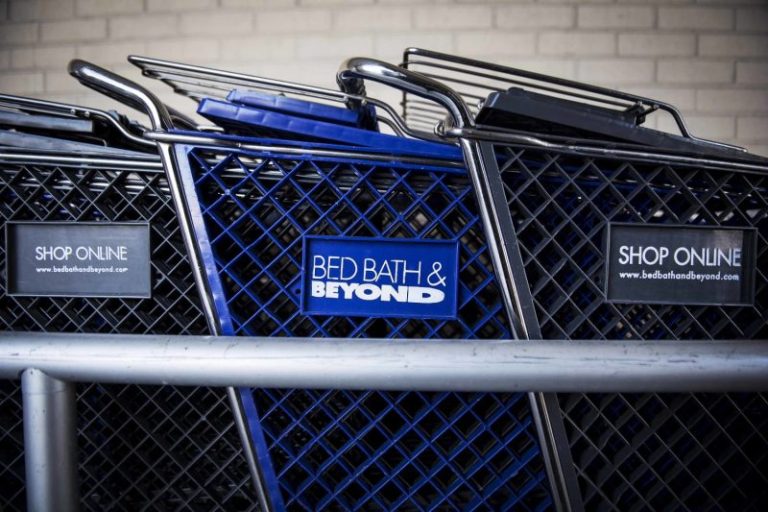
Bed Bath & Beyond is back — kind of.

The bankrupt home goods chain is being resurrected by the owners and licensees of its intellectual property, which opened the first new Bed Bath & Beyond store in Nashville, Tennessee, on Friday with potentially dozens of more to come.

This time around, the store has a new name — Bed Bath & Beyond Home — and marks a “fresh start” for the beloved brand, said Amy Sullivan, the CEO of The Brand House Collective, the store’s operator.

“We’re proud to reintroduce one of retail’s most iconic names with the launch of Bed Bath & Beyond Home, beautifully reimagined for how families gather at home today,” Sullivan said in a news release. “With Bed Bath & Beyond Home we’re delivering on our mission to offer great brands, for any budget, in every room. It’s a powerful addition to our portfolio and a meaningful step forward in our transformation.”

In honor of the brand’s legacy, the new store will accept the brand’s famous 20% coupon, regardless of when it expired.

“We encourage guests to bring in their legacy Bed Bath & Beyond coupons which we will gladly honor,” the company said in a news release. “The coupon we all know and love is back and for those who need one, a fresh version will be waiting at the door.”

Bed Bath and Beyond 2.0 has been several years in the making and involved a rigmarole of corporate acquisitions and rebrandings. When the original Bed Bath and Beyond filed for bankruptcy in April 2023 following a string of corporate missteps, it struggled to find a buyer and ended up liquidating and selling off its business in parts. Overstock.com later bought the brand’s intellectual property, rebranded its business to Beyond Inc. and launched an online-only version of Bed Bath and Beyond.

What followed from there was a dizzying array of corporate deal-making. Ultimately, Beyond took an ownership stake in Kirkland’s Inc., a home decor chain with around 300 stores across the U.S., and gave it the exclusive license to develop and create Bed Bath & Beyond Home stores, as well as Buy Buy Baby stores.

Kirkland’s later rebranded to The Brand House Collective and plans to convert some of its existing Kirkland’s Home stores into more Bed Bath and Beyond shops. Friday’s launch in Nashville is the first of six planned for the market and, pending the results, it plans to convert around 75 additional stores through 2026.

The company said it chose Nashville for the launch because of its proximity to its corporate headquarters, which will allow it to “closely manage every detail and set the standard for future rollouts.”

While the relaunch is exciting for fans of the legacy brand, it comes at a difficult time for the home decor market. In many ways, Bed Bath & Beyond’s bankruptcy was the fault of its management team and execution missteps, but it also faced macro challenges as well, experts said at the time. Competition from players like Amazon, Walmart, Home Goods and Wayfair has made it harder for other brands to capture customer spend, and the overall sector has been soft for several years because of high interest rates and the sluggish housing market.

Even the current leaders in the home decor space have seen soft trends and it’s unlikely that will change until interest rates fall and the housing market picks back up, some analysts have said.

This post appeared first on NBC NEWS

Apple has been sued by a Texas company that accused the iPhone maker of stealing its technology to create its lucrative mobile wallet Apple Pay.

In a complaint made public on Thursday, Fintiv said Apple Pay’s key features were based on technology developed by CorFire, which Fintiv bought in 2014, and now used in hundreds of millions of iPhones, iPads, Apple Watches and MacBooks.

Apple did not immediately respond to requests for comment.

Fintiv, based in Austin, Texas, said Apple held multiple meetings in 2011 and 2012 and entered nondisclosure agreements with CorFire aimed at licensing its mobile wallet technology, to capitalize on fast-growing demand for contactless payments.

Instead, and with the help of CorFire employees it lured away, Apple used the technology and trade secrets to launch Apple Pay in the United States and dozens of other countries, beginning in 2014, the complaint said.

Fintiv also said Apple has led an informal racketeering enterprise by using Apple Pay to generate fees for credit card issuers such as Bank of America, Capital One, Citigroup, JPMorgan Chase and Wells Fargo, and the payment networks American Express, Mastercard and Visa.

“This is a case of corporate theft and racketeering of monumental proportions,” enabling Cupertino, California-based Apple to generate billions of dollars of revenue without paying Fintiv “a single penny,” the complaint said.

In a statement, Fintiv’s lawyer Marc Kasowitz called Apple’s conduct “one of the most egregious examples of corporate malfeasance” he has seen in 45 years of law practice.

The lawsuit in Atlanta federal court seeks compensatory and punitive damages for violations of federal and Georgia trade secrets and anti-racketeering laws, including RICO.

Apple is the only defendant. CorFire was based in Alpharetta, Georgia, an Atlanta suburb.

On August 4, a federal judge in Austin dismissed Fintiv’s related patent infringement lawsuit against Apple, four days after rejecting some of Fintiv’s claims, court records show.

Fintiv agreed to the dismissal, and plans to “appeal on the existing record,” the records show.

This post appeared first on NBC NEWS

Sen. Bill Cassidy, R-La., has condemned the Department of Health and Human Services’ move to shift funding away from mRNA vaccine development, claiming it undermines President Donald Trump’s agenda to make the nation healthy again.

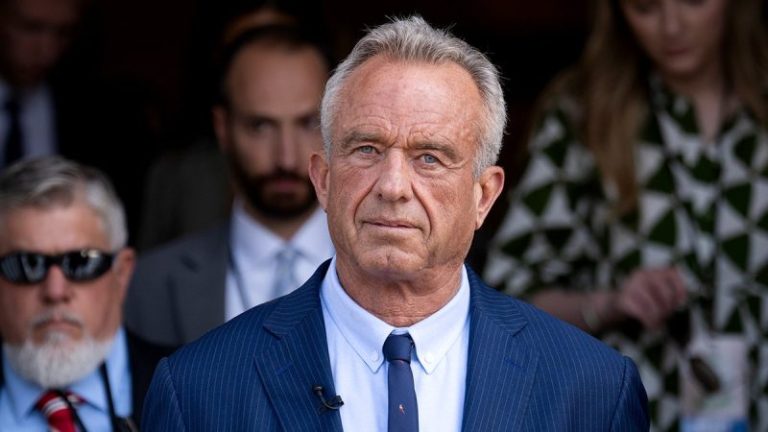
‘We reviewed the science, listened to the experts, and acted,’ Department of Health and Human Services Sec. Robert F. Kennedy Jr. said, according to an HHS press release.

‘BARDA is terminating 22 mRNA vaccine development investments because the data show these vaccines fail to protect effectively against upper respiratory infections like COVID and flu. We’re shifting that funding toward safer, broader vaccine platforms that remain effective even as viruses mutate.’

Cassidy registered his objection to the move.

‘It is unfortunate that the Secretary just canceled a half a billion worth of work, wasting the money which is already invested. He has also conceded to China an important technology needed to combat cancer and infectious disease. President Trump wants to Make America Healthy Again and Make America Great Again. This works against both of President Trump’s goals,’ the lawmaker said in a post on X. 

The HHS stated, ‘While some final-stage contracts (e.g., Arcturus and Amplitude) will be allowed to run their course to preserve prior taxpayer investment, no new mRNA-based projects will be initiated. HHS has also instructed its partner, Global Health Investment Corporation (GHIC), which manages BARDA Ventures, to cease all mRNA-based equity investments. In total, this affects 22 projects worth nearly $500 million. Other uses of mRNA technology within the department are not impacted by this announcement.’

Fox News Digital reached out to Cassidy’s office to request comment from the senator on Thursday, but did not receive a response by the time of publication.

Cassidy, who has served in the upper chamber since 2015, is aiming to get re-elected in 2026, though the incumbent faces competition from other Republicans who have also launched bids for the Senate seat.

In February 2021, Cassidy voted to convict Trump after the House impeachment in the wake of the January 6 episode at the U.S. Capitol. That Senate vote, which occurred after Trump had already left office, ultimately fell short of the threshold necessary to convict.

This post appeared first on FOX NEWS

Veteran Democratic operative Anita Dunn is on Capitol Hill on Thursday for a closed-door interview with House Oversight Committee investigators.

Arriving minutes before 10 a.m. with her counsel in tow, Dunn did not speak to reporters on her way into the door despite a myriad of shouted questions being thrown at her about her upcoming interview.

She is the tenth former White House official to appear before the panel’s lawyers, as Committee Chair James Comer, R-Ky., probes whether former President Joe Biden’s inner circle worked to cover up signs of mental decline in the elderly leader – and whether executive actions signed via autopen were done without his awareness.

Dunn is appearing voluntarily before the committee’s lawyers for a transcribed interview that will likely last several hours into the afternoon.

Three of the 10 former Biden administration officials who have appeared so far have come under subpoena, and each pleaded the Fifth Amendment to avoid answering material questions.

Appearing voluntarily does not give people the ability to invoke the constitutional right against self-incrimination, but it’s possible Dunn will give House investigators little to work with.

The six former White House aides who appeared voluntarily before her have all defended Biden’s mental acuity and ability to serve as president, sources said, even as some, like ex-Chief of Staff Ron Klain, have conceded the 82-year-old’s age has worn on him over time.

Dunn, like those who appeared before her, has known Biden for years.

She’s been a key player in Democratic communications and public relations strategies for decades, and reportedly was a central figure in Biden’s messaging strategy both at the White House and during his short-lived 2024 campaign.

‘She’s running everything,’ one unnamed White House advisor told CNN in June 2023 while discussing Biden’s re-election bid.

A January 2023 report by NBC News described Dunn and her husband, former Obama administration White House counsel Robert Bauer, as central figures in Biden’s orbit. Bauer also reportedly served as Biden’s personal lawyer.

‘If it’s a room of five people, Anita and Bob are two of them,’ an unnamed former White House aide told the outlet.

Dunn was also a central figure amid the fallout after Biden’s disastrous June 2024 debate against then-candidate Donald Trump.

NBC News reported in July 2024 that Biden family members discussed whether he should fire Dunn and Bauer, though White House chief of staff Jeff Zients dismissed the reports as ‘unfounded and insulting rumors’ in a statement to the outlet at the time.

Dunn served as White House communications director under former President Barack Obama, and Biden brought her onto his 2020 campaign to help with his own communications strategy.

She also served as senior advisor to the president for communications in the Biden White House before playing a key role in his 2024 campaign.

Comer wrote in his letter summoning Dunn, ‘You served as former President Biden’s ‘most senior communications adviser.’ Former President Biden confided in you extensively over the past decade.’

‘The Committee seeks to understand your observations of former President Biden’s mental acuity and health as one of his closest advisors. If White House staff carried out a strategy lasting months or even years to hide the chief executive’s condition—or to perform his duties—Congress may need to consider a legislative response,’ Comer wrote.

This post appeared first on FOX NEWS

Veteran Democratic operative Anita Dunn will be on Capitol Hill on Thursday for a closed-door interview with House Oversight Committee investigators.

She is the tenth former White House official to appear before the panel’s lawyers, as Committee Chair James Comer, R-Ky., probes whether former President Joe Biden’s inner circle worked to cover up signs of mental decline in the elderly leader – and whether executive actions signed via autopen were done without his awareness.

Dunn is appearing voluntarily before the committee’s lawyers for a transcribed interview. It’s expected to begin around 10 a.m. and will likely last several hours into the afternoon.

Three of the 10 former Biden administration officials who have appeared so far have come under subpoena, and each pleaded the Fifth Amendment to avoid answering material questions.

Appearing voluntarily does not give people the ability to invoke the constitutional right against self-incrimination, but it’s possible Dunn will give House investigators little to work with.

The six former White House aides who appeared voluntarily before her have all defended Biden’s mental acuity and ability to serve as president, sources said, even as some, like ex-Chief of Staff Ron Klain, have conceded the 82-year-old’s age has worn on him over time.

Dunn, like those who appeared before her, has known Biden for years.

She’s been a key player in Democratic communications and public relations strategies for decades, and reportedly was a central figure in Biden’s messaging strategy both at the White House and during his short-lived 2024 campaign.

‘She’s running everything,’ one unnamed White House advisor told CNN in June 2023 while discussing Biden’s re-election bid.

A January 2023 report by NBC News described Dunn and her husband, former Obama administration White House counsel Robert Bauer, as central figures in Biden’s orbit. Bauer also reportedly served as Biden’s personal lawyer.

‘If it’s a room of five people, Anita and Bob are two of them,’ an unnamed former White House aide told the outlet.

Dunn was also a central figure amid the fallout after Biden’s disastrous June 2024 debate against then-candidate Donald Trump.

NBC News reported in July 2024 that Biden family members discussed whether he should fire Dunn and Bauer, though White House chief of staff Jeff Zients dismissed the reports as ‘unfounded and insulting rumors’ in a statement to the outlet at the time.

Dunn served as White House communications director under former President Barack Obama, and Biden brought her onto his 2020 campaign to help with his own communications strategy.

She also served as senior advisor to the president for communications in the Biden White House before playing a key role in his 2024 campaign.

Comer wrote in his letter summoning Dunn, ‘You served as former President Biden’s ‘most senior communications adviser.’ Former President Biden confided in you extensively over the past decade.’

‘The Committee seeks to understand your observations of former President Biden’s mental acuity and health as one of his closest advisors. If White House staff carried out a strategy lasting months or even years to hide the chief executive’s condition—or to perform his duties—Congress may need to consider a legislative response,’ Comer wrote.

This post appeared first on FOX NEWS

After a report by the Daily Mail cited ‘well-placed’ sources close to Steve Bannon who claim he is gearing up for a 2028 presidential run, the former chief strategist to Donald Trump gave a two-word response. 

‘Trump 2028,’ Bannon said in response to a report he’s seeking political advice for a potential run. The report also claimed Bannon had privately disparaged Vice President JD Vance, considered the top contender to run for the presidency on the GOP’s ticket in 2028.

A source in Bannon’s inner circle told the Daily Mail Bannon has repeatedly said he does not think Vance is tough enough to run in 2028.

However, this week, President Trump said JD Vance would most likely be his successor. He added that Vance and Secretary of State Marco Rubio would make a formidable ticket, noting it was ‘too early’ to discuss the matter. 

‘I thinkJD Vance would be a great nominee if he decides he wants to do that,’ Rubio said during an interview with Lara Trump.

Bannon’s two-word response was published by the conservative news outlet The National Pulse, which blasted the Daily Mail for the ‘thinly sourced story’ and argued the article was an effort to drive division within the Republican Party.

Bannon told Politico in March that ‘all I do is back President Trump and try to move the populist agenda and the America First agenda. I don’t think like a politician.’ Bannon also described the notion of him running for president as ‘absurd.’ 

In April, Bannon told News Nation that there are ‘many different alternatives’ that could permit Trump to sidestep constitutional term limits, noting in another interview the same month that ‘we have a team’ looking at those alternatives. 

Three days after Trump’s 2025 inauguration, Rep. Andy Ogles, R-Tenn., introduced a constitutional amendment that would allow the president to serve a third and final term. 

According to Congress.gov, that proposal was referred to the House Judiciary Committee but has received no further consideration thus far.

The official Trump Store continues selling ‘TRUMP 2028’ merchandise, such as a hat for $50, which has further fueled speculation about a potential Trump run for a third term.

This post appeared first on FOX NEWS

The Trump administration will deliver $93 million in new food aid to 12 African countries and Haiti to fight malnutrition, the State Department has announced.

State Department spokesperson Tommy Pigott said in a Thursday press briefing that the Trump administration will treat nearly one million children suffering from malnutrition through $93 million in ready-use therapeutic food (RUTF). 

The food aid will be distributed in Haiti, Mali, Niger, Ethiopia, Sudan, South Sudan, Nigeria, Madagascar, the Central African Republic, the Democratic Republic of Congo, Djibouti, Kenya and Chad.

Following the announcement, Pigott was asked to square the discrepancy between the Trump administration’s revocation of visas belonging to Haitians in the U.S. and plans to potentially deport them, with the administration’s efforts to try to promote stability in the region through food assistance.  

‘Look, we’ve seen actions from this administration in order to try to encourage stability in Haiti. We’ve seen actions, announcements taken to try to go after those that are leading to instability in Haiti,’ Pigott responded. 

‘For specifics on TPS, I assume that you’re talking about whether they are afraid of [Department of Homeland Security] in terms of those specific decisions. But we have seen actions here from the State Department to try to encourage stability in Haiti.’

The announcement about new foreign nutrition aid comes after the Trump administration gutted billions from the government’s spending on foreign aid. As part of the reforms, the U.S. Agency for International Development (USAID), the primary government agency tasked with disbursing foreign aid, was folded into the State Department.

The $93 million in new food assistance will be utilized by the United Nations Children’s Fund (UNICEF) and will run until June, according to Semafor, which spoke to a State Department official familiar with the new food aid disbursement. 

In addition to providing ready-to-eat food, the new assistance, which will all be American-made, according to the State Department, will also be used to help produce or grow more ready-to-eat food, Semafor reported.  

This post appeared first on FOX NEWS