
Author

admin

Browsing

Lithium, a naturally occurring trace element in the brain, may be able to unlock a key medical mystery: why some people develop Alzheimer’s disease and others don’t, despite similar brain changes.

In a recently published study, scientists at Harvard Medical School state that lithium not only exists in the human brain at biologically meaningful levels, but also appears to protect against neurodegeneration.

Additionally, their work shows that lithium supports the function of all major brain cell types.

The decade-long study drew on mouse experiments and analyses of human brain and blood samples across the spectrum of cognitive health. The Harvard team discovered that as amyloid beta, the sticky protein associated with Alzheimer’s, begins to accumulate, it binds to lithium and depletes its availability in the brain. This drop in lithium impairs neurons, glial cells and other brain structures, accelerating memory loss and disease progression.

“The idea that lithium deficiency could be a cause of Alzheimer’s disease is new and suggests a different therapeutic approach,” said Bruce Yankner, who is the senior author of the study.

Yankner, a professor of genetics and neurology at Harvard Medical School who in the 1990s was the first to show that amyloid beta is toxic to nerve cells, said the new findings open the door to treatments that address the disease in its entirety, rather than targeting single features like amyloid plaques or tau tangles.

To explore this possibility, researchers screened for lithium compounds that could evade capture by amyloid beta.

They identified lithium orotate as the most promising candidate. In mice, the compound reversed Alzheimer’s-like brain changes, prevented cell damage and restored memory, even in animals with advanced disease.

Crucially, the effective dose was about one-thousandth of that used in psychiatric treatments, avoiding the toxicity risk that has hampered lithium’s clinical use in older patients.

“You have to be careful about extrapolating from mouse models, and you never know until you try it in a controlled human clinical trial,” Yankner cautioned. “But so far the results are very encouraging.”

The path to these findings began with access to an unusually rich source of brain tissue.

Working with the Rush Memory and Aging Project in Chicago, the team examined postmortem samples from thousands of donors, from cognitively healthy individuals to those with mild cognitive impairment and full-blown Alzheimer’s.

Using advanced mass spectrometry, they measured trace levels of about 30 metals. Lithium stood out as the only one whose levels dropped sharply at the earliest stages of memory loss.

The pattern matched earlier population studies linking higher environmental lithium levels, including in drinking water, to lower dementia rates. But unlike those correlations, the Harvard team directly measured brain lithium and established a normal range for healthy individuals who had never taken lithium as medication.

“Lithium turns out to be like other nutrients we get from the environment, such as iron and vitamin C,” Yankner said. “It’s the first time anyone’s shown that lithium exists at a natural level that’s biologically meaningful without giving it as a drug.”

To test whether this deficiency was more than an association, the researchers fed healthy mice a lithium-restricted diet, lowering brain lithium to levels seen in Alzheimer’s patients.

The animals developed brain inflammation, lost connections between neurons and showed cognitive decline; however, replenishing them with lithium orotate reversed these changes. What’s more, mice given the compound from early adulthood were protected from developing Alzheimer’s-like symptoms altogether.

The findings raise several possibilities. Measuring lithium levels in blood could become a tool for early screening, identifying people at risk before symptoms emerge. Furthermore, amyloid-evading lithium compounds could be tested as preventive or therapeutic agents, potentially altering the disease course more fundamentally than existing drugs.

For now, researchers stress that no one should self-medicate with lithium supplements.

The team emphasized that the safety and efficacy of lithium orotate in humans remain unproven, and clinical trials will be needed to determine whether the dramatic benefits seen in mice translate to people.

Securities Disclosure: I, Giann Liguid, hold no direct investment interest in any company mentioned in this article.

This post appeared first on investingnews.com

Disney’s ESPN and Fox Corp. are teaming up to offer their upcoming direct-to-consumer streaming services as a bundle, the companies said Monday.

The move comes as media companies look to nab more consumers for their streaming alternatives, and draw them in with sports, in particular.

Last week, both companies announced additional details about the new streaming options. ESPN’s streaming service — which has the same name as the TV network — and Fox’s Fox One will each launch on Aug. 21, ahead of the college football and NFL seasons.

The bundled apps, however, will be available beginning Oct. 2 for $39.99 per month. Separately, ESPN and Fox One will cost $29.99 and $19.99 a month, respectively.

While the bundle will offer sports fans a bigger offering at a discounted rate, the streaming services are not exactly the same.

ESPN’s flagship service will be an all-in-one app that includes all of its live sports and programming from its TV networks, including ESPN2 and the SEC Network, as well as ESPN on Disney-owned ABC. The app will also have fantasy products, new betting tie-ins, studio programming and documentaries.

ESPN will also offer its app as a bundle with Disney’s other streaming services, Disney+ and Hulu, for $35.99 a month. That Disney bundle will cost a discounted $29.99 a month for the first 12 months — the same price as the stand-alone app.

Last week, ESPN further beefed up the content on its streaming app when it inked a deal with the WWE for the U.S. rights to the wrestling league’s biggest live events, including WrestleMania, the Royal Rumble and SummerSlam, beginning in 2026. The sports media giant also reached an agreement with the NFL that will see ESPN acquire the NFL Network and other media assets from the league.

The Fox One service, however, will be a bit different. Fox had been on the sidelines of direct-to-consumer streaming for years after its competitors launched their platforms. Just this year, it said it would offer all of its content — including news and entertainment — from its broadcast and pay TV networks in a streaming offering. Fox One won’t have any exclusive or original content.

Fox’s move into the direct-to-consumer streaming game — outside of its Fox Nation app and the free, ad-supported streamer Tubi — came after it abandoned its efforts to launch Venu, a joint sports streaming venture with Disney and Warner Bros. Discovery.

Both Fox CEO Lachlan Murdoch and Disney CEO Bob Iger said during separate earnings calls last week that they were exploring bundling options with other services. Since Fox announced the Fox One app, Murdoch has said the company would lean into bundles with other streaming services.

“Announcing ESPN as our first bundle partner is evidence of our desire to deliver the best possible value and viewing experience to our shared customers,” said Tony Billetter, SVP of strategy and business development for FOX’s direct to consumer segment, in a release on Monday.

This post appeared first on NBC NEWS

Nvidia and AMD have agreed to share 15% of their revenue from sales to China with the U.S. government, the White House confirmed Monday, sparking debate about whether the move could affect the chip giants’ business and whether Washington might seek similar deals.

In exchange for the revenue cut, the two semiconductor companies will receive export licenses to sell Nvidia’s H20 and AMD’s MI308 chips in China, according to the Financial Times.

“We follow rules the U.S. government sets for our participation in worldwide markets. While we haven’t shipped H20 to China for months, we hope export control rules will let America compete in China and worldwide,” Nvidia said in a statement to NBC News. “America cannot repeat 5G and lose telecommunication leadership. America’s AI tech stack can be the world’s standard if we race.”

AMD said in a statement that its initial license applications to export MI308 chips to China have been approved.

The arrangement crafted by President Donald Trump’s administration is “unusual,” analysts told CNBC, but underscores his transactional nature. Meanwhile, investors see the move as broadly positive for both Nvidia and AMD, which once more secure access to the Chinese market.

Nvidia’s H20 is a chip that has been specifically created to meet export requirements to China. It was previously banned under export curbs, but the company last month said it expected to receive licenses to send the product to China.

Also in July, AMD said it would resume exports of its MI308 chips.

At the time, there was no suggestion that the resumption of sales to China would come with conditions or any kind of revenue forfeiture, and the step was celebrated by markets because of the billions of dollars worth of potential sales to China that were back on the table.

On Monday, Nvidia shares rose modestly, while AMD’s stock was up more than 2%, highlighting how investors believe the latest development is not a major negative for the companies.

“From an investor perspective, it’s still a net positive, 85% of the revenue is better than zero,” Ben Barringer, global technology analyst at Quilter Cheviot, told CNBC.

“The question will be whether Nvidia and AMD adjust their prices by 15% to account for the levy, but ultimately it’s better that they can sell into the market rather than hand the market over entirely to Huawei.”

Huawei is Nvidia and AMD’s closest Chinese rival.

Uncertainty, nevertheless, still looms for both U.S. companies over the longer term.

“In the short term, the deal gives both companies some certainties for their exports to China,’ George Chen, partner and co-chair of the digital practice at The Asia Group, told CNBC. ‘For the long term, we don’t know if the U.S. government may want to take a bigger cut from their China business especially if their sales to China keep growing.’

Multiple analysts told CNBC that the deal is “unusual,” but almost par for the course for Trump.

“It’s a good development, albeit a strange one, and feels like the sort of arrangement you might expect from President Trump, who is a deal-maker at heart. He’s willing to yield, but only if he gets something in return, and this certainly sets an unusual precedent,” Barringer said.

Neil Shah, partner at Counterpoint Research, said the revenue cut is equivalent to an “indirect tariff at source.”

Daniel Newman, CEO of The Futurum Group, also posted Sunday on X that the move is a “sort of ‘tax’ for doing business in China.”

But such deals are unlikely to be cut for other companies.

“I don’t anticipate it extending to other sectors that are just as important to the U.S. economy like software and services,” Nick Patience, practice lead for AI at The Futurum Group, told CNBC.

The U.S. sees semiconductors as a strategic technology, given they underpin so many other tools like artificial intelligence, consumer electronics and even military applications. Washington has therefore put chips under an export control regime unlike that of any other product.

“Semiconductor is a very unique business and the pay-to-play tactic may work for Nvidia and AMD because it’s very much about getting export approval from the U.S. gov,” the Asia Group’s Chen said.

“Other business like Apple and Meta can be more complicated when it comes to their business models and services for China.”

Semiconductors have become a highly sensitive geopolitical topic. Over the last two weeks, China has raised concerns about the security of Nvidia’s chips.

Late last month, Chinese regulators asked Nvidia to “clarify” reports about potential security vulnerabilities and “backdoors.” Nvidia rejected the possibility that its chips have any “backdoors” that would allow anyone to access or control them. On Sunday, Nvidia again denied that its H20 semiconductors have backdoors after accusations from a social media account affiliated with Chinese state media.

China’s state-run newspaper Global Times slammed Washington’s tactics, citing an expert.

“This approach means that the US government has repudiated its original security justification to pressure US chip makers to secure export licenses to China through economic leverage,” the Global Times article said.

The Chinese government is yet to comment on the reported revenue agreement.

Trump’s deal with Nvidia and AMD will likely stir mixed feelings in China. On the one hand, China will be unhappy with the arrangement. On the other hand, Chinese firms will likely want to get their hands on these chips to continue to advance their own AI capabilities.

“For China, it is a conundrum as they need those chips to advance their AI ambitions but also the fee to the US government could make it costlier and there is a doubt of US ‘backdoors’ considering US has agreed for chipmakers to supply,” Counterpoint Research’s Shah said.

— CNBC’s Erin Doherty contributed to this report.

This post appeared first on NBC NEWS

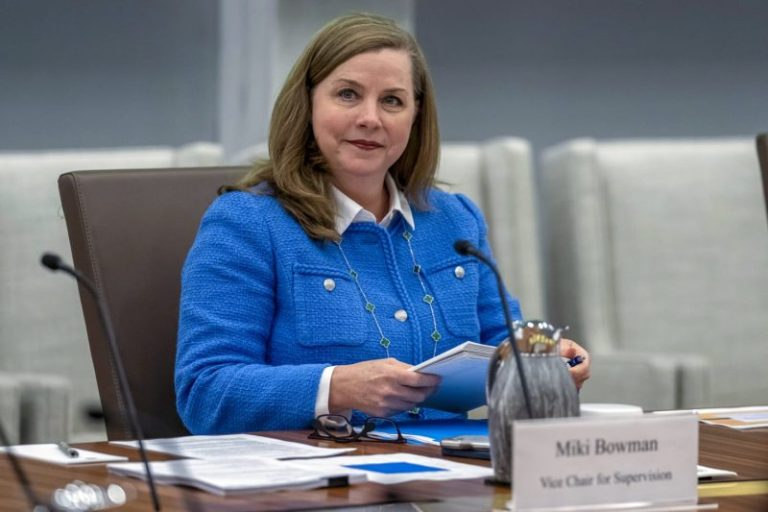
NEW YORK — A top official at the Federal Reserve said Saturday that this month’s stunning, weaker-than-expected report on the U.S. job market is strengthening her belief that interest rates should be lower.

Michelle Bowman was one of two Fed officials who voted a week and a half ago in favor of cutting interest rates. Such a move could help boost the economy by making it cheaper for people to borrow money to buy a house or a car, but it could also threaten to push inflation higher.

Bowman and a fellow dissenter lost out after nine other Fed officials voted to keep interest rates steady, as the Fed has been doing all year. The Fed’s chair, Jerome Powell, has been adamant that he wants to wait for more data about how President Donald Trump’s tariffs are affecting inflation before the Fed makes its next move.

At a speech during a bankers’ conference in Colorado on Saturday, Bowman said that “the latest labor market data reinforce my view” that the Fed should cut interest rates three times this year. The Fed has only three meetings left on the schedule in 2025.

The jobs report that arrived last week, only a couple of days after the Fed voted on interest rates, showed that employers hired far fewer workers last month than economists expected. It also said that hiring in prior months was much lower than initially thought.

On inflation, meanwhile, Bowman said she is getting more confident that Trump’s tariffs “will not present a persistent shock to inflation” and sees it moving closer to the Fed’s 2% target. Inflation has come down substantially since hitting a peak above 9% after the pandemic, but it has been stubbornly remaining above 2%.

The Fed’s job is to keep the job market strong, while keeping a lid on inflation. Its challenge is that it has one main tool to affect both those areas, and helping one by moving interest rates up or down often means hurting the other.

A fear is that Trump’s tariffs could box in the Federal Reserve by sticking the economy in a worst-case scenario called “stagflation,” where the economy stagnates but inflation is high. The Fed has no good tool to fix that, and it would likely have to prioritize either the job market or inflation before helping the other.

On Wall Street, expectations are that the Fed will have to cut interest rates at its next meeting in September after the U.S. jobs report came in so much below economists’ expectations.

Trump has been calling angrily for lower interest rates, often personally insulting Powell while doing so. He has the opportunity to add another person to the Fed’s board of governors after an appointee of former President Joe Biden stepped down recently.

This post appeared first on NBC NEWS

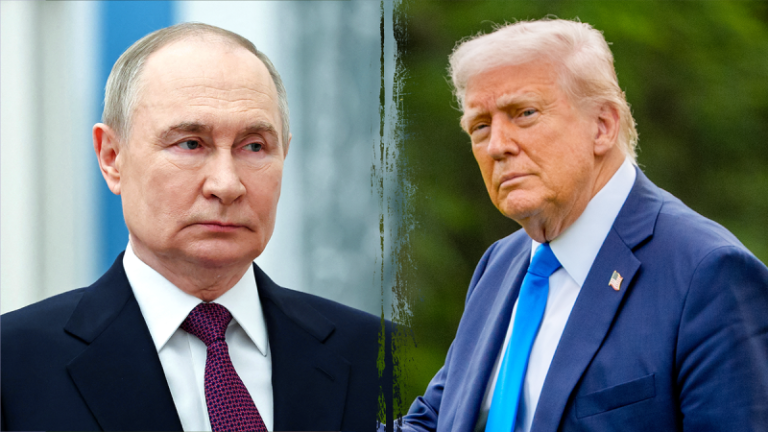
A senior member of Russian President Vladimir Putin’s inner circle warned that multiple countries are mounting ‘titanic efforts’ to undermine the upcoming summit between the Russian leader and U.S. President Donald Trump.

The two leaders are scheduled to meet in Alaska on Aug. 15, though Trump’s announcement, made via a Truth Social post on Friday, offered few additional details about the summit. It is also unclear if Ukrainian President Volodymyr Zelenskyy will be invited to join the talks as the Kremlin’s unprovoked war stretches into its fourth year. 

‘Undoubtedly, a number of countries interested in continuing the conflict will make titanic efforts to disrupt the planned meeting between President Putin and President Trump,’ wrote Russia’s investment envoy, Kirill Dmitriev, in a Telegram post on Saturday, referencing the Kremlin’s ongoing war in Ukraine.

While Dmitriev did not name specific countries, he warned that critics of the upcoming talks could seek to sabotage the summit through diplomatic maneuvers or media-driven provocations. Several NATO countries in Europe have been openly skeptical of any deal that rewards Russian aggression in the three-year-old war.

Dmitriev, who met with Trump administration officials in Washington in April, has been dubbed Putin’s ‘shadow foreign minister’ for his behind-the-scenes role in shaping Russia’s global diplomacy.

 As head of the Kremlin’s sovereign wealth fund and a recently appointed special envoy, he has often acted as an informal bridge between Moscow and Washington.

Meanwhile, the Kremlin said in a statement on Saturday that Trump and Putin are expected to ‘focus on discussing options for achieving a long-term peaceful resolution to the Ukrainian crisis.’

‘This will evidently be a challenging process, but we will engage in it actively and energetically,’ the statement added.

Trump has previously said that Putin and Zelenskyy were close to a ceasefire deal but suggested that Kyiv would have to concede significant territory, an outcome that Ukrainians and many European allies oppose. 

This post appeared first on FOX NEWS

Senate Republicans left Washington this week to sell President Donald Trump’s ‘big, beautiful bill,’ but the road to creating and passing the legislation began just over a year and a half ago. 

Trump’s $3.3 trillion megabill, crammed with his legislative priorities on border security, defense and energy, was a product months in the making. And it was the marquee policy in the bill, which was to extend or make permanent many of the 2017 Tax Cuts and Jobs Act, that was the driving force behind Republicans’ desire to pass it.

But Senate Republicans have had little time to rest on their laurels and celebrate the bill’s passage, spending the month since Trump signed it advancing a $9 billion clawback package and trying to ram through Senate Democrats’ blockade of the president’s nominees.

The journey to pass the bill began well before Republicans had a trifecta in Washington in early 2024, when then-Senate Republican Conference Chair John Barrasso, R-Wyo., hosted a policy retreat with Senate Republicans to hash out what the GOP’s agenda could look like should the win out in November.

And months later, Trump visited with Senate Republicans to discuss the strategy they had been working on behind-the-scenes.

‘With President Trump in the White House, we discussed how Republicans will get America back on track,’ Barrasso said at the time. ‘That starts with helping families escape the pain of Democrat high prices, unleashing American energy, stopping Democrat tax increases, and securing the Southern Border. Republicans are united.’

The real, nitty-gritty work began in January where concepts were taken and fleshed out into legislation.

Senate Majority Leader John Thune, R-S.D., opted to leapfrog the House and move forward with the Senate’s own budget framework, which initially divided the ‘big, beautiful bill’ into two chunks. That added pressure on Republicans in the lower chamber to coalesce behind a plan of their own.

For much of the earlier part of this year, however, the Senate was waiting on the House to fine-tune and pass their own version of the bill. Still, Thune and his leadership team, including Sen. Markwayne Mullin, R-Okla., worked to get a product from one side of the building to the other that the Senate GOP could work with.

And when the bill made its way to the upper chamber in early June, the pressure was on to deliver a finished product to Trump by July 4, an artificial deadline used to help corral lawmakers into finishing work on the bill.

One of the major disagreements in the upper chamber before the bill ever hit the floor was over the nature of cuts to Medicaid, particularly aimed at the provider tax rate. The issue was eventually smoothed over through the creation of a $50 billion rural hospital fund, but lawmakers who sounded the alarm against it vowed to ensure that the changes to the provider would never take effect.

‘I think it was a huge mistake,’ Sen. Josh Hawley, R-Mo., said at the time. ‘I think this has been an unhappy episode here in Congress, this effort to cut Medicaid.’ 

‘And I think, frankly, my party needs to do some soul-searching,’ he continued. ‘If you want to be a working class party, you’ve got to get delivered for working class people. You cannot take away health care from working people.’

And when the bill did finally hit the floor for what would evolve into a multi-day affair of passing through procedural hurdles, Senate Minority Leader Chuck Schumer, D-N.Y., forcing the reading of the entire bill and a marathon vote-a-rama, Senate Republicans were still not entirely on board.

At first, a cohort of fiscal hawks led by Sen. Ron Johnson, R-Wis., and Sen. Rick Scott, R-Fla., appeared to not support the package — they wanted even deeper cuts to Medicaid by tweaking the percentage that the federal government pays for healthcare in states that opted into Obamacare, which they argued would have saved billions extra.

They were offered an amendment that eventually never came to the floor, but was enough for them to back down from tanking the bill. And their resistance began in the first of a handful of huddles inside Thune’s office outside the Senate floor.

Sen. Cynthia Lummis, R-Wyo., joined them for the closed-door conversations, and told Fox News Digital that while her vote was not contingent on getting the change added, she wanted to make the case for why it should be.

‘It saved a lot of money,’ she said. ‘It saved a lot of money, and so I was anxious to see us use the opportunity, since we were able to open up mandatory spending, use the opportunity to really save some money.’

And later on, in the wee hours of the night, Republicans were bouncing from Thune’s office to the Senate floor, hashing out deals as they went to get Sen. Lisa Murkowski, R-Alaska, to support the bill, knowing that Sens. Susan Collins, R-Maine, and Thom Tillis, R-N.C., could vote against it.

‘Sometimes it’s got to be put on a clock, because at some point the argument has to come to an end,’ Mullin told Fox News Digital. ‘And that’s why we had to do some of it on the floor. We had to, we had to force the hand.’

And in the end, only three Republicans, Sens. Rand Paul of Kentucky, Collins and Tillis voted against the bill. From there it went to the House, where Republicans in the lower chamber had their own dramatic rally to pass the legislative behemoth.

And now, as Republicans scatter to their home states to sell the bill to their constituents, Tillis said that the ‘foundational’ piece of information that lawmakers can share is that they averted a nationwide tax hike.

‘The shame of the Medicaid provision is that the vast majority of the bill is supported,’ he told Fox News Digital. ‘I think we have to remind them the problem with the tax bill is they’re not going to see a cut, but if we hadn’t done it, they would have seen a historic increase.’

‘So we need to remind them of what we’re doing is continuing what we started, and the economy that we created, it was able to withstand COVID,’ he continued. ‘And I firmly believe if we hadn’t passed it. We’d have been in a different posture.’

This post appeared first on FOX NEWS

Senate Republicans faced a choice recently: Remain in session and confirm more of President Trump’s nominees, or finally abandon Washington for the vaunted August recess.

Senators hung around – a little while – knocking out some of the President’s nominees for administration positions. But not all. That drew the ire of some conservatives, Trump loyalists and President Donald Trump himself.

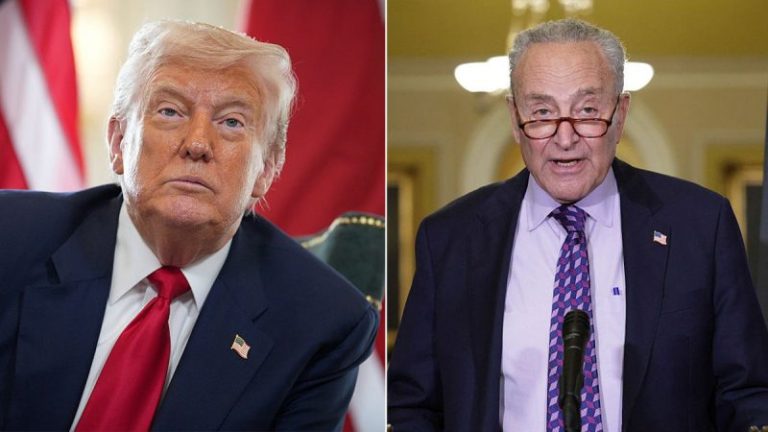
Trump seethed at Senate Minority Leader Chuck Schumer, D-N.Y., for requiring the Senate to run lengthy parliamentary traps and incinerate valuable floor time to confirm even non-controversial nominees. The President finally unloaded on the New York Democrat in a digital coup de grace, telling him to ‘GO TO HELL!’

It’s notable that Trump has not yet met with Schumer or House Minority Leader Hakeem Jeffries, D-N.Y., during his second term. But then again, this is a two-way street. And Democrats remember multiple tumultuous meetings with Mr. Trump during the last time he was in office. It culminated in verbal grappling between the President and former House Speaker Nancy Pelosi, D-Calif, and ended with Democrats abandoning the meeting after only a few moments.

So, it’s far from certain any such meeting would yield anything remotely productive.

But back to the ‘August recess.’

First, it’s important to establish that members of the House and Senate are not on ‘summer vacation.’ Sure, there are always some breaks to visit with family and friends. Lawmakers are people, too. But truly, this is not a ‘break.’ Lawmakers are always ‘on.’ Not everything they do is centered around Washington. Any congressman or senator worth their salt will tell you that spending time back in their home states or districts is just as important – if not more so – than what goes down on Capitol Hill. Meeting with constituents. Visiting businesses. Conducting town hall meetings. Stopping by local coffee bars. Breaking bread at diners. Chatting up the local press corps. 

Members also use this longer respite for political travel and fact-finding missions overseas. These ‘CODELS’ – short for ‘Congressional Delegation’ – are a critical function for lawmakers to build bridges with foreign leaders and make their marks on how the U.S. approaches the rest of the globe. House Speaker Mike Johnson, R-La., and former House Majority Leader Steny Hoyer, D-Md., have recently led groups on trips to Israel. At least one other major trip is booked for later this month.

So, the ‘August recess’ is not inherently a ‘bad’ thing. It’s an essential part of the job and probably one of the biggest misnomers in American politics. 

Still, many Americans simply dismiss August as a ‘vacation’ for House members and senators, and it is a challenging optic for Congress.

Which brings us back to the tension between staying in session to get ‘something’ done and returning home.

It’s clear the Senate could have stayed in session to plow through more of President Trump’s nominees. Schumer and other Democrats simply weren’t going to relent and allow Republicans to confirm a slate of nominees ‘en bloc.’ That’s where the Senate greenlights a large slate of nominees all at once and approves them either by unanimous consent or via voice vote. The Senate confirms the nominees all at once. The House certainly could have stayed in session to hammer out a few spending bills ahead of the deadline to fund the government by October 1.

But here’s a stark reality – especially for the Senate:

Lawmakers and staff desperately needed a break.

Period. Full stop.

Since May, the Senate in particular has conducted multiple overnight, round-the-clock and weekend sessions. Not just a few. The Senate voted deep into the night or overnight on the Big, Beautiful Bill. Then the Senate was back for late-night sessions confirming nominees. 

Yes. This is the people’s business. But the floor staff and support teams were exhausted. Senate leaders were mindful of that. And that’s to say nothing of the lawmakers themselves.

It’s anecdotal, but lawmakers probably needed a break from one another, too. That makes them happier – and probably more productive when they return to Washington. 

But this still doesn’t solve the political dilemma facing Republican senators with a substantial core of their party demanding they remain moored in Washington to grind out nominees.

And it may not satisfy President Trump, either.

There’s lots of Senate talk now about ‘changing the rules’ to accelerate the confirmation of nominees. 

One thing is for sure: the Senate won’t change the ‘rules’ to expedite the confirmation process. The Senate boasts 44 standing rules. It takes 67 votes to break a filibuster on an actual rules change. But what Senate Majority Leader John Thune, R-S.D., could do is back the Senate into a special parliamentary posture where he can initiate a new ‘precedent’ to confirm different types of nominees. That’s a maneuver that late Senate Majority Leader Harry Reid, D-Nev., executed to confirm some of former President Obama’s nominees. The same with former Senate Majority Leader Mitch McConnell, R-Ky., to confirm Supreme Court nominees.

‘New precedents’ in the Senate require some complicated parliamentary wrangling. But only a simple majority is necessary to make good on this gambit for nominees. So, it’s easier and much more plausible than ‘changing the rules.’

To the lay person, a new ‘precedent’ doesn’t sound important. But there’s a reason why the Senate only has 44 standing rules and a voluminous book of precedents. You can accomplish a lot in the Senate if you’re able to concoct a new precedent.

And note that it’s not just Republicans who want to change the way the Senate does things for some lower-tier, non-controversial nominees. Some Senate Democrats have expressed interest in changes, too.

There are only so many minutes and so many hours. Time is just as valuable to Democrats as it is to Republicans.

Everyone on Capitol Hill knows that more long nights and overnight sessions await lawmakers in September and the fall as the Senate attempts to confirm additional nominees.

That’s to say nothing of avoiding a government shutdown in October.

This is why Senate Republicans elected to stick around for a bit recently – and then call it a day. Or a month.

After all, there is only so much time available in August.

This post appeared first on FOX NEWS

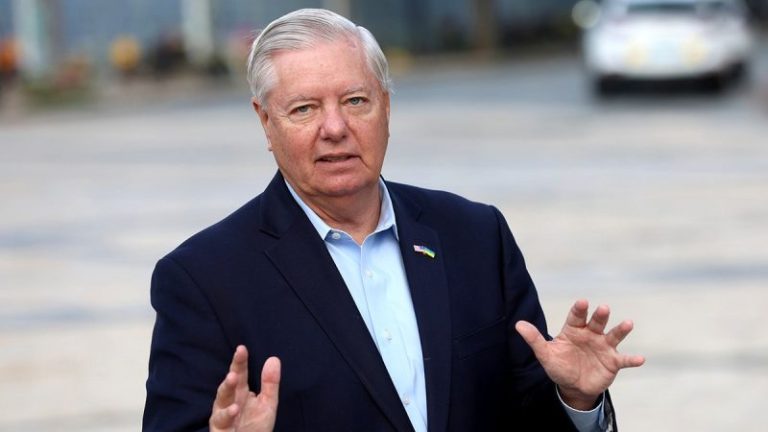
President Donald Trump recently spoke to the South Carolina Republican Party’s Silver Elephant Gala through a phone that Sen. Lindsey Graham held up to a microphone.

Trump, who endorsed Graham for re-election earlier this year, continued expressing his support for the senator while speaking on the phone.

Trump said the senator has his ‘full endorsement,’ calling him a ‘great guy,’ saying that Graham has always been there for him when he needed him and he ‘won’t forget it.’

‘Thank you for your surprise call, Mr. President!’ Graham said in a post on X that also featured footage of Trump’s remarks about him. 

‘With your support, I’ll keep delivering the America First agenda to the great people of South Carolina. I’m glad to have been part of the most awesome six months in modern history led by President @realDonaldTrump.’

Graham, who has served in the Senate since 2003, is facing Republican primary challengers.

Paul Dans, the former director of the 2025 Presidential Transition Project at the Heritage Foundation and who is one of Graham’s challengers, attended the event where Trump spoke by phone.

‘Lindsey Graham’s terrified—his Senate seat’s at risk against me, his toughest challenger yet. After 32 years of broken term-limit promises, he’s done. Clinging to President Trump won’t save him from SC’s America First Patriots who see his grift. #LindseyPanic #PrezTrumpPlsHelpMe,’ Dans wrote in a post on X.

Graham will be up for re-election in 2026.

This post appeared first on FOX NEWS

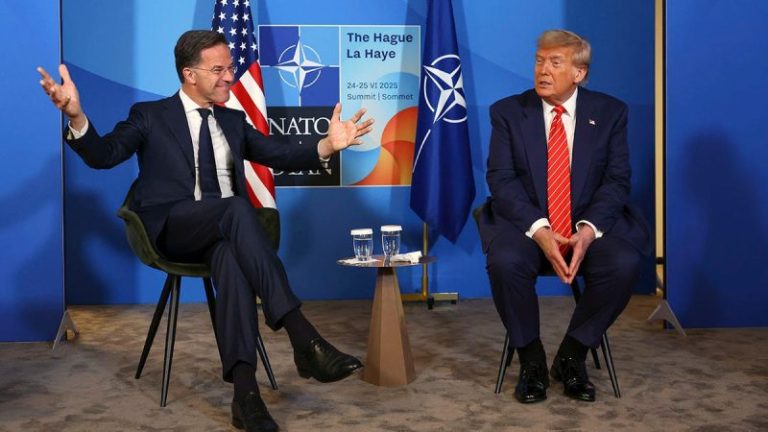
President Donald Trump will use the upcoming summit with Russian President Vladimir Putin to test how serious Putin is about ending the war with Ukraine, NATO Secretary General Mark Rutte said Sunday.

Rutte told ABC’s ‘This Week’ that the meeting comes as Trump continues to put pressure on Putin, noting the recent secondary sanctions on countries like India, which purchased Russian oil, and delivering lethal weapons to Ukraine.

‘Next Friday will be important because it will be about testing Putin, how serious he is on bringing this terrible war to an end,’ Rutte said.

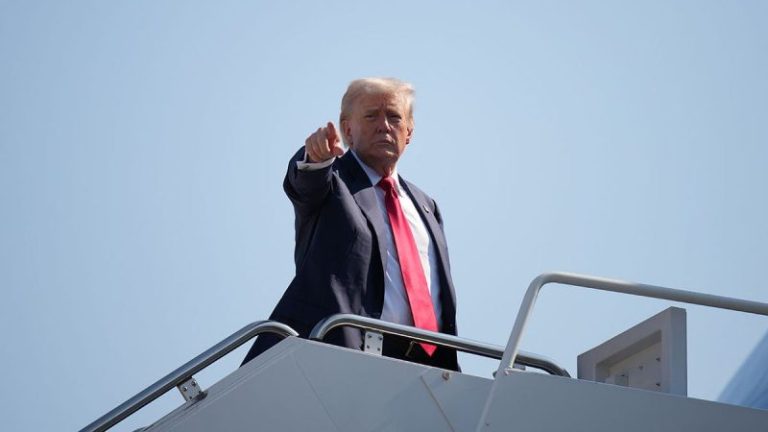
Trump announced the first in-person meeting with Putin since Moscow launched its deadly invasion of Ukraine in 2022 in a Truth Social post on Saturday. The leaders are expected to meet in Alaska on Friday, Aug. 15.

In recent weeks, Trump has refused to mince words when asked about Putin. Trump said during a Cabinet meeting July 8 he was fed up with Putin and said he was eyeing potentially imposing new sanctions on Russia. 

The NATO chief called the upcoming meeting ‘an important step’ in the process of reaching full-scale peace negotiations between Russia and Ukraine.

Ukrainian President Volodymyr Zelenskyy, however, wasn’t expected to be at the summit with Trump and Putin as of Sunday. Despite Zelenskyy’s absence, Rutte said ‘we need Ukraine at the table.’

‘It will be about territory,’ Rutte said of the upcoming meeting. ‘It will, of course, be about security guarantees, but also about the absolute need to acknowledge that Ukraine decides on its own future, that Ukraine has to be a sovereign nation deciding on its geopolitical future, of course having no limitations to its own military troop levels, and for NATO to have no limitations on our presence on the eastern flank in countries like Latvia, Estonia and Finland.’

U.S. Ambassador to NATO Matthew Whitaker told CNN on Sunday that no decision had been made at this point about whether Zelenskyy would be invited to the meeting.

‘If [Trump] thinks that that is the best scenario to invite Zelenskyy, then he’ll do that,’ Whitaker said, adding that ‘there’s time to make that decision.’

When asked about whether Putin can be trusted, Whitaker said that in any situation of competing national interests it will be actions, not words, that decide whether peace is achieved and preserved.

‘Words are cheap, but in this case, whether it’s the Russians or the Ukrainians, both sides are going to have to take the actions to have peace and to continue to honor that peace,’ he said.

Fox News Digital’s Diana Stancy contributed to this report.

This post appeared first on FOX NEWS

Ukrainian President Volodymyr Zelenskyy on Sunday thanked European leaders for backing his push to join this week’s U.S.–Russia summit, as Kyiv fears Washington and Moscow could strike a deal to end the war but in a way that undermines Ukraine’s sovereignty.

‘The end of the war must be fair, and I am grateful to everyone who stands with Ukraine and our people today for the sake of peace in Ukraine, which is defending the vital security interests of our European nations,’ Zelenskyy said.

The leaders of Britain, France, Germany, Italy, Poland, Finland and the European Commission said in a joint statement that any diplomatic solution brokered between President Donald Trump and Russian President Vladimir Putin must protect the security interests of Ukraine and Europe.

‘The U.S. has the power to force Russia to negotiate seriously,’ EU foreign policy chief Kaja Kallas told Reuters on Sunday. ‘Any deal between the U.S. and Russia must have Ukraine and the EU included, for it is a matter of Ukraine’s and the whole of Europe’s security,’ she added.

NATO Secretary General Mark Rutte said the upcoming summit ‘will be about testing Putin’ and will serve as a measure of how serious the Russian leader is about ‘bringing this terrible war to an end.’

Both the White House and the Kremlin have acknowledged Zelenskyy’s request to join the talks, though no formal invitation has been issued. Trump and Putin are scheduled to meet in Alaska on Aug. 15. If Zelenskyy were to take part, the meeting would mark the first between Putin and Zelenskyy since the start of Moscow’s war.

The meeting, which Trump announced in a Truth Social post on Friday, comes on the heels of Washington’s threats to impose steep tariffs on the Kremlin and its allies.

Trump has previously singled out countries like India and China—top buyers of discounted Russian crude — for undermining G7 price caps and weakening the impact of Western sanctions.

In response, bipartisan lawmakers introduced the Sanctioning Russia Act, which would impose a 500% tariff targeting the core of Russia’s economy — its oil and gas exports — if Moscow continues to resist peace efforts or escalates the conflict.

Meanwhile, a senior member of Putin’s inner circle warned that multiple countries are mounting ‘titanic efforts’ to undermine the upcoming summit between the Russian leader and Trump.

‘Undoubtedly, a number of countries interested in continuing the conflict will make titanic efforts to disrupt the planned meeting between President Putin and President Trump,’ wrote Russia’s investment envoy, Kirill Dmitriev, in a Telegram post on Saturday, referencing the Kremlin’s ongoing war in Ukraine.

While Dmitriev did not name specific countries, he warned that critics of the upcoming talks could seek to sabotage the summit through diplomatic maneuvers or disinformation through the media.

This post appeared first on FOX NEWS