Author

admin

Browsing

Meghan McCain believes ‘the U.S.-Israel alliance is incredibly strong’ even amid rising antisemitism across the country and increasing political pressure from both sides of the aisle. 

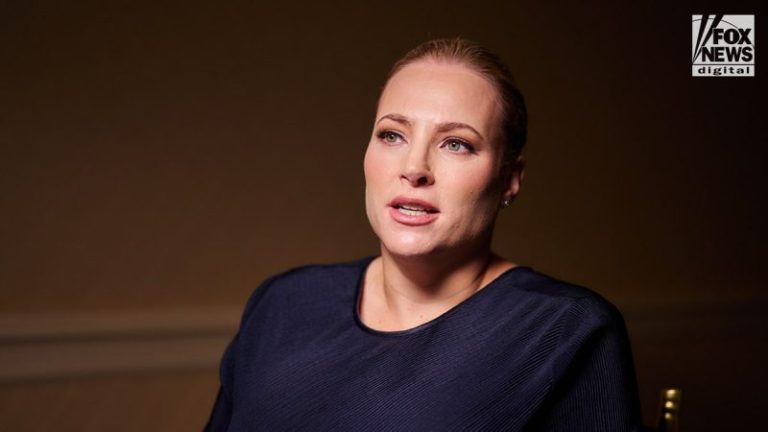
Fox News Digital sat down with McCain on Tuesday evening before she received the ‘Champion of Israel’ award from the American Friends of Magen David Adom (AFMDA), which supports Israel’s emergency medical and disaster response service. She noted that in her observation, issues surrounding the U.S.-Israel relationship appear to be more partisan as far as the left is concerned. 

McCain said that she sees some pro-Israel Democrats, specifically pointing to Sen. Chuck Schumer, D-N.Y., ‘hedging in different places.’ During her award acceptance speech at this year’s AFMDA New York City gala, she also called out New York City Democratic mayoral candidate Zohran Mamdani, who has taken heat for previous acceptance of antisemitic rhetoric such as ‘globalize the intifada.’ 

‘Pray for this city,’ McCain said, adding, ‘he’s an animal.’ The statement garnered applause from the audience, which gathered at Manhattan’s Cipriani Wall Street.

McCain also acknowledged that there are political elements not just on the left, but also on the right that oppose Israel, all of which she condemned. She urged those in attendance to ‘fight together to combat this destructive message of the radical left and within my own party on the alt-right.’

Despite this, the White House’s ties to Jerusalem give McCain hope that the relationship between the two nations is ironclad.

‘Of many of the reasons that I’m glad that President Trump is president is his wholehearted support of Israel is definitely one of them,’ McCain told Fox News Digital. ‘I think that we have an incredibly strong alliance and shared values and shared political interests and shared global interests.’

The former co-host of ‘The View’ also said that she believes the majority of the American public understands that ‘the interests of Israel and the interests of the United States of America are shared, especially in our fight against Islamic extremism.’

Charlie Kirk – who was also a steadfast supporter of Israel – came up both in McCain’s speech and her conversation with Fox News Digital.

‘I think we’re all sort of struggling with his assassination,’ she told Fox News Digital. ‘I am not satisfied with the reaction of the broad swath of Democrat leaders. When you have people like Ilhan Omar that are still accepted in Democrat spaces after what she said about Charlie Kirk in the wake of his passing, I mean, it’s hideous.’

Speaking to the audience of first responders and their supporters, she pointed out the contrast between those who save lives because of their beliefs and those who end them.

‘Where what you do here is about saving lives, the other side has nothing to offer but destruction. There are people all around the world and even in this country who do not want to participate in debate. They do not want to be proven wrong,’ McCain said.

‘And in the instance of people brave enough like Charlie Kirk to stand for Judeo-Christian values and the values of family and life and freedom and the right of Israel to defend itself against its enemies, they will try to destroy you by any means necessary and dance in celebration when you fall,’ she later added.

Addressing gala attendees, McCain delivered a strong defense of the U.S.-Israel alliance, as well as her personal unwavering support for the Jewish state.

‘No matter how much of the world — motivated by moral cowardice, material interest, or the sublimated antisemitism that still stalks the globe — turns away from Israel, I will not. I will never. And I speak for millions and millions of Americans who feel exactly the same,’ McCain said to a cheering crowd.

McCain credited her father, the late Sen. John McCain, R-Ariz., and his relationship with the late Sen. Joe Lieberman, D-Conn., for her desire to deliver a strong defense of the U.S.-Israel relationship.

‘My father always understood the importance of the connection between America and Israel. His deep friendship with the man who was for all intents and purposes my uncle, the late Senator Joe Lieberman, was what exposed me to Jewish life, thought, and practice from a young age,’ McCain said. Later in her speech, she added that she and her husband, Ben Domenech ‘feel the same way, as so many Americans do: that Israel’s cause is right, Israel’s fight is noble, and Israel’s means are just.’

Magen David Adom (MDA), which is essentially Israel’s version of the Red Cross, handles a wider range of issues than its American counterpart, the Red Cross, such as disaster relief and blood services. 

On Oct. 7, 2023, MDA handled over 21,600 emergency calls, five times more than the number of calls it gets on an average Saturday. Additionally, MDA dispatched 1,430 ambulances and intensive care units alongside hundreds of emergency motorcycles, three helicopters, command and control vehicles, and 24 mass casualty response vehicles equipped to deploy mobile treatment sites. Since the Israel-Hamas war began, 38 MDA personnel lost their lives.

McCain concluded her speech with a stark warning — that Israel’s fight is America’s fight and that ‘If Israel were to lose its war — God forbid — the armies of darkness would march toward us here in America, too.’

This post appeared first on FOX NEWS

Rep. Elise Stefanik, R-N.Y., requested that Attorney General Pam Bondi undertake an investigation into Doctors Without Borders under the Anti-Terrorism Act.

In a copy of Stefanik’s letter reviewed by Fox News Digital, she accuses Doctors Without Borders, often known by its French acronym MSF, of having gone on a media offensive against U.S.-backed Gaza Humanitarian Foundation, accusing the organization of ‘orchestrated killing.’ 

Stefanik claimed the attacks ‘mirror propaganda continuously pushed by Hamas and threaten to undermine the only large-scale humanitarian food operation currently working in Gaza.’ 

GHF has distributed 167 million meals to Gazans since it started operations in May. During the same period, less than 18% of aid sent into Gaza by the U.N. has reached its destination due to theft and armed looting, per the United Nations Office for Project Services.

Stefanik stated in her letter to Bondi that by ‘using its platform and resources to amplify Hamas-aligned disinformation,’ MSF ‘may cross well into unlawful activity.’ Stefanik noted, the Anti-Terrorism Act ‘makes clear that no individual or organization may provide material support to a designated terrorist group, including through propaganda.’

Stefanik pointed out several indicators that demonstrate MSF ‘are in fact not neutral in the Gaza conflict and in fact only seem to promote Hamas-supported rhetoric.’ She said MSF ‘has made no reference to hostages illegally held by Hamas in Gaza,’ and has not ‘campaigned for them to receive medical treatment.’

Stefanik described several hostages who required specialized care. One hostage was being treated for cancer on Oct. 7. Another lost his hand during a grenade explosion at the Nova festival. A third was kidnapped while nine months pregnant and gave birth while held captive. ‘None is included in MSF’s ‘humanitarian’ advocacy,’ Stefanik said.

Stefanik also called into question the ‘extremist actions and rhetoric’ of MSF staff, which have led to criticism of the organization. In one case, after MSF lamented the death of a staffer who was killed in Gaza in June 2024; the Israel Defense Forces confirmed he was a rocket expert for Palestinian Islamic Jihad. In another, a staffer publicly called for Palestinians to ‘fight and die as martyrs’ according to the French publicationLe Journal du Dimanche in March 2024. 

Stefanik also questions whether MSF, a registered 501(c)(3), has violated the ‘strict prohibitions’ that come with nonprofit status. She asked that Bondi’s office review MSF’s ‘political attacks’ and, if necessary, refer the group to the Internal Revenue Service. 

‘This is not a matter of routine oversight,’ Stefanik concluded. ‘It is a matter of national security, the protection of U.S. taxpayers and donors, and the defense of legitimate humanitarian organizations in one of the most dangerous conflict zones in the world. President Trump has made clear that the United States will never tolerate support for terrorist organizations in any form, and this case demands that same clarity and resolve.’

MSF did not immediately respond to Fox News Digital’s questions about Stefanik’s letter.

This post appeared first on FOX NEWS

Senate Republicans rammed through dozens of President Donald Trump’s nominees on Thursday in their first flex of the Senate’s new rules for confirmations.

Lawmakers voted along party lines to confirm 48 of Trump’s nominees, many being for undersecretary or assistant secretary positions in a variety of agencies throughout the federal government and ambassadorships.

Senate Republicans went ‘nuclear’ last week to make the change after a last-minute deal with Democrats fell apart.

The change ushered in by the ‘nuclear option’ allows lawmakers to confirm an unlimited number of nominees in batches, also known as en bloc, with a simple majority vote in the upper chamber. However, the process is time-consuming, given that lawmakers must jump through procedural hoops and allow for 30 hours of debate.

‘Why has not a single nominee been confirmed by voice vote or by unanimous consent? We know why,’ Senate Majority Whip John Barrasso, R-Wyo., said on the Senate floor. ‘It’s Democrat obstruction.

‘The country has never seen anything like this,’ he continued. ‘Senate Democrats are freezing the Senate floor, freezing the federal government and freezing our nation’s progress. This harms America’s safety. It hamstrings the agenda that Americans voted for.’

Among this batch of nominees were Kimberly Guilfoyle, who Trump tapped to be the U.S. ambassador to Greece, and Callista Gingrich, who was picked to be the U.S. ambassador to Switzerland.

Republicans argued that the change would benefit both parties now and in the future and viewed the change as an option of last resort to break through Senate Democrats’ blockade of Trump’s picks.

Typically, subcabinet-level nominees, particularly those with bipartisan support out of committee, are sped through the Senate either by unanimous consent or through a voice vote, two fast-track procedural moves in the upper chamber. All the nominees in this first round made it out of committee on a bipartisan basis.

However, Senate Minority Leader Chuck Schumer, D-N.Y., and his caucus wouldn’t allow either to be used and caused a backlog of nominees to lower level positions in the Trump administration to pile up. As of Thursday, the list had swollen to 173.

The only one of Trump’s nominees that easily moved through the chamber was Secretary of State Marco Rubio, who was confirmed in January on a near unanimous vote. 

This post appeared first on FOX NEWS

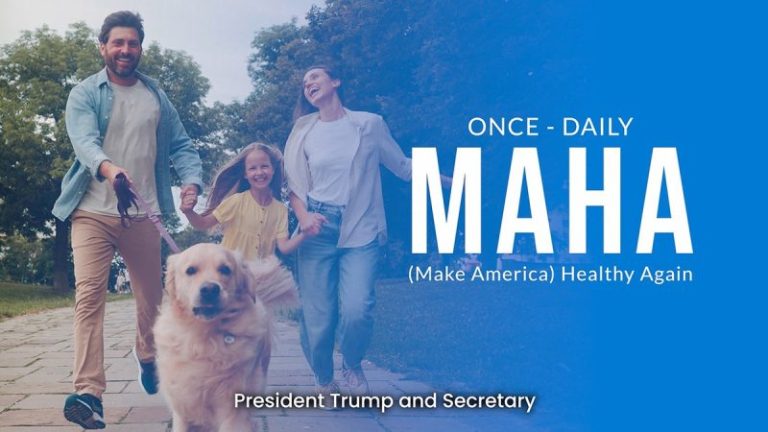
Shortly after announcing a strategy to go after deceptive direct-to-consumer advertising by the pharmaceutical industry, Robert F. Kennedy Jr. and the Department of Health and Human Services released a parody video of a drug advertisement – a pointed way of emphasizing the fact that the United States is largely unique in allowing drug ads.

‘Tired of endless drug ads promising quick fixes but leaving you sicker than you were before? That can change today. Ask your doctor about MAHA,’ the parody commercial begins, referring to Kennedy’s ‘Make America Healthy Again’ initiative. 

‘MAHA may cause healthier living, fewer chronic diseases, and lower drug costs,’ the video’s narrator continues. ‘Some Americans reported more time spent with family instead of at the pharmacy. Other side effects may include healthier children, a stronger nation, more transparency in healthcare, honest advertising, and accountability from Big Pharma.’

The drug advertisement parody comes after Kennedy and HHS laid out their plans to target direct-to-consumer drug advertising – something that isn’t widely allowed outside the United States – in a new children’s health strategy released earlier this month. 

The strategy said it will ramp up enforcement of current prescription drug advertising laws, with a priority on ‘egregious violations demonstrating harm from current practices.’ The strategy noted these violations could include the dissemination of ‘risk information and quality of life through misleading and deceptive advertising on social media and digital platforms.’

The strategy to go after direct-to-consumer drug ads will also include inter-agency cooperation to explore the development of potential new industry guidelines that limit direct-to-consumer advertising for certain ‘unhealthy foods’ to children. These efforts include ‘evaluating the use of misleading claims and imagery,’ the MAHA children’s strategy stated. 

Kennedy said alongside the release of HHS’s parody advertisement that the Trump administration plans to begin holding the pharmaceutical industry accountable for not sharing full safety information in their drug ads on television, radio and beyond.


‘No more hiding vital information in small print, or pushing it off to a website, or a 1-800 number,’ Kennedy said in a video released in conjunction with the parody advertisement. He also noted that regulators have been letting pharmaceutical manufacturers avoid providing complete warnings in their marketing materials.

Kennedy said in the accompanying video that, in the past, regulators let companies mention a vague ‘major statement’ of risk that required consumers to go elsewhere for important details about the drug. The secretary said this ‘loophole’ opened the door to a ‘tsunami’ of misleading advertisements.

‘Drug ads drove up prescription drug costs and distorted doctor-patient conversations. Patients saw glossy ads and often asked for new medications,’ Kennedy continued. ‘Big Pharma’s marketing hooked the country on prescription drugs. We’re taking action to end that practice.’

This post appeared first on FOX NEWS

Hunter Biden was involved in discussions about pardons toward the end of his father’s White House term, a source familiar with Jeff Zients’ interview with the House Oversight Committee told Fox News Digital on Thursday.

Zients met with House investigators behind closed doors for over six hours — the final former Biden administration official to appear in House Oversight Committee Chair James Comer’s probe into ex-President Joe Biden’s use of the autopen.

Comer, R-Ky., is also investigating whether Biden’s top aides covered up signs of mental decline in the former president, and whether executive decisions signed via autopen — including myriad clemency orders Biden approved — were executed with his full awareness.

Zients told investigators that Hunter was involved in some of those pardon discussions and attended a few meetings on the subject with White House aides, the source said.

It’s not clear how much say Hunter had in those meetings, or if he was involved in discussions about his own controversial pardon.

The former president issued a ‘full and unconditional’ pardon for his son in early December, just under two months before leaving office. 

That’s despite Biden and his staff denying the possibility of such a move on several occasions.

Biden approved nearly 2,500 commutations on Jan. 17, just days before leaving the White House, setting a record for most clemency orders ever granted by a U.S. president — more than 4,200 in total — and the most ever in a single day.

Weeks earlier, he issued pardons for several family members, including Hunter.

It had been previously reported by NBC News and other outlets that Hunter sat in on White House meetings with Biden’s aides in the wake of the former president’s disastrous June 2024 debate against then-candidate Donald Trump.

Zients is the final former Biden aide expected to appear before the House Oversight Committee in its autopen probe.

The source familiar with his sit-down told Fox News Digital that Zients ‘admitted that President Biden’s speech stumbles increased as he aged.’

‘He also noted that the president’s difficulty remembering dates and names worsened over time, including during the administration,’ the source said.

A second source familiar with Zients’ comments to the House Oversight Committee defended his comments. 

‘As chief of staff, Jeff’s job was to ensure that the president met with a range of advisors to thoroughly consider issues so that the president could make the best decisions,’ the second source told Fox News Digital.

‘Throughout Jeff’s time working with him, while President Biden valued input from a wide variety of advisors and experts, the final decisions were made by the president and the president alone,’ the second source said.

‘Jeff had full confidence in President Biden’s ability to serve as president and is proud of what President Biden accomplished during his four years in office.’

Fox News Digital reached out to Zients’ attorney and the law firm of Abbe Lowell, who was known to have defended Hunter previously, for comment but did not immediately hear back.

This post appeared first on FOX NEWS

House Main Street Caucus Chairman Mike Flood, R-Neb., will refer Democratic colleague Rep. Ilhan Omar, D-Minn., for a House Ethics Committee investigation, he first told Fox News Digital.

It is the latest move in the GOP-led fallout over Omar’s response to the assassination of Charlie Kirk, a conservative activist who was shot and killed in Utah during a college campus speaking event last week.

‘I will be filing tomorrow … a complaint with the Committee on Ethics in the House of Representatives with 18 very concerning incidents and/or behaviors and/or statements that, on their face, reflect poorly on the House of Representatives,’ Flood said of Omar.

The top of the list of complaints will include the progressive Democrat’s ‘obnoxious, insulting and dismissive comments following the assassination of Charlie Kirk,’ he said.

‘Second, harboring illegal immigrants. I believe in February of this year that Omar hosted a workshop advising Somalians on how to avoid being deported after protecting the laws of the United States,’ Flood continued of his points. ‘No. 3, she’s used TikTok for mixed official and campaign content, which specifically violates other House rules.’

Flood was one of four House Republicans to help Omar narrowly avoid being censured by the House on Wednesday evening.

Rep. Nancy Mace, R-S.C., moved to force a vote on censuring Omar over her reaction to Kirk’s killing, but the move was quashed when four Republicans and all Democrats voted to table the measure.

Flood said at the time of his vote, ‘Ilhan Omar’s statements and social media posts are reprehensible and should be referred to the Ethics Committee. The appropriate time to consider a censure motion would be after ethics reviews her conduct.’

He told Fox News Digital on Thursday that initiating an ethics investigation would make a censure ‘far more credible.’

Flood pointed out that he similarly voted to table a censure threat against Rep. LaMonica McIver, D-N.J., for her conduct outside a New Jersey ICE facility before the ethics committee could issue a report on the matter.

‘And so I have gathered enough information, starting yesterday, before I voted to table, understanding that this was an issue,’ Flood said.

He also disagreed with the other three House Republicans who all said Omar’s comments were protected by the First Amendment.

‘This isn’t a free speech issue. This is a ‘Have you demonstrated that you are behaving at all times in a manner that reflects credibly on the House?’’ Flood said.

Omar specifically faced backlash over an interview with progressive news outlet Zeteo, in which she criticized Kirk’s past commentary and Republicans’ reaction to the shooting. She later accused Republicans of taking her words out of context, and she called Kirk’s death ‘mortifying.’

She previously told Zeteo days after Kirk’s assassination that he had ‘downplayed slavery and what Black people have gone through in this country by saying Juneteenth shouldn’t exist.’

‘There are a lot of people who are out there talking about him just wanting to have a civil debate,’ the ‘Squad’ member said. ‘There is nothing more effed up, you know, like, than to completely pretend that, you know, his words and actions have not been recorded and in existence for the last decade or so.’

She later posted on X amid the backlash, ‘While I disagreed with Charlie Kirk vehemently about his rhetoric, my heart breaks for his wife and children. I don’t wish violence on anyone. My faith teaches me the power of peace, empathy, and compassion. Right-wing accounts trying to spin a false story when I condemned his murder multiple times is fitting for their agenda to villainize the left to hide from the fact that Donald Trump gins up hate on a daily basis.’

Omar also reposted a video on X, where others not associated with the congresswoman said, ‘Don’t be fooled, these people don’t give a single s— about Charlie Kirk. They’re just using his death to further their Christo-fascist agenda.’

The Minnesota Democrat’s colleagues have vehemently defended her against Mace’s censure and Republican criticism.

Fox News Digital reached out to Omar’s office for a response to Flood but did not immediately hear back.

This post appeared first on FOX NEWS

Cobra (LSE: COBR), a mineral exploration and development company, is pleased to announce that is has received Environmental Protection and Rehabilitation (‘EPEPR’) approval from the Government of South Australia’s Department for Energy and Mining (‘DEM’) for the Company’s exploration programme that will support planned pump and permeability testing at the Boland wellfield.

Key Points:

  • Cobra is now completing its programme notification process that will see infield testing commence in mid-October and last for approximately two weeks
  • Field tests will provide an infield measure of the rate of permeability achievable through the in-situ recovery (‘ISR’) process
  • A large (55kg) bench scale ISR column study underway at the Australian Nuclear and Scientific Technology Organisation (‘ANSTO’) is currently achieving exceptional permeability rates of 1.5 metres/day
  • The column pH dropped from pH7.0 to pH4.0 in just 48 hours, with first liquor assays expected soon
  • Being able to replicate similar permeabilities in a field environment will provide robust, high confidence mining parameters for use with future economic studies

Rupert Verco, Managing Director of Cobra, commented:

‘It is pleasing to receive DEM approval that will enable our first field testing. Once the programme notification is fulfilled, the team will mobilise to site to install temporary infrastructure and commence testing.

Initial permeabilities achieved in the large-scale column are exceptionally encouraging and will see Rare Earth Elements being recovered in very short time frames using a low-cost lixiviant. Running these two work programmes in parallel will provide invaluable data that will form the basis for estimating future ISR production rates. We expect recovery results of this in-field test to be reported to the market in the coming weeks.’

Follow this link to watch a short video of MD Rupert Verco explaining future field studies relevant to this announcement: https://investors.cobraplc.com/link/P4xdBP

Update on Scaled Column ISR Test

  • Percolation of lixiviant through a 55kg ISR column containing a composite sample from three drillholes from across the Boland project has commenced using ~0.3M ammonium sulphate (‘AMSUL’) at pH3
  • Recovery rates of individual REEs will be evaluated during the ISR process, with separate liquors to be collected to evaluate the possibility of producing an MREC from both early stage (pH>4.5) and late stage (pH=3.0).
  • In two days, the average permeability rate being achieved is 1.5 metres/day
  • The current recovered liquor pH is <4.0; previous columns showed REE recoveries from pH5
  • Study anticipated to be completed within a fortnight
  • First liquor assays expected soon

Figures 1 & 2: photos of the 55kg column subject to ISR studies currently in progress at ANSTO laboratories

Further information relating to Boland and these results are presented in the appendices.

Enquiries:

Cobra Resources plc

Rupert Verco (Australia)

Dan Maling (UK)

via Vigo Consulting

+44 (0)20 7390 0234

SI Capital Limited (Joint Broker)

Nick Emerson

Sam Lomanto

+44 (0)1483 413 500

Global Investment Strategy (Joint Broker)

James Sheehan

+44 (0)20 7048 9437

james.sheehan@gisukltd.com

Vigo Consulting (Financial Public Relations)

Ben Simons

Anna Stacey

+44 (0)20 7390 0234

cobra@vigoconsulting.com

The person who arranged for the release of this announcement was Rupert Verco, Managing Director of the Company.

Information in this announcement relates to exploration results that have been reported in the following announcements:

  • Exploration update: ‘Low-Cost Recoveries from Optimised Testing’, dated 11th August 2025
  • Exploration update: ‘Rare Earth ISR System beyond Boland’, dated 4th August 2025
  • Exploration update: ‘Favourable Boland Metallurgical Results’, dated 21st July 2025
  • Exploration update: ‘Boland Project Update’, dated 26th June 2025
  • Wudinna Project Update: ‘Boland Aircore Drill Results’, dated 25th February 2025
  • Wudinna Project Update: ‘Further Positive Metallurgy Results from Boland Project’, dated 16 December 2024
  • Wudinna Project Update: ‘2nd Bench Scale ISR Study & £1.7M Placing’, dated 26 November 2024
  • Wudinna Project Update: ‘ISR Bench Scale Study Completion’, dated 4 November 2024
  • Wudinna Project Update: ‘ISR bench scale study delivers exceptional results’, dated 1 October 2024
  • Wudinna Project Update: ‘ISR bench scale update – Exceptionally high recoveries with low impurities and low acid consumption; on path to disrupt global supply of heavy rare earths’, dated 28 August 2024
  • Wudinna Project Update: ‘ISR bench scale update -Further metallurgical success at world leading ISR rare earth project’, dated 11 July 2024

Competent Persons Statement

The information in this report that relates to metallurgical results is based on information compiled by Cobra Resources and reviewed by Mr James Davidson who is Principal at Rendement and a Fellow of the Australian Institute of Mining and Metallurgy (F AusIMM). Mr Davidson has sufficient experience that is relevant to the metallurgical testing which was undertaken to qualify as a Competent Person as defined in the 2012 edition of the ‘Australasian Code for Reporting of Exploration Results, Mineral Resources and Ore Reserves’. Mr Davidson consents to the inclusion in this report of the matters based on this information in the form and context in which it appears.

Information in this announcement has been assessed by Mr Rupert Verco, a Fellow of the Australasian Institute of Mining and Metallurgy. Mr Verco is an employee of Cobra and has more than 17 years’ industry experience which is relevant to the style of mineralisation, deposit type, and activity which he is undertaking to qualify as a Competent Person as defined in the 2012 Edition of the Australasian Code for Reporting Exploration Results, Mineral Resources and Ore Reserves of JORC. This includes 13 years of Mining, Resource Estimation and Exploration.

About Cobra

Cobra Resources is a South Australian critical minerals developer, advancing assets at all stages of the pre-production pathway.

In 2023, Cobra identified the Boland ionic rare earth discovery at its Wudinna Project in the Gawler Craton – Australia’s only rare earth project suitable for in situ recovery (ISR) mining. ISR is a low-cost, low-disturbance extraction method that eliminates the need for excavation, positioning Boland to achieve bottom-quartile recovery costs.

In 2025, Cobra further expanded its portfolio by optioning the Manna Hill Copper Project in the Nackara Arc, South Australia. The project contains multiple underexplored prospects with strong potential to deliver large-scale copper discoveries.

In 2025, Cobra sold its Wudinna Gold Assets to Barton Gold (ASX: BDG) for up to A$15 million in cash and shares.

Regional map showing Cobra’s tenements in South Australia

Follow us on social media:

LinkedIn: https://www.linkedin.com/company/cobraresourcesplc

X: https://twitter.com/Cobra_Resources

Engage with us by asking questions, watching video summaries and seeing what other shareholders have to say. Navigate to our Interactive Investor hub here: https://investors.cobraplc.com/

Subscribe to our news alert service: https://investors.cobraplc.com/auth/signup

Appendix 1: Background information – the Boland Project and ISR

  • The Boland Project was discovered by Cobra in 2023. Mineralisation is ionically bound to clays and organics within palaeochannel sands within the Narlaby Palaeochannel
  • Mineralisation occurs within a permeable sand within an aquifer that is saltier than sea water and is confined by impermeable clays
  • ISR is executed through engineered drillhole arrays that allow the injection of mildly acidic ammonium or magnesium sulphate lixiviants, using the confining nature of the geology to direct and lower the acidity of the orebody. This low-cost process enables mines to operate profitably at lower grades and lower rates of recovery
  • Once REEs are mobile in solution in groundwater, it is also possible, from an engineering standpoint, to recover the solution to surface via extraction drillholes, without any need for excavation or ground disturbance
  • The capital costs of ISR mining are low as they involve no material movements and do not require traditional infrastructure to process ore – i.e. metals are recovered in solution
  • Ionic mineralisation is highly desirable owing to its high weighting of valuable HREOs and the cost-effective method in which REEs can be desorbed
  • Ionic REE mineralisation in China is mined in an in-situ manner that relies on gravity to permeate mineralisation. The style of ISR process is unconfined and cannot be controlled, increasing the risk for environmental degradation. This low-cost process has enabled China to dominate mine supply of HREOs, supplying over 90% globally
  • Confined aquifer ISR is successfully executed globally within the uranium industry, accounting for more than 60% of the world’s uranium production. This style of ISR has temporary ground disturbance, and the ground waters are regenerated over time
  • Cobra is aiming to demonstrate the economic and environmental benefits of recovering ionic HREOs through the more environmentally aquifer controlled ISR – a world first for rare earths

Figure A1: Comparison between the Chinese and the proposed Boland process for ISR mining of REEs

Appendix 2: Metallurgical sample information

Drillhole

From (m)

To (m)

ID

Pr6O11

ppm

Nd2O3

ppm

Tb2O3

ppm

Dy2O3

ppm

Sm2O3

TREO

ppm

CBSC0006

31.15

33.05

CBSC006-comp

12

48

1.3

8

9

264

CBSC0009

25.55

26.89

CBSC009-comp

53

215

6.8

38

50

1,261

CBSC0010

26.00

27

CBSC0010-comp

151

470

9.2

52

76

2,999

Composite

CBSC00-06+09+10

58

194

4.8

28

36

1,194

This information is provided by RNS, the news service of the London Stock Exchange. RNS is approved by the Financial Conduct Authority to act as a Primary Information Provider in the United Kingdom. Terms and conditions relating to the use and distribution of this information may apply. For further information, please contact rns@lseg.com or visit www.rns.com.

RNS may use your IP address to confirm compliance with the terms and conditions, to analyse how you engage with the information contained in this communication, and to share such analysis on an anonymised basis with others as part of our commercial services. For further information about how RNS and the London Stock Exchange use the personal data you provide us, please see our Privacy Policy.

Source

This post appeared first on investingnews.com

Standard Uranium Ltd. (TSXV: STND,OTC:STTDF) (OTCQB: STTDF) (FSE: 9SU0) (‘Standard Uranium’ or the ‘Company’) is pleased to announce that it has signed a letter of intent (the ‘LOI’), dated September 15, 2025, with Collective Metals Inc. (CSE: COMT) (the ‘Optionee’), an arms-length party. Pursuant to the LOI, the Optionee will be granted the option (the ‘Option’) to acquire a seventy-five percent interest in the 4,002-hectare Rocas Project (‘Rocas’ or the ‘Project’) located in the eastern Athabasca Basin region (Figure 1).

Rocas Project Highlights:

  • Prime Location – More than 7.5 km of exploration strike length along a strong NE-SW magnetic low trend coincident with EM conductors and cross-cutting faults, providing shallow drill targets south of Key Lake.
  • Uranium at Surface – Mineralized outcrop grab samples along approximately 900 metres of strike length, grading up to 0.50 wt.% U3O8 and never drill tested1 (Figure 2).
  • New Uranium Targets – Results from a high-resolution ground gravity survey completed in 2024 highlight potential alteration halos and high-priority exploration targets along well defined structural corridors.

The Option is exercisable by the Optionee completing cash payments and share issuances, and incurring the following exploration expenditures on the Project:

Consideration
Payments
Consideration
Shares
Exploration Expenditures Operator
Fees
Earn-in at completion of each Year
Year 1 $50,000 $250,000 $1,500,000 10% 0%
Year 2 $50,000 $250,000 $1,500,000 12% 0%
Year 3 $125,000 $225,000 $1,500,000 12% 75%
Total $225,000 $725,000 $4,500,000

Jon Bey, Standard Uranium CEO and Chairman, commented: ‘We are very pleased to have agreed to terms with our new partners at Collective Metals to advance our newly expanded Rocas Project. The global demand for nuclear energy requires more uranium exploration and high-grade discoveries. There is no better place on the planet to make these discoveries than the Athabasca Basin region. We look forward to completing this transaction and beginning phase one of our three-year exploration programs run by our Standard Uranium technical team.’

Figure 1. Regional map of Standard Uranium’s Rocas Project. The Project is located 75 kilometers southwest of the Key Lake Mine and Mill facilities along Highway 914.

To view an enhanced version of this graphic, please visit:
https://images.newsfilecorp.com/files/10633/266920_38abd1beb4e55916_001full.jpg

About the Rocas Project

The Rocas project comprises 4,002 hectares, located 75 kilometers southwest of the Key Lake Mine and Mill facilities along Highway 914, and approximately 72 kilometers south of the present-day margin of the Athabasca Basin. The project was acquired via staking in May 2023 and recently expanded by an additional 931 hectares. Standard Uranium holds a 100%-interest in the Property.

The Project covers 7.5 kilometres of a northeast trending magnetic low/electromagnetic (‘EM’) conductor corridor which hosts several uranium showings, including historical mineralized outcrop grab samples along approximately 900 metres of strike length, grading up to 0.50 wt.% U3O81. Notably, none of the historical uranium occurrences have been drill-tested.

Historical airborne EM work in 2017 defined conductive trends on the Project west of and sub-parallel to the Key Lake Road shear zone, corresponding with favourable metasedimentary basement lithologies. Multiple parallel conductors, offsets, and termination points indicate the trend widening and potential cross-cutting structures. Additionally, a 2007 field sampling program identified anomalous lakebed geochemical anomalies that statistically rank as greater than 95th percentile U, Co, V, and Zn along the conductor corridor, including high U/Th ratios2.

Figure 2. Geophysical map of the Rocas Project highlighting EM conductors, faults, historical uranium showings, and anomalous lakebed geochemistry.

To view an enhanced version of this graphic, please visit:
https://images.newsfilecorp.com/files/10633/266920_38abd1beb4e55916_002full.jpg

2024 Ground Gravity Survey

The Company contracted MWH Geo-Surveys (Canada) Ltd. to complete a high-resolution ground gravity survey along known conductive exploration trends on the Rocas project. The surveys are designed to aid in the identification of potential zones of hydrothermal alteration of host rocks associated with uranium mineralization events.

The gravity surveys across the conductive structural corridors improve definition of drill targets for future exploration programs. Convolutions Geoscience have completed detailed inversion and 3D modeling, which will provide additional vectoring layers for future drill programs. Value-added products include 3D density inversions, depth slices, modeling interpretation, and expert recommendations.

Four new drill target zones have been identified on the Rocas project, outlined via the confluence of low gravity anomalies, historical surface mineralization, lakebed geochemical anomalies, EM conductors, and crosscutting fault zones.

3-Year Earn-In Option

Prior to exercise of the Option, the Company will act as the operator of the Project and will be entitled to charge a 10% fee on expenditures in Year 1, increasing to 12% in Year 2 and Year 3.

Following successful completion of the obligations of the Option (i.e., at the end of Year 3), Optionee will acquire a 75% equity in the Property, with Standard retaining 25% as well as a 2.5% net smelter returns royalty on the Project, of which 1.0% may be purchased back at any time for a one-time cash payment of $1,000,0002.

The parties intend on forming an unincorporated joint venture for the further development of the Project.

The LOI is non-binding at this time and the grant of the Option remains subject finalisation and execution of definitive agreements. No finders’ fee is payable by the Company in connection with the Option.

*The Company considers uranium mineralization with concentrations greater than 1.0 wt% U3O8 to be ‘high-grade’.

**The Company considers radioactivity readings greater than 300 counts per second (cps) to be ‘anomalous’.

Qualified Person Statement

The scientific and technical information contained in this news release has been reviewed, verified, and approved by Sean Hillacre, P.Geo., President and VP Exploration of the Company and a ‘qualified person’ as defined in NI 43-101.

Historical data disclosed in this news release relating to sampling results from previous operators are historical in nature. Neither the Company nor a qualified person has yet verified this data and therefore investors should not place undue reliance on such data. The Company’s future exploration work may include verification of the data. The Company considers historical results to be relevant as an exploration guide and to assess the mineralization as well as economic potential of exploration projects.

References

1 Mineral Assessment Report 74B09-0007: Uranex Ltd., 1977 & SMDI# 2465: https://mineraldeposits.saskatchewan.ca/Home/Viewdetails/2465
2 Mineral Assessment Report 74B09-0032: Forum Uranium Corp., 2007

About Standard Uranium (TSXV: STND,OTC:STTDF)

We find the fuel to power a clean energy future

Standard Uranium is a uranium exploration company and emerging project generator poised for discovery in the world’s richest uranium district. The Company holds interest in over 235,435 acres (95,277 hectares) in the world-class Athabasca Basin in Saskatchewan, Canada. Since its establishment, Standard Uranium has focused on the identification, acquisition, and exploration of Athabasca-style uranium targets with a view to discovery and future development.

Standard Uranium’s Davidson River Project, in the southwest part of the Athabasca Basin, Saskatchewan, comprises ten mineral claims over 30,737 hectares. Davidson River is highly prospective for basement-hosted uranium deposits due to its location along trend from recent high-grade uranium discoveries. However, owing to the large project size with multiple targets, it remains broadly under-tested by drilling. Recent intersections of wide, structurally deformed and strongly altered shear zones provide significant confidence in the exploration model and future success is expected.

Standard Uranium’s eastern Athabasca projects comprise over 43,185 hectares of prospective land holdings. The eastern basin projects are highly prospective for unconformity related and/or basement hosted uranium deposits based on historical uranium occurrences, recently identified geophysical anomalies, and location along trend from several high-grade uranium discoveries.

Standard Uranium’s Sun Dog project, in the northwest part of the Athabasca Basin, Saskatchewan, is comprised of nine mineral claims over 19,603 hectares. The Sun Dog project is highly prospective for basement and unconformity hosted uranium deposits yet remains largely untested by sufficient drilling despite its location proximal to uranium discoveries in the area.

For further information, contact:

Jon Bey, Chief Executive Officer, and Chairman
Suite 3123, 595 Burrard Street
Vancouver, British Columbia, V7X 1J1

Tel: 1 (306) 850-6699
E-mail: info@standarduranium.ca

Cautionary Statement Regarding Forward-Looking Statements

This news release contains ‘forward-looking statements’ or ‘forward-looking information’ (collectively, ‘forward-looking statements’) within the meaning of applicable securities legislation. All statements, other than statements of historical fact, are forward-looking statements and are based on expectations, estimates and projections as of the date of this news release. Forward-looking statements include, but are not limited to, statements regarding the intended use of proceeds from the Offering.

Forward-looking statements are subject to a variety of known and unknown risks, uncertainties and other factors that could cause actual events or results to differ from those expressed or implied by forward-looking statements contained herein. There can be no assurance that such statements will prove to be accurate, as actual results and future events could differ materially from those anticipated in such statements. Certain important factors that could cause actual results, performance or achievements to differ materially from those in the forward-looking statements are highlighted in the ‘Risks and Uncertainties’ in the Company’s management discussion and analysis for the fiscal year ended April 30, 2024.

Forward-looking statements are based upon a number of estimates and assumptions that, while considered reasonable by the Company at this time, are inherently subject to significant business, economic and competitive uncertainties and contingencies that may cause the Company’s actual financial results, performance, or achievements to be materially different from those expressed or implied herein. Some of the material factors or assumptions used to develop forward-looking statements include, without limitation: the future price of uranium; anticipated costs and the Company’s ability to raise additional capital if and when necessary; volatility in the market price of the Company’s securities; future sales of the Company’s securities; the Company’s ability to carry on exploration and development activities; the success of exploration, development and operations activities; the timing and results of drilling programs; the discovery of mineral resources on the Company’s mineral properties; the costs of operating and exploration expenditures; the presence of laws and regulations that may impose restrictions on mining; employee relations; relationships with and claims by local communities and indigenous populations; availability of increasing costs associated with mining inputs and labour; the speculative nature of mineral exploration and development (including the risks of obtaining necessary licenses, permits and approvals from government authorities); uncertainties related to title to mineral properties; assessments by taxation authorities; fluctuations in general macroeconomic conditions.

The forward-looking statements contained in this news release are expressly qualified by this cautionary statement. Any forward-looking statements and the assumptions made with respect thereto are made as of the date of this news release and, accordingly, are subject to change after such date. The Company disclaims any obligation to update any forward-looking statements, whether as a result of new information, future events or otherwise, except as may be required by applicable securities laws. There can be no assurance that forward-looking statements will prove to be accurate, as actual results and future events could differ materially from those anticipated in such statements. Accordingly, readers should not place undue reliance on forward-looking statements.

Neither the TSX-V nor its Regulation Services Provider (as that term is defined in the policies of the TSX-V) accepts responsibility for the adequacy or accuracy of this release.

To view the source version of this press release, please visit https://www.newsfilecorp.com/release/266920

News Provided by Newsfile via QuoteMedia

This post appeared first on investingnews.com

A Nevada lithium project central to US efforts to secure domestic mineral supply is leaning on a half-century-old satellite program for modern answers.

The US Geological Survey’s (USGS) Landsat program, managed with NASA, has provided continuous Earth observations since 1972. Its freely available images allow scientists and industry leaders to measure landscape changes with precision.

In Northern Nevada, those insights are proving crucial as Lithium Americas (TSX:LAC,NYSE:LAC) works to advance Thacker Pass in a way that meets strict environmental and land-use standards.

“Landsat imagery is valuable for critical minerals project development because it provides consistent, long-term data that document land use changes and geological features, assess environmental receptors and support planning decisions,” said Alexi Zawadzki, president of North American operations for Lithium Americas, in a USGS report.

When planning began, Landsat data revealed that the original mine site overlapped with important sage-grouse habitat.

Although the bird is not a protected species, its sharp population decline since the 1960s has made it an indicator of ecosystem health in Nevada’s rangelands. The finding prompted developers to shift the project six miles south, away from prime territory.

Water use is another critical challenge faced by the project. Landsat data has been paired with field checks to estimate groundwater levels, using differences in vegetation to infer depth.

With this data, the Thacker Pass project aims to recycle processed water up to seven times and to operate as a “zero liquid discharge facility.”

Unlike traditional lithium brine operations, the project will extract lithium from clay deposits. Tailings will be stored in dry facilities and later reused for reclamation work.

Economic promise

Lithium Americas estimates construction of Thacker Pass could generate more than US$700 million annually and support 1,800 jobs. Once operational, economic activity linked to the mine could average US$2.1 billion per year, according to a University of Nevada, Reno, study.

Lithium is a cornerstone of batteries that power smartphones, laptops and electric vehicles. The US ranks third globally in known lithium resources but remains dependent on imports.

Due to the resource’ growing importance, developing domestic supply has become a matter of both industrial policy and national security.

Landsat’s value, is hardly confined to mining. A 2023 economic analysis placed its annual contributions to US industries at US$25.6 billion, spanning everything from gold exploration to reduced insurance costs for farmers.

For Thacker Pass, the test will come as mining gets underway. But for now, the view from space has already reshaped how the project is planned and envisioned moving forward.

By applying Landsat data, planners hope to show that resource extraction and environmental stewardship can advance together.

Securities Disclosure: I, Giann Liguid, hold no direct investment interest in any company mentioned in this article.

This post appeared first on investingnews.com

The US’ growing debt burden and rising borrowing costs are sharpening questions about the long-term credibility of the dollar, while simultaneously opening the door for cryptocurrencies to position themselves as alternatives for investors seeking protection from inflation.

A new report from Grayscale, the world’s largest digital asset investment platform, argues that macroeconomic imbalances in the US could drive increasing demand for crypto assets.

“Because of the large debt stock, rising interest rates, and a lack of other viable means for dealing with it, the US government’s commitment to control money supply growth and inflation may no longer be fully credible,” the firm said in its analysis.

A question of trust in money

Modern fiat currencies function only as long as people believe governments will preserve their value.

In practice, that means limiting money supply growth and keeping inflation low. Since the 1990s, delegating this responsibility to independent central banks has largely worked, anchoring expectations and fostering decades of relative stability.

But Grayscale notes that history is full of examples where governments have broken that trust, turning to the printing press to ease fiscal strain.

Today, the US finds itself in a precarious position: public debt has climbed to roughly 100 percent of gross domestic product, interest expenses are rising as bond yields climb, and Washington continues to run persistent deficits.

The report argues that the credibility gap is widening.

“If holders of US Dollar-denominated assets come to believe” that inflation will be tolerated as a tool for managing debt, Grayscale wrote, “they may seek out alternative stores of value.”

In most countries, inflation fears are local problems. In the case of the dollar, the stakes are far higher. The Federal Reserve estimates the US currency accounts for 60 to 70 percent of international use, compared with 20 to 25 percent for the euro and less than 5 percent for the Chinese renminbi.

That dominance means any loss of confidence in the dollar’s stability ripples across global finance. According to Grayscale, this is why risks tied to US debt are not the “most severe” compared to emerging markets but remain “the most important.”

The US fiscal picture deteriorated after the 2008 financial crisis and worsened during the pandemic. From 2007 to today, average annual deficits have swelled from 1 percent to about 6 percent of GDP, pushing total debt to nearly US$30 trillion.

Much of this was sustainable when interest rates were near zero. But the era of cheap borrowing has ended.

As debt is refinanced at higher rates, interest outlays absorb a larger share of federal spending, squeezing room for other priorities and raising the prospect of a “snowball effect” where debt grows faster than the economy.

Enter crypto

This backdrop has fueled interest in alternative monetary assets that are insulated from political pressures.

Gold has long played that role, but Grayscale points to Bitcoin and Ethereum as digital equivalents with unique advantages.

“These cryptocurrencies have certain design features that can make them a refuge, when needed, from conventional fiat money,” the report said.

Bitcoin’s supply is capped at 21 million coins, its issuance schedule is transparent, and no institution can arbitrarily inflate it.

Ethereum, while more complex due to its broader ecosystem of applications, also shares the qualities of decentralization and predictable supply controls.

In Grayscale’s view, these traits matter most when confidence in fiat currencies erodes. “The utility of these assets comes from what they do not do. Most importantly, they will not increase in supply because a government needs to service its debt.”

Despite this, Grayscale does not argue that crypto’s rise is inevitable. A credible restoration of US fiscal discipline and central bank independence could limit the appeal of alternative assets.

Feasible measures, according to the report, might include stabilizing and reducing the debt-to-GDP ratio, reaffirming the Fed’s inflation target, and resisting political pressure on monetary policy.

History itself can serve as a roadmap for this. Gold soared in the 1970s when inflation ran high and institutional credibility faltered, but lost ground in the 1980s and 1990s as the Fed restored trust and inflation fell. A similar trajectory could shape crypto’s role.

For now, the macro picture points in the opposite direction. With deficits entrenched and debt swelling, investors face a world where the dollar’s long-term credibility is in question.

In such an environment, Grayscale argues, crypto assets can serve as a crucial alternative.

“As long as those risks are getting larger, the value of assets that can provide a hedge against that outcome arguably should be going higher,” the report concluded.

Securities Disclosure: I, Giann Liguid, hold no direct investment interest in any company mentioned in this article.

This post appeared first on investingnews.com