
Author

admin

Browsing

1911 Gold Corporation (‘ 1911 Gold ‘ or the ‘ Company ‘) (TSXV: AUMB,OTC:AUMBF; OTCQB: AUMBF; FRA: 2KY) is pleased to announce that it has entered into an amended and restated agreement with Haywood Securities (‘ Haywood ‘), as lead agent, on its own behalf and on behalf of Velocity Capital Partners (together with Haywood, the ‘ Agents ‘), to amend the terms of its previously announced ‘best efforts’ private placement and LIFE offering to increase the size of the offering to C$17 million (the ‘ Upsized Offering ‘).

Under the terms of the Upsized Offering, the Agents have agreed to sell, on a ‘best efforts’ private placement basis, up to: (i) 3,184,000 common shares which qualify as ‘flow-through shares’ (within the meaning of the Tax Act) and qualify as ‘Canadian exploration expenses’ as defined in the Tax Act (the ‘ CEE LIFE Shares ‘) at a price of C$0.64 per CEE LIFE Share (the ‘ CEE Issue Price ‘); and (ii) 14,802,000 common shares which qualify as ‘flow-through shares’ (within the meaning of the Tax Act) and qualify as ‘accelerated Canadian development expenses’ as defined in the Tax Act (the ‘ CDE Offered Shares ‘) at a price of C$0.554 per CDE Offered Share (the ‘ CDE Issue Price ‘) for aggregate gross proceeds to the Company from the sale of CEE LIFE Shares and CDE Offered Shares of up to C$10,238,068 (the ‘ LIFE Offering ‘).

Additionally, the Agents have agreed to sell, on a ‘best-efforts’ private placement basis, up to: (i) 6,889,000 common shares of the Company (the ‘ Non-FT Shares ‘) at a price per Non-FT Share of C$0.45 (the ‘ Non-FT Issue Price ‘); and (ii) 5,655,000 common shares which qualify as ‘flow-through shares’ (within the meaning of the Tax Act) and qualify as ‘Canadian exploration expenses’ as defined in the Tax Act (the ‘ CEE PP Shares ‘ and together with the CEE LIFE Shares, the ‘ CEE Offered Shares ‘) at the CEE Issue Price for aggregate gross proceeds to the Company from the sale of the Non-FT Shares and CEE PP Shares of up to C$6,719,250 (the ‘ PP Offering ‘ and together with the LIFE Offering, the ‘ Marketed Offering ‘). The Marketed Offering combines aggregate gross proceeds to the Company of up to C$16,957,318. The CEE Offered Shares, CDE Offered Shares, and Non-FT Shares are referred to herein as the ‘ Offered Shares ‘.

The Company has granted the Agents an option to sell up to an additional 15% of the Marketed Offering in CEE Offered Shares at the CEE Issue Price (the ‘ Agents’ Option ‘, and together with the Marketed Offering, the ‘ Upsized Offering ‘), exercisable in whole or in part at any time up to 48 hours prior to the closing date of the Upsized Offering.

The Non-FT Shares and CEE PP Shares will be issued and sold to eligible purchasers pursuant to the available ‘accredited investor’, ‘minimum amount investment’ and ‘family, friends and business associates’ private placement exemptions in accordance with National Instrument 45-106 – Prospectus Exemptions (‘ NI 45-106 ‘) in each of the Provinces of Canada. The CEE LIFE Shares and CDE Offered Shares will be offered and sold to eligible purchasers pursuant to the listed issuer financing prospectus exemption under Part 5A of NI 45-106 and Coordinated Blanket Order 45-935 – Exemptions from Certain Conditions of the Listed Issuer Financing Exemption (the ‘ LIFE Exemption ‘) in each of the Provinces of Canada. The Offered Shares may be offered and sold to eligible purchasers pursuant to the LIFE Exemption in, the United States and in certain offshore foreign jurisdictions. The Offered Shares sold to purchasers in the United States will be made on a private placement basis pursuant to one or more exemptions from registration requirements of the United States Securities Act of 1933, as amended.

For the CEE Offered Shares, the Company, pursuant to the provisions in the Tax Act shall use an amount equal to the gross proceeds of the sale of the CEE Offered Shares to incur qualifying expenditures after the Closing Date and prior to December 31, 2026 in the aggregate amount of not less than the total amount of the gross proceeds raised from the issue of CEE Offered Shares. The Company shall renounce the qualifying expenditures so incurred to the purchasers of the CEE Offered Shares effective on or before December 31, 2025.

For the CDE Offered Shares, the Company, pursuant to the provisions in the Tax Act shall use an amount equal to the gross proceeds of the sale of the CEE Offered Shares to incur ‘accelerated Canadian development expenses’ after the Closing Date and prior to December 31, 2026 in the aggregate amount of not less than the total amount of the gross proceeds raised from the issue of CDE Offered Shares. The Company shall renounce the qualifying expenditures so incurred to the purchasers of the CDE Offered Shares effective on or before December 31, 2026.

The net proceeds from the sale of the Non-FT Shares shall be used for general corporate and working capital purposes.

The CEE LIFE Shares and CDE Offered Shares to be issued under the Upsized Offering will not be subject to resale restrictions pursuant to applicable Canadian securities laws.

The Non-FT Shares and CEE PP Shares to be issued under the Upsized Offering will be subject to a hold period in Canada expiring four months and one day from the closing date of the Upsized Offering.

The Company has filed an amended and restated offering document (the ‘ Offering Document ‘) related to the LIFE Offering of CEE LIFE Shares and CDE Offered Shares that can be accessed under the Company’s profile on SEDAR+ at https://www.sedarplus.ca and on the Company’s website at www.1911gold.com . Prospective investors of the LIFE Non-FT Shares, CEE LIFE Shares and CDE Offered Shares should read the Offering Document before making an investment decision.

The Upsized Offering is expected to close on or about October 15, 2025 or such other date as the Company and the Agents may agree, and is subject to certain closing conditions including, but not limited to, the receipt of all necessary approvals including the conditional listing approval of the TSX Venture Exchange (‘ TSXV ‘) and the applicable securities regulatory authorities. The Upsized Offering is subject to final acceptance of the TSXV.

In consideration for their services, the Company has agreed to pay the Agents a cash commission equal to 6.0% of the gross proceeds from the Upsized Offering (subject to reduction to 3.0% on certain president’s list purchases) and that number of non-transferable compensation options (the ‘ Compensation Options ‘) as is equal to 6.0% of the aggregate number of Offered Shares sold under the Upsized Offering (subject to reduction to 3.0% on certain president’s list purchases). Each Compensation Option is exercisable to acquire one common share of the Company at a price equal to the Non-FT Issue Price for a period of 24 months from the closing date of the Upsized Offering, except Compensation Options issued with respect to president’s list purchasers, with such Compensation Options to be exercisable for a period of nine months from the closing date of the Upsized Offering.

The Offered Shares have not been registered and will not be registered under the U.S. Securities Act of 1933, as amended, and may not be offered or sold in the United States absent registration or an applicable exemption from the registration requirements. This press release shall not constitute an offer to sell or the solicitation of an offer to buy nor shall there be any sale of the securities in any State in which such offer, solicitation or sale would be unlawful.

About 1911 Gold Corporation

1911 Gold is a junior developer with a highly prospective, consolidated land package totaling more than 61,647 hectares within and adjacent to the Archean Rice Lake greenstone belt in Manitoba, Canada. The Company also owns the True North mine and mill complex in Bissett, Manitoba. 1911 Gold believes its land package represents a prime exploration opportunity, with the potential to develop a mining district centred on the True North complex.

In addition, the Company holds the Apex project near Snow Lake, Manitoba and the Denton-Keefer project near Timmins, Ontario, and remains focused on advancing organic growth while pursuing accretive acquisition opportunities across North America.

1911 Gold’s True North complex and exploration land package are located within the traditional territory of the Hollow Water First Nation, signatory to Treaty No. 5 (1875-76). 1911 Gold looks forward to maintaining open, co-operative and respectful communication with the Hollow Water First Nation, and all local stakeholders, in order to build mutually beneficial working relationships.

ON BEHALF OF THE BOARD OF DIRECTORS

Shaun Heinrichs

President and CEO

For further information, please contact:

Shaun Heinrichs
Chief Executive Officer

(604) 674-1293

sheinrichs@1911gold.com

www.1911gold.com

CAUTIONARY STATEMENT REGARDING FORWARD-LOOKING INFORMATION

This news release may contain forward -looking statements. Often, but not always, forward- looking statements can be identified by the use of words such as ‘plans’, ‘expects’ or ‘does not expect’, ‘is expected’, ‘budget’, ‘scheduled’, ‘estimates’, ‘forecasts’, ‘intends’, ‘anticipates’ or ‘does not anticipate’, or ‘believes’, or describes a ‘goal’, or variation of such words and phrases or state that certain actions, events or results ‘may’, ‘could’, ‘would’, ‘might’ or ‘will’ be taken, occur or be achieved .

All forward-looking statements reflect the Company’s beliefs and assumptions based on information available at the time the statements were made. Actual results or events may differ from those predicted in these forward-looking statements. All of the Company’s forward-looking statements are qualified by the assumptions that are stated or inherent in such forward-looking statements, including the assumptions listed below. Although the Company believes that these assumptions are reasonable, this list is not exhaustive of factors that may affect any of the forward-looking statements.

Forward-looking statements involve known and unknown risks, future events, conditions, uncertainties and other factors which may cause the actual results, performance or achievements to be materially different from any future results, prediction, projection, forecast, performance or achievements expressed or implied by the forward-looking statements. All statements that address expectations or projections about the future, including, but not limited to, statements with respect to the terms of the Upsized Offering, the use of proceeds of the Upsized Offering, the timing and ability of the Company to close the Upsized Offering, the timing and ability of the Company to receive necessary regulatory approvals, the tax treatment of the securities issued under the Upsized Offering, the timing for the qualifying expenditures to be incurred and to be renounced in favour of the subscribers, and the plans, operations and prospects of the Company, are forward-looking statements.

In making the forward-looking statements included in this news release, the Company have applied several material assumptions, including that the Upsized Offering will close on the anticipated terms; that the Company will use the net proceeds of the Upsized Offering as anticipated; that the Company will receive all necessary approvals in respect of the Upsized Offering; the Company´s financial condition and development plans do not change because of unforeseen events, and management’s ability to execute its business strategy and no unexpected or adverse regulatory changes with respect to the Company mineral projects, and that the specific proposals to amend the Tax Act publicly announced on March 3, 2025 by the Minister of Energy and Natural Resources on behalf of the Minister of Finance proposing an amendment to extend the mineral exploration tax credit for investors in flow-through shares until March 31, 2027 will be enacted. Forward-looking statements and information are subject to various known and unknown risks and uncertainties, many of which are beyond the ability of the Company to control or predict, that may cause the Company’s actual results, performance or achievements to be materially different from those expressed or implied thereby, and are developed based on assumptions about such risks, uncertainties and other factors set out herein. Although 1911 Gold has attempted to identify important factors that could cause actual actions, events or results to differ materially from those described in forward-looking statements, there may be other factors that cause actions, events or results not to be as anticipated, estimated or intended. There can be no assurance that forward-looking statements will prove to be accurate, as actual results and future events could differ materially from those anticipated in such statements. Accordingly, readers should not place undue reliance on forward-looking statements.

All forward-looking statements contained in this news release are given as of the date hereof. The Company disclaims any intention or obligation to update or revise any forward-looking statements whether as a result of new information, future events or otherwise, except in accordance with applicable securities laws.

Neither TSX Venture Exchange nor its Regulation Services Provider (as that term is defined in the policies of the TSX Venture Exchange) accepts responsibility for the adequacy or accuracy of this release.

News Provided by GlobeNewswire via QuoteMedia

This post appeared first on investingnews.com

The US cannabis industry is at a turning point. State-level legalization and retail growth continue to accelerate, but federal policy remains stalled, leaving businesses navigating both opportunity and uncertainty.

Together, they shed light on the operational, financial and regulatory hurdles shaping the future of cannabis in the US.

Banking reform stalled, but bipartisan momentum building

As the co-founder of Nabis — which works with more than 400 brands and thousands of retailers — Ning has a unique perspective on these challenges. He explained that forcing a multibillion-dollar, state-sanctioned industry to operate largely in cash comes with safety and economic risks for businesses.

“Bottom line, it costs us around 4 to 5 percent of our top line of the business, which is pretty substantial,” he said, citing expenses like armored vehicles, guards, security safes, theft insurance and cash processing fees.

The SAFER Banking Act is designed to create a safe harbor for financial institutions to provide these services, protecting them from federal penalties for working with state-legal cannabis businesses.

While the act did not pass during the Biden administration, it continues to receive support, with a bipartisan coalition of 32 state attorneys general renewing calls to pass the SAFER Banking Act during a congressional break in late July, underscoring its importance for public safety, economic transparency and financial access.

Analysts have noted the need for a creditworthiness benchmark for cannabis firms, saying that without one companies like Nabis have had to develop their own internal credit scoring systems.

The rescheduling debate: Tax relief and research

While banking reform would address operational security, federal rescheduling of cannabis would tackle the punitive tax burden under Section 280E of the Internal Revenue Code.

This past April, the US Drug Enforcement Administration (DEA) confirmed that its cannabis rescheduling review was still pending, with no new steps taken, subject to 90 day updates.

That same month, during an April 30 Senate hearing, new DEA head nominee Terrance Cole said reviewing the rescheduling proposal would be a top priority for him if confirmed, though he gave no position.

Several months later, in August, President Donald Trump said his administration was actively reviewing the proposal, with a decision expected in the coming weeks, though no hearing was scheduled. A day later, Representative Greg Steube (R-FL) reintroduced the 1-to-3 Act to legislatively move cannabis to Schedule III.

Also in late August, Representative Jerrold Nadler (D-NY) and other Democrats reintroduced the MORE Act to federally decriminalize cannabis, while Representative Morgan Griffith (R-VA) circulated draft legislation to regulate hemp-derived intoxicating products, closing Farm Bill loopholes. The STATES Act, which aims to allow states to set cannabis policies free from federal interference, was reintroduced in August as well.

Progress in rescheduling progress and the elimination of Section 280E would further mitigate banking risks, decrease business taxes and broaden opportunities for medical research.

Speaking about this topic, Ning provided a powerful financial metric. He estimates that the removal of the 280E tax would bring back roughly 12 percent to companies’ bottom lines. Ning described this as a non-dilutive gain that would make the cannabis industry a legitimate category for institutional investment.

“I think it would bring a lot of renewed sense of interest and excitement,’ he said.

Additionally, rescheduling would allow academic institutions to conduct more research with greater funding, as it would officially acknowledge cannabis as a medically accepted product with acceptable use cases.

Secretary of Health and Human Services Robert F. Kennedy has consistently shown interest in expanded research into therapeutic uses of cannabis and psychedelic compounds.

MAPS is conducting a Phase 2 study examining inhaled cannabis for the treatment of post-traumatic stress disorder in veterans, funded by a US$12.9 million grant from the Michigan Veteran Marijuana Research Grant Program.

Should legislative obstacles in Washington be overcome, America’s cannabis industry could see a new wave of opportunities. Unfortunately, a rescheduling decision is improbable before the midterm elections.

In September, Represenative Dina Titus (D-NV), co-chair of the Congressional Cannabis Caucus, told University of Nevada, Las Vegas, researchers that federal reform efforts remain stalled.

Shortly after, on September 11, the Department of Justice withdrew several proposed regulatory actions, including a measure to facilitate cannabis research and a hemp lab waiver tied to the rescheduling hearings.

Meanwhile, the House Appropriations Committee recently approved a bill blocking rescheduling or descheduling, but kept a rider protecting state medical programs.

State-level trends in US cannabis

Nabis’ unique position in the supply chain gives the company a macro view of the industry.

Data cited by Ning reveals that the cannabis industry as a whole is growing as more and more states legalize it; however, he noted significant differences between mature markets like California and newer ones. In mature markets, there are often more brands than retailers, giving retailers bargaining power to demand longer terms and deeper discounts, or sometimes not paying at all. Meanwhile, smaller brands have no other option but to sell to larger retail chains.

This imbalance is contributing to a trend of consolidation, which Ning said happens first in the most costly areas of the industry, such as distribution, followed by cultivation and then manufacturing.

Retailers are the most recent tier to see rapid consolidation.

While Ning believes this will eventually happen in younger markets like New York, where retail sales alone have already surpassed US$2 billion, he noted that the state’s regulations, which include credit laws and a limit on the number of licenses an individual can own, may prevent the kind of aggressive consolidation seen in California.

Ning also pointed to a shift in consumer behavior and product trends. While flower products remain the biggest base of the market, more highly manufactured products like edibles, concentrates and beverages are seeing significant growth in the legal market because consumers are more loyal to the brands that make them.

This is in contrast to the illicit market, where consumers tend to be loyal to the strain rather than the brand.

What’s next for US cannabis?

The cannabis industry is caught between growing state-level legalization and persistent federal uncertainty.

While some in the industry have lost hope in federal reform, Ning believes a new wave of investor confidence would emerge if either rescheduling or banking reform were to pass, or if there was a breakthrough in medical research.

In the meantime, Ning pointed out that the cannabis industry has historically been insulated from broader economic downturns because it operates domestically, and, in fact, is even more “hyper localized” within each state.

He also noted that cannabis, similar to other vices like alcohol or tobacco, tends to boom during recessions.

“We saw this during COVID. We saw this in prior situations that resembled depressive times before. So that brought back some investment sentiment as well,’ he concluded.

Securities Disclosure: I, Meagen Seatter, hold no direct investment interest in any company mentioned in this article.

This post appeared first on investingnews.com

Gold hit yet another new price record this week, rising past US$3,700 per ounce.

The yellow metal broke that level on Wednesday (September 16), the first day of the US Federal Reserve’s meeting, and then did it again the next day just after the gathering wrapped up.

The Fed was widely anticipated to cut interest rates, and that’s exactly what happened — it announced a 25 basis point reduction to the 4 to 4.25 percent range, with Chair Jerome Powell describing it to reporters as a ‘risk-management cut.’

Although inflation is still outside the Fed’s 2 percent target, Powell said the central bank has shifted its focus toward the jobs market due to a change in the balance of risks — in his view, it’s no longer possible to call the labor market ‘very solid.’

‘Labor demand has softened, and the recent pace of job creation appears to be running below the break-even rate needed to hold the unemployment rate constant.’ — Jerome Powell, US Federal Reserve

All Fed governors were in favor of the 25 basis point cut, with the exception of new addition Stephen Miran, who wanted to see a 50 basis point decline. Miran, who is on leave from his position at the White House Council of Economic Advisers, was confirmed by the Senate this week. He was selected by US President Donald Trump to replace Adriana Kugler.

Miran’s new role at the Fed has raised questions about the central bank’s independence, as Trump has now nominated three out of seven governors. Lisa Cook, who Trump attempted to fire in August, ultimately did not lose her position after a federal appeals court ruling.

Looking forward, the Fed’s latest dot plot shows policymakers expect two additional 25 basis point cuts this year, which would take rates to the 3.5 to 3.75 percent level.

In 2026, they are currently anticipating only one quarter-point reduction.

Going back to gold, it took a breather after passing US$3,700, sinking back down to the US$3,640 level after the Fed’s meeting. It was back at up at US$3,685 as of Friday (September 19) afternoon.

While that’s a fairly big move in a short amount of time, many experts agree that right now it’s the big picture that’s important for gold, not day-to-day factors.

Here’s how Will Rhind of GraniteShares explained it:

‘I think the main thing that’s driving gold, like I said, is this alternative to the dollar. People want an alternative to fiat money and particularly the dollar, and also to traditional stocks and bonds. And so gold’s appeal as being a genuine alternative, an uncorrelated alternative grows by the month, seemingly.’

Bullet briefing — Gold M&A heats up, GDX switches index

Newmont announces sale of Coffee

Denver Gold Group hosted its Mining Forum Americas in Colorado Springs this week, bringing together the gold sector’s major players — and with them a slew of news.

Among the major transactions announced was Newmont’s (TSX:NGT,NYSE:NEM,ASX:NEM) sale of its Yukon-based Coffee project to explorer Fuerte Metals (TSXV:FMT,OTCQB:FUEMF), formerly Atacama Copper, for total consideration of up to US$150 million.

The Coffee transaction is the latest in a series of divestments from Newmont, which is looking to cut costs and hone in on tier-one assets after buying Newcrest Mining in 2023. Once the deal goes through, Newmont will have sold all six operations and two projects it set out to trim.

‘The sale of the Coffee Project reflects our ongoing efforts to streamline the portfolio and sharpen our focus on core operations’ — Tom Palmer, Newmont

During the last gold bull market, major miners were criticized for doing high-priced deals and letting costs spiral out of control — this time, they appear to be taking steps to avoid that.

Alamos to divest Turkish subsidiary

Also divesting an asset this week was Alamos Gold (TSX:AGI,NYSE:AGI), which said it plans to sell its Turkish subsidiary to a unit of industrial conglomerate Nurol Holding.

The US$470 million agreement will take several assets off Alamos’ hands, including its Kirazlı gold project, which has been blocked since 2019, when its mining licenses were not renewed amid protests. Alamos filed a $1 billion claim against Turkey in response, but said arbitration will be suspended and ultimately discontinued if certain contractual milestones are met.

‘This transaction marks a positive outcome, allowing us to crystallize significant value for our Turkish assets, and utilize the proceeds to support the development of our portfolio of other high-return growth projects’ — John A. McCluskey, Alamos Gold

Zijin Gold plans IPO

Zijin Gold International, which operates all of Zijin Mining Group’s (OTC Pink:ZIJMF,HKEX:2899,SHA:601899) mines outside of China, is lining up a Hong Kong initial public offering (IPO) that could raise over US$3 billion.

Trading is set to begin on September 29, and the deal will value Zijin Gold at US$24.1 billion. According to Zijin Gold’s prospectus, it ranks ninth and eleventh globally in terms of gold reserves and production, respectively. The IPO is reportedly the world’s largest since May, and of course comes as gold continues on its record-setting price run.

GDX makes index switch

The VanEck Gold Miners ETF (ARCA:GDX), better known as GDX, began tracking a new index on Friday. It now follows the MarketVector Global Gold Miners Index.

VanEck announced the change at the beginning of June, saying that it would coincide with GDX’s regular index reconstitution and rebalance cycle. In an update this week, the company shared how the shift will impact weightings for its holdings. While in many cases the difference is less than a percentage point, there are some larger changes — for example, Newmont’s weighting is falling by 6.04 percent; in addition, some companies have been removed or added.

So far VanEck hasn’t announced changes for the VanEck Junior Gold Miners ETF (ARCA:GDXJ). Adjustments to that fund could be interesting — market participants often note that it doesn’t provide true exposure to exploration-stage companies.

Securities Disclosure: I, Charlotte McLeod, hold no direct investment interest in any company mentioned in this article.

This post appeared first on investingnews.com

Statistics Canada released July’s monthly mineral production survey on Friday (September 19). The data showed gold production increased month-over-month, while copper and silver declined; shipments, however, saw broad declines from June for all three metals.

Gold production increased significantly to 18,855 kilograms compared to 16,935 kilograms in June. Meanwhile, copper production fell to 37.99 million kilograms from 39.17 million kilograms in June, and silver production slipped to 25,345 kilograms from 28,390 kilograms.

As for shipments, gold shipments slid to 16,748 kilograms from 18,554, copper fell to 39.28 million kilograms from 45.96 million, and silver decreased to 26,397 kilograms from 31,181.

StatsCan released August’s consumer price index (CPI) data on Tuesday (September 16), the day before the Bank of Canada’s interest rate decision. The release showed that all-items inflation rose 1.9 percent on a yearly basis, up from the 1.7 percent recorded in July.

The agency attributed the faster growth in headline inflation in part to a slower year-over-year decline in gasoline prices, which fell 12.7 percent in August versus 16.1 percent in July, resulting in a less moderating effect on inflation than during the previous month.

StatsCan noted that without volatile gasoline prices included, CPI in August rose 2.4 percent year-over-year after registering a 2.5 percent increase in the three previous months.

The Bank of Canada chose to reduce its benchmark lending rate by 25 basis points to 2.5 percent on Wednesday (September 17), noting ‘a weaker economy and less upside risk to inflation.’ It marks the first cut since March, when it set the rate at 2.75 percent.

South of the border, the US Federal Reserve held its September meeting of the Federal Open Market Committee on Tuesday and Wednesday. The US central bank also chose to cut 25 basis points from the Federal Funds Rate, bringing it to the 4 percent to 4.25 percent range. It is the first change to the interest rate since the last 25 basis point cut in December 2024.

For more on what’s moving markets this week, check out our top market news roundup.

Markets and commodities react

Canadian equity markets were in positive territory this week.

The S&P/TSX Composite Index (INDEXTSI:OSPTX) set another new record high this week, ending the week up 1.29 percent to 29,768.36. The S&P/TSX Venture Composite Index (INDEXTSI:JX) performed even better, climbing 2.65 percent to finish Friday at 904.80, its first close above 900 since January 2022. The CSE Composite Index (CSE:CSECOMP) also jumped, gaining 4.98 percent to end the week at 162.04.

The gold price was in focus again this week as it climbed to another new record, reaching an intraday high of US$3,707 per ounce on Wednesday ahead of the FOMC meeting. While the price retreated slightly to US$3,642 on Thursday, it ended the week up 1.15 percent overall at US$3,685.26 per ounce.

The silver price was also volatile, rising to US$42.83 per ounce early in the week before dipping below US$42 per ounce in mid-week trading. It bounced back to end the week on 14 year highs, gaining 2.11 percent to close Friday at US$43.08.

Copper saw its mid-week gains erased by the end of the week, closing Friday largely flat at US$4.63 per pound. The S&P Goldman Sachs Commodities Index (INDEXSP:SPGSCI) echoed those movements with a 0.06 percent gain to end the week at 545.95.

Top Canadian mining stocks this week

How did mining stocks perform against this backdrop?

Take a look at this week’s five best-performing Canadian mining stocks below.

Stocks data for this article was retrieved at 4:00 p.m. EDT on Friday using TradingView’s stock screener. Only companies trading on the TSX, TSXV and CSE with market caps greater than C$10 million are included. Mineral companies within the non-energy minerals, energy minerals, process industry and producer manufacturing sectors were considered.

1. Japan Gold (TSXV:JG)

Weekly gain: 119.05 percent
Market cap: C$50.3 million
Share price: C$0.23

Japan Gold is an exploration company focused on a portfolio of Japan-based gold assets.

Its most advanced property is the Mizobe gold project located in Southern Kyushu. The site hosts several exploration targets covering an area of 2 kilometers by 2.5 kilometers and has produced river float samples up to 18.9 g/t of gold.

The company is also working on a trio of projects with Barrick (TSX:ABX,NYSE:B), the most advanced of which is the Hakuryu project located in Northern Hokkaido. The company has identified several targets, including the Hakuryu No. 3 vein, which hosts a 360 meter main zone with a thickness of 20 meters.

Shares in Japan Gold gained significantly at the end of the week; however, the company has not released news since September 9, when it reported that it had mobilized for a four-hole, 1,600 meter drill program at Mizobe.

2. Minnova (TSXV:MCI)

Weekly gain: 110 percent
Market cap: C$21.06 million
Share price: C$0.21

Minnova is an exploration and development company advancing its brownfield PL gold mine in Manitoba, Canada.

The property consists of 28 mining claims and covers an area of 5,114 hectares. An April 2018 feasibility study for the project indicated project economics with an after-tax net present value of C$36.7 million, an internal rate of return of 53 percent and a payback period of 1.2 years, calculated at a gold price of US$1,250 per ounce.

The company has been working to restart the mine over the past few years, but faced funding shortfalls. Trading for Minnova was halted on August 6 as it worked to resolve financial issues to maintain its listing on the TSXV.

On September 11, the company announced that trading would resume on the TSXV alongside a corporate update. It disclosed that it had a working capital deficiency of C$544,611 and is planning a private placement to address the shortfall. Funds will also go towards ongoing activities at PL, including drilling, test work and updated NI 43-101 techno-economic studies.

Minnova also announced that it is advancing plans for preliminary open-pit and underground mine design and layout, and that work on a new mine development plan that takes into account higher gold prices is underway.

Shares in Minnova have surged since trading resumed earlier this week from their price of under C$0.10 before the halt.

3. Stamper Oil and Gas (TSXV:STMP)

Weekly gain: 98.26 percent
Market cap: C$16.02 million
Share price: C$0.018

Stamper Oil and Gas is an exploration and development company working to advance offshore projects in Namibia.

The company holds an interest in five exploration blocks in Namibia; its most significant holding is a 32.9 percent stake in PEL 107 located in the Orange Basin. PEL 107 covers an area of 5,484 square kilometers and is located 210 kilometers from shore in an area that hosts three multi-billion-barrel discoveries since 2022.

The company has been conducting seismic work ahead of the planned drilling of an exploration well set to commence in 2027.

Stamper completed the acquisition of its holdings in the Namibian blocks on September 10, when it reported it had closed its purchase of BISP Exploration, originally announced on May 12.

4. New Break Resources (CSE:NBRK)

Weekly gain: 93.33 percent
Market cap: C$17.03 million
Share price: C$0.29

New Break Resources is a gold exploration company working to advance its Moray gold project in Northeastern Ontario, Canada.

The property is located near Timmins, within the Abitibi Greenstone Belt, and spans an area of 10,326 hectares. Additionally, it is situated 32 kilometres northwest of Alamos Gold’s (TSX:AGI) Young-Davidson gold mine, which produced 174,000 ounces of gold in 2024.

On Wednesday, New Break announced results from its six-hole, 1,502-meter maiden diamond drilling program at the site. The company highlighted one assay with an average grade of 4.11 grams per metric ton (g/t) gold over 31.3 meters, including an interval of 6.75 g/t over 7.1 meters.

The prior week, the company closed the final tranche of an oversubscribed private placement. In total, the company raised proceeds of C$1 million over three tranches, which will be used for ongoing exploration at Moray and for general working capital purposes.

5. Clean Tech Vanadium Mining (TSXV:CTV)

Weekly gain: 91.67 percent
Market cap: C$15.77 million
Share price: C$0.115

CleanTech Vanadium is an exploration company working to advance several critical mineral projects in the US.

Its most recent focus has been on its Kentucky-Illinois fluorspar projects, which consist of over a dozen deposits covering over 8,150 acres along the border of Kentucky and Illinois. Mining in the region dates back to the late 1800s and has produced 12.5 million metric tons of fluorspar, according to the company.

CleanTech also owns the Gibellini vanadium project in Nevada, US. The project has been approved for multiple state permits and received a positive environmental impact statement from the Bureau of Land Management. According to the project page, the site covers 21 kilometers and hosts a measured and indicated vanadium oxide resource of 127 million pounds.

Additionally, the company announced on August 6 that it had acquired the El Triunfo gold-antimony project near La Paz, Bolivia, from Silver Elephant for cash considerations of C$155,000.

The most recent announcement from CleanTech came on Tuesday when it welcomed an additional US$1 billion in funding programs from the Department of Energy (DoE) that was announced on August 13. It also highlighted the continued inclusion of fluorspar, germanium, gallium, indium and vanadium on the US Geological Survey’s Critical Minerals list.

CleanTech stated that it intends to explore funding options with the DoE, with a focus on advancing its Illinois-Kentucky fluorspar district. The company noted that the Department of Defense is funding research at the nearby Hicks Dome rare earth and fluorspar project in Illinois.

FAQs for Canadian mining stocks

What is the difference between the TSX and TSXV?

The TSX, or Toronto Stock Exchange, is used by senior companies with larger market caps, and the TSXV, or TSX Venture Exchange, is used by smaller-cap companies. Companies listed on the TSXV can graduate to the senior exchange.

How many mining companies are listed on the TSX and TSXV?

As of May 2025, there were 1,565 companies listed on the TSXV, 910 of which were mining companies. Comparatively, the TSX was home to 1,899 companies, with 181 of those being mining companies.

Together, the TSX and TSXV host around 40 percent of the world’s public mining companies.

How much does it cost to list on the TSXV?

There are a variety of different fees that companies must pay to list on the TSXV, and according to the exchange, they can vary based on the transaction’s nature and complexity. The listing fee alone will most likely cost between C$10,000 to C$70,000. Accounting and auditing fees could rack up between C$25,000 and C$100,000, while legal fees are expected to be over C$75,000 and an underwriters’ commission may hit up to 12 percent.

The exchange lists a handful of other fees and expenses companies can expect, including but not limited to security commission and transfer agency fees, investor relations costs and director and officer liability insurance.

These are all just for the initial listing, of course. There are ongoing expenses once companies are trading, such as sustaining fees and additional listing fees, plus the costs associated with filing regular reports.

How do you trade on the TSXV?

Investors can trade on the TSXV the way they would trade stocks on any exchange. This means they can use a stock broker or an individual investment account to buy and sell shares of TSXV-listed companies during the exchange’s trading hours.

Article by Dean Belder; FAQs by Lauren Kelly.

Securities Disclosure: I, Dean Belder, hold no direct investment interest in any company mentioned in this article.

Securities Disclosure: I, Lauren Kelly, hold no direct investment interest in any company mentioned in this article.

This post appeared first on investingnews.com

Here’s a quick recap of the crypto landscape for Friday (September 19) as of 9:00 p.m. UTC.

Get the latest insights on Bitcoin, Ethereum and altcoins, along with a round-up of key cryptocurrency market news.

Bitcoin and Ethereum price update

Bitcoin (BTC) was priced at US$115,191, a 1.9 percent decrease in 24 hours, and its lowest valuation of the day, after an earlier price peak to US$116,450.

Bitcoin price performance, September 19, 2025.

Chart via TradingView.

The crypto market showed strength this week, bolstered by investor confidence after the US Federal Reserve’s interest rate cut on Wednesday (September 17) and NVIDIA’s (NASDAQ:NVDA) US$5 billion investment in Intel (NASDAQ:INTC).

Meanwhile, the US Securities and Exchange Commission’s (SEC) adoption of new generic listing standards for spot crypto exchange-traded products paves the way for faster approvals of products tracking digital assets.

The REX-Osprey XRP ETF (NYSEAMERICAN:XRPR) and the REX-Osprey DOGE ETF (NYSEAMERICAN:DOJE) launched on Thursday (September 18) as the first implementations of this rule change.

The funds saw US$37.7 million and US$17 million traded on the day, respectively.

Ether (ETH) was trading at US$4,445.54, down by 3.2 percent to its lowest valuation on Friday. The cryptocurrency’s highest valuation was US$4,541.88.

Altcoin price update

  • Solana (SOL) was priced at US$236.73, a decrease of 4.8 percent over the last 24 hours. Its lowest valuation of the day was US$236.10, while its highest valuation was US$242.53.
  • XRP was trading for US$2.99, down by 3.8 percent in the past 24 hours, its lowest valuation of the day. Its highest was US$3.04.
  • SUI (Sui) was valued at US$3.65, trading at its lowest valuation of the day and down by 7.6 percent over the past 24 hours. Its highest price point on Friday was US$3.75.
  • Cardano (ADA) was priced at US$0.8959, down by 3.6 percent over 24 hours. Its lowest value of the day was US$0.8933, while its highest value was US$0.9075.

ETF data & derivatives trends

Spot Bitcoin ETFs drew record inflows this week, with around 20,685 BTC were added. The influx pushed US spot Bitcoin ETF holdings to around 1.32 million BTC worth US$150 billion.

BlackRock’s iShares Bitcoin Trust ETF (NASDAQ:IBIT) led with US$1 billion in net buys, while Fidelity’s Advantage Bitcoin ETF (TSX:FBTC) topped US$843 million and ARK 21Shares Bitcoin ETF (BATS:ARKB) added US$182 million.

Meanwhile, US Ethereum ETFs saw outflows of US$62 million over the week.

Altcoin ETFs are also taking shape. In mid-September, the SEC approved the first US ETFs for XRP and Dogecoin. DOGE jumped by 20 percent upon its ETF debut. This altcoin ETF wave, now backed by giants like Grayscale and Franklin Templeton, is reshaping flows and legitimizing more speculative assets.

On the derivatives side, leverage is at a near-record level.

Bitcoin futures open interest surpassed US$220 billion in September. CryptoQuant notes clusters of orders just above and below the spot price, so any sharp swing, even a small break, could trigger “record liquidations.”

Bitcoin liquidations have totaled approximately US$13.71 million over the past four hours, predominantly from long positions, indicating continued selling pressure in the market.

Ethereum liquidations reflected a similar trend, with about US$10.85 million liquidated in the same period, of which US$10.08 million were long positions, signaling sustained bearish momentum.

The perpetual funding rate for BTC was at 0.0064 percent, while the ETH funding rate stood at 0.001 percent, indicating a neutral or balanced market without strong bias toward bullish or bearish positioning.

Market indicators showed an RSI level of 41.03 as of 8:00 p.m. UTC, suggesting neutral conditions.

Next week’s crypto news to watch

Bitcoin has formed a rising wedge pattern over the past month, with a bearish divergence noted by on-chain analysts. Technically, Bitcoin appears to be in a mild consolidation after last week’s surge.

CryptoQuant analyst Axel Adler has observed that Bitcoin is trading just above its short-term holder realized price.

In equities, the S&P 500 (INDEXSP:.INX) and Nasdaq Composite (INDE XNASDAQ:.IXIC) hit record highs as crypto pulled back modestly on Friday, reflecting a temporary decoupling.

Key crypto catalysts to watch next week include potential announcements out of Korea’s Blockchain Week, scheduled to run in Seoul from September 22 to 28.

Additionally, LayerZero (ZRO) is scheduled for a major token unlock on September 20 of approximately 25.7 million ZRO tokens, roughly 8.5 percent of the current circulating supply, valued at around US$52.5 million

Other significant upcoming unlocks include Optimism’s 116 million OP tokens on September 21 and AltLayer’s 3.7 million ALT token release on September 25.

Today’s crypto news to know

Stablecoin startups post fundraising record

Funding for stablecoin-related companies has surged to unprecedented levels this year, with 14 firms raising a combined US$537 million so far, according to DefiLlama data. That figure marks a sharp jump from the US$84 million raised across all of 2024, underscoring a wave of investor confidence in fiat-pegged digital assets.

The year’s biggest deal came in July, when Hong Kong’s OSL Group (HKEX:0863) secured US$300 million.

Analysts have linked the momentum to favorable regulatory shifts, including the GENIUS Act, signed into law by U.S. President Donald Trump in July, which provided legal clarity for stablecoin issuers.

The sector’s rapid rise is also visible in secondary markets. For instance, after its initial public offering in June, Circle (NYSE:CRCL) is now trading at four times its debut value.

Watchdog flags Trump-linked crypto firm for token sales to sanctioned actors

A watchdog group has accused World Liberty Financial, a cryptocurrency venture tied to US President Donald Trump, of allowing its tokens to flow into the hands of users connected with sanctioned entities.

According to Accountable.us, WLFI tokens ended up with wallets linked to North Korea’s Lazarus Group, Iran’s Nobitex exchange, and Russian traders, despite long-standing US restrictions.

The report highlights one case on Jan. 20, 2025, when WLFI sold 600,000 tokens, worth roughly US$10,000, on Trump’s inauguration day to a wallet later tied to Lazarus transactions.

Even after DeFi platforms flagged the account, the wallet continued operating until late August, receiving WLFI’s branded USD1 stablecoin as part of an airdrop. Separate sales were traced back to Iran’s Nobitex in October 2024, a platform that Chainalysis has previously identified as a hub for sanctions evasion.

The allegations raise questions over WLFI’s compliance and could intensify regulatory pressure on the company.

Trump’s team has not publicly responded to the claims.

Ethereum Foundation announces next hard fork details and timeline

Ethereum’s Fusaka hard fork is scheduled for mainnet launch on December 3, 2025, according to an announcement shared by Ethereum researcher Christine D. Kim.

The upgrade will include 11 to 12 Ethereum improvement proposals focused on scalability and network efficiency, particularly doubling blob capacity to enhance layer-2 transaction throughput.

Testing will occur on public testnets throughout October and November. A US$2 million audit competition is underway to ensure Fusaka’s code security ahead of deployment.

The upgrade follows May’s Pectra hard fork and sets the stage for subsequent improvements planned for 2026.

PayPal’s US dollar stablecoin expands to nine blockchains

PayPal Holdings’ (NASDAQ:PYPL) US dollar stablecoin, PYUSD, is expanding to nine new blockchains through a partnership with interoperability protocol LayerZero.

The move broadens the token’s reach beyond its native issuance on Ethereum, Solana, Arbitrum, and Stellar, making it accessible across networks like Avalanche, Aptos, Tron, and others.

As part of the rollout, LayerZero created a wrapped version called PYUSD0, which is fully interchangeable with the original token and operates within its Hydra Stargate system.

The expansion is designed to accelerate adoption and cement PYUSD’s role as a dollar-backed instrument across the crypto ecosystem. Since launching in 2023 through issuer Paxos, PYUSD has grown steadily, with supply climbing from US$520 million at the start of the year to US$1.3 billion.

Kraken, Trust Wallet partner to expand xStocks access

Kraken has partnered with Trust Wallet to expand access to xStocks, a tokenized equities product developed by Backed.

This collaboration, announced on Friday, brings 60 tokenized US equities to over 200 million Trust Wallet users worldwide, allowing them to trade these assets across multiple blockchains using a variety of local fiat currencies.

“For xStocks to achieve true mass adoption, seamless integration with the world’s most popular self-custody wallets is vital. Bringing xStocks to Trust Wallet places open and interoperable tokenized equities directly into the hands of millions, alongside the crypto, stablecoins and DeFi assets they already use every day,” said Kraken co-CEO Arjun Sethi.

In the coming weeks, the team said it will continue collaborating with partners to introduce xStocks to additional high-performance blockchains and leading consumer applications.

Canadian regulators called to crypto action

In a speech on Thursday, the Bank of Canada’s executive director of payments, Ron Morrow, said that Canada is behind other countries in developing rules for the use of stablecoins and should consider regulations for digital assets given the growing interest in them domestically and the US’ efforts to enable widespread adoption.

“Governments are moving to regulate stablecoins and other cryptocurrencies so consumers can reap their benefits and be protected from credit and liquidity risks. In fact, many jurisdictions worldwide either have, or will soon have, a regulatory framework for cryptoassets,” Morrow said during a keynote speech at the ONE Conference in Ottawa.

He called on federal and provincial regulators to “work quickly and collaboratively to evolve our regulatory frameworks.”

Securities Disclosure: I, Giann Liguid, hold no direct investment interest in any company mentioned in this article.

Securities Disclosure: I, Meagen Seatter, hold no direct investment interest in any company mentioned in this article.

This post appeared first on investingnews.com

Modern warfare is evolving quickly alongside emerging technologies, unlocking unprecedented investment opportunities in diverse areas of the defense sector.

Escalating conflicts in Europe and the Middle East are prompting governments worldwide to increase military spending. Looking at the US alone, the passage of the One Big Beautiful Bill Act has the potential to bring a US$150 billion investment into the defense industry. In addition, the Trump administration is proposing a US$1 trillion defense budget for 2026 with a focus on cybersecurity, artificial intelligence (AI) and autonomous systems capabilities.

The biggest US defense contractors and exchange-traded funds (ETFs) are expected to benefit greatly from the huge government spending expected in the sector. As for up-and-coming American defense companies that offer investors growth opportunities, those that can quickly develop and commercialize dual-capability technologies (i.e. for both civil sector and defense markets) are looking equally as attractive.

“If the opportunity is purely in the defense sector, that’s a big, but ultimately limited, opportunity. If the opportunity is in defense and a range of other sectors because the technology has got a transversal application, then it becomes far more interesting for an investor,” notes Joe Cassidy, partner, technology, media and telecom at KPMG in the UK.

Defense and security trends: Nature of war is changing

Defense spending jumped nearly 10 percent in 2024, according to a KPMG report on emerging trends in the aerospace and defense sector, representing “its fastest growth rate in nearly four decades.’

The firm attributes this growth to geopolitical destabilization both in Europe and in the Middle East. The global trade war surrounding rare earths, platinum-group metals, aluminum, steel and semiconductors is adding further pressure.

This increase in domestic defense spending has been translating into big wins for defense and security stocks. As Raymond James’ September Defense & Government Market Intel Report shows, publicly traded companies in the US defense sector are up by 57.8 percent since September 2024.

In a June interview with Federal News Network’s Terry Gerton, Sam Maness, managing director of Raymond James’ Defense and Government Group, ascribed the growth to the anticipated increase in funding for domestic defense contractors. He noted that US-China tensions and other geopolitical conflicts are “lead(ing) to bullishness for anything that is more meaningfully touching mission, and defense technology naturally does that.’

Looking forward, analysts expect supply chain sovereignty and cutting-edge technological advancements to be the major themes in this sector as nations look to cost effectively build out their domestic defense industries. At the same time, new weapons systems are reshaping the nature of war both on the battlefield and online.

“The way conflicts are resolved is changing rapidly and new technologies are disrupting the battlefield strategy,” states KPMG in its report. “Defense departments need rapid innovation and are no longer willing to wait years for a custom system when an ‘80% Solution’ can be purchased off-the-shelf.”

So what technologies are getting the most attention in the defense sector?

As mentioned, cybersecurity, autonomous systems and AI solutions are in the spotlight, and companies with dual-capability technologies are getting recognition. Below are examples of defense stocks tracked by Raymond James that are focused on providing these technologies to both the civil and defense sectors.

Cybersecurity defense stocks

One of the greatest threats to modern militaries is cyber attacks. This makes securing military IT infrastructure, communications networks and weapons systems mission critical for today’s armed forces.

L3Harris Technologies (NYSE:LHX) is a leading US defense contractor that provides cybersecurity solutions such as end-to-end technologies across air, land, sea, space and cyber domains.

The firm also serves public safety sectors such as law enforcement and fire; commercial sectors such as utilities and transportation; the commercial aviation space; and the healthcare industry.

Mercury Systems (NASDAQ:MRCY) develops secure processing subsystems, embedded computing and mission-critical technologies with advanced cybersecurity features for military and defense applications.

The company also supplies the aviation and industrial sectors.

V2X (NYSE:VVX) supplies vehicle-to-everything cybersecurity to secure communications between military vehicles, drones and command centers. It is in the process of acquiring federal IT business of QinetiQ Group (LSE:QQ), which provides data engineering, intel mission support and cyber solutions for US intelligence agencies.

In the civil and commercial space, the company provides solutions to first responders, commercial fleets and the auto sector, as well as urban mobility and utilities.

Zscaler (NASDAQ:ZS) is a leader in cloud-native security and its zero-trust architecture platforms are used by the US Department of Defense, intelligence agencies and other defense contractors. In August, the company acquired Red Canary, adding to its portfolio of cybersecurity detection and response solutions for US defense and intelligence agencies. Zscaler also serves the healthcare, finance, retail, energy, manufacturing and public sectors.

    Autonomous system defense stocks

    The changing nature of war is probably best represented in the rapid innovation and adoption of lower-cost autonomous systems such as drones, unmanned ground vehicles, robotics and counter-drone technologies.

    A key supplier to the US military, AeroVironment (NASDAQ:AVAV) designs and manufactures unmanned aerial vehicles and robotics systems primarily for military surveillance and reconnaissance.

    The company also provides electric energy systems to the commercial and public sectors.

    Kratos Defense & Security Solutions (NASDAQ:KTOS) specializes in advanced defense technologies such as unmanned systems, satellite communications and hypersonics, while adapting them for commercial markets.

    Teledyne Technologies (NYSE:TDY) provides drones, unmanned vehicles and robotics-related technologies to the defense sector through its subsidiary Teledyne FLIR.

    It also provides these technologies for the civil aviation, manufacturing and energy sectors.

    Through its subsidiary Textron Systems, Textron (NYSE:TXT) develops and integrates autonomous and robotics systems for the US Department of Defense and military operations for intelligence, surveillance and reconnaissance missions. The company’s autonomous technologies portfolio also extends into civil aviation, law enforcement and critical infrastructure protection for government and civilian operations.

      Artificial intelligence defense stocks

      AI technologies are rapidly being integrated into existing and emerging defense tech, including unmanned aerial and ground vehicles, reconnaissance and surveillance systems as well as hypersonic weapons.

      Curtiss-Wright (NYSE:CW) is a global engineering company that provides products such as sensors, controls and data acquisition systems for the defense, aviation, nuclear power and industrial markets. Its defense solutions division has produced AI-optimized rugged embedded computing systems for use on the battlefield.

      Leonardo DRS (NASDAQ:DRS) specializes in AI-enabled computing and sensing for tactical military platforms, including for use in US Army ground vehicles. Its technology is also used for public safety and infrastructure protection during disaster responses, as well as in industrial automation, medical diagnostics and commercial transportation.

      Palantir Technologies (NASDAQ:PLTR) is a leading defense contractor that delivers AI platforms for the US military and its allies. It partners with other major defense industry companies such Northrop Grumman (NYSE:NOC) and Anduril Industries. Palantir’s technology is also widely used in the civil sector, as well as by more than half of Fortune 500 companies in sectors such as healthcare, energy, finance and manufacturing.

      Voyager Technologies (NYSE:VOYG) is a defense- and space-focused AI technology company that provides national security solutions with partners such as Palantir. In August, it acquired Electromagnetic Systems, adding AI-based automated target recognition software and intelligence analytics for space-based radar systems to its portfolio. Voyager’s AI tech is also used by NASA and commercial satellite operators.

        Securities Disclosure: I, Melissa Pistilli, hold no direct investment interest in any company mentioned in this article.

        This post appeared first on investingnews.com

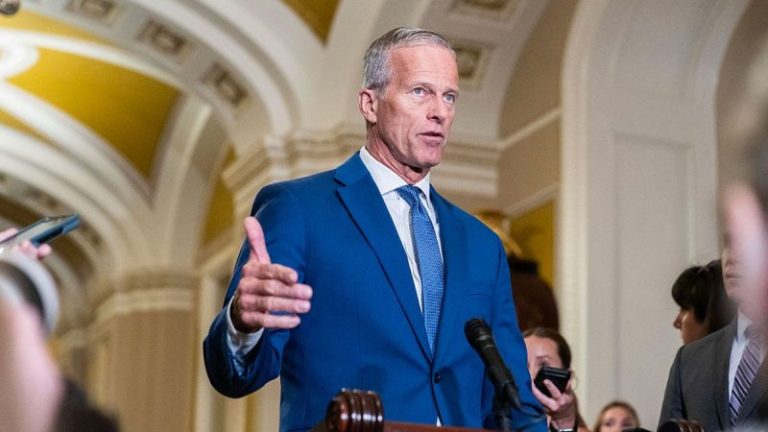
        Senate Majority Leader John Thune, R-S.D., said he believes Senate Democrats are posturing for a government shutdown to score a political win with their base, and he’s trying to prevent it.

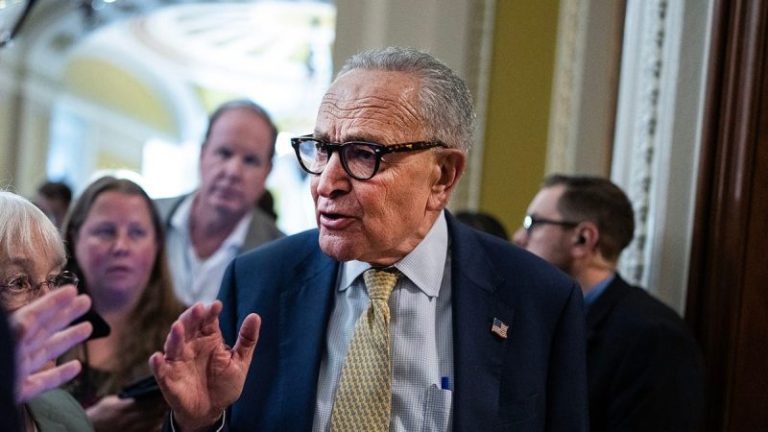
        In an interview with Fox News Digital, Thune argued that Democrats, led by Senate Minority Leader Chuck Schumer, D-N.Y., lack a real reason for not backing the GOP’s short-term government funding extension other than to appease the ‘far left.’

        Thune said that in March, when Democrats last joined Republicans to keep the government open, Schumer and his caucus made a ‘very different argument’ about averting a partial government shutdown, but the move was unpopular with their political base.

        ‘It’s getting to the point now where their base [has] got so much influence in the party, and they’re so demanding on just resisting and fighting everything, with respect to the Trump administration, that they can’t see straight,’ Thune said.  

        ‘It is borderline pathological. It’s like a disease,’ he continued. ‘They just — that this is something with which they’re afflicted, and I think it really blurs their vision. And I think they run the risk with this, again, of putting themselves in a position of where they are viewed as the party that’s trying to block the government from being funded.’

        House Republicans unveiled their stopgap bill, known as a continuing resolution (CR), earlier this week that would keep the government open under current spending levels until Nov. 21.

        The bill is ‘clean,’ meaning there aren’t partisan policy or spending riders, save for the millions meant for beefing up security measures for lawmakers, the judicial branch and the administration, and funding meant for Washington, D.C.’s budget.

        While the Republican-controlled House is expected to pass the bill on Friday, the Senate is a different story. Despite Thune commanding a majority in the upper chamber, he will need Senate Democrats to support the bill. And so far, they aren’t budging.

        Thune contended that the bill is everything that Democrats — when they controlled the Senate under former President Joe Biden — dreamed of: a clean, short-term bill. But the issue at hand now is a matter of communication.

        Schumer has accused Thune of not speaking with him, or Senate Democrats more broadly, about the bill, and he has labeled the GOP’s push to avert a partial government shutdown a partisan effort led by President Donald Trump.

        But Thune said he did try to talk to Schumer last week when the GOP was gearing up to change Senate rules to blast through Democrats’ blockade of Trump’s nominees.

        Thune went to Schumer on the floor to discuss the then-ongoing talks between Republicans and Democrats on a since-failed deal for confirmations, but he recalled that the Democratic leader brushed him off.

        ‘He couldn’t get out of the conversation fast enough,’ Thune said. ‘He was, like, running off the floor. So, I mean, there was certainly an opportunity there to say, ‘We need to sit down and talk about, you know, a CR and how to fund the government.’ I just think this is more political posturing.’

        ‘That’s the way it’s supposed to work. But the way Schumer likes it to work, and I think this is, again, part of his business model, is you go into his back office, behind closed doors and write this, you know, in the dark of night, and that’s just not the way we’re doing business,’ he continued.

        Senate Democrats unveiled their own counter-proposal to the GOP’s bill late Wednesday night that includes a slew of their priorities not included in the clean CR, like permanently extending expiring Obamacare premium subsidies, undoing the ‘big, beautiful bill’s’ Medicaid cuts, and clawing back the canceled funding for NPR and PBS.

        Thune said that some of the issues that Democrats were pushing in a short-term extension ‘don’t fit there,’ but that conversations, particularly on finding a deal for the healthcare insurance tax credits, could be had later on.

        Still, he viewed Democrats’ resistance as not ‘serious,’ given that the end goal of the short-term extension is to actually pass the dozen spending bills to fund the government — a feat that hasn’t been pulled off in Congress since the 1990s.

        The House and Senate are currently working on a path forward for three spending bills, which both chambers have already passed. Thune hoped that if lawmakers were able to avert a partial shutdown, that work could continue with the remaining nine funding bills.

        ‘This will test the seriousness of whether or not they actually want a real appropriations process, and whether they want to have a bipartisan way of funding the government,’ Thune said.

        ‘And if the Democrats would give us consent to get on them and work with us, we could have a bipartisan process on the floor like we did with those other three, and we could fund most of the government the old-fashioned way, which is the way it’s supposed to be done,’ he continued.

        But before any of that can happen, the bill has to make its way to the upper chamber. Thune is leaving the door open for the Senate to work into the weekend, but the Sept. 30 deadline is fast-approaching.

        Congress also has a recess scheduled for next week to observe the Jewish New Year, and a vast majority of Republicans will be in Arizona for conservative activist Charlie Kirk’s memorial service. 

        There are also several procedural hurdles in the Senate that will have to be dealt with, further bogging down the process. Ultimately, Thune believed that it would be ‘up to the Democrats.’

        ‘If they want to put a vote up sooner, later, and our members again — if the Democrats are going to fight us and make us do this the hard way — may just decide, let’s just set this up for votes,’ Thune said. ‘When we get back here, and we get up against the deadline, when it becomes real, then we use live ammo.’

        Fox News Digital reached out to Schumer’s office for comment, but did not immediately hear back. 

        This post appeared first on FOX NEWS

        This story discusses suicide. If you or someone you know is having thoughts of suicide, please contact the Suicide & Crisis Lifeline at 988 or 1-800-273-TALK (8255).

        A top conservative watchdog is suing the federal health care bureaucracy alleging they are stonewalling results of a study started under the Obama administration looking into the effects of transgender therapy pharmaceuticals on youth.

        Oversight Project president Mike Howell told Fox News Digital in a Wednesday interview that administering puberty blockers and other nascent drugs to teens is akin to ‘modern-day Tuskegee experiments’ and that the National Institutes of Health and the study’s proctor should not be allowed to keep their results secret.

        In 2014, NIH awarded a grant to children’s hospitals that led to a study helmed by a Los Angeles pediatrician to discern the long-term effects of puberty blockers on pediatric transgender people, Howell explained, citing his organization’s lawsuit.

        In 2024, Rep. Lisa McClain, R-Mich., wrote to the Biden-led NIH questioning why ‘principal investigator’ Dr. Johanna Olson-Kennedy was ‘withholding publication’ of the $9.7 million study’s findings.

        ‘In light of the NIH grantee’s unwillingness to release the research project’s findings, we ask that you provide documents and information to assist the Committee’s oversight of this matter,’ McClain wrote, citing her role as chair of a House Oversight subcommittee.

        One year later, Howell’s group sought the files through a public request in July, and sued this week, claiming officials ignored them. 

        Both McClain, in her letter, and Howell, in his interview, raised concerns over Olson-Kennedy’s remarks about critics potentially weaponizing results from the NIH-funded study.

        ‘NIH is responsible for overseeing its extramural research projects to ensure supported researchers practice transparency, exemplify scientific integrity, and are proper stewards of taxpayer funds,’ McClain wrote to the Biden NIH.

        Howell said he wants the NIH, under the Trump administration, to make the results public, citing troubling hints from Olson-Kennedy in a New York Times article that quoted her saying about one-quarter of participants reported some type of depression.

        ‘In light of the recent spate of transgender ideology-inspired violent extremism and domestic terrorism, Including some of the shootings at schools and churches and most recently, Charlie Kirk, the Oversight Project and I want to know what the government knows about the psychological conditions of this new and coveted population of transgender children who are now growing into adults,’ Howell said.

        ‘It seems to me, in light of recent disclosures, including the America First Legal v. FDA [suit] that the government was well aware that these types of therapies, surgeries and cultural celebration and praising of this class of people was dangerous and led to increases in suicide rates, depression and other psychological conditions which all too often are manifesting in violent tendencies.’

        In 2024, America First Legal – founded by Trump confidant Stephen Miller – sued for the release of any FDA records on off-label uses for puberty blockers and ‘cross-sex hormones.’

        Howell said there is public interest in the study’s publication because it may ‘map out’ why or whether the government has been aware of the ‘massive, growing problem’ but declined to publicize for ‘politically-correct reasons.’

        While NIH declined comment to Fox News Digital citing ongoing litigation, HHS Secretary Robert F. Kennedy Jr., has been very critical of the types of drugs the Oversight Project is also concerned about.

        Kennedy has called puberty blockers for minors ‘castration drugs,’ and suggested young people cannot be considered prescient enough to make such life-changing medical decisions.

        ‘Minors cannot drive, vote, join the army, get a tattoo, smoke, or drink, because we know that children do not fully understand the consequences of decisions with life-long ramifications,’ he wrote on social media.

        ‘The more I learn, the more troubled I have become about giving puberty blockers to youth,’ Kennedy said in May 2024.

        As secretary, Kennedy urged doctors to reconsider child sex-change operations in a formal letter obtained by the Daily Caller in May.

        ‘HHS expects you promptly to make the necessary updates to your treatment protocols and training for care for children and adolescents with gender dysphoria to protect them from these harmful interventions,’ it read.

        Neal Cornett, a lead attorney in the case, told Fox News Digital he would also like to see any internal NIH reports on the physiological effects of related drugs Lupron and Supprelin.

        ‘Imagine that you’re 14 years old – you take some kind of puberty blocker – you’re basically stunted, your bones aren’t growing, you have osteoporosis at the age of 15… that’s going to do a psychological number on you,’ Cornett said.

        Howell said there is an absolute connection, if allegations bear out, between the Tuskegee Experiments of the mid-20th century on African Americans and studies testing out puberty blockers on 21st century children.

        ‘When I first read [of the study] – I was reminded of Tuskegee Experiments on African Americans [where the uniformed U.S. Public Health Service] gave them drugs… to test out treatments there; horrific events,’ he said.

        Fox News Digital also reached out to the Children’s Hospital of Los Angeles, which was listed as the affiliate medical center for Olson-Kennedy. A number listed for Olson-Kennedy’s California practice was disconnected.

        She told the Times in October 2024 she intended then to publish the data but blamed delays on funding cuts — a claim the NIH denied, the paper reported.

        This post appeared first on FOX NEWS

        Senate Minority Leader Chuck Schumer, D-N.Y., accused President Donald Trump of exploiting the death of conservative activist Charlie Kirk in order to go after critics.

        Schumer’s charge came as Senate Democrats teed up legislation called the ‘No Political Enemies Act,’ which would prohibit Trump and his administration from weaponizing government agencies. It comes in the wake of late-night TV host Jimmy Kimmel’s sidelining by ABC over comments he made related to Kirk.

        The top Senate Democrat said freedom of speech is ‘one of the great hallmarks of our country’ but that the Trump administration ‘is trying to snuff it out.’

        ‘Those who break the law, of course, resort to any source of violence ought to be prosecuted to the fullest extent of the law,’ Schumer said. ‘But using the tragic death of Charlie Kirk as an excuse to supercharge the political witch hunt against critics is abhorrent, obnoxious and as un-American as it gets.’

        ‘To attack civil society, whether it’s Jimmy Kimmel, civil society organizations or the Trump administration’s perceived political enemies, its crusade is unending,’ he continued. ‘And this is one of the saddest parts of all, because of congressional Republicans’ obeisance to Trump, it’s unchecked because they are scared to stand up to Trump.’

        Democrats’ legislation would prevent the administration from using agencies like the Justice Department, FBI and the IRS from going after people for criticizing the government, according to a one-page description of the bill.

        It would also hold officials accountable for using their office to go after critics, ensure courts quickly dismiss ‘abusive actions,’ and provide due process for U.S. nonprofits that the government tries to ‘label as criminal or terrorist organizations.’

        Their legislative push also comes after Attorney General Pam Bondi said earlier this week that the administration would ‘go after you if you are targeting anyone with hate speech.’

        Sen. Chris Murphy, D-Conn., called her comments ‘bone chilling.’

        ‘The shooting of Charlie Kirk was a national tragedy,’ he said. ‘It should have been a line in the sand, an opportunity for President Trump to bring this country together to do whatever is necessary to stamp out political violence that’s targeted both Republicans and Democrats, political violence that emanates from both right-wing and left-wing radicalization.’

        ‘But Trump and his lieutenants are choosing a different path,’ he continued. ‘They are choosing to exploit this tragedy, to weaponize the federal government to destroy Donald Trump’s political opposition.’

        Fox News Digital reached out to the White House and Justice Department for comment but did not immediately hear back. 

        This post appeared first on FOX NEWS

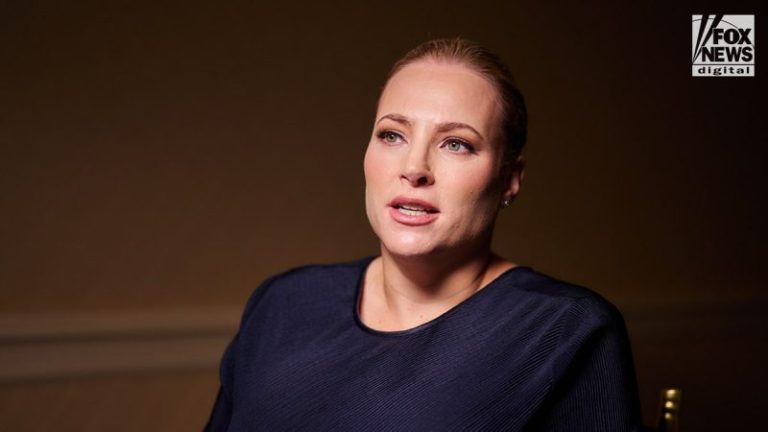
        Meghan McCain believes ‘the U.S.-Israel alliance is incredibly strong’ even amid rising antisemitism across the country and increasing political pressure from both sides of the aisle. 

        Fox News Digital sat down with McCain on Tuesday evening before she received the ‘Champion of Israel’ award from the American Friends of Magen David Adom (AFMDA), which supports Israel’s emergency medical and disaster response service. She noted that in her observation, issues surrounding the U.S.-Israel relationship appear to be more partisan as far as the left is concerned. 

        McCain said that she sees some pro-Israel Democrats, specifically pointing to Sen. Chuck Schumer, D-N.Y., ‘hedging in different places.’ During her award acceptance speech at this year’s AFMDA New York City gala, she also called out New York City Democratic mayoral candidate Zohran Mamdani, who has taken heat for previous acceptance of antisemitic rhetoric such as ‘globalize the intifada.’ 

        ‘Pray for this city,’ McCain said, adding, ‘he’s an animal.’ The statement garnered applause from the audience, which gathered at Manhattan’s Cipriani Wall Street.

        McCain also acknowledged that there are political elements not just on the left, but also on the right that oppose Israel, all of which she condemned. She urged those in attendance to ‘fight together to combat this destructive message of the radical left and within my own party on the alt-right.’

        Despite this, the White House’s ties to Jerusalem give McCain hope that the relationship between the two nations is ironclad.

        ‘Of many of the reasons that I’m glad that President Trump is president is his wholehearted support of Israel is definitely one of them,’ McCain told Fox News Digital. ‘I think that we have an incredibly strong alliance and shared values and shared political interests and shared global interests.’

        The former co-host of ‘The View’ also said that she believes the majority of the American public understands that ‘the interests of Israel and the interests of the United States of America are shared, especially in our fight against Islamic extremism.’

        Charlie Kirk – who was also a steadfast supporter of Israel – came up both in McCain’s speech and her conversation with Fox News Digital.

        ‘I think we’re all sort of struggling with his assassination,’ she told Fox News Digital. ‘I am not satisfied with the reaction of the broad swath of Democrat leaders. When you have people like Ilhan Omar that are still accepted in Democrat spaces after what she said about Charlie Kirk in the wake of his passing, I mean, it’s hideous.’

        Speaking to the audience of first responders and their supporters, she pointed out the contrast between those who save lives because of their beliefs and those who end them.

        ‘Where what you do here is about saving lives, the other side has nothing to offer but destruction. There are people all around the world and even in this country who do not want to participate in debate. They do not want to be proven wrong,’ McCain said.

        ‘And in the instance of people brave enough like Charlie Kirk to stand for Judeo-Christian values and the values of family and life and freedom and the right of Israel to defend itself against its enemies, they will try to destroy you by any means necessary and dance in celebration when you fall,’ she later added.

        Addressing gala attendees, McCain delivered a strong defense of the U.S.-Israel alliance, as well as her personal unwavering support for the Jewish state.

        ‘No matter how much of the world — motivated by moral cowardice, material interest, or the sublimated antisemitism that still stalks the globe — turns away from Israel, I will not. I will never. And I speak for millions and millions of Americans who feel exactly the same,’ McCain said to a cheering crowd.

        McCain credited her father, the late Sen. John McCain, R-Ariz., and his relationship with the late Sen. Joe Lieberman, D-Conn., for her desire to deliver a strong defense of the U.S.-Israel relationship.

        ‘My father always understood the importance of the connection between America and Israel. His deep friendship with the man who was for all intents and purposes my uncle, the late Senator Joe Lieberman, was what exposed me to Jewish life, thought, and practice from a young age,’ McCain said. Later in her speech, she added that she and her husband, Ben Domenech ‘feel the same way, as so many Americans do: that Israel’s cause is right, Israel’s fight is noble, and Israel’s means are just.’

        Magen David Adom (MDA), which is essentially Israel’s version of the Red Cross, handles a wider range of issues than its American counterpart, the Red Cross, such as disaster relief and blood services. 

        On Oct. 7, 2023, MDA handled over 21,600 emergency calls, five times more than the number of calls it gets on an average Saturday. Additionally, MDA dispatched 1,430 ambulances and intensive care units alongside hundreds of emergency motorcycles, three helicopters, command and control vehicles, and 24 mass casualty response vehicles equipped to deploy mobile treatment sites. Since the Israel-Hamas war began, 38 MDA personnel lost their lives.

        McCain concluded her speech with a stark warning — that Israel’s fight is America’s fight and that ‘If Israel were to lose its war — God forbid — the armies of darkness would march toward us here in America, too.’

        This post appeared first on FOX NEWS