Piche Resources (PR2:AU) has announced High Grade Rock Chip Results extend Cerro Chacon (updated)
Download the PDF here.
This post appeared first on investingnews.com


Piche Resources (PR2:AU) has announced High Grade Rock Chip Results extend Cerro Chacon (updated)
Download the PDF here.
Jindalee Lithium (JLL:AU) has announced Successful $8M Placement & SPP to Advance McDermitt & SPAC
Download the PDF here.
Jindalee Lithium (JLL:AU) has announced Options Prospectus
Download the PDF here.

Locksley Resources (LKY:AU) has announced Locksley Delivers 100% American Made Antimony Ingot
Download the PDF here.
Atlantic Lithium (A11:AU) has announced Pronounced Lithium-in-soil Anomalies
Download the PDF here.
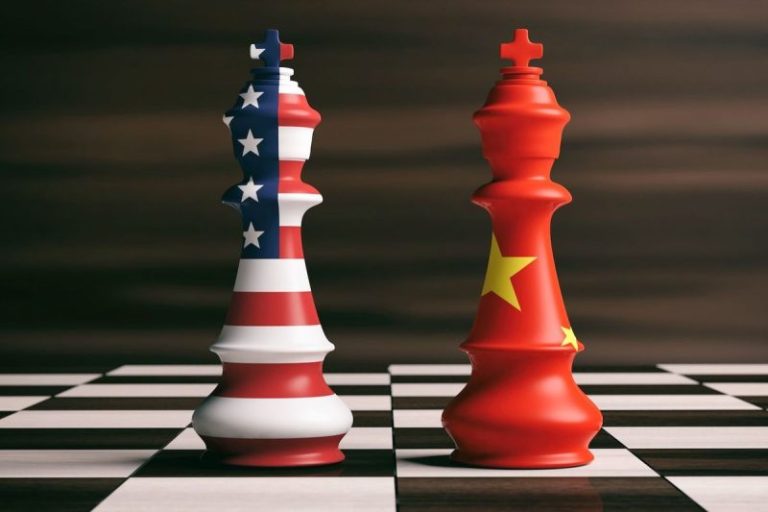
China has accused the US of “seriously distorting and exaggerating” Beijing’s newly expanded rare earths export controls, but signaled a willingness to hold talks before an expected meeting between US President Donald Trump and Chinese President Xi Jinping later this month.
“The US interpretation seriously distorts and exaggerates China’s measures, deliberately creating unnecessary misunderstanding and panic,” Ministry of Commerce spokesperson He Yongqian said Thursday (October 16).
According to the Global Times, he emphasized that Beijing’s restrictions are intended to protect national security and prevent the misuse of rare earths in military applications, not to destabilize global markets.
The remarks follow a sharp escalation in rhetoric between the two countries after China expanded its export controls last week to include five additional rare earth elements: holmium, erbium, thulium, europium and ytterbium.
The new rules will take effect in stages starting November 8, coinciding with the expiry of a six month trade truce between Washington and Beijing. Foreign companies that use Chinese materials or equipment to produce rare earths products will require Chinese export licenses, even if no Chinese firm is directly involved in the transaction.
Beijing has also vowed stricter scrutiny of applications tied to advanced semiconductors and defense systems, such as 14 nanometer chips and artificial intelligence used in weapons platforms.
Top US officials have accused Beijing of attempting to weaponize its dominance in the global rare earths supply chain, which accounts for about 70 percent of global production and more than 90 percent of processing capacity.
At a press briefing on Wednesday (October 15), US Trade Representative Jamieson Greer called China’s new measures a “global supply chain power grab” and warned that Washington and its allies “would not accept the restrictions.”
However, he also said China has not yet implemented the full regulatory system and suggested there is still room to de-escalate. “These are drafted, or in draft, so it’s quite real,” Greer said.
“But our expectation is that they won’t implement this, and that we’ll be able to be back to where we were a week ago, where we had the tariff levels we’ve agreed to and the flow of rare earths that we agreed to.”
Secretary of the Treasury Scott Bessent echoed the sentiment, telling CNBC that the Trump administration does not want to further inflame tensions, but will act decisively if Beijing moves forward with its restrictions.
“When we get an announcement like this week with China on the rare earths, you realize we have to be self-sufficient, or we have to be sufficient with our allies,” Bessent said.
He also accused China of using its dominance in rare earths refining and processing to slash prices and drive foreign competitors out of the market. Trump has threatened to impose 100 percent tariffs on Chinese goods starting on November 1 — or sooner — if Beijing moves ahead with the export controls.
Despite the mounting friction, both sides remain committed to a scheduled meeting between Trump and Xi in South Korea later this month, highlighting the indispensable nature of rare earths to modern industry.
They are used in electric vehicles, wind turbines, smartphones and, crucially, in US military systems such as F-35 fighter jets, Tomahawk missiles and Predator drones. Each F-35 is estimated to require more than 400 kilograms of rare earths for its stealth coatings, motors and radar systems.
In response to China’s dominance, Washington has ramped up efforts to secure alternative sources of critical minerals.
The Department of Defense earlier this year struck a deal with MP Materials (NYSE:MP), the largest US rare earths producer. It includes an equity stake, a price floor and an offtake deal to guarantee supply for defense applications.
Separately, the Trump administration is reportedly exploring a potential investment in Critical Metals (NASDAQ:CRML), a US-listed firm developing Greenland’s vast Tanbreez rare earths deposit.
Securities Disclosure: I, Giann Liguid, hold no direct investment interest in any company mentioned in this article.

Gold Fields (NYSE:GFI) has completed its AU$3.7 billion purchase of Gold Road Resources.
Gold Road rejected Gold Fields’ first acquisition proposal in March, saying it undervalued the company.
Following negotiations between the two parties, Gold Fields, through its wholly owned entity Gruyere Holdings, entered into a scheme implementation deed with Gold Road on May 5. Under the AU$3.7 billion deal, the companies agreed that Gold Road shareholders would receive fixed cash consideration of AU$2.52 per share.
‘The Scheme provides Gold Road shareholders with an opportunity to realise certain value for their Gold Road shares at a compelling premium,” said Gold Road Managing Director and CEO Duncan Gibbs at the time.
“This offer price represents a material premium to the undisturbed share price prior to the initial Gold Fields’ proposal and a material premium to longer term trading levels,’ he added.
Under the deal, Gold Fields will gain a 100 percent interest in the Gruyere project in Western Australia.
Gruyere, which the companies previously worked on together as a joint venture, currently holds an open-pit mineral resource of 6.04 million ounces, and ore reserves of 3.67 million ounces.
Its average annual gold production stands at at 350,000 ounces.
According to Gold Fields, all Gold Road shares are now owned by Gruyere Holdings. Following the scheme’s implementation, Gold Road is expected to apply to delist from the Australian Securities Exchange.
Securities Disclosure: I, Gabrielle de la Cruz, hold no direct investment interest in any company mentioned in this article.
Jindalee Lithium (JLL:AU) has announced Proposed issue of securities – JLL
Download the PDF here.
Here’s a quick recap of the crypto landscape for Friday (October 17) as of 9:00 p.m. UTC.
Get the latest insights on Bitcoin, Ether and altcoins, along with a round-up of key cryptocurrency market news.
Bitcoin (BTC) was priced at US$106,495, a 1.7 percent decrease in 24 hours. Its lowest valuation of the day was US$104,747, and its highest was US$107,411.
Bitcoin price performance, October 17, 2025.
Chart via TradingView.
The Bitcoin price remains under pressure. While sizable short liquidations of both Bitcoin and Ether have provided pockets of buying relief, overall market confidence is tempered. Volatility persists, leaving the market poised for further directional cues from key upcoming earnings and economic data releases.
Ether (ETH) was priced at US$3,830.31, a 1.2 percent decrease in 24 hours. Its lowest valuation of the day was US$3,726.31, and its highest was US$3,845.65.
Bitcoin derivatives metrics indicate a complex market environment with mixed signals.
While short-term buying pressure has occurred, underlying market sentiment remains bearish or neutral, with cautious trading behavior and no strong bullish conviction at this time.
Bitcoin liquidations have totaled approximately US$22.09 million in the last four hours, with short positions making up the majority, signaling a short squeeze or bullish pressure. Ether liquidations show a similar pattern, totaling US$20.86 million, the majority of which were short positions.
Futures open interest for Bitcoin has decreased by 1.56 percent to around US$70 billion, showing strong bearish sentiment. Ether futures open interest was unchanged at around US$44 billion, reflecting market neutrality.
The perpetual funding rate for Bitcoin was -0.009, and for Ether it was -0.015, indicating bearish market sentiment.
Bitcoin’s relative strength index stands at 34.05, indicating that the cryptocurrency is in a bearish/bullish/neutral momentum, phase but not yet deeply oversold.
CMC’s Crypto Fear & Greed Index has fallen far into fear territory, dipping to 28 on Friday from an earlier score of 32.
CMC Crypto Fear and Greed Index, Bitcoin price and Bitcoin volume.
Chart via CoinMarketCap.
A group of Japan’s largest banks, including MUFG Bank, Sumitomo Mitsui Banking and Mizuho Bank, are reportedly collaborating to launch a yen-backed stablecoin using MUFG’s Progmat platform.
The initiative aims to create an interoperable payment token for over 300,000 corporate clients. MUFG will be the first user for internal settlements. The stablecoin is expected to roll out by year end, potentially establishing Japan’s first unified bank-backed stablecoin network and accelerating crypto adoption in the region’s financial infrastructure.
Uniswap has expanded its web app to support the Solana blockchain, enabling users to trade Solana-based tokens, the platform announced in a blog post on Wednesday (October 15). This move broadens Uniswap’s reach beyond Ether, lowering transaction costs and speed for DeFi traders using Solana’s high-performance network.
Ripple will reportedly add a US$1 billion purchase of its native XRP cryptocurrency to its digital asset treasury.
Sources for Bloomberg said the treasury funds, which will be raised through a special purpose acquisition company, will be used to support Ripple’s ecosystem development, liquidity provision and strategic partnerships, reinforcing Ripple’s commitment to growing XRP’s adoption in global payments.
Securities Disclosure: I, Meagen Seatter, hold no direct investment interest in any company mentioned in this article.

The U.S. National Highway Traffic Safety Administration (NHTSA) has opened a new investigation into 2.88 million Tesla vehicles running ‘Full Self-Driving’ (FSD). Officials say the system may be breaking traffic laws, and worse, causing accidents. According to Reuters, 58 reports describe Teslas blowing through red lights, drifting into the wrong lanes and even crashing at intersections. Fourteen of those cases involved actual crashes, and 23 caused injuries.
Get my best tech tips, urgent security alerts and exclusive deals delivered straight to your inbox. Plus, you’ll get instant access to my Ultimate Scam Survival Guide — free when you join my CYBERGUY.COM newsletter.
In one striking pattern, six Tesla vehicles reportedly ran red lights before colliding with other cars. One driver in Houston complained that FSD ‘is not recognizing traffic signals,’ saying the car stopped at green lights but ran through reds. The driver even said Tesla saw the issue firsthand during a test drive, but refused to fix it. The agency is also reviewing new reports that some Teslas using FSD failed to handle railroad crossings safely, with one case involving a near-collision with an oncoming train.
This is far from Tesla’s first brush with regulators. The company is already facing several investigations tied to both its Autopilot and FSD systems. In one high-profile case, a California jury ordered Tesla to pay $329 million after an Autopilot-related crash killed a woman. Another investigation is looking into Tesla’s limited Robotaxi service in Austin, Texas, where passengers reported erratic driving and speeding — even with human safety drivers onboard. Meanwhile, Tesla is still fighting a false advertising lawsuit from California’s DMV. Regulators say calling the software ‘Full Self-Driving’ is misleading since it requires constant driver supervision. Tesla recently changed the name to ‘Full Self-Driving (Supervised)’ to reflect that reality.
Tesla’s latest FSD software update arrived just days before the investigation began. But the NHTSA says the system has already ‘induced vehicle behavior that violated traffic safety laws.’ This investigation, now in its early stages, could lead to a recall if the agency finds Tesla’s self-driving software poses a safety risk.
If you drive a Tesla with FSD enabled, stay alert. The system isn’t fully autonomous, no matter what the name suggests. You should:
For everyone else, this investigation is a reminder that ‘self-driving’ still means supervised driving.
Think your devices and data are truly protected? Take this quick quiz to see where your digital habits stand. From passwords to Wi-Fi settings, you’ll get a personalized breakdown of what you’re doing right and what needs improvement. Take my Quiz here: Cyberguy.com.
Tesla’s dream of a fully autonomous future keeps hitting speed bumps. With safety regulators circling and lawsuits piling up, the company’s next moves will shape public trust in AI-driven transportation. Still, the push toward automation isn’t slowing down; it’s just under heavier watch.
How much control would you give an AI behind the wheel? Let us know by writing to us at Cyberguy.com.
Get my best tech tips, urgent security alerts and exclusive deals delivered straight to your inbox. Plus, you’ll get instant access to my Ultimate Scam Survival Guide — free when you join my CYBERGUY.COM newsletter
Copyright 2025 CyberGuy.com. All rights reserved.