Author

admin

Browsing

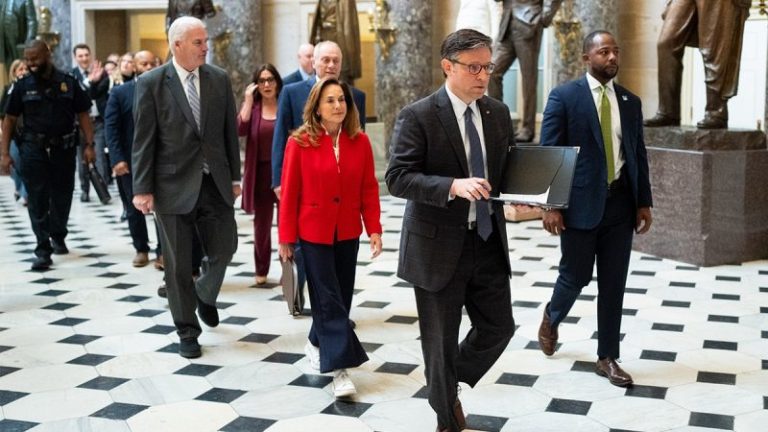
The end of the longest government shutdown in U.S. history is finally in sight, with the House of Representatives set to vote on a federal funding bill later Wednesday evening.

House lawmakers are set to take a procedural vote in the 5 p.m. hour on whether to allow debate on the measure. If the legislation survives, a final vote is expected in the 7 p.m. hour.

The government has been shut down for 43 days as Democrats and Republicans hotly debated the merits of the GOP’s initial federal funding bill, a short-term extension of fiscal year (FY) 2025 spending levels through Nov. 21.

The vast majority of Democrats are still against the legislation, including House Democratic leadership, but GOP lawmakers across several ideologically diverse factions have signaled confidence in a nearly unified Republican vote.

House Freedom Caucus Policy Chairman Chip Roy, R-Texas, said he heard no dissent on the bill from his band of fiscal hawks.

‘I’m not going to speak for everybody, but I think there’s general support. So you know, I’m unaware of any opposition of significance,’ he told reporters Tuesday night.

House Appropriations Committee Chairman Tom Cole, R-Okla., said, ‘Nothing’s ever easy around here. But, look, I didn’t notice any dissent … I think the votes will be there on our side.’

But with a razor-thin majority, House GOP leaders can only afford to lose two Republican votes at most to pass the bill without relying on any Democrats.

‘I’m very hopeful,’ House Majority Leader Steve Scalise, R-La., told Fox News Digital when asked if Republicans had the votes to pass the bill. ‘I think you’re seeing just a few Democrats come to their senses. It should be a lot more.’

Meanwhile, the shutdown’s effects on the country have grown more severe by the day.

Many of the thousands of air traffic controllers and Transportation Security Administration (TSA) agents who had to work without pay were forced to take second jobs, causing nationwide flight delays and cancellations amid staffing shortages at the country’s busiest airports. Millions of Americans who rely on federal benefits were also left in limbo as funding for critical government programs ran close to drying out.

At the heart of the issue was Democratic leaders’ refusal to back any funding bill that did not also extend COVID-19 pandemic-era enhanced Obamacare subsidies that are set to expire at the end of this year. Democrats argued it was their best hope of preventing healthcare price hikes for Americans across the U.S.

Republicans agreed to hold conversations on reforming what they saw as a broken healthcare system, but they refused to pair any partisan priority with federal funding.

The initial bill passed the House on Sept. 19 but stalled in the Senate for weeks, when Democrats sank the bill more than a dozen times.

However, after weeks of stalemate and the clock running down on their Nov. 21 bill, a new compromise emerged that got support from eight Senate Democrats to carry it across the finish line.

The new legislation would extend FY 2025 federal funding levels through Jan. 30, to give negotiators more time to strike a longer-term deal for FY 2026.

It would also give lawmakers some headway with that mission, advancing legislation to fund the Department of Agriculture and the Food and Drug Administration; the Department of Veterans Affairs and military construction; and the legislative branch.

In a victory for Democrats, the deal would also reverse federal layoffs conducted by the Trump administration in October, with those workers getting paid for the time they were off.

A side deal struck in the Senate also guaranteed Senate Democrats a vote on legislation extending the enhanced Obamacare subsidies. Speaker Mike Johnson, R-La., however, has made no such promise in the House.

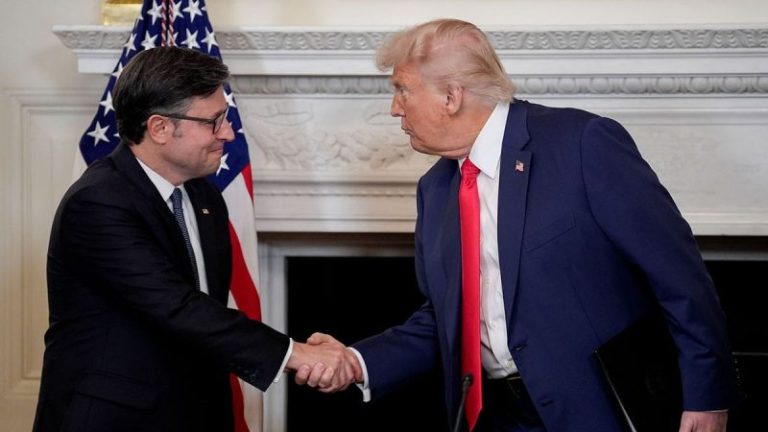
If passed on Wednesday night, the legislation heads to President Donald Trump’s desk for a signature.

When asked about the bill on Tuesday, a White House official told Fox News Digital, ‘President Trump has wanted the government reopened since the first day Democrats shut it down. The action in the Senate is a positive development, and we look forward to seeing it progress.’


This post appeared first on FOX NEWS

In 2015, when Donald Trump was running for the Republican nomination for president, a refrain that was often heard from his supporters and mocked by his detractors was, ‘He fights.’

It seemed empty and vacuous, but in fact, it represented a few core issues that GOP voters felt their party was ignoring, or at least not prioritizing. Today, it is the Democratic base that is demanding its party ‘fight.’ But fight for what?

Trump’s core issues, and those of what would become known as MAGA, were a bit obscure at first, but eventually became very clear: Secure the border, abandon globalism and bad trade deals, and fight the culture war.

What are the issues or policies that are animating today’s fighting spirit in the Democratic Party? There are three that are dominant.

The first issue can roughly be called redistribution of wealth. We should avoid using the term socialism here, because it is vague and toxic, and what Democrats are really talking about is the very purpose of the social safety net, from welfare to food stamps.

At least nominally, the position of the Democratic Party for half a century has been that welfare programs are a hand up, not a hand out. As John F. Kenndy put it, they are the rising tide that lifts all ships.

In practice, this has led to a permanent underclass that is funded by high-earning taxpayers, but Democrats have long refused to admit it. Democrat socialists have ripped off the Band-Aid. Soaking the rich to pay for the basic needs of the poor and working man is their proud new mantra.

It turns out, the likes of New York City Mayor-elect Zohran Mamdani have Democratic voters with them on this about-face. In a recent Gallup poll, 66% of Democrats had a positive view of socialism, with only 42% saying the same about capitalism.

Former President Joe Biden used to whisper that billionaires should ‘pay their fair share.’ Today, Sen. Bernie Sanders, I-Vt., and Rep. Alexandria Ocasio-Cortez, D-N.Y., shout from the rooftops that the rich should pay way more than their ‘fair share,’ and basically subsidize everyone else.

The second major issue that the democrat socialists have locked onto is Israel, and America’s relationship with and military funding of the Jewish state, something that even a decade ago the party supported as bedrock policy.

According to a Pew survey, since 2022, the percentage of Democrats with a negative view of Israel has gone from 53% to a staggering 69%, and the lean and hungry New Democrats know it.

Rep. Ro Khana, D-Calif., who has been quietly crafting a new vision for his party, recently posted a list of issues at the core of his mission. They included ‘Medicare-for-all,’ child care for $10 a day, housing, and then, right there at the bottom, ‘No bombs to Israel.’

Meanwhile, pro-Israel Sen. John Fetterman, D-Pa., has all but admitted there is ‘no room’ in the party for those on his side of the issue. That’s not good news for the political future of moderates like Pennsylvania Gov. Josh Shapiro.

The third issue that is clearly firing up the Democratic base is immigration, and when I say they are fired up, I mean seemingly normal people leaping in front of the cars of federal authorities to keep them from deporting illegal alien criminals.

Take Mamdani’s acceptance speech in Brooklyn last week: ‘Thank you to those so often forgotten by the politics of our city, who made this movement their own. I speak of Yemeni bodega owners and Mexican abuelas,’ he said. ‘Senegalese taxi drivers and Uzbek nurses. Trinidadian line cooks and Ethiopian aunties. Yes, aunties.’

The key words here are ‘who made this movement.’

Make no mistake, this new iteration of the Democratic Party will not only seek to give amnesty to every person illegally in the United States, they will open the border again, and their voters will cheer on the invasion.

It wasn’t just establishment Republicans who underestimated Trump’s appeal in 2015, it was the whole country. What we didn’t see then was that on his big three issues, the border, globalism and the culture war, he was tapping into a real popular zeitgeist.

Today, we are at a similar point, on redistribution of wealth, Israel and immigration, the democrat socialists have found popular policies among their base, and all the Chuck Schumers in the world can’t talk them out of it.

Just as Trump took over the GOP before anyone quite knew it, the democrat socialists have found the same fighting path to dominance among Democrats, and for the few moderates left, it already looks far too late to stop it.

This post appeared first on FOX NEWS

Former first lady Michelle Obama revealed on a recent episode of her podcast that she was left infuriated by a moment on Air Force One in 2009 when she debated whether to wear Bermuda shorts while on vacation — which ultimately led to controversy. 

‘The fact that we had to spend time thinking about that kind of stuff in ways that my husband didn’t — it was really infuriating,’ Obama said during an episode on her podcast, ‘IMO With Michelle Obama and Craig Robinson,’ which she co-hosts with her brother. ‘Then an article, a negative article, still happened.’ 

The former first lady explained that in August 2009 she and the former president were set to depart Air Force One for a hike in the Grand Canyon while on their first vacation since the inauguration earlier that year. While she fretted over what attire would be appropriate for a first lady and not draw public criticism, Barack Obama did not need to put effort into thinking about his outfit, she recounted. 

‘It was 100 degrees,’ Michelle Obama remembered of the conversation. ‘Barack — I was like, ‘Well, what are you wearing?’ He was like, ‘Well, I’m gonna throw on some sneakers, I’m gonna take my jacket off and roll my sleeves up’ because that’s what men can do. White shirt, no collar, no tie. That was how he changed.’

Michelle Obama said she debated whether to wear hiking shorts or a dress before landing on wearing Bermuda shorts. 

‘I can’t wear hiking shorts there, and I can’t wear a dress to hike,’ she said. ‘That would be crazy. People would call me ‘disconnected’ and ‘un-American.’ I’m at the Grand Canyon in a tea-length dress with flats? I was like, ‘That’s not how people go to the Grand Canyon.”

‘I eventually opted for the thing that felt mostly me,’ Michelle Obama continued. ‘And it was the Bermuda shorts. Because if we’re going on a hike, this is how a normal person would go on a hike.’

The former first lady did face backlash for the attire, as pundits at the time criticized that a first lady wearing shorts while departing Air Force One was too casual, with outlets running headlines such as, ‘Who Wears Short Shorts? Michelle Obama,’ ‘First lady’s shorts draw some long, hard looks,’ and ‘Michelle Obama: The Shorts Heard Round the World.’

Michelle Obama said in 2013 that she would not wear shorts again on Air Force One after the 2009 outfit caused ‘a huge stink.’ She explained at the time that she made the more relaxed choice because ‘we’re on vacation.’

First lady Melania Trump also has faced backlash over her wardrobe attire, including in 2017 when she wore a baseball cap and jeans to visit Texas after Hurricane Harvey that was viewed by some critics as too casual, and again in 2018 when she wore a green jacket while on a trip to visit the border that read, ‘I really don’t care. Do u?’ 

Melania Trump later told the media she wore the jacket as a message to the liberal media and other critics: ‘I want to show them that I don’t care,’ she told ABC News in 2018. 

Fox News Digital reached out to Michelle Obama’s office Tuesday for additional comment on the matter but did not immediately receive a reply. 

This post appeared first on FOX NEWS

House GOP leaders are looking to kick off next week in high gear to make up for the six weeks they spent out of session during the government shutdown.

With the end of Congress’ 42-day fiscal standoff in sight, House Majority Leader Steve Scalise, R-La., told Fox News Digital that House lawmakers will be faced with an accelerated schedule to accomplish the GOP’s priorities for this term.

I wanted to rework the schedule to create more time to make up for what happened during the shutdown, and the fact that there were a lot of bills that stacked up that we planned to bring to the floor in October that weren’t able to go,’ he said in an interview on Tuesday night.

Priorities for next week include legislation to help reduce federal restrictions on liquefied natural gas (LNG), and a bill aimed at expanding refining capacity in a bid to reduce soaring energy costs.

Measures aimed at D.C. are also expected to see votes, including a bill that D.C.’s pretrial release and detention processes require mandatory pretrial detention for defendants charged with violent crimes. 

Another bill expected to get a vote next week would undo local ordinances that Republicans say place burdensome barriers on the Metropolitan Police Department.

A largely symbolic measure to denounce socialism in the U.S. is also on next week’s schedule.

Lawmakers will be expected to work long into the night in a departure from their traditional day-to-day in D.C. Votes will be scheduled in the evenings when lawmakers have normally departed Capitol Hill for other events.

Scalise also noted the House would have a five-day legislative week from Monday through Friday, rather than the more traditional four days in D.C.

More time will also be allotted during the day for House committees to conduct hearings and advance their legislation, something that has not been done on Capitol Hill since Sept. 19.

‘We’re going to do that for the next few weeks until we catch up on the time that we missed when everybody was back in their districts,’ Scalise said.

The latter point is critical considering Congress will be reckoning with several key priorities in the coming months.

The bill to end the government shutdown, expected to pass the House on Wednesday, kicks the majority of fiscal year (FY) 2026 federal spending to a Jan. 30 deadline. It would also authorize funding for three of Congress’ 12 annual spending bills for FY 2026.

However, it will be an uphill battle for both the Senate and House appropriations committees to strike their remaining spending deals by then.

‘There are nine remaining bills, and we’d like to get all of those done in the next few weeks. And so, [House Appropriations Committee Chairman Tom Cole, R-Okla.] and his appropriators will be working overtime as well,’ Scalise said.

Congress also still has to find a bipartisan compromise on the federal government’s annual defense policy bill, called the National Defense Authorization Act (NDAA).

‘There have been a lot of negotiations ongoing. I think we’re getting close on the NDAA,’ Scalise said.

Scalise said Republicans would also be busy at work on a new Farm Bill, legislation that sets agricultural priorities as well as federal food policies for urban, suburban and rural areas across the country, as well as a highway bill — legislation that authorizes policy for surface infrastructure like roads, bridges and rail lines nationwide.

‘A lot of those bills have been very active in the committee process. They just haven’t gotten a lot of attention nationally during the shutdown. But the committees have been working, especially the chairman, to try to get those bills ready to move,’ he said.

‘And so we will have a lot of big ticket items that are important to our America First agenda ready to go. And that’s why we’re going to just add more floor time to be able to get all of it done by the end of this year.’

But in order to get all those ‘big-ticket items’ done, the House will first need to pass the Senate’s bipartisan bill to end the government shutdown.

Asked if his chamber had the votes to do so, Scalise said, ‘I’m very hopeful we will.’

‘I’m very confident our members are really eager to get back to a full House schedule. Many of them have been working overtime in their districts to mop up the mess Democrats created during the shutdown,’ he said.

This post appeared first on FOX NEWS

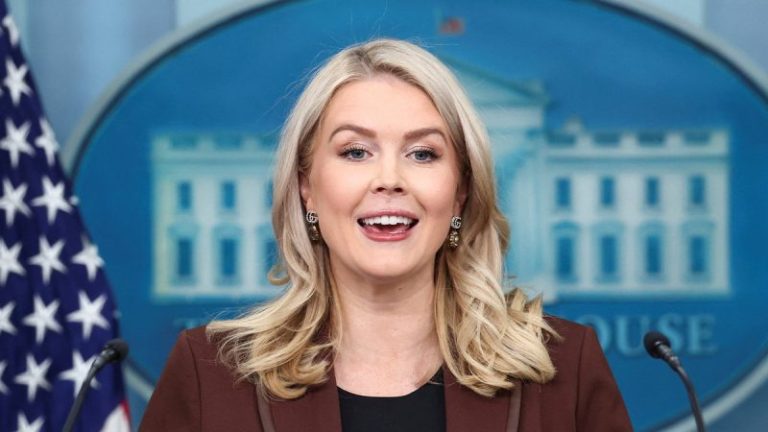
White House press secretary Karoline Leavitt said Wednesday that President Donald Trump ‘remains in exceptional physical health’ after concerns have swirled in recent months, including when the president received an MRI scan in October. 

‘As stated in the memo provided on October 10th, President Trump received advanced imaging at Walter Reed Medical Center as part of his routine physical examination,’ Leavitt said during Wednesday’s White House press briefing. ‘The full results were reviewed by attending radiologists and consultants, and all agreed that President Trump remains in exceptional physical health.’ 

The response followed a member of the media asking for additional details as to why Trump received an MRI during a checkup at Walter Reed National Military Center in Maryland in October. 

‘I got an MRI, it was perfect,’ Trump told reporters on Air Force One in October. 

‘I gave you the full results,’ he added. ‘We had an MRI, and the machine, you know, the whole thing, and it was perfect.’ 

The checkup in October has been described as routine by the administration, with Trump’s physician reporting that Trump is in ‘exceptional health.’ 

Media outlets and others have fanned the flames of concerns around Trump’s health earlier in 2025 when he was spotted with swollen legs in July while attending the FIFA Club World Cup final in New Jersey, as well as when other photos that same month showed him with bruises on his hands.

Leavitt said in July, while reading a health memo, that Trump’s swollen legs were part of a ‘benign and common condition’ for individuals older than age 70, while the bruising on his hands was attributable to ‘frequent handshaking and the use of aspirin.’

Navy Capt. Sean P. Barbabella, the physician to the president, wrote in a memorandum to Leavitt following the October checkup that the visit was part of an ongoing health maintenance plan that included ‘advanced imaging, laboratory testing and preventative health assessments conducted by multidisciplinary team of specialists.’

Barbabella said in his October summary that Trump, ‘remains in exceptional health, exhibiting strong cardiovascular, pulmonary, neurological, and physical performance.’ 

The checkup was Trump’s second in 2025, following an April visit that Barbabella said found Trump ‘remains in excellent health.’

Leavitt added Wednesday that Trump is slated to hold a dinner later that evening, which she said might include press attendance where the media could see Trump’s physical state themselves. 

‘I know all of you will see with your own eyes later this evening when he opens up his dinner to the press, and perhaps you will see him when he signs the bill to reopen the federal government,’ she said. ‘So stay tuned on plans for that.’ 

Fox News Digital’s Brie Stimson contributed to this report. 

This post appeared first on FOX NEWS

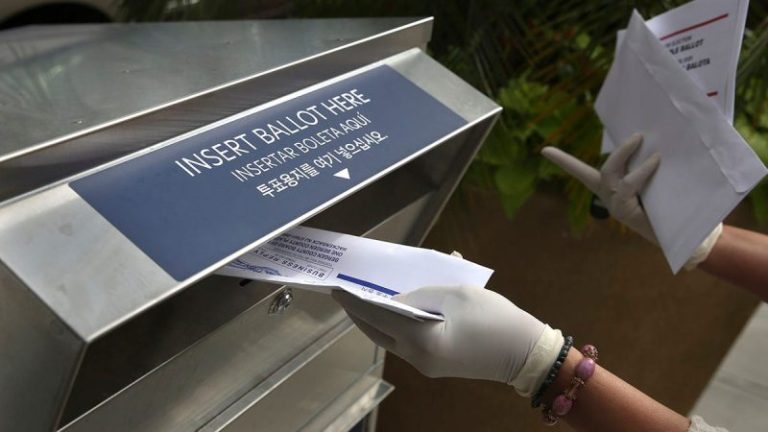
The Supreme Court revealed on Monday it will consider a lawsuit, originally brought by the Republican National Committee, over whether counting ballots that arrive after Election Day is lawful.

The case will examine a state law in solid red Mississippi that allows ballots postmarked by Election Day to be counted if they are received up to five days after the election. 

The RNC, which has fought to stop late-arriving ballots over allegations that they undermine trust in the vote counting process, argues the state law conflicts with federal law and is hoping the Supreme Court will ban them nationwide.

David Becker, executive director of the Center for Election Innovation & Research, emphasized that the court would not be weighing in on the legality of mail-in ballots, which are accepted in some form in every state, or whether ballots could be cast after Election Day.

‘What this case is about is whether a ballot that was cast on or before Election Day, sealed in an envelope, placed in the U.S. Mail and received by a state some days later can be counted if a state law says that that’s okay,’ Becker told Fox News Digital.

Mississippi’s rule went into effect in 2020, when many states implemented new emergency election policies over COVID-19. Well over a dozen, both red and blue, accept late mail-in ballots if they are postmarked by Election Day. 

The RNC sued over the law and secured a win at the conservative U.S. Court of Appeals for the 5th Circuit, leading Mississippi to bring the matter to the Supreme Court. The state argues ‘election’ means voters’ final choice, which occurs when ballots are cast by Election Day. Receipt of ballots that are marked and submitted effectuates the voters’ choice but are ‘not part of the election itself,’ Mississippi told the Supreme Court in a filing. As such, the state argues, federal law does not prohibit short, post-Election Day windows to receive ballots cast on time. 

Becker warned of repercussions that could come of the Supreme Court upholding the 5th Circuit’s ruling, saying it could invite a host of new litigation because close races could come down to ballots cast by Election Day that arrive a day or two after the election because of U.S. Postal Service delays.

‘We as a society do not want a bunch of ballots coming in the day or two after, delivered late, not because of the voter but because of the Postal Service, and having those ballots being the margin of victory in a close race,’ Becker said.

In a statement, RNC chairman Joe Gruters echoed broader sentiments of election security hawks who have taken issue with late-arriving ballots.

‘Allowing states to count large numbers of mail-in ballots that are received after Election Day undermines trust and confidence in our elections,’ Gruters said.

‘Elections must end on Election Day, which is why the RNC led the way in challenging this harmful state law. The RNC has been hard at work litigating this case for nearly two years, and we hope the Supreme Court will affirm the Fifth Circuit’s landmark decision that mail-in ballots received after Election Day cannot be counted.’

This post appeared first on FOX NEWS

A bill to end the record-breaking U.S. government shutdown is headed to President Donald Trump’s desk after more than 42 days.

Federal funding legislation aimed at opening the government passed in the House Wednesday evening, ending the weeks-long fiscal standoff that has largely paralyzed Congress since Oct. 1. Republicans on the House floor erupted in cheers when the bill prevailed while the majority of Democrats quietly exited the chamber.

The White House said Trump would sign the bill at 9:45 p.m. this evening.

Six Democrats voted with all but two Republicans to pass the bill with a 222 to 209 margin. The Democrats who voted in favor of the legislation are Reps. Tom Suozzi, D-N.Y., Henry Cuellar, D-Texas, Adam Gray, D-Calif., Marie Gluesenkamp Perez, D-Wash, and Don Davis, D-N.C.

When the House took its initial vote on federal funding legislation on Sept. 19, just one Democrat — Golden — voted with the GOP.

The vast majority of House Democrats opposed the bill, however, including their senior ranks.

House Minority Leader Hakeem Jeffries, D-N.Y., reiterated to reporters hours before the vote that Democrats were frustrated the bill did not do anything about COVID-19 pandemic-era healthcare subsidies under Obamacare, also known as the Affordable Care Act (ACA). Those enhanced tax credits expire this year.

‘House Democrats are here on the Capitol steps to reiterate our strong opposition to this spending bill because it fails to address the Republican healthcare crisis, and it fails to extend the Affordable Care Act tax credit,’ Jeffries said.

House Speaker Mike Johnson, R-La., sounded optimistic in comments to reporters Wednesday morning ahead of the vote, however.

‘I wanted to come out and say that we believe the long national nightmare will be over tonight,’ Johnson said. ‘It was completely and utterly foolish and pointless in the end.’

Some drama threatened to crack House GOP unity earlier in the day, however, as some Republicans in the lower chamber seethed over a last-minute provision added to the bill that allows senators whose communications were tapped during former Special Counsel Jack Smith’s probe to sue the federal government for $500,000 each.

Reps. Chip Roy, R-Texas, Austin Scott, R-Ga., and Morgan Griffith, W.Va., all shared concerns with the measure but said they would not extend the government shutdown over it.

Johnson appeared to placate their and others’ concerns, at least for now, with a promise to vote next week on separate legislation repealing that provision.

Rep. Greg Steube, R-Fla., told reporters he would vote against the bill over its inclusion, however.

‘I’m not voting to send Lindsey Graham half a million dollars,’ he told reporters.

He and Rep. Thomas Massie, R-Ky., voted against the final bill, but their opposition was not enough to sink legislation.

Meanwhile, the shutdown’s effects on the country have grown more severe by the day.

Many of the thousands of air traffic controllers and Transportation Security Administration (TSA) agents who had to work without pay were forced to take second jobs, causing nationwide flight delays and cancellations amid staffing shortages at the country’s busiest airports. Millions of Americans who rely on federal benefits were also left in limbo as funding for critical government programs ran close to drying out.

At the heart of the issue was Democratic leaders’ refusal to back any funding bill that did not also extend the enhanced Obamacare subsidies. Democrats argued it was their best hope of preventing healthcare price hikes for Americans across the U.S.

Republicans agreed to hold conversations on reforming what they saw as a broken healthcare system, but they refused to pair any partisan priority with federal funding.

In the end, a compromise led by the Senate — which saw eight Democrats in the upper chamber join colleagues to pass the bill in a 60 to 40 vote — included a side deal guaranteeing the left a vote on extending the enhanced subsidies sometime in December.

Johnson has made no such promise in the House, however.

And the lack of a guarantee on extending those subsidies has angered progressives and Democratic leaders.

‘What were Republicans willing to give in the end, other more than a handshake deal to take a future vote on extending the healthcare subsidies?’ Rep. Shomari Figures, D-Ala., said Wednesday. ‘We all know that a future vote is the equivalent of asking two wolves and a chicken to vote on what’s for dinner. It is dead on arrival.’

Republican Study Committee Chairman August Pfluger, R-Texas, criticized Democrats for prolonging the shutdown for little payoff.

‘They literally got absolutely nothing except for a total and complete surrender, that accomplished nothing more than hurting American families,’ he said.

The bill kicks the current federal funding fight to Jan. 30, by which point House GOP leaders said they were confident they’ll finish work on a longer-term deal for fiscal year 2026.

It also includes full-year federal spending for the Department of Agriculture, the legislative branch, and the Department of Veterans Affairs — three of 12 annual appropriations bills that Congress is tasked with passing annually.

‘There are nine remaining bills, and we’d like to get all of those done in the next few weeks. And, so, [House Appropriations Committee Chairman Tom Cole, R-Okla.] and his appropriators will be working overtime,’ House Majority Leader Steve Scalise, R-La., told Fox News Digital.

Asked if he thought they’d get it done by that date, Cole said, ‘I think we can.’

This post appeared first on FOX NEWS

The record-breaking U.S. government shutdown appears to be on a path to finally ending after 43 days.

Federal funding legislation aimed at opening the government survived a key test vote in the House later Wednesday, teeing it up for final passage in a matter of hours.

That means the bill could hit President Donald Trump’s desk as soon as Wednesday night, likely ending what has been the longest shutdown in U.S. history.

The White House announced that Trump would sign the bill in a statement of administration policy obtained by Fox News Digital.

‘The Administration urges every Member of Congress to support this responsible, good faith product to finally put an end to the longest shutdown in history,’ the statement said.

The bill advanced through a procedural hurdle known as a rule vote, which is where lawmakers decide whether to allow legislation to get debated before a final vote on passage.

Rule votes generally fall along partisan lines and are not an indication of whether a bill will be bipartisan.

The vast majority of House Democrats still oppose the bill, but it’s possible that at least several moderates will defy their leaders to support it.

House Minority Leader Hakeem Jeffries, D-N.Y., reiterated to reporters hours before the vote that Democrats were frustrated the bill did not do anything about COVID-19 pandemic-era healthcare subsidies under Obamacare, also known as the Affordable Care Act (ACA). Those enhanced tax credits expire this year.

‘House Democrats are here on the Capitol steps to reiterate our strong opposition to this spending bill because it fails to address the Republican healthcare crisis, and it fails to extend the Affordable Care Act tax credit,’ Jeffries said.

House Speaker Mike Johnson, R-La., sounded optimistic in comments to reporters Wednesday morning ahead of the vote.

‘I wanted to come out and say that we believe the long national nightmare will be over tonight,’ Johnson said. ‘It was completely and utterly foolish and pointless in the end.’

Meanwhile, the shutdown’s effects on the country have grown more severe by the day.

Many of the thousands of air traffic controllers and Transportation Security Administration (TSA) agents who had to work without pay were forced to take second jobs, causing nationwide flight delays and cancellations amid staffing shortages at the country’s busiest airports. Millions of Americans who rely on federal benefits were also left in limbo as funding for critical government programs ran close to drying out.

At the heart of the issue was Democratic leaders’ refusal to back any funding bill that did not also extend the enhanced Obamacare subsidies. Democrats argued it was their best hope of preventing healthcare price hikes for Americans across the U.S.

Republicans agreed to hold conversations on reforming what they saw as a broken healthcare system, but they refused to pair any partisan priority with federal funding.

In the end, a compromise led by the Senate — which saw eight Democrats in the upper chamber join colleagues to pass the bill in a 60 to 40 vote — included a side deal guaranteeing the left a vote on extending the enhanced subsidies sometime in December.

Johnson has made no such promise in the House, however.

And the lack of a guarantee on extending those subsidies has angered progressives and Democratic leaders.

‘What were Republicans willing to give in the end, other more than a handshake deal to take a future vote on extending the healthcare subsidies?’ Rep. Shomari Figures, D-Ala., said Wednesday. ‘We all know that a future vote is the equivalent of asking two wolves and a chicken to vote on what’s for dinner. It is dead on arrival.’

The full House will now vote on the legislation during the 7 p.m. hour.

The bill kicks the current federal funding fight to Jan. 30, by which point House GOP leaders said they were confident they’ll finish work on a longer-term deal for fiscal year 2026.

‘There are nine remaining bills, and we’d like to get all of those done in the next few weeks. And, so, [House Appropriations Committee Chairman Tom Cole, R-Okla.] and his appropriators will be working overtime,’ House Majority Leader Steve Scalise, R-La., told Fox News Digital.

Asked if he thought they’d get it done by that date, Cole said, ‘I think we can.’

This post appeared first on FOX NEWS

Vice President JD Vance praised President Donald Trump’s ‘bulldozer’ approach to public health, calling it a necessary force that ‘just had to happen,’ during remarks at Wednesday’s Make America Healthy Again (MAHA) summit.

The summit, held at the Waldorf Astoria in Washington, D.C., was centered on Health and Human Services (HHS) Secretary Robert F. Kennedy Jr.’s MAHA movement — aimed at improving nutrition, eliminating toxins, preserving natural habitats and fighting the chronic disease epidemic in the U.S.

‘That is a good summary of Donald J. Trump is that he takes a bulldozer to Overton windows every single day,’ Vance told the HHS secretary during the event. ‘It just had to happen… One of the criticisms that Bobby will always get, and I always think it’s such b——-, excuse my language… [is that] sometimes there’s this attack where people say that conclusion is not supported by the science, or this or that conclusion is a conspiracy theory.’

‘Science, as practiced in its best form, is that if you disagree with it, then you ought to criticize it, and you ought to argue against it. You can’t shut down the debate,’ Vance continued. ‘If you look at all the big public health debates that we’ve had in this country over the last 20 or 30 years… they tried to silence the people who were saying things that were outside the Overton window. As we found out the hard way over the last few years, it was very often that people who were outside the Overton window were actually right, and all the experts were wrong.’

Vance went on to say the country could not advance unless Americans become comfortable with people who are ‘willing to challenge orthodoxy.’

He also vowed to keep Appalachia in the forefront of the conversation, noting residents have higher premature mortality rates due to a long history of being failed by the public health system.

‘You know what really p—– people off — when they realize that their loved ones are dying much sooner than everybody else,’ said Vance, whose autobiography, ‘Hillbilly Elegy,’ details his own upbringing in Appalachia. ‘That is a big part of the story of what’s going on in Appalachia, and why I think so many people in Appalachia feel left behind.’

He described himself as ‘the golden boy’ of Appalachia, admitting he feels guilt about the many people who grew up in families like his and have not had an easy life or the same amount of economic opportunity.

‘That gives me a sense of purpose because I want those people to have the same opportunities that I’ve had,’ Vance said. ‘But it also gives me a great sense of anger, because we never should have gotten to the point that we are today. The reason that we have, is because of failed leadership over generations.’

When discussing the people of Appalachia, he said they are people who, ‘though they don’t have much, would take the shirt off their back and give it to a complete stranger, because that’s what you do.’

‘If you go back to America’s biggest wars — World War I, World War II, Vietnam — which were the counties that filled their draft quotas with volunteers instead of with draftees?’ Vance posed. ‘It’s very often the parts in deep Appalachia where you’ve got grinding poverty, but you’ve also got this incredible love of country.’

‘So if any place in this country deserves not to be left behind, it’s Appalachia… These are people who deserve to live better, healthier lives, but they really have been left behind by this country’s leadership,’ Vance added.

This post appeared first on FOX NEWS

Investor Insight

Standard Uranium offers high-grade uranium discovery potential in the Athabasca Basin. With a fully funded drill program scheduled for spring 2026 at its flagship Davidson River project, and joint ventures on other highly prospective projects, the company provides investors early stage exposure to the emerging nuclear energy market.

Overview

Standard Uranium (TSXV:STND,USOTC:STTDF,FRA:9SU0) is a uranium exploration and project generation company focused on advancing high-grade uranium discoveries within the world-famous Athabasca Basin in Saskatchewan, Canada.

With a mission to “supply the fuel for a clean energy future,” Standard Uranium is focused on discovering and developing basement-hosted and unconformity-related uranium deposits that can power the growth of nuclear energy. Its dual-track model combines aggressive exploration at its flagship Davidson River project with a robust project generator platform, advancing multiple projects through partnerships while generating non-dilutive cash flow in operator fees, share payments, and royalties.

With 13 projects totaling more than 235,000 acres, Standard Uranium offers investors exposure to both immediate discovery catalysts and long-term portfolio value. Its leadership team brings deep geological expertise and operational experience across the Athabasca Basin, complemented by disciplined capital management.

As global governments reaffirm nuclear energy’s role in achieving net-zero targets, Standard Uranium is positioned to capitalize on the growing demand for secure, high-grade uranium supply from Canada.

Company Highlights

  • Flagship Davidson River Project: Large-scale, high-priority exploration asset in the southwest Athabasca Basin, along trend from NexGen’s Arrow and Paladin Energy’s Triple R uranium deposits, positioned for a significant uranium discovery.
  • Extensive Portfolio in the Athabasca Basin: Over 235,000 acres (95,000+ hectares) across 13 projects in Canada’s premier uranium district, including active joint ventures at Sun Dog, Corvo, and Rocas.
  • Project Generator Model: Leverages strategic partnerships to fund exploration and generate cash flow while retaining upside through 25 percent ownership and a 2.5 percent net smelter return (NSR) royalty on joint-venture projects.
  • Fully Funded for Davidson River Drill Campaign: Financing completed to support 8,000 to 10,000 meters of drilling at Davidson River, planned for spring 2026.
  • Rocas Drill Program: The first-ever drill program to be conducted on Rocas will commence in winter 2026, comprising approximately 1,800 metres.
  • Corvo Drill Program: A skid-assisted diamond drill program totalling approximately 3,000 metres is planned for winter 2026, which will mark the first drill program on the Project in more than 40 years.
  • Riding the Nuclear Power Renaissance: Positioned to benefit from global decarbonization trends and a long-term rise in uranium demand.
  • Proven Team: Led by experienced geologists and exploration professionals with a track record of discoveries in the Athabasca Basin.

Key Projects

Davidson River Project

Located in the southwest Athabasca Basin, approximately 25 kilometres west of NexGen’s Arrow deposit and Paladin Energy’s Triple R deposit, the Davidson River project spans 30,737 hectares across 10 contiguous mineral claims. The property lies along the same structural trends that hosts these globally significant discoveries.

To date, Standard Uranium has drilled 16,561 metres across 39 holes, intersecting wide, graphitic-sulphidic shear zones, structural deformation, and alteration features characteristic of high-grade basement uranium systems. Recent multiphysics and machine learning-assisted surveys conducted in partnership with Fleet Space Technologies and GoldSpot Discoveries have provided new three-dimensional imaging of subsurface structures, identifying refined targets along the Warrior, Bronco and Thunderbird corridors.

The company is preparing for an 8,000 to 10,000-meter diamond drill campaign scheduled for spring 2026, marking its most comprehensive program to date. With modern targeting data and strong geological indicators, Davidson River represents the company’s clearest path to a transformational discovery in the southwest Athabasca Basin.

Sun Dog Project (JV)

Located in the northwestern Athabasca Basin near Uranium City, the Sun Dog project consists of nine mineral claims totaling 19,603 hectares. This highly prospective property sits in a historically productive uranium district that remains underexplored by modern methods.

Surface sampling has identified several uranium-rich showings, including modern grab samples returning grades up to 3.58 percent U₃O₈. The project’s targets are associated with structural intersections and alteration zones consistent with basement-hosted and unconformity-related uranium systems.

Standard Uranium has partnered with Aero Energy, under a three-year earn-in agreement, allowing Aero to acquire up to a 100 percent interest in the project. The partnership structure ensures ongoing advancement at Sun Dog with Standard Uranium retaining a 2.5 percent NSR royalty, providing continued exposure to discovery success without direct funding requirements.

Corvo Project (JV)

The Corvo project in the eastern Athabasca Basin covers 12,265 hectares and represents one of Standard Uranium’s most promising partner-funded assets. The project lies along three major magnetic low and EM conductor trends extending for nearly 29 kilometres of prospective strike length.

The project is currently being advanced under a joint venture with Aventis Energy, which is funding exploration work through a three-year earn-in agreement. Standard retains a 25 percent ownership interest and a 2.5 percent NSR, while acting as operator during the earn-in phase.

Historical drilling and sampling have confirmed uranium mineralization, including the “Manhattan” showing, where modern surface grab samples collected by the company in 2025 returned assays up to 8.10 percent U3O8. These results highlight the property’s potential to host near-surface, high-grade uranium deposits.

Rocas Project (JV)

The Rocas project, located in the southeastern Athabasca Basin region, lies approximately 75 km southwest of the Key Lake mine and mill and covers 4,002 hectares along a 7.5-km northeast-trending magnetic low and EM conductor corridor.

Surface exploration has confirmed uranium mineralization at outcrop, with historical grab samples grading up to 0.5 percent U₃O₈ across nearly 900 metres of strike length. Historical surveys have also identified lakebed geochemical anomalies and structural features that indicate potential zones of hydrothermal alteration, ideal settings for basement-hosted uranium deposits.

In 2025, Standard Uranium executed an option agreement with Collective Metals, granting the partner 75 percent earn-in over three years in exchange for staged cash payments, share issuances, and $4.5 million in exploration spending. Standard retains a 25 percent ownership interest and a 2.5 percent NSR, while acting as operator during the earn-in phase.

Eastern Athabasca Exploration Projects

Beyond its flagship and joint-venture assets, Standard Uranium holds eight additional exploration-stage properties across the eastern Athabasca Basin, including Ascent, Canary, Atlantic, Cable Bay, Ox Lake, Umbra, Brown Lake and Sable. Together, these projects cover over 43,000 hectares of highly prospective ground along established uranium trends near recent discoveries by Denison Mines and IsoEnergy.

These projects represent the company’s pipeline of future partnerships and discovery opportunities, ensuring consistent exploration activity across the Basin.

Management Team

Jon Bey – Chairman, CEO, and Director

Jon Bey is a capital markets executive with over two decades of experience in the junior exploration industry. Bey has explored for uranium, gold, silver, diamonds and oil and gas in the Americas, Europe, Asia and Africa. He has public company experience across several sectors and with companies listed on the TSX, TSXV, CSE and LSE exchanges. Bey is the chairman of Ophir Metals and the founder and managing director of the Steel Rose Group of companies.

Sean Hillacre – President & VP Exploration

Sean Hillacre has over a decade of experience as an economic geologist in the Athabasca Basin uranium district, including five years at NexGen Energy as part of the technical team progressing the Arrow uranium deposit toward production. A high-energy, results oriented geoscientist, Hillacre brings a unique and balanced background integrating academic geoscience with industry experience, along with a comprehensive understanding of project development.

Vivien Chang – Chief Financial Officer

Vivien Chuang is a chartered professional accountant (BC, Canada) with more than 15 years of experience in the resource and mining sector. She was a former CFO of Azincourt Energy, BluEnergies, Muzhu Mining, and Northern Empire Resources, K2 Gold Corporation and Chakana Copper (formerly Remo Resources). Currently, she is VP Finance of Jasper Management and Advisory and president of VC Consulting, which provides CFO and other financial accounting and compliance services to a number of companies.

Neil McCallum – Lead Technical Director

Neil McCallum has over 15 years of experience primarily in North American mineral deposit exploration, with a focus on targeting and discovery of unconformity-related uranium deposits. He is currently a project manager at Edmonton-based Dahrouge Geological Consulting. McCallum has managed and conducted uranium exploration in and around the Athabasca Basin and other jurisdictions for multiple companies.

This post appeared first on investingnews.com